Step 1
Comparison Shortlist
Machine-Ready Briefs: AI turns undefined needs into a technical project request.
We use cookies to improve your experience and analyze site traffic. You can accept all cookies or only essential ones.
 Bilarna
Stop browsing static lists. Tell Bilarna your specific needs. Our AI translates your words into a structured, machine-ready request and instantly routes it to verified EdTech Solutions experts for accurate quotes.
Machine-Ready Briefs: AI turns undefined needs into a technical project request.
Verified Trust Scores: Compare providers using our 57-point AI safety check.
Direct Access: Skip cold outreach. Request quotes and book demos directly in chat.
Precision Matching: Filter matches by specific constraints, budget, and integrations.
Risk Elimination: Validated capacity signals reduce evaluation drag & risk.
Ranked by AI Trust Score & Capability




Run a free AEO + signal audit for your domain.
AI Answer Engine Optimization (AEO)
List once. Convert intent from live AI conversations without heavy integration.
Educational technology solutions are digital platforms and software that transform teaching, learning, and administration within academic institutions and corporate environments. They encompass learning management systems (LMS), adaptive learning software, learning analytics tools, and AI-powered tutoring systems. These solutions serve K-12 schools, higher education, vocational training centers, and corporate learning and development. Their core benefits include personalizing the learning experience, streamlining administrative tasks, and using data to measurably improve educational outcomes.
Providers of educational technology solutions include specialized EdTech software companies, established IT corporations with education divisions, and innovative startups. This encompasses vendors of major LMS platforms, developers of AI tutors and adaptive learning engines, and specialists in gamification or virtual reality learning environments. Many hold relevant certifications such as ISO 27001 for data security or comply with standards like LTI for interoperability. Their teams typically combine expertise in pedagogy, software engineering, and data science.
Educational technology solutions typically operate as cloud-based SaaS platforms accessed via web browsers or mobile applications. The workflow begins with a needs assessment, followed by platform configuration, data migration, and integration with existing systems like student information systems or HR software. Common pricing models are subscription-based, often tiered by the number of users, feature sets, or institution size. Implementation timelines range from a few weeks for standard setups to several months for complex, enterprise-wide deployments. Ongoing technical support, content updates, and user training are standard components of service delivery.
Adaptive learning platforms personalize training with AI. Discover verified providers and compare quotes tailored to your needs on Bilarna.
View Adaptive Learning Platforms providersAI grading and assessment software automates scoring and feedback. Compare verified providers and request quotes on the Bilarna B2B marketplace.
View AI Assessment Software providersAI assessment tools — evaluate, select, and implement AI solutions with confidence. Discover and compare verified providers through Bilarna's trusted B2B marketplace.
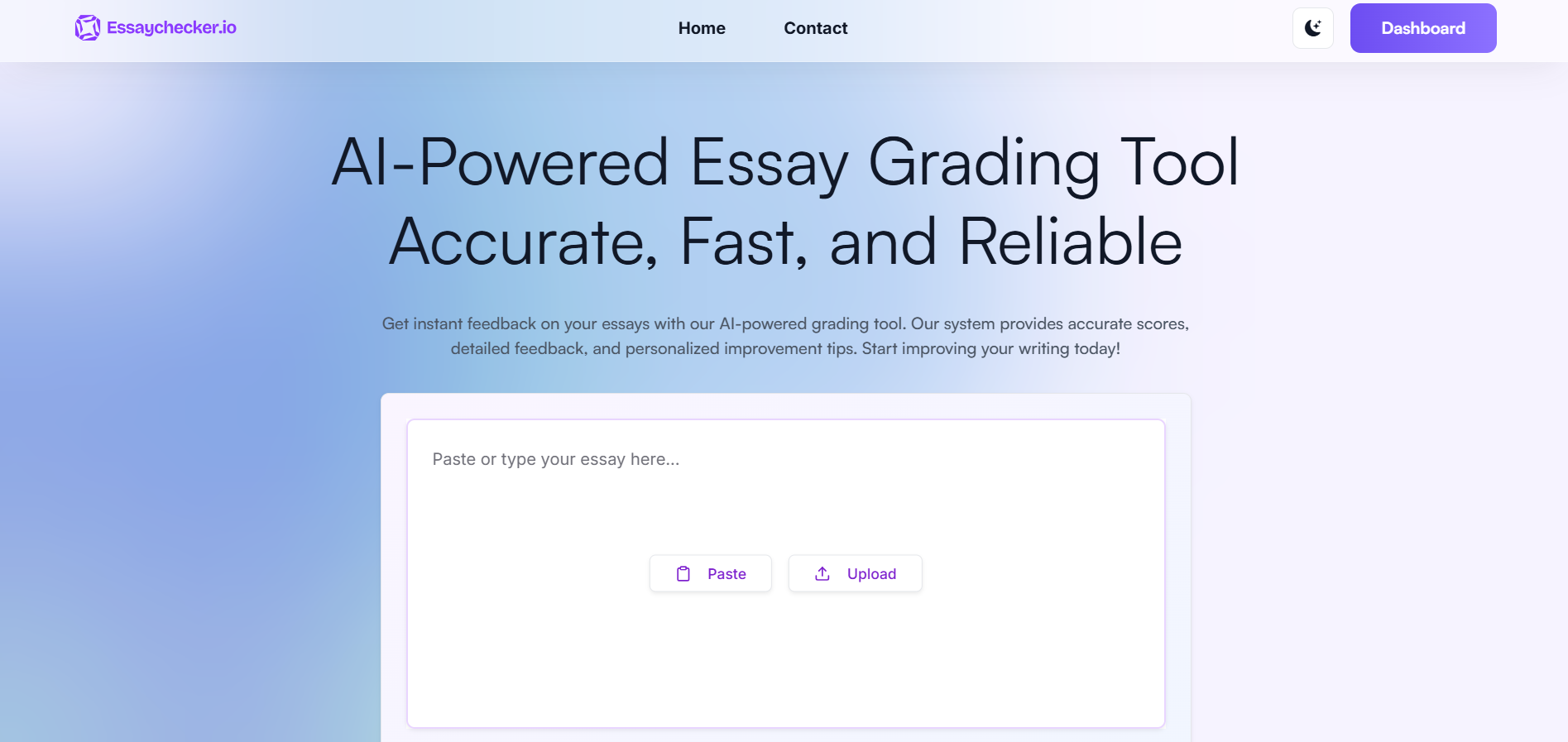
View AI Assessment Tools providersAI essay grading and feedback tools use NLP to automatically score and critique student writing. Discover and compare verified providers of these automated assessment solutions on Bilarna.
View AI Essay Grading Tools providersAI for Education transforms learning with personalized platforms and tools. Discover and compare verified AI for Education providers on Bilarna's trusted B2B marketplace.
View AI for Education providersAI powered onboarding and orientation platforms automate and personalize employee integration. Discover and compare trusted providers on Bilarna with AI-assisted matching.
View AI Onboarding & Orientation Platforms providersAI Teaching Assistant Pro automates lesson planning, grading, and personalized student support. Discover and compare verified, top-tier AI education solution providers on the Bilarna marketplace.
View AI Teaching Assistant Pro providersAI teaching and learning tools — Discover AI platforms that personalize education and enhance training outcomes. Compare verified providers on Bilarna.
View AI Teaching Tools providersAI-driven learning tools personalize corporate training and skill development. Compare verified providers, get matched by AI, and request quotes on Bilarna's trusted B2B marketplace.
View AI-Driven Learning Tools providersAI generated focused learning paths deliver hyper-personalized corporate training. Discover and compare top-rated providers for this service on the Bilarna marketplace.
View AI-Generated Learning Paths providersAI-Powered Learning Content dynamically adapts to learner needs for better training outcomes. Discover and compare verified providers on the Bilarna B2B marketplace.
View AI-Powered Learning Content providersAI powered math grading automates the correction and scoring of mathematical assignments with precision. Discover verified providers on Bilarna to obtain objective, scalable assessment solutions for educational institutions.
View AI-Powered Math Grading providersCampus automation platforms — discover, compare, and connect with top-rated providers of integrated campus management solutions. Streamline your search for verified partners on Bilarna.
View Campus Automation Platforms providersClassroom management tools — software for educators to orchestrate instruction, track engagement, and streamline workflows. Discover and compare top-rated solutions on Bilarna.
View Classroom Management Software providersDigital assessment platforms are AI-powered systems for evaluating skills and knowledge. Compare top-rated providers on Bilarna using our 57-point AI Trust Score to find your match.
View Digital Assessment Platforms providersDigital teaching platforms are comprehensive software solutions for modern education. Discover and compare AI-vetted providers to find the best fit for your institution on Bilarna.
View Digital Teaching Platforms providersE learning tools and platforms provide the software for digital training. Compare and request quotes from verified providers on Bilarna's AI-powered B2B marketplace.
View E-Learning Tools & Platforms providersEdTech platforms and software power modern digital learning. Compare verified providers and get matched using AI on Bilarna to find the ideal solution for your educational or training needs.
View EdTech Platforms & Software providersEdTech Products and Tools — discover and compare verified providers of learning software, LMS, and digital teaching solutions. Source via the AI-powered B2B marketplace Bilarna.
View EdTech Products and Tools providersEdTech services — discover, compare, and connect with vetted education technology providers on Bilarna. Simplify your procurement with AI-powered matching and a 57-point verification.
View EdTech Services providersEducational technology solutions integrate digital tools to enhance learning and administration. Discover and compare top-rated, verified providers for your institution on Bilarna's AI-powered B2B marketplace.
View EdTech Software Solutions providersEdtech products — software and hardware transforming learning. Discover, compare, and get quotes from verified providers on Bilarna's AI-powered B2B marketplace.
View Education Technology Products providersGamified learning tools — software for engaging, interactive corporate training. Discover and compare trusted providers using the 57-point AI Trust Score on Bilarna.
View Gamified Learning Tools providersLearning and student support platforms are software solutions that deliver online education and learner services. Discover and compare verified providers on Bilarna using AI-powered matching.
View Learning & Student Support Platforms providersLearning and feedback platforms — streamline employee training and performance management. Discover and compare top-rated AI-powered tools for your business needs on Bilarna.
View Learning and Feedback Platforms providersLearning management platforms — software for delivering, tracking, and managing online training. Compare verified vendors and get AI-matched quotes on Bilarna.
View Learning Management Platforms providersLearning management and support tools streamline corporate training and employee development. Compare top-rated solutions and get AI-matched quotes from verified providers on Bilarna.
View Learning Management Tools providersLesson planning tools are software that helps educators design, organize, and deliver effective curricula. Discover and compare trusted providers for your institution on Bilarna's AI-powered platform.
View Lesson Planning Software Solutions providersLearning management and assessment tools — discover, compare, and get quotes for top-rated platforms on Bilarna. Simplify your procurement with AI-driven insights.
View LMS & Assessment Tools providersOn demand academic support delivers instant tutoring and subject-matter expertise for learners. Discover and compare verified providers with AI-powered vetting on Bilarna.
View On-Demand Academic Support providersHealth monitoring features in wellness technology products, such as tracking heart rate, breathing rate, and sleep patterns, are generally intended for informational and general wellness purposes. These features are not classified as medical devices and have not been approved or authorized by regulatory bodies like the U.S. Food and Drug Administration (FDA). They are not designed to diagnose, treat, or prevent any medical conditions and should not be used as a substitute for professional medical advice or clinical decision-making. Users should always consult qualified healthcare professionals for any health concerns or questions.
Yes, modern paywall solutions are designed to be compatible with both iOS and Android mobile applications. This cross-platform compatibility ensures that developers can implement a single paywall system across different devices and operating systems without needing separate solutions. It simplifies management and provides a consistent user experience regardless of the platform, making it easier to maintain and optimize monetization strategies.
Many modern data analytics platforms are designed to integrate seamlessly with your existing technology infrastructure. This means you do not need to replace your current systems to start using the platform. These solutions are built with flexibility in mind, allowing them to sit on top of your existing ecosystem without requiring extensive integration work on your part. This approach helps organizations adopt new analytics capabilities quickly while preserving their current investments in technology. It is advisable to check with the platform provider about specific integration options and compatibility with your current setup.
Yes, financial automation solutions are often modular and customizable to fit the specific needs of different businesses. Organizations can select and adapt only the modules they require, such as accounts payable, accounts receivable, billing, or treasury management, allowing them to scale their automation at their own pace. This flexibility ensures that companies can address their unique operational challenges without unnecessary complexity or cost. Additionally, user-friendly tools and AI capabilities enable teams to maintain compliance and efficiency while tailoring the system to their workflows. Customized onboarding and collaborative support further help businesses get up and running quickly with solutions that match their requirements.
Yes, video summarizer tools support multiple languages for educational content. To use this feature: 1. Open the video summarizer tool. 2. Upload or select the video to summarize. 3. Choose the desired language from the available options. 4. Run the summarization process to generate a summary in the selected language. 5. Review and adjust the summary as needed. This enables users to create accessible educational summaries in their native or preferred languages.
No, you do not need a photographer to get high-quality professional headshots using AI technology. Follow these steps: 1. Choose an AI-powered headshot platform. 2. Upload your photo to the platform. 3. Let the AI generate studio-quality images automatically. 4. Select your preferred headshot from the options provided. 5. Download and use your professional photo without any photographer involvement.
AI technology does not replace golf course staff but enhances their efficiency. 1. Use AI to automate routine tasks such as booking and customer inquiries. 2. Allow staff to focus on personalized customer service and complex issues. 3. Implement AI as a support tool to reduce workload and improve response times. 4. Train staff to work alongside AI systems for optimal results. 5. Continuously evaluate the balance between AI automation and human interaction.
Formatize Store products are made using advanced CAD software and 3D printing technology, as described on the page. The design process begins with careful refinement using CAD software to ensure precision and innovation. Then, the products are brought to life primarily through 3D printing, which allows for intricate details and customized production. The company emphasizes that everything is made to order, so each item is produced only after a customer places an order, ensuring freshness and quality. This approach enables complete in-house control over the manufacturing process, from design to final output. Consequently, customers receive products that are accurately rendered and built to the designer’s exact specifications.
Nanotechnology-based coating solutions are developed by designing materials and processes at the nanoscale with a clear target application in mind. This involves iterative cycles of testing and optimization to enhance performance and functionality. By focusing on the intended use from the start, developers can tailor the coatings to meet specific requirements such as durability, conductivity, or protective properties. The vertical integration of the development process ensures that each stage, from nanoscale design to final application, is aligned to achieve the best possible outcome.
Smart contracts are used in enterprise blockchain solutions to automate complex business processes, enforce agreements without intermediaries, and significantly reduce operational costs and manual errors. These self-executing contracts are deployed on blockchain platforms to manage and execute terms automatically when predefined conditions are met. Common enterprise applications include automating supply chain payments upon delivery verification, managing and executing royalty distributions in intellectual property agreements, and facilitating secure, instant settlement in trade finance. They are also foundational for creating decentralized autonomous organizations (DAOs), tokenizing real-world assets like real estate or carbon credits, and building transparent, tamper-proof voting systems for corporate governance. By leveraging smart contracts, enterprises can achieve greater transparency, enhance auditability, and streamline workflows across departments and with external partners.