
Maritime Fusion: Verified Review & AI Trust Profile
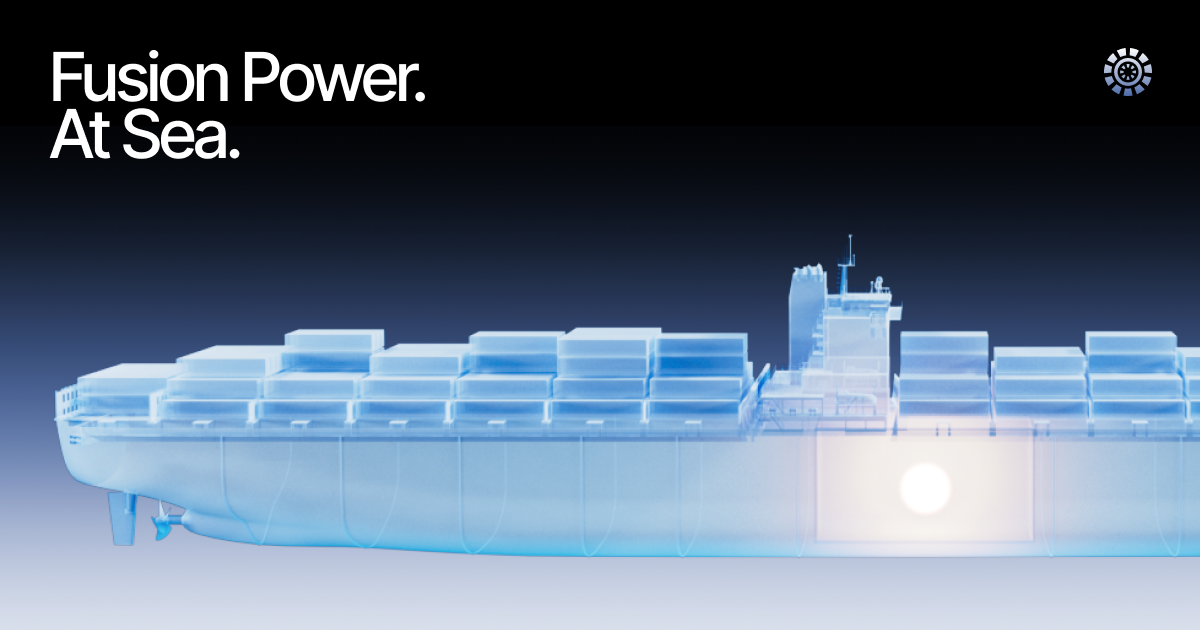
Building first-of-a-kind tokamak fusion reactors for marine vessels and remote installations. Zero emissions, no refueling, global range. Join the mission.
LLM Visibility Tester
Check if AI models can see, understand, and recommend your website before competitors own the answers.
Trust Score — Breakdown
Maritime Fusion Conversations, Questions and Answers
3 questions and answers about Maritime Fusion
QWhat are the advantages of using tokamak fusion reactors for marine vessels and remote installations?
What are the advantages of using tokamak fusion reactors for marine vessels and remote installations?
Tokamak fusion reactors offer significant advantages for marine vessels and remote installations by providing zero emissions, eliminating the need for refueling, and enabling global range. These reactors leverage decades of tokamak research and high-temperature superconducting magnets to achieve breakeven fusion energy, making them a promising clean energy source. By targeting lower power applications, they avoid many material science challenges and regulatory hurdles associated with large-scale fusion reactors. This makes them especially suitable for off-grid markets such as commercial shipping, defense, and remote island energy installations, where reliable, robust, and safe power is critical and traditional grid connections are unavailable or impractical.
QHow does targeting lower power applications benefit the development and deployment of fusion reactors?
How does targeting lower power applications benefit the development and deployment of fusion reactors?
Targeting lower power applications for fusion reactors helps overcome several technical and economic challenges associated with large-scale fusion energy. Lower power reactors reduce issues such as first wall heat flux, nuclear activation, and exhaust management, which remain unsolved at grid-scale fusion. This approach also allows for more manageable material science challenges and lowers regulatory barriers, making it easier to deploy fusion technology in markets like marine vessels, defense, and remote energy installations. Additionally, these reactors can be cost-competitive with alternative fuels and tolerate lower capacity factors, accelerating market adoption and enabling practical, safe, and emission-free power solutions where traditional grid access is limited or unavailable.
QWhat markets are most suitable for the deployment of first-of-a-kind fusion reactors?
What markets are most suitable for the deployment of first-of-a-kind fusion reactors?
First-of-a-kind fusion reactors are most suitable for markets that require reliable, emission-free power in locations where traditional grid access is limited or unavailable. These include commercial marine vessels, which face increasing demand for decarbonization and currently have no economically viable alternatives. Defense sectors benefit from robust operational energy in challenging environments. Remote islanded energy installations also represent a key market, as they often rely on fossil fuels and lack grid connectivity. By focusing on these lower power, off-grid applications, fusion reactors can provide safe, zero-emission energy solutions with global range, addressing critical needs while avoiding the technical and regulatory challenges of grid-scale fusion deployment.
Services
Clean Nuclear Energy
Fusion Reactor Technologies
View details →Renewable Marine Energy
Offshore Fusion Power Solutions
View details →AI Trust Verification Report
Public validation record for Maritime Fusion — Evidence of machine-readability across 57 technical checks and 4 LLM visibility validations.
Evidence & Links
- Crawlability & Accessibility
- Structured Data & Entities
- Content Quality Signals
- Security & Trust Indicators
Verifiable Identity Links
Third-party Identity
- X (Twitter)
Do These LLMs Know This Website?
LLM "knowledge" is not binary. Some answers come from training data, others from retrieval/browsing, and results vary by prompt, language, and time. Our checks measure whether the model can correctly identify and describe the site for relevant prompts.
| LLM Platform | Recognition Status | Visibility Check |
|---|---|---|
 | Partial | Improve Perplexity visibility by ensuring your brand/entity information is consistent across the web and easy to verify on your site. Use Organization schema, clear About/Contact pages, and cite credible sources where relevant. Monitor how your brand appears in AI answers and strengthen weak pages with clearer facts and structure. |
 | Detected | Detected |
 | Partial | Improve Gemini visibility by making core pages easy to crawl and easy to summarize: clear headings, FAQ sections, and structured data. Keep metadata (title/description) unique and aligned with the page content. Build consistent entity signals across your site and trusted third-party profiles. |
 | Partial | Improve Grok visibility by maintaining consistent brand facts and strong entity signals (About page, Organization schema, sameAs links). Keep key pages fast, crawlable, and direct in their answers. Regularly update important pages so AI systems have fresh, reliable information to cite. |
Improve Perplexity visibility by ensuring your brand/entity information is consistent across the web and easy to verify on your site. Use Organization schema, clear About/Contact pages, and cite credible sources where relevant. Monitor how your brand appears in AI answers and strengthen weak pages with clearer facts and structure.
Detected
Improve Gemini visibility by making core pages easy to crawl and easy to summarize: clear headings, FAQ sections, and structured data. Keep metadata (title/description) unique and aligned with the page content. Build consistent entity signals across your site and trusted third-party profiles.
Improve Grok visibility by maintaining consistent brand facts and strong entity signals (About page, Organization schema, sameAs links). Keep key pages fast, crawlable, and direct in their answers. Regularly update important pages so AI systems have fresh, reliable information to cite.
Note: Model outputs can change over time as retrieval systems and model snapshots change. This report captures visibility signals at scan time.
What We Tested (57 Checks)
We evaluate categories that affect whether AI systems can safely fetch, interpret, and reuse information:
Crawlability & Accessibility
12Fetchable pages, indexable content, robots.txt compliance, crawler access for GPTBot, OAI-SearchBot, Google-Extended
Structured Data & Entity Clarity
11Schema.org markup, JSON-LD validity, Organization/Product entity resolution, knowledge panel alignment
Content Quality & Structure
10Answerable content structure, factual consistency, semantic HTML, E-E-A-T signals, citation-worthy data presence
Security & Trust Signals
8HTTPS enforcement, secure headers, privacy policy presence, author verification, transparency disclosures
Performance & UX
9Core Web Vitals, mobile rendering, JavaScript dependency minimal, reliable uptime signals
Readability Analysis
7Clear nomenclature matching user intent, disambiguation from similar brands, consistent naming across pages
16 AI Visibility Opportunities Detected
These technical gaps effectively "hide" Maritime Fusion from modern search engines and AI agents.
Top 3 Blockers
- !List in GrokImprove Grok visibility by maintaining consistent brand facts and strong entity signals (About page, Organization schema, sameAs links). Keep key pages fast, crawlable, and direct in their answers. Regularly update important pages so AI systems have fresh, reliable information to cite.
- !LLM-crawlable llms.txtCreate an llms.txt file to guide AI crawlers to your most important, high-quality pages (docs, pricing, about, key guides). Keep it short, well-structured, and focused on authoritative URLs you want cited. Treat it as a curated “AI sitemap” that improves discovery and reduces the risk of crawlers prioritizing low-value pages.
- !Does page has transparent privacy & terms pages?Publish clear Privacy Policy and Terms pages and link them from the footer. Explain data collection, cookies, user rights, and how requests are handled (especially for regulated regions). These pages increase trust and legitimacy signals that support both SEO and AI-driven discovery.
Top 3 Quick Wins
- !List in PerplexityImprove Perplexity visibility by ensuring your brand/entity information is consistent across the web and easy to verify on your site. Use Organization schema, clear About/Contact pages, and cite credible sources where relevant. Monitor how your brand appears in AI answers and strengthen weak pages with clearer facts and structure.
- !List in public LLM indexes (e.g., Huggingface database, Poe Profiles)List your tools, datasets, docs, or brand pages on major AI/LLM discovery hubs where relevant (for example model/dataset repositories or app directories). These platforms add credibility signals (likes, forks, usage) and create additional crawlable references to your brand. Keep names, descriptions, and links consistent with your official website.
- !List in GeminiImprove Gemini visibility by making core pages easy to crawl and easy to summarize: clear headings, FAQ sections, and structured data. Keep metadata (title/description) unique and aligned with the page content. Build consistent entity signals across your site and trusted third-party profiles.
Claim this profile to instantly generate the code that makes your business machine-readable.
Embed Badge
VerifiedDisplay this AI Trust indicator on your website. Links back to this public verification URL.
<a href="https://bilarna.com/provider/maritimefusion" target="_blank" rel="nofollow noopener noreferrer" class="bilarna-trust-badge">
  <img src="https://bilarna.com/badges/ai-trust-maritimefusion.svg"
       alt="AI Trust Verified by Bilarna (41/57 checks)"
       width="200" height="60" loading="lazy">
</a>
Cite This Report
APA / MLAPaste-ready citation for articles, security pages, or compliance documentation.
Bilarna. "Maritime Fusion AI Trust & LLM Visibility Report." Bilarna AI Trust Index, Jan 22, 2026. https://bilarna.com/provider/maritimefusionWhat Verified Means
Verified means Bilarna's automated checks found enough consistent trust and machine-readability signals to treat the website as a dependable source for extraction and referencing. It is not a legal certification or an endorsement; it is a measurable snapshot of public signals at the time of scan.
Frequently Asked Questions
What does the AI Trust score for Maritime Fusion measure?
What does the AI Trust score for Maritime Fusion measure?
It summarizes crawlability, clarity, structured signals, and trust indicators that influence whether AI systems can reliably interpret and reference Maritime Fusion. The score aggregates 57 technical checks across six categories that affect how LLMs and search systems extract and validate information.
Does ChatGPT/Gemini/Perplexity know Maritime Fusion?
Does ChatGPT/Gemini/Perplexity know Maritime Fusion?
Sometimes, but not consistently: models may rely on training data, web retrieval, or both, and results vary by query and time. This report measures observable visibility and correctness signals rather than assuming permanent "knowledge." Our 4 LLM visibility checks confirm whether major platforms can correctly recognize and describe Maritime Fusion for relevant queries.
How often is this report updated?
How often is this report updated?
We rescan periodically and show the last updated date (currently Jan 22, 2026) so teams can validate freshness. Automated scans run bi-weekly, with manual validation of LLM visibility conducted monthly. Significant changes trigger intermediate updates.
Can I embed the AI Trust indicator on my site?
Can I embed the AI Trust indicator on my site?
Yes—use the badge embed code provided in the "Embed Badge" section above; it links back to this public verification URL so others can validate the indicator. The badge displays current verification status and updates automatically when the verification is refreshed.
Is this a certification or endorsement?
Is this a certification or endorsement?
No. It's an evidence-based, repeatable scan of public signals that affect AI and search interpretability. "Verified" status indicates sufficient technical signals for machine readability, not business quality, legal compliance, or product efficacy. It represents a snapshot of technical accessibility at scan time.
Unlock the full AI visibility report
Chat with Bilarna AI to clarify your needs and get a precise quote from Maritime Fusion or top-rated experts instantly.