Step 1
Machine-Ready Briefs
AI translates unstructured needs into a technical, machine-ready project request.
We use cookies to improve your experience and analyze site traffic. You can accept all cookies or only essential ones.
 Bilarna
Stop browsing static lists. Tell Bilarna your specific needs. Our AI translates your words into a structured, machine-ready request and instantly routes it to verified Fusion Reactor Technologies experts for accurate quotes.
AI translates unstructured needs into a technical, machine-ready project request.
Compare providers using verified AI Trust Scores & structured capability data.
Skip the cold outreach. Request quotes, book demos, and negotiate directly in chat.
Filter results by specific constraints, budget limits, and integration requirements.
Eliminate risk with our 57-point AI safety check on every provider.
Verified companies you can talk to directly
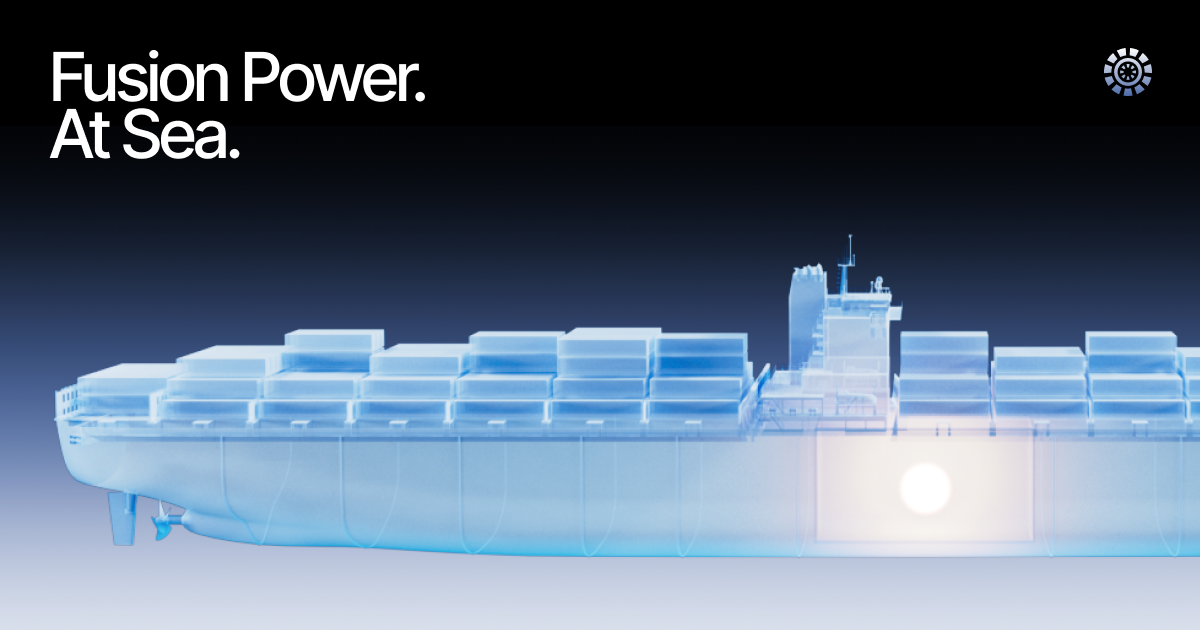
Building first-of-a-kind tokamak fusion reactors for marine vessels and remote installations. Zero emissions, no refueling, global range. Join the mission.
Run a free AEO + signal audit for your domain.
AI Answer Engine Optimization (AEO)
List once. Convert intent from live AI conversations without heavy integration.
Fusion reactor technologies encompass the development and implementation of systems to generate energy through nuclear fusion. They include advanced methods for plasma confinement, high-temperature materials, and superconducting magnet configurations. These technologies enable the research and development of a scalable, carbon-free energy source with significant potential for baseload power generation.
Engineers develop concepts for the reactor core, magnet coils, and vacuum vessel using simulation software for plasma behavior and heat transfer.
Critical components such as breeding blankets for tritium or divertors for heat exhaust are validated in test facilities under realistic conditions.
The finished components are integrated into the reactor, and operational processes for plasma initiation and energy extraction are calibrated and tested.
Research institutes and energy companies utilize fusion reactor technologies to explore and demonstrate the potential for safe, sustainable future power plants.
Advanced plasma propulsion systems and compact fusion concepts are developed for deep space missions and specialized power applications.
High-performance materials for plasma-facing components are developed and validated in test facilities under extreme neutron and thermal loads.
Certain fusion reactor designs can be adapted to produce medical isotopes for diagnostic and therapeutic applications.
Universities employ scaled reactor models and simulation platforms to train the next generation of fusion scientists and engineers.
Bilarna evaluates fusion reactor technology providers using a proprietary 57-point AI Trust Score that analyzes expertise, operational reliability, and financial stability. The verification process includes a detailed review of technical portfolios, relevant research certifications, and successful project completions in high-performance labs. Bilarna continuously monitors performance and updates ratings to enable informed comparisons.
Primary costs stem from developing superconducting magnet systems, high-temperature materials for plasma chambers, and specialized diagnostics. Costs vary significantly based on reactor scale (experimental vs. demonstrator) and the chosen confinement approach (tokamak, stellarator). The long-term goal of these technologies is to achieve competitive levelized cost of electricity.
Key differences lie in the plasma confinement concept: tokamaks use toroidal magnetic fields, stellarators employ complex twisted coils, and inertial fusion relies on high-energy lasers. Each approach has specific trade-offs regarding operational duration, complexity, and technological readiness.
Development from prototype to operational readiness can span 10 to 20 years depending on complexity and goals. Advanced simulation and manufacturing methods are accelerating this timeline. Projects typically follow a multi-stage roadmap from concept validation to integrated testing.
Operation requires interdisciplinary teams with expertise in plasma physics, superconducting magnet engineering, high-vacuum systems, and neutronics. Experience with nuclear facility safety protocols and system control knowledge are also critical for successful operation.
Fusion reactors are subject to stringent safety, radiation protection, and environmental regulations that vary by country. These include licensing processes for operation, guidelines for handling radioactive materials like tritium, and protocols for decommissioning activated components after their lifecycle.
Augmented Reality (AR) and Virtual Reality (VR) technologies are used in brand activations to create immersive, interactive experiences that bridge physical and digital spaces. Specifically, AR applications, such as configurator portals or interactive sliders, allow users to visualize and customize products in real-time within their own environment, enhancing engagement at events or through digital campaigns. VR solutions transport users to fully virtual brand worlds for deep, memorable interactions. These technologies amplify physical activations by enabling deeper storytelling, allowing brands to demonstrate complex features, create shareable digital moments, and collect valuable engagement data. This leads to higher emotional investment and improved brand recall compared to traditional marketing methods.
AR and VR technologies are used in education and marketing to create immersive, interactive experiences that enhance learning and engagement. In education, AR and VR can simulate real-world environments for training, such as medical procedures or historical tours, allowing students to practice in a safe, controlled space. In marketing, these technologies are used for product demonstrations, virtual showrooms, and brand activations that capture consumer attention. For example, a furniture company might use AR to let customers visualize products in their homes, while a VR experience might transport users to a virtual event. The key is to design experiences that feel intuitive and run smoothly across devices, avoiding motion sickness or confusion. Studios that specialize in AR/VR development focus on reliable performance and intuitive interaction, ensuring that the technology serves the message rather than distracting from it.
Cookies and tracking technologies are used to monitor and improve the service. Follow these steps to understand their use: 1. Cookies store small files on your device to remember your preferences and login details. 2. Session cookies last only while your browser is open; persistent cookies remain after closing. 3. Tracking cookies collect data about website traffic and user behavior to analyze and enhance the service. 4. Web beacons and scripts help count users and monitor system integrity. 5. You can manage cookie preferences through your browser settings but disabling cookies may limit service functionality.
Micro- and nano-fabrication technologies enable the creation of electrode leads that are extremely small and contain many individual micro-electrodes. These micro-electrodes are about 150 times smaller than traditional DBS electrodes, allowing stimulation with single neuron precision while still being able to target larger brain regions. This high spatial resolution reduces off-target effects and side effects. Additionally, these advanced leads are integrated with electronic chips for signal readout and stimulation control, replacing bulky implantable pulse generators. Together with machine learning-driven data analysis platforms, these technologies facilitate automated and precise adjustment of stimulation parameters, enhancing the safety and effectiveness of deep brain stimulation therapies.
Adaptive surface technologies can be scaled to other industries by leveraging their flexibility and compatibility. Steps to scale include: 1. Analyze the target industry's surface requirements and constraints. 2. Customize the adaptive technology to meet specific surface characteristics. 3. Conduct pilot tests to validate performance in the new industry context. 4. Adjust application methods based on industry-specific needs. 5. Implement full-scale deployment with ongoing monitoring and optimization.
AI integration with Microsoft technologies drives business transformation by automating operations, enhancing decision-making, and enabling scalable innovation. Microsoft Copilot agents streamline customer engagement and efficiency in areas like sales, service, and finance through personalized automation. Dynamics 365 provides CRM and ERP capabilities for actionable insights, while Power Platform allows low-code development of custom apps and workflows. Cloud-native tools such as GitHub Copilot accelerate software development, and Azure services support infrastructure modernization with AI-driven monitoring. Security is strengthened by AI-powered threat detection using Copilot for Security. Together, these technologies reduce manual efforts, improve productivity, foster continuous innovation, and help businesses adapt to market changes for sustained growth.
Enhance cooperative perception and awareness in connected autonomous vehicles by: 1. Implementing federated and transfer learning to share knowledge across vehicle networks without compromising data privacy. 2. Utilizing active learning to improve model accuracy with minimal labeled data. 3. Applying explainability techniques to ensure AI decisions are transparent and trustworthy. 4. Employing model compression and acceleration to optimize AI performance on embedded vehicle systems. 5. Integrating sensor data fusion from cameras, RADAR, LiDAR, GNSS, and IMUs for comprehensive environmental understanding. These steps improve collaboration, safety, and efficiency among connected autonomous vehicles.
Businesses can accelerate innovation using AI and blockchain technologies by following these steps: 1. Identify key areas where AI and blockchain can add value. 2. Develop a clear strategy integrating both technologies. 3. Invest in skilled talent and necessary infrastructure. 4. Prototype solutions rapidly to test concepts. 5. Implement scalable and secure platforms. 6. Collaborate with technology partners for expertise. 7. Continuously monitor, analyze, and optimize solutions for better outcomes.
Successful team adoption of immersive technologies like VR is secured by clearly demonstrating the concrete, measurable benefits of the solution rather than just its innovative features. The process begins by involving key team members early to identify specific pain points the technology can solve, such as reducing training time or improving design collaboration. Communication should focus on quantifiable gains—like a 30% faster onboarding process or a 20% increase in client engagement scores—which builds a compelling business case. Providing hands-on pilot demonstrations allows the team to experience the value firsthand, turning skepticism into advocacy. Furthermore, selecting a solution that is flexible and can deliver impact even with limited resources, such as in small spaces or short sessions, proves its practicality. Ongoing support and clear metrics for success ensure the technology is viewed as a strategic tool for achieving business objectives, not just a technological experiment.
Companies can automate their onboarding process by leveraging artificial intelligence (AI) and optical character recognition (OCR) technologies to extract and process data from essential documents such as incorporation certificates, meeting minutes, and powers of attorney. This automation accelerates data extraction, reduces manual errors, and streamlines compliance checks, enabling faster and more efficient onboarding of new business clients. By digitizing and analyzing these documents automatically, companies save time and resources while ensuring accuracy and regulatory adherence.