
Home Eigen Innovations: Verified Review & AI Trust Profile
Eigen combines imaging and AI to detect issues traditional vision systems miss, revolutionizing quality inspection.
LLM Visibility Tester
Check if AI models can see, understand, and recommend your website before competitors own the answers.
Trust Score — Breakdown
Home Eigen Innovations Conversations, Questions and Answers
3 questions and answers about Home Eigen Innovations
QWhat is AI-powered thermal vision for industrial quality inspection?
What is AI-powered thermal vision for industrial quality inspection?
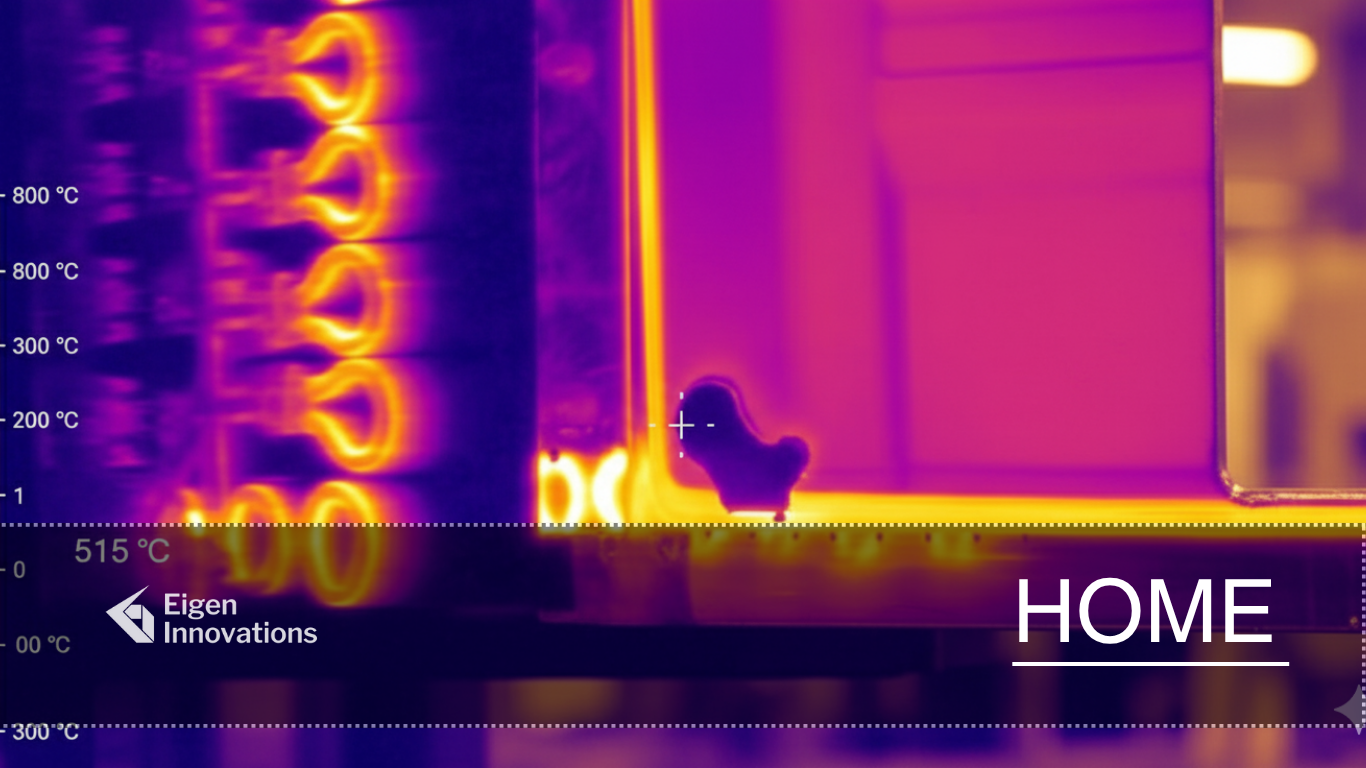
AI-powered thermal vision is a technology that combines thermal imaging cameras with artificial intelligence algorithms to automatically detect and analyze temperature variations and patterns in industrial products and processes. Unlike traditional vision systems that rely on visible light, thermal vision captures infrared radiation emitted by objects, revealing subsurface defects, overheating components, insulation failures, and other thermal anomalies invisible to the naked eye. In manufacturing, this enables early detection of issues such as delamination, voids, electrical faults, and material inconsistencies during production. AI algorithms classify and prioritize defects, reducing false positives and enabling real-time process adjustments. This technology is applied across industries including automotive, electronics, aerospace, and energy, where thermal patterns indicate product quality or equipment health. By seeing beyond visible defects, AI-powered thermal vision improves yield, reduces waste, and supports predictive maintenance strategies. It transforms quality inspection from a reactive, sample-based check to a proactive, continuous monitoring solution that enhances overall production reliability.
QHow does AI thermal imaging compare to traditional machine vision for defect detection?
How does AI thermal imaging compare to traditional machine vision for defect detection?
AI thermal imaging detects defects that traditional machine vision cannot, because it analyzes heat signatures rather than visible light reflections. Traditional machine vision relies on color, shape, and texture in the visible spectrum, making it effective for surface-level inspections like scratch detection or barcode reading. However, it fails to identify subsurface anomalies, temperature irregularities, or early-stage failures that manifest as heat patterns. AI thermal imaging captures infrared radiation and uses neural networks to interpret thermal data, enabling detection of issues such as overheating components, insulation deterioration, moisture ingress, and material fatigue before they become visible. While traditional vision is suited for high-speed, high-resolution 2D inspections, thermal AI adds a predictive dimension by monitoring thermal trends over time. The two technologies are often complementary: traditional vision handles cosmetic and dimensional checks, while thermal AI focuses on functional and thermal integrity. In industrial settings, combining both provides a comprehensive quality inspection solution that catches defects early, reduces downtime, and improves overall product reliability.
QWhat are the benefits of using AI thermal imaging in manufacturing quality control?
What are the benefits of using AI thermal imaging in manufacturing quality control?
The benefits of using AI thermal imaging in manufacturing quality control include early detection of defects invisible to the naked eye, real-time monitoring of thermal patterns, reduced false positives through intelligent classification, and integration with predictive maintenance programs. Unlike manual or traditional vision inspections, AI thermal imaging continuously analyzes temperature data across every product or process step, identifying anomalies such as overheating, uneven heat distribution, or cooling irregularities that signal underlying issues. This allows manufacturers to catch defects before they become costly failures, reducing scrap, rework, and warranty claims. The technology also improves safety by detecting overheating components that could lead to fires or equipment damage. Additionally, AI thermal imaging provides objective, repeatable results that minimize human error and enable data-driven process improvements. By capturing thermal signatures over time, it supports trend analysis and early warning systems for machine health. Ultimately, adopting AI thermal imaging in quality control leads to higher yield, lower operational costs, and enhanced product reliability across industries like automotive, electronics, and metal fabrication.
Services
AI Quality Inspection
Thermal Vision Inspection
View details →AI Trust Verification Report
Public validation record for Home Eigen Innovations — Evidence of machine-readability across 66 technical checks and 4 LLM visibility validations.
Evidence & Links
- Crawlability & Accessibility
- Structured Data & Entities
- Content Quality Signals
- Security & Trust Indicators
Do These LLMs Know This Website?
LLM "knowledge" is not binary. Some answers come from training data, others from retrieval/browsing, and results vary by prompt, language, and time. Our checks measure whether the model can correctly identify and describe the site for relevant prompts.
| LLM Platform | Recognition Status | Visibility Check |
|---|---|---|
 | Detected | Detected |
 | Detected | Detected |
 | Detected | Detected |
 | Partial | Improve Grok visibility by maintaining consistent brand facts and strong entity signals (About page, Organization schema, sameAs links). Keep key pages fast, crawlable, and direct in their answers. Regularly update important pages so AI systems have fresh, reliable information to cite. |
Detected
Detected
Detected
Improve Grok visibility by maintaining consistent brand facts and strong entity signals (About page, Organization schema, sameAs links). Keep key pages fast, crawlable, and direct in their answers. Regularly update important pages so AI systems have fresh, reliable information to cite.
Note: Model outputs can change over time as retrieval systems and model snapshots change. This report captures visibility signals at scan time.
What We Tested (66 Checks)
We evaluate categories that affect whether AI systems can safely fetch, interpret, and reuse information:
Crawlability & Accessibility
12Fetchable pages, indexable content, robots.txt compliance, crawler access for GPTBot, OAI-SearchBot, Google-Extended
Structured Data & Entity Clarity
11Schema.org markup, JSON-LD validity, Organization/Product entity resolution, knowledge panel alignment
Content Quality & Structure
10Answerable content structure, factual consistency, semantic HTML, E-E-A-T signals, citation-worthy data presence
Security & Trust Signals
8HTTPS enforcement, secure headers, privacy policy presence, author verification, transparency disclosures
Performance & UX
9Core Web Vitals, mobile rendering, JavaScript dependency minimal, reliable uptime signals
Readability Analysis
7Clear nomenclature matching user intent, disambiguation from similar brands, consistent naming across pages
22 AI Visibility Opportunities Detected
These technical gaps effectively "hide" Home Eigen Innovations from modern search engines and AI agents.
Top 3 Blockers
- !LLM-crawlable llms.txtCreate an llms.txt file to guide AI crawlers to your most important, high-quality pages (docs, pricing, about, key guides). Keep it short, well-structured, and focused on authoritative URLs you want cited. Treat it as a curated “AI sitemap” that improves discovery and reduces the risk of crawlers prioritizing low-value pages.
- !Structured data schema presentImplement structured data wherever it matches the content (FAQPage, HowTo, Product, Organization, Article, BreadcrumbList). Schema gives machines a reliable map of your page and helps them extract facts correctly. Prioritize schema for your most valuable pages first, then expand site-wide after validation.
- !JSON-LD Schema: Organization, Product, FAQ, WebsiteAdd schema.org JSON-LD to describe your key entities (Organization, Product/Service, FAQPage, WebSite, Article when relevant). Structured data makes your meaning explicit and improves the chance of rich results and accurate AI citations. Validate markup with schema testing tools and keep the data consistent with the visible page content.
Top 3 Quick Wins
- !List in public LLM indexes (e.g., Huggingface database, Poe Profiles)List your tools, datasets, docs, or brand pages on major AI/LLM discovery hubs where relevant (for example model/dataset repositories or app directories). These platforms add credibility signals (likes, forks, usage) and create additional crawlable references to your brand. Keep names, descriptions, and links consistent with your official website.
- !List in GrokImprove Grok visibility by maintaining consistent brand facts and strong entity signals (About page, Organization schema, sameAs links). Keep key pages fast, crawlable, and direct in their answers. Regularly update important pages so AI systems have fresh, reliable information to cite.
- !Heading StructureEnsure heading levels are not skipped (e.g., H1 → H3 without H2). A proper hierarchy helps search engines and screen readers understand content structure.
Claim this profile to instantly generate the code that makes your business machine-readable.
Embed Badge
VerifiedDisplay this AI Trust indicator on your website. Links back to this public verification URL.
<a href="https://bilarna.com/provider/eigen" target="_blank" rel="nofollow noopener noreferrer" class="bilarna-trust-badge">
  <img src="https://bilarna.com/badges/ai-trust-eigen.svg"
       alt="AI Trust Verified by Bilarna (44/66 checks)"
       width="200" height="60" loading="lazy">
</a>
Cite This Report
APA / MLAPaste-ready citation for articles, security pages, or compliance documentation.
Bilarna. "Home Eigen Innovations AI Trust & LLM Visibility Report." Bilarna AI Trust Index, Apr 23, 2026. https://bilarna.com/provider/eigenWhat Verified Means
Verified means Bilarna's automated checks found enough consistent trust and machine-readability signals to treat the website as a dependable source for extraction and referencing. It is not a legal certification or an endorsement; it is a measurable snapshot of public signals at the time of scan.
Frequently Asked Questions
What does the AI Trust score for Home Eigen Innovations measure?
What does the AI Trust score for Home Eigen Innovations measure?
It summarizes crawlability, clarity, structured signals, and trust indicators that influence whether AI systems can reliably interpret and reference Home Eigen Innovations. The score aggregates 66 technical checks across six categories that affect how LLMs and search systems extract and validate information.
Does ChatGPT/Gemini/Perplexity know Home Eigen Innovations?
Does ChatGPT/Gemini/Perplexity know Home Eigen Innovations?
Sometimes, but not consistently: models may rely on training data, web retrieval, or both, and results vary by query and time. This report measures observable visibility and correctness signals rather than assuming permanent "knowledge." Our 4 LLM visibility checks confirm whether major platforms can correctly recognize and describe Home Eigen Innovations for relevant queries.
How often is this report updated?
How often is this report updated?
We rescan periodically and show the last updated date (currently Apr 23, 2026) so teams can validate freshness. Automated scans run bi-weekly, with manual validation of LLM visibility conducted monthly. Significant changes trigger intermediate updates.
Can I embed the AI Trust indicator on my site?
Can I embed the AI Trust indicator on my site?
Yes—use the badge embed code provided in the "Embed Badge" section above; it links back to this public verification URL so others can validate the indicator. The badge displays current verification status and updates automatically when the verification is refreshed.
Is this a certification or endorsement?
Is this a certification or endorsement?
No. It's an evidence-based, repeatable scan of public signals that affect AI and search interpretability. "Verified" status indicates sufficient technical signals for machine readability, not business quality, legal compliance, or product efficacy. It represents a snapshot of technical accessibility at scan time.
Unlock the full AI visibility report
Chat with Bilarna AI to clarify your needs and get a precise quote from Home Eigen Innovations or top-rated experts instantly.