Step 1
Machine-Ready Briefs
AI translates unstructured needs into a technical, machine-ready project request.
We use cookies to improve your experience and analyze site traffic. You can accept all cookies or only essential ones.
 Bilarna
Stop browsing static lists. Tell Bilarna your specific needs. Our AI translates your words into a structured, machine-ready request and instantly routes it to verified Thermal Vision Inspection experts for accurate quotes.
AI translates unstructured needs into a technical, machine-ready project request.
Compare providers using verified AI Trust Scores & structured capability data.
Skip the cold outreach. Request quotes, book demos, and negotiate directly in chat.
Filter results by specific constraints, budget limits, and integration requirements.
Eliminate risk with our 57-point AI safety check on every provider.
Verified companies you can talk to directly
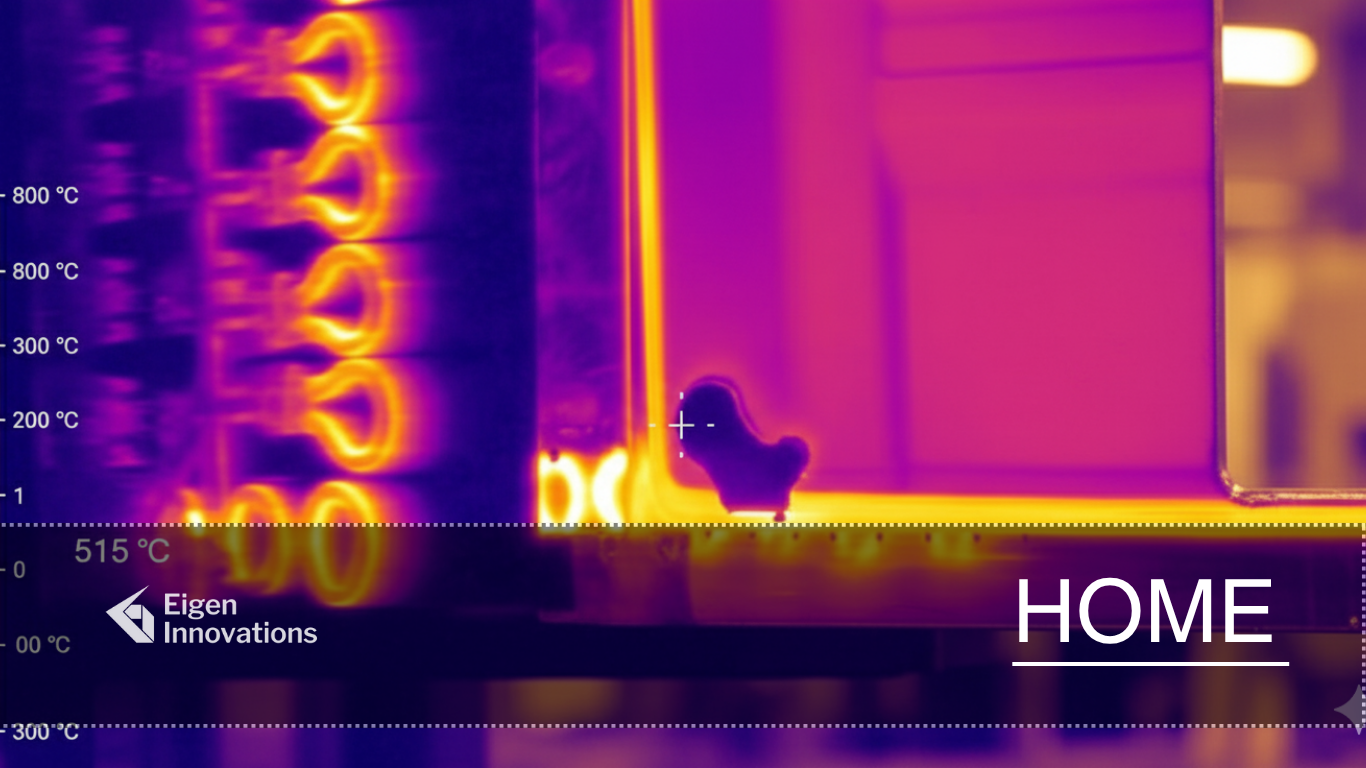
Eigen combines imaging and AI to detect issues traditional vision systems miss, revolutionizing quality inspection.
Run a free AEO + signal audit for your domain.
AI Answer Engine Optimization (AEO)
List once. Convert intent from live AI conversations without heavy integration.
Thermal vision inspection is a non-contact diagnostic technique that uses infrared cameras to detect heat patterns and anomalies. It captures thermal data to identify overheating components, moisture intrusion, or insulation defects. This method enables early fault detection, reduces downtime, and extends asset lifespan.
Coordinate with a certified thermographer to perform the inspection at your site.
The technician uses a thermal camera to record temperature variations across equipment surfaces.
Software processes the thermal data to generate a detailed report with anomaly markers.
Detect loose connections or overloads in switchgear before they cause arc flashes.
Identify bearing overheating or misalignment in motors and pumps.
Locate insulation gaps or air leaks that reduce energy efficiency.
Schedule repairs based on actual thermal conditions rather than fixed intervals.
Verify uniform heat distribution in manufacturing lines like ovens or welds.
Bilarna uses a 57-point AI Trust Score to evaluate each thermal vision inspection provider’s expertise, equipment certification, and client feedback. This score ensures you only connect with verified thermographers who meet rigorous industry standards. Choose confidently from Bilarna’s curated marketplace.
Electrical utilities, manufacturing, building management, and petrochemical plants gain the most. The method helps prevent equipment failures and energy losses.
Thermal cameras provide a wide-area temperature map, whereas contact sensors measure only single points. Accuracy depends on camera resolution and emissivity settings.
Yes, it is a non-contact technique performed while equipment is live. This allows safe detection of loose connections or overloaded circuits.
For critical assets, quarterly or biannual inspections are recommended. Annual scans suffice for less critical systems, but check local regulations.
Look for Level I or II certification from organizations like ASNT or ITC. Experience in your industry and up-to-date equipment are also important.
Yes, many modern inspection software solutions can automatically read and interpret geometric dimensioning and tolerancing (GD&T) data, including Feature Control Frames (FCFs). These systems use advanced algorithms to infer tolerances and apply them during the inspection process, improving accuracy and efficiency. While accuracy rates may vary, some software can achieve up to 95% accuracy in reading FCFs. This automation reduces manual input errors and speeds up quality control workflows, making it easier for manufacturers to maintain compliance with engineering specifications.
Many modern inspection software solutions are capable of interpreting geometric dimensioning and tolerancing (GD&T) data, including Feature Control Frames (FCFs). These systems use advanced algorithms to read and understand GD&T symbols and tolerances, often achieving high accuracy rates. Some software can automatically infer and apply tolerances based on the GD&T data, streamlining the inspection process and reducing manual input errors. However, the accuracy and capabilities can vary between products, so it is important to verify the software's ability to handle specific GD&T standards and the level of precision it offers before making a selection.
3D vision technology enhances bulk inventory tracking by providing accurate and real-time measurements of inventory levels. Unlike traditional methods that rely on manual counting or 2D imaging, 3D vision captures depth and volume, allowing for precise monitoring of bulk materials. This technology reduces human error, increases operational efficiency, and enables better decision-making by offering clear visibility into inventory status. It is particularly useful in industries where bulk materials are stored in large quantities and require continuous monitoring to optimize supply chain management.
AI and computer vision enable smart retail solutions by analyzing visual data from sources like existing CCTV cameras to optimize store operations and customer experience. A primary application is footfall counting and tracking, which measures customer traffic patterns and dwell times. More advanced systems perform customer behavior analysis to predict shopping intent, identify popular product zones, and understand movement flows within a store. This data supports omni-channel retail strategies by linking physical store analytics with online behavior. Computer vision can also be used for inventory management, loss prevention, and personalized in-store marketing, ultimately helping retailers increase conversion rates, optimize staffing, and improve store layout based on data-driven insights.
Use AI and computer vision to enhance digital transformation resilience in agriculture, forestry, and aquaculture. Steps: 1. Collect data on plant traits using mobile apps or sensors. 2. Analyze leaf area, chlorophyll content, and other indicators with AI algorithms. 3. Monitor crop health and growth patterns in real-time. 4. Optimize resource use and yield predictions based on AI insights. 5. Implement automated decision-making to improve efficiency and sustainability.
Use AI-vision movement evaluations to enhance user physical wellness by following these steps: 1. Measure movement accurately on any smart device to gather data. 2. Gain simple, science-backed insights from the evaluation results. 3. Guide users with personalized actions and solutions based on their movement patterns. This approach helps unlock movement-function insights, enabling targeted interventions that improve overall physical health and performance.
Get real-time assistance by using a smartphone app that connects blind or low vision users with volunteers and AI. Steps: 1. Download the accessible technology app on your smartphone. 2. Open the app and request assistance. 3. Connect via live video with a volunteer or use AI for visual descriptions. 4. Receive instant help anytime, day or night, anonymously and worldwide.
Businesses can implement ethical AI by following these steps: 1. Establish clear ethical guidelines aligned with industry standards. 2. Conduct regular audits to identify and mitigate biases in AI models. 3. Ensure transparency by documenting AI decision-making processes. 4. Train employees on ethical AI practices and awareness. 5. Engage stakeholders to review AI impacts and gather feedback for continuous improvement.
Scaling computer vision technology across large networks requires careful integration to avoid disrupting daily operations. This involves deploying state-of-the-art models that are optimized for performance and reliability in real-world environments. Partnerships with specialized technology providers can facilitate the transition from lab environments to production at scale. Key strategies include using modular and flexible deployment solutions, continuous monitoring and updating of models, and ensuring compatibility with existing infrastructure. Successful scaling also depends on addressing challenges such as data management, annotation quality, and computational resource allocation to maintain consistent and accurate results across the network.
Improve drone inspection capabilities with custom equipment and payload integration by following these steps: 1. Assess the specific inspection requirements to identify limitations of existing equipment. 2. Design and prototype custom inspection tools tailored to the unique needs of the inspection task. 3. Integrate specialized payloads such as sensors or cameras to enhance data collection quality and variety. 4. Test existing payload solutions or develop robust new payloads for the intended use case. 5. Manufacture UAV parts in-house to allow rapid iteration and optimization of designs. 6. Deploy the customized drones to perform inspections with improved accuracy, efficiency, and data relevance.