Step 1
Machine-Ready Briefs
AI translates unstructured needs into a technical, machine-ready project request.
We use cookies to improve your experience and analyze site traffic. You can accept all cookies or only essential ones.
 Bilarna
Stop browsing static lists. Tell Bilarna your specific needs. Our AI translates your words into a structured, machine-ready request and instantly routes it to verified Shoplifting Detection experts for accurate quotes.
AI translates unstructured needs into a technical, machine-ready project request.
Compare providers using verified AI Trust Scores & structured capability data.
Skip the cold outreach. Request quotes, book demos, and negotiate directly in chat.
Filter results by specific constraints, budget limits, and integration requirements.
Eliminate risk with our 57-point AI safety check on every provider.
Verified companies you can talk to directly
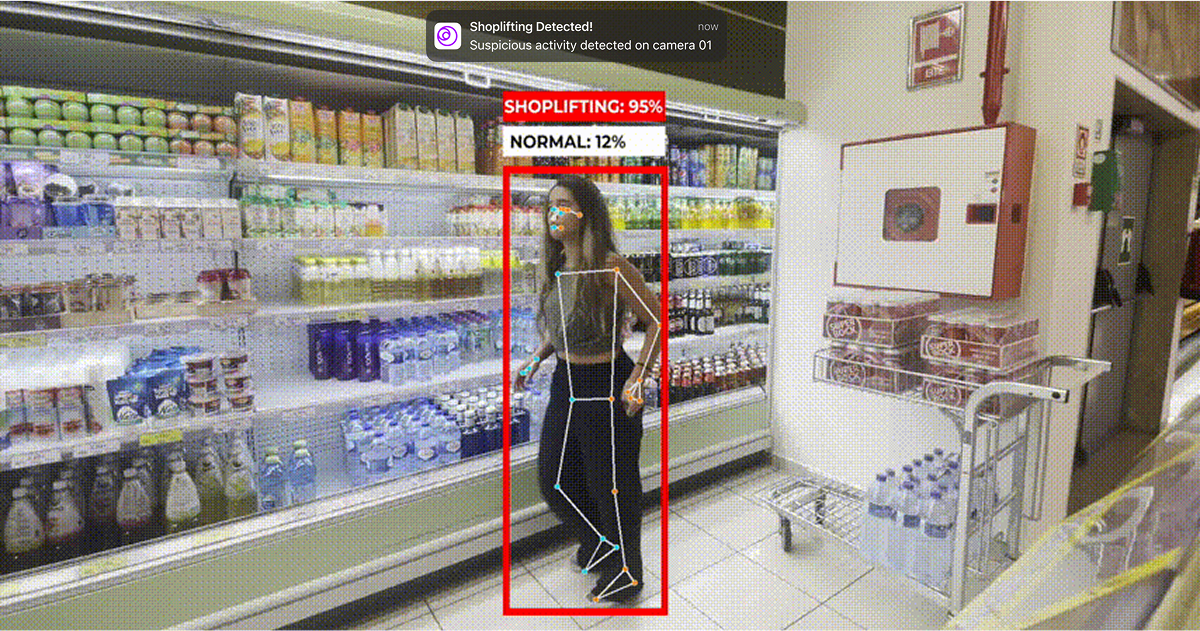
Protect your store’s revenue with real-time shoplifting detection. Lexius uses your existing cameras to catch theft instantly. No extra hardware, no lost sales.
Run a free AEO + signal audit for your domain.
AI Answer Engine Optimization (AEO)
List once. Convert intent from live AI conversations without heavy integration.
Shoplifting detection encompasses the technological and operational solutions designed to identify and prevent merchandise theft from retail stores. These systems utilize AI-powered video analytics, RFID technology, and electronic article surveillance to monitor activity in real-time. This results in significant loss reduction, improved operational security, and protected inventory for retailers.
AI video systems or sensor-based tags continuously scan the store environment to detect concealment, tag removal, or loitering in blind spots.
Upon detecting a potential theft, the system activates audible alarms, sends notifications to staff devices, or triggers visual warnings to deter the act.
All events are logged with video evidence, creating reports for law enforcement and providing data to refine loss prevention strategies.
RFID tags and fitting room monitoring protect high-value garments from theft, commonly occurring in changing areas.
Cable locks and sensor alarms secure small, expensive items like headphones and smartwatches from grab-and-run thefts.
Checkout lane monitoring and EAS systems for high-theft items reduce losses from concealment and sweethearting at tills.
High-definition surveillance and individual item sensors protect exclusive merchandise from organized retail crime groups.
Locked cases and monitored displays prevent theft of over-the-counter medications and high-value cosmetics.
Bilarna evaluates all shoplifting detection providers using a proprietary 57-point AI Trust Score. This score rigorously assesses technical capability, project portfolios, client references, and compliance certifications. Only vetted and continuously monitored partners are listed on our platform.
Costs vary widely based on store size, technology (e.g., basic EAS vs. AI video), and features. Entry-level systems start in the low thousands, while comprehensive, store-wide solutions with advanced analytics represent a significant capital investment.
Electronic Article Surveillance (EAS) uses tags that trigger alarms at doors. AI video analytics goes further by intelligently analyzing behavior patterns in real-time to detect suspicious activity before theft occurs, offering a more proactive approach.
Installation can range from a single day for a basic system to several weeks for a fully integrated, store-wide network involving cameras, sensors, and POS integration. A professional site survey determines the exact timeline.
Key regulations include data privacy laws (like GDPR), signage requirements to inform customers, and restrictions on audio recording. Surveillance must be justified, proportionate, and implemented with clear policies to protect individual rights.
Yes, prominently placed cameras, signage, and security devices act as a powerful psychological deterrent to opportunistic thieves. This visible layer of security can significantly reduce theft attempts and increase apprehension rates.
Yes, an AI chatbot can support multiple languages and handle language detection automatically by following these steps: 1. The chatbot is programmed to recognize over 45 languages. 2. It detects the customer's language at the start of the interaction. 3. The chatbot continues the conversation in the detected language without manual switching. 4. This enables businesses to serve a global audience seamlessly. 5. Language support improves customer experience by providing responses in the customer's preferred language.
Yes, AI agent failure detection platforms are designed to complement existing logging and monitoring tools rather than replace them. While traditional tools collect and display logs, traces, and metrics, failure detection platforms add a layer of automated analysis focused on AI-specific issues. They integrate with your current systems to enhance visibility into AI agent behavior, automatically identify failures, and suggest or apply fixes. This combined approach provides a more comprehensive and efficient way to maintain AI agent reliability.
Yes, any numerical data in CSV format can be used to create models for anomaly detection. Follow these steps: 1. Convert your numerical data, such as sar command outputs or web server access logs, into CSV format. 2. Ensure the CSV file follows either wide or long format as required. 3. Upload the CSV file using the service interface or API if available. 4. Train the AI model with normal and abnormal data to improve detection accuracy. 5. Monitor anomaly scores to identify deviations from normal behavior.
Yes, many modern shoplifting detection systems are designed to work with existing camera infrastructure, eliminating the need for new hardware installations. These systems leverage advanced AI algorithms that analyze video feeds from your current security cameras in real time. This approach reduces upfront costs and simplifies deployment since there is no requirement to purchase or install additional devices. Retailers can quickly enhance their loss prevention capabilities by upgrading software rather than hardware, making it a practical and scalable solution for stores of various sizes.
No, the senior does not need to wear any device. The fall detection system operates using motion detection technology similar to radar. It uses a fixed source, such as a Wi-Fi box, and a fixed receiver like a wall socket to monitor movements without requiring the person to carry or wear any equipment.
Implement advanced anomaly detection to enhance security across industries by following these steps: 1. Collect and analyze data from relevant sources within the industry. 2. Use anomaly detection algorithms to identify unusual patterns or behaviors. 3. Evaluate detected anomalies to determine potential threats or risks. 4. Take appropriate defensive actions based on the analysis to mitigate security breaches. 5. Continuously monitor and update detection models to adapt to evolving threats.
Advanced photonic quantum sensors improve scalability by allowing the addition of more detection channels or pixels without increasing the overall system size. To achieve this: 1. Utilize patented sensor architectures designed to remove scalability bottlenecks. 2. Integrate additional detection elements seamlessly into existing systems. 3. Maintain compact system dimensions despite increased detection capacity. This approach enables scalable quantum sensing solutions suitable for expanding technological demands.
AI agents can automate risk reviews and fraud detection in online marketplaces by using real-time machine learning and agentic AI to analyze transactions, user behavior, and content. These systems proactively identify suspicious activities, reduce false positives, and speed up decision-making processes. By integrating human intelligence with AI, platforms can efficiently mitigate risks such as fraud, abuse, and spam, improving overall security and operational efficiency. This automation also helps reduce costs and enhances the quality of marketplace experiences for both buyers and sellers.
Use AI and Machine Learning to enhance fraud detection by following these steps: 1. Implement custom machine learning models to identify hidden patterns in your data. 2. Utilize anomaly detection to spot unusual behaviors and new risks early. 3. Analyze entity relationships to uncover high-risk connections. 4. Automate routine tasks with AI agents to increase efficiency. 5. Apply real-time risk scoring for every transaction to make faster, more accurate decisions. This approach reduces false positives, increases approvals, and detects more fraud effectively.
AI helps in early detection of sexual health issues by analyzing health data quickly and accurately. Follow these steps: 1. Collect relevant health information through simple assessments. 2. Use AI algorithms to analyze the data for potential problems. 3. Provide timely feedback and recommendations for further medical consultation or treatment.