Comparison Shortlist
Machine-Ready Briefs: AI turns undefined needs into a technical project request.
We use cookies to improve your experience and analyze site traffic. You can accept all cookies or only essential ones.
 Bilarna
Stop browsing static lists. Tell Bilarna your specific needs. Our AI translates your words into a structured, machine-ready request and instantly routes it to verified Retail Security Solutions experts for accurate quotes.
Machine-Ready Briefs: AI turns undefined needs into a technical project request.
Verified Trust Scores: Compare providers using our 57-point AI safety check.
Direct Access: Skip cold outreach. Request quotes and book demos directly in chat.
Precision Matching: Filter matches by specific constraints, budget, and integrations.
Risk Elimination: Validated capacity signals reduce evaluation drag & risk.
Ranked by AI Trust Score & Capability
Run a free AEO + AI signal audit for your business domain.
AI Answer Engine Optimization — your business cited in ChatGPT, Gemini, and Perplexity results
List once. Convert intent from live AI conversations without heavy integration.
Is your Retail Security Solutions business invisible to AI? Check your AI Visibility Score and claim your machine-ready profile to get warm leads.
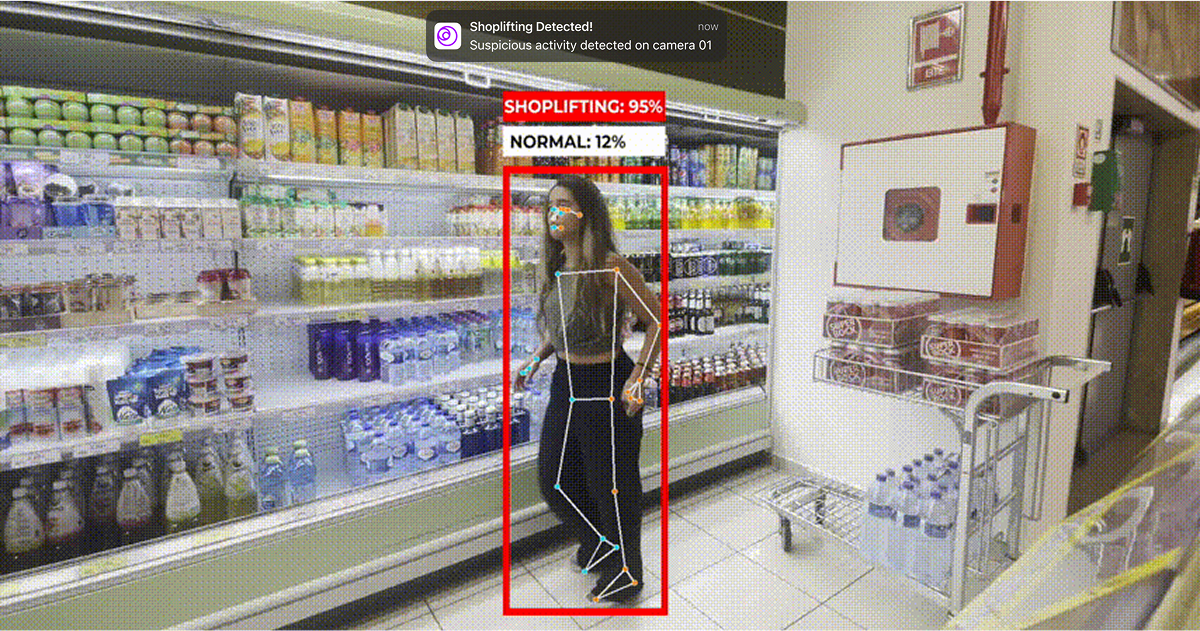
Retail security solutions are integrated systems designed to prevent theft, reduce shrinkage, and enhance safety in physical retail environments. These solutions leverage technologies such as AI-powered video analytics, electronic article surveillance (EAS), access control, and real-time monitoring to detect suspicious behavior, deter shoplifting, and secure high-value merchandise. They serve industries including supermarkets, department stores, specialty retailers, and convenience stores. Core benefits include significant loss prevention, improved operational efficiency, enhanced customer and employee safety, and data-driven insights into store activity.
Providers of retail security solutions include specialized security technology vendors, video surveillance companies, and integrated systems integrators. These firms often hold certifications in physical security, cybersecurity for connected devices, and compliance with data privacy regulations like GDPR. Many develop proprietary AI algorithms for behavior analytics and object recognition. The market includes global security giants offering comprehensive suites, as well as agile startups focusing on cloud-native, AI-driven theft prevention software that integrates with existing camera infrastructure.
Retail security solutions work by integrating hardware like cameras and sensors with software platforms that analyze video feeds in real-time using computer vision. A typical workflow involves site assessment, installation of equipment, system configuration, and staff training on responding to alerts. Common pricing models include monthly SaaS subscriptions based on the number of cameras or store square footage, upfront capital expenditure for hardware, and hybrid models. Implementation can take from a few days for software-only solutions to several weeks for full hardware rollouts. Providers typically offer online quoting tools, digital proposal uploads, and post-deployment feedback channels for continuous optimization.
Yes, modern paywall solutions are designed to be compatible with both iOS and Android mobile applications. This cross-platform compatibility ensures that developers can implement a single paywall system across different devices and operating systems without needing separate solutions. It simplifies management and provides a consistent user experience regardless of the platform, making it easier to maintain and optimize monetization strategies.
Yes, plant-based meat products are suitable for both restaurants and retail stores. They offer a clean-label, versatile protein option that can appeal to a wide range of customers, including those seeking vegan or plant-based alternatives. Restaurants can incorporate these products into their menus to provide innovative dishes such as plant-based steaks, ribs, or fish filets, catering to diverse dietary preferences. Retail stores can stock these items to meet growing consumer demand for sustainable and ethical food choices. Offering plant-based meats can help businesses attract new customers and support environmentally friendly practices while providing delicious and satisfying meal options.
Yes, the leasing solutions are offered on a brand-independent and manufacturer-independent basis for several product categories. Specifically, the page highlights brand independence for coffee machines, telephone systems, and other equipment, allowing customers to choose any brand or manufacturer. This flexibility ensures that businesses are not locked into a specific vendor and can select the best products for their needs without financing constraints. By removing brand restrictions, the service enables companies to maintain competitive procurement and adapt to changing technology landscapes. Ultimately, this approach gives businesses greater control over their equipment choices and long-term asset management.
Yes, The Purest Solutions states that all of its formulations are based on scientific explanations, test and analysis, and clinical studies conducted with institutions including SkinLab and Yeditepe. The brand's 'Effective Formulating' principle holds that it does not make promises but instead produces result-oriented formulations, combining the correct active ingredients at the appropriate pH in a stable form. This scientific basis is applied across problem-focused products such as the salicylic acid toner for acne and blackheads, the glycolic acid blue toner for pore-tightening, and the adenosine shampoo for hair-loss prevention. The brand also emphasizes that effective formulation matters more than ingredient quantity, meaning the focus is on how active ingredients are stabilized and delivered in the final product. For users evaluating skincare claims, this means the stated development process is validation-driven, with clinical testing presented as a standard requirement rather than an exception, which supports the efficacy positioning of each product in the catalog.
Yes, AI video analytics solutions are designed to integrate seamlessly with existing security systems without the need for hardware modifications. This means organizations can enhance their video surveillance capabilities by adding AI-driven analytics without replacing cameras, servers, or other infrastructure components. The software typically connects to current video feeds and security platforms, allowing users to apply customized rules, attach images for improved detection, and receive detailed reports. This flexibility reduces implementation costs and downtime, enabling businesses to upgrade their security operations efficiently while maintaining their current hardware investments.
Yes, financial automation solutions are often modular and customizable to fit the specific needs of different businesses. Organizations can select and adapt only the modules they require, such as accounts payable, accounts receivable, billing, or treasury management, allowing them to scale their automation at their own pace. This flexibility ensures that companies can address their unique operational challenges without unnecessary complexity or cost. Additionally, user-friendly tools and AI capabilities enable teams to maintain compliance and efficiency while tailoring the system to their workflows. Customized onboarding and collaborative support further help businesses get up and running quickly with solutions that match their requirements.
Yes, physical retail stores can request an in-person commercial visit by selecting the dedicated option on the website. The store asks '¿Eres una tienda? Solicita tu visita comercial' (Are you a store? Request your commercial visit), which opens a sales meeting channel for shop owners or buyers. This service appears alongside the wholesale budget option, indicating that commercial visits are part of the B2B sales process. During such a visit, a sales representative would likely present the full men's and women's collections, explain wholesale terms, and possibly share samples or a lookbook, although the page does not specify the exact agenda. For retailers, this is a way to inspect the Spanish fashion range firsthand before committing to an order, which is an advantage over buying sight unseen from an online catalog. The practical takeaway is that store owners can move from digital inquiry to face-to-face conversation, making it easier to evaluate both sport and dress styles for their own customers.
Yes, SAP explicitly states that its solutions are designed for organizations of any size, including small businesses. The page emphasizes becoming an intelligent, sustainable enterprise with the best in cloud, platform, and sustainability solutions, no matter your size. SAP offers tailored products such as SAP Business One and SAP Business ByDesign specifically for small and midsize enterprises, providing core ERP functionality, financial management, and customer relationship tools in the cloud. These solutions are scalable, allowing small businesses to start with essential features and expand as they grow. The implication is that small enterprises can access enterprise-grade technology without large upfront investments, enabling them to compete effectively with larger players by leveraging advanced analytics, automation, and sustainability capabilities.
Yes, data migration from an existing retail management or manual system to a new platform is typically supported through specialized tools and services. Many providers offer free, expert-assisted migration for key data like products, customers, and suppliers, transforming it into a compatible format. For businesses using manual methods like spreadsheets, direct import functionality is often available through a server version of the platform, allowing data upload from common file types. This process enables merchants to preserve their historical data and operational records without starting from scratch, ensuring a smooth transition. It is advisable to review the specific migration details and supported data types on the platform's official documentation before initiating the transfer.
Treezor's platform is used by a variety of innovative European companies across different sectors. Notable examples include Qonto and Shine for neo-accounts for SMEs, Coinhouse for cryptocurrency investment, Tiime for modernizing accounting for SMEs, Veracash for precious metals payments, Skipr for enterprise mobility solutions, Swile for digital employee benefits, Cashbee for savings applications, and Lydia for mobile payments. These success stories demonstrate Treezor's ability to support diverse use cases from B2B payments to savings and investment. By providing a modular, API-first platform, Treezor enables each company to integrate only the financial services they need, whether that's card issuing, account management, or acquiring, helping them scale rapidly while maintaining compliance and security.
Describe your project once and receive curated quotes from verified Retail Security Solutions providers in Ai.