Step 1
Machine-Ready Briefs
AI translates unstructured needs into a technical, machine-ready project request.
We use cookies to improve your experience and analyze site traffic. You can accept all cookies or only essential ones.
 Bilarna
Stop browsing static lists. Tell Bilarna your specific needs. Our AI translates your words into a structured, machine-ready request and instantly routes it to verified Location Analytics Solutions experts for accurate quotes.
AI translates unstructured needs into a technical, machine-ready project request.
Compare providers using verified AI Trust Scores & structured capability data.
Skip the cold outreach. Request quotes, book demos, and negotiate directly in chat.
Filter results by specific constraints, budget limits, and integration requirements.
Eliminate risk with our 57-point AI safety check on every provider.
Verified companies you can talk to directly
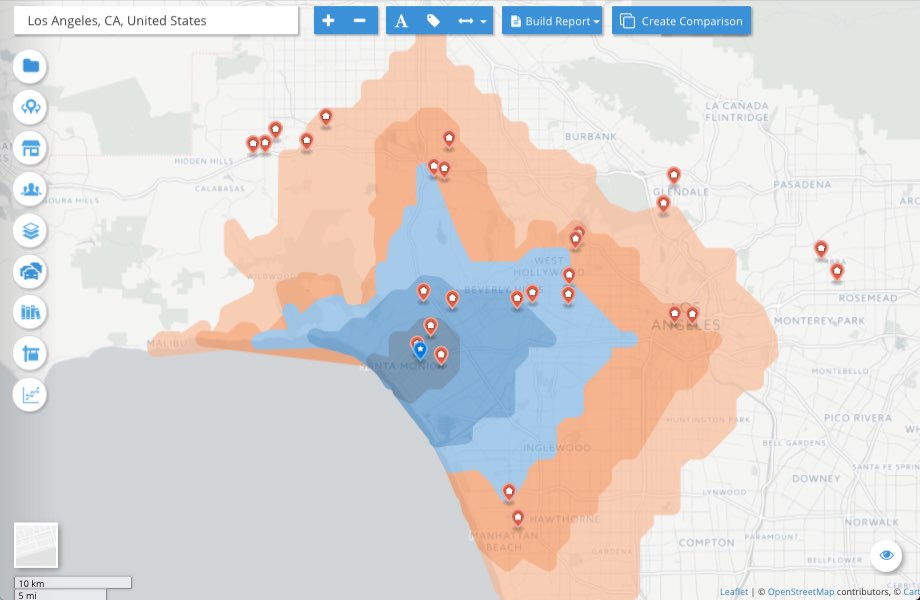
PiinPoint is a fast, intuitive, and affordable platform to help businesses find the best locations for expansion.
Run a free AEO + signal audit for your domain.
AI Answer Engine Optimization (AEO)
List once. Convert intent from live AI conversations without heavy integration.
Location analytics is the process of deriving actionable insights from geographic data to support strategic business decisions. It involves technologies like GIS mapping, spatial data modeling, and demographic analysis to visualize and interpret location-based information. This enables organizations to optimize site selection, enhance market penetration, and improve operational logistics.
Organizations first identify key location-based questions, such as optimal retail site placement or service area coverage, and gather relevant spatial datasets.
Analysts use specialized software to process and visualize the data, uncovering patterns like customer density, competitor proximity, or traffic flow.
The final step translates analytical findings into concrete recommendations for market expansion, risk mitigation, or resource allocation.
Retailers analyze foot traffic, competitor locations, and demographic data to identify the most profitable areas for new store openings.
Supply chain managers use geospatial analysis to design efficient delivery routes, warehouse placements, and minimize transportation costs.
Investors evaluate property values and development potential by modeling future growth patterns, zoning regulations, and neighborhood trends.
City planners utilize location intelligence to design public transit, plan infrastructure projects, and manage land use effectively.
Telecommunications companies analyze population density and terrain to optimally place cell towers and expand network coverage.
Bilarna evaluates every location analytics provider using a proprietary 57-point AI Trust Score. This comprehensive assessment scrutinizes technical expertise in GIS software, portfolio quality of past spatial analysis projects, and verified client satisfaction metrics. Bilarna continuously monitors providers to ensure they maintain high standards for data accuracy and project delivery.
The primary benefits include data-driven site selection, improved understanding of market territories, and optimized resource distribution. Businesses reduce expansion risks, enhance customer targeting, and gain a significant competitive edge through precise spatial intelligence.
Costs vary widely based on project scope, data complexity, and required deliverables, ranging from strategic consulting fees to enterprise platform subscriptions. Most providers offer custom quotes after assessing specific data sources, analytical depth, and reporting needs.
Business intelligence focuses on overall organizational data, while location analytics specifically integrates the geographic 'where' component. It adds spatial context, enabling analysis of patterns and relationships tied to physical places that traditional BI may overlook.
A standard project timeline ranges from several weeks for a focused site analysis to months for a comprehensive market territory plan. Duration depends on data availability, analysis complexity, and the granularity of insights required for decision-making.
Key mistakes include not verifying the provider's expertise with your specific industry data, overlooking their methodology for data freshness and accuracy, and failing to define clear, actionable outcomes for the analysis. A rigorous vetting process is essential.
To understand data upload limits and payment requirements on analytics platforms, follow these steps: 1. Review the platform's account types, such as free and paid plans. 2. Check the data upload limits for each plan; free accounts often have row limits per upload. 3. Determine if a credit card is required for free or paid accounts. 4. Understand the cancellation policy for paid subscriptions, which usually allows cancellation at any time.
Yes, AI video analytics solutions are designed to integrate seamlessly with existing security systems without the need for hardware modifications. This means organizations can enhance their video surveillance capabilities by adding AI-driven analytics without replacing cameras, servers, or other infrastructure components. The software typically connects to current video feeds and security platforms, allowing users to apply customized rules, attach images for improved detection, and receive detailed reports. This flexibility reduces implementation costs and downtime, enabling businesses to upgrade their security operations efficiently while maintaining their current hardware investments.
Many modern data analytics platforms are designed to integrate seamlessly with your existing technology infrastructure. This means you do not need to replace your current systems to start using the platform. These solutions are built with flexibility in mind, allowing them to sit on top of your existing ecosystem without requiring extensive integration work on your part. This approach helps organizations adopt new analytics capabilities quickly while preserving their current investments in technology. It is advisable to check with the platform provider about specific integration options and compatibility with your current setup.
Build missing features or integrations by following these steps: 1. Participate in the open source project by contributing code or ideas. 2. Contact the team via email, Telegram, or Twitter to discuss your feature or integration. 3. Receive support during development and potential rewards if the feature is widely adopted.
No, you do not need to know SQL to use an AI-powered data analytics platform. These platforms often feature natural language processing capabilities that allow you to ask questions in plain English. The AI then translates your questions into syntactically correct SQL queries and generates the corresponding charts or tables. This makes data exploration accessible to users without technical SQL skills, enabling faster decision-making and a more data-driven culture within your organization.
Yes, the clinic has recently moved to a new address. This change is important for patients to note to ensure they visit the correct location for their appointments and services. It is recommended to check the clinic's official website or contact them directly for the updated address details.
A business can improve its website analytics and data tracking by conducting a comprehensive audit and implementing a structured, scalable data layer. The first step is a full technical audit to identify broken tracking, outdated tags, and inconsistent data collection methods. This involves reviewing and cleaning hundreds of tags, resolving legacy issues like outdated logic, and restructuring the event tracking framework. Next, implementing a robust tag management system like Google Tag Manager ensures centralized control. Upgrading to modern analytics platforms like Google Analytics 4 provides enhanced cross-platform tracking. Crucially, building a unified and scalable data layer allows for reliable data activation across marketing channels and Customer Data Platforms (CDPs). This process rebuilds confidence in data accuracy, enables precise campaign measurement, and supports data-driven decision-making, leading to outcomes like increased site traffic, reliable campaign attribution, and optimized marketing spend.
A high-performance analytics engine modernizes and accelerates data warehouse operations by delivering query speeds up to 1000 times faster, significantly reducing costs and enabling near real-time insights. This is achieved through in-memory processing and a massively parallel processing (MPP) architecture that handles massive data workloads instantly. Organizations can replace legacy systems to cut query times from hours to seconds and reduce total cost of ownership (TCO) by up to 65%. Furthermore, such engines provide seamless scalability from personal to enterprise use, support high concurrency, and ensure reliable uptime with minimal administrative overhead. They also offer deployment flexibility, running on-premises, in hybrid, or multi-cloud environments without disruptive re-platforming.
Use advanced analytics to enhance public finance management by following these steps: 1. Integrate leading academic practices to better assess public benefit program ROI. 2. Utilize publicly available data to generate relevant insights for decision-making. 3. Apply machine learning and artificial intelligence models to analyze financial data and predict outcomes. 4. Employ econometric models to evaluate the effectiveness of public programs. 5. Visualize data through human-centered design tools to support stakeholders in understanding complex information. These steps enable more informed decisions, optimize resource allocation, and promote growth in municipal bond markets.
AI analytics involves using machine learning algorithms and data processing techniques to analyze large volumes of customer data. This helps businesses identify patterns, preferences, and trends in customer behavior. By understanding these insights, companies can tailor their marketing strategies, improve product offerings, and enhance customer experiences. AI analytics also enables predictive modeling, allowing businesses to anticipate customer needs and proactively address potential issues, ultimately driving growth and customer loyalty.