Step 1
Machine-Ready Briefs
AI translates unstructured needs into a technical, machine-ready project request.
We use cookies to improve your experience and analyze site traffic. You can accept all cookies or only essential ones.
 Bilarna
Stop browsing static lists. Tell Bilarna your specific needs. Our AI translates your words into a structured, machine-ready request and instantly routes it to verified Insurance Workflow Automation experts for accurate quotes.
AI translates unstructured needs into a technical, machine-ready project request.
Compare providers using verified AI Trust Scores & structured capability data.
Skip the cold outreach. Request quotes, book demos, and negotiate directly in chat.
Filter results by specific constraints, budget limits, and integration requirements.
Eliminate risk with our 57-point AI safety check on every provider.
Verified companies you can talk to directly

Strada helps insurance carriers, MGAs, and brokers automate and scale phone conversations with AI agents that handle renewals, claims, and customer service 24/7.
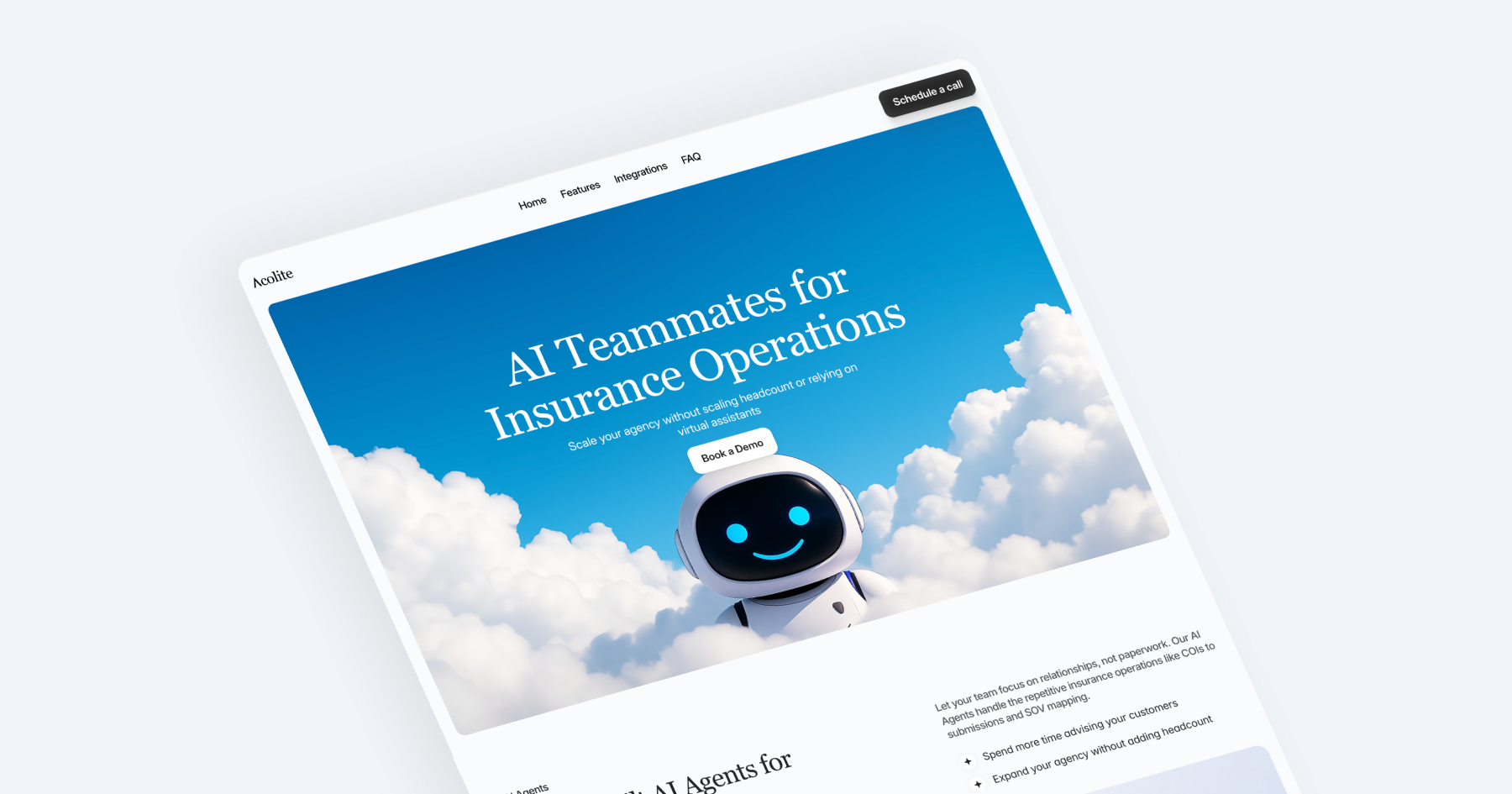
Automate submissions, certificates of insurance, and property records with AI. Cut re-keying and version chaos. Built for brokers, agents, and carrier ops.
Run a free AEO + signal audit for your domain.
AI Answer Engine Optimization (AEO)
List once. Convert intent from live AI conversations without heavy integration.
Insurance workflow automation is the use of AI and software to automate repetitive insurance tasks. It employs technologies like RPA and machine learning for data processing and decision support. Benefits include reduced operational costs, faster service delivery, and improved compliance.
Identify key insurance processes such as claims handling or underwriting that can be automated based on volume and complexity.
Deploy software with robotic process automation and AI algorithms to handle tasks like document processing and risk assessment.
Use analytics to track automation efficiency, identify bottlenecks, and continuously refine workflows for maximum ROI.
Automate the end-to-end claims lifecycle from submission to payment, reducing processing time and improving accuracy.
Streamline underwriting by automating data collection, analysis, and policy pricing with predictive models.
Automate policy issuance, renewals, and amendments to ensure consistency and reduce manual errors.
Implement AI to automatically detect suspicious patterns in claims and activities, enhancing security.
Automate the generation of regulatory reports to meet standards like Solvency II or IFRS 17 efficiently.
Bilarna verifies insurance workflow automation providers using a proprietary 57-point AI Trust Score. This score evaluates expertise, reliability, compliance, and client satisfaction through portfolio reviews and reference checks. Continuous monitoring ensures providers maintain high performance and innovation standards.
Costs vary from $50,000 to $500,000 based on scope, with factors like software licensing and integration complexity. Ongoing maintenance fees typically range from 15% to 25% annually.
Implementation takes 3 to 12 months, depending on process complexity and data migration. A phased approach with pilot testing is recommended for success.
Evaluate providers based on industry experience, technology stack, scalability, and client references. Ensure they offer robust API integration and compliance features.
Common pitfalls include poor data quality, inadequate change management, and over-automating tasks requiring human judgment. Start with high-volume, rule-based processes.
Expect 30-50% faster processing times, 20-40% cost reductions, and improved accuracy leading to higher customer satisfaction and fewer errors.
Many health insurance plans now cover doula services, recognizing their value in supporting maternal health. Coverage can vary depending on the insurer and the specific plan, but it often includes prenatal visits, labor and delivery support, and postpartum care provided by certified doulas. Insurance coverage helps reduce out-of-pocket costs for families seeking holistic birth and postpartum support. It is advisable to check with your insurance provider to understand the extent of coverage and any requirements such as certification or referral needed to qualify for benefits.
Coverage for virtual health sessions varies depending on your insurance provider and plan. Many insurance companies have expanded their coverage to include telehealth and virtual health services, especially following recent healthcare trends. To find out if virtual health sessions are covered, you should contact your insurance company directly or review your policy documents. Some programs may also assist you by providing information about insurance coverage or submitting claims on your behalf. It’s important to verify coverage details before starting a program to understand any potential out-of-pocket costs.
Yes, automation tools are designed to handle complex multi-page forms effectively. They can reliably navigate through multiple pages, input data accurately, and manage conditional logic or validations that forms may require. This capability reduces the risk of human error and speeds up the completion process. By automating form filling, businesses can ensure consistency and accuracy in data entry, especially when dealing with large volumes of forms or repetitive tasks. This is particularly useful in sectors like healthcare, finance, and insurance where form accuracy is critical.
Yes, financial automation solutions are often modular and customizable to fit the specific needs of different businesses. Organizations can select and adapt only the modules they require, such as accounts payable, accounts receivable, billing, or treasury management, allowing them to scale their automation at their own pace. This flexibility ensures that companies can address their unique operational challenges without unnecessary complexity or cost. Additionally, user-friendly tools and AI capabilities enable teams to maintain compliance and efficiency while tailoring the system to their workflows. Customized onboarding and collaborative support further help businesses get up and running quickly with solutions that match their requirements.
Using health insurance to cover egg freezing costs depends on your insurance provider and plan. Some insurance plans may cover certain parts of the process, such as screening blood tests, but often the full egg freezing procedure is not covered. To reduce costs, some services streamline operations by excluding billing staff who handle insurance claims, which may limit insurance use. It's important to check with your insurance provider to understand what is covered. In some cases, specialized insurance plans might offer better coverage for fertility preservation procedures.
AI legal assistants typically do not require new software installation or changes to existing workflows. They are designed to integrate seamlessly with current systems, allowing legal teams to adopt the technology without disrupting their established processes. This ease of integration helps minimize training time and resistance to change. Furthermore, many AI legal tools operate via familiar platforms such as email, making them accessible and convenient for users. This approach ensures that legal professionals can benefit from AI capabilities while maintaining compliance with industry standards and regulations.
No, you do not need technical skills or a developer to implement business automation. Modern automation services are designed to be managed by business users and process owners. The implementation typically involves you describing your business workflows and goals in plain language to a specialist or through a guided platform. The service provider then handles the technical translation, system configuration, and integration work. This approach allows you to focus on defining the desired outcomes while experts manage the underlying technology. Many platforms also offer no-code or low-code visual builders that enable users to design and modify automations using drag-and-drop interfaces, making the technology accessible without programming knowledge.
Creating automation workflows for desktop applications typically requires some basic technical skills, mainly the ability to write simple code snippets. However, many modern automation platforms allow users to describe workflows in plain English or natural language, making it easier for those with limited coding experience. The automation engine then interprets these instructions to perform tasks such as opening applications, entering data, or extracting information. This approach lowers the barrier to entry, enabling developers and automation engineers to quickly build and trigger workflows without deep programming knowledge.
No, you generally do not need technical skills to use an AI-based accounting automation tool. These platforms are designed with user-friendly interfaces tailored for accountants and finance teams rather than IT specialists. They often include guided workflows and step-by-step instructions to help users connect their tax portals, configure settings, and review automated data entries. The artificial intelligence component works in the background to classify and suggest accounting data, while users maintain control over final approvals. This approach ensures that even those without technical expertise can efficiently automate invoice processing and improve accuracy.
No, you do not need technical skills to use an AI-based invoice automation tool. These platforms are designed with user-friendly interfaces tailored for accountants and finance teams rather than IT specialists. The software typically guides users step-by-step through the setup and daily operations, making it accessible even for those without a technical background. The artificial intelligence handles complex tasks like data classification and error detection automatically, allowing users to focus on reviewing and approving the processed invoices with confidence.