Step 1
Machine-Ready Briefs
AI translates unstructured needs into a technical, machine-ready project request.
We use cookies to improve your experience and analyze site traffic. You can accept all cookies or only essential ones.
 Bilarna
Stop browsing static lists. Tell Bilarna your specific needs. Our AI translates your words into a structured, machine-ready request and instantly routes it to verified Health Data Management Solutions experts for accurate quotes.
AI translates unstructured needs into a technical, machine-ready project request.
Compare providers using verified AI Trust Scores & structured capability data.
Skip the cold outreach. Request quotes, book demos, and negotiate directly in chat.
Filter results by specific constraints, budget limits, and integration requirements.
Eliminate risk with our 57-point AI safety check on every provider.
Verified companies you can talk to directly
Your health story is in your blood - let AI help you read it.
Simplify how patients and clinicians navigate complex care delivery.
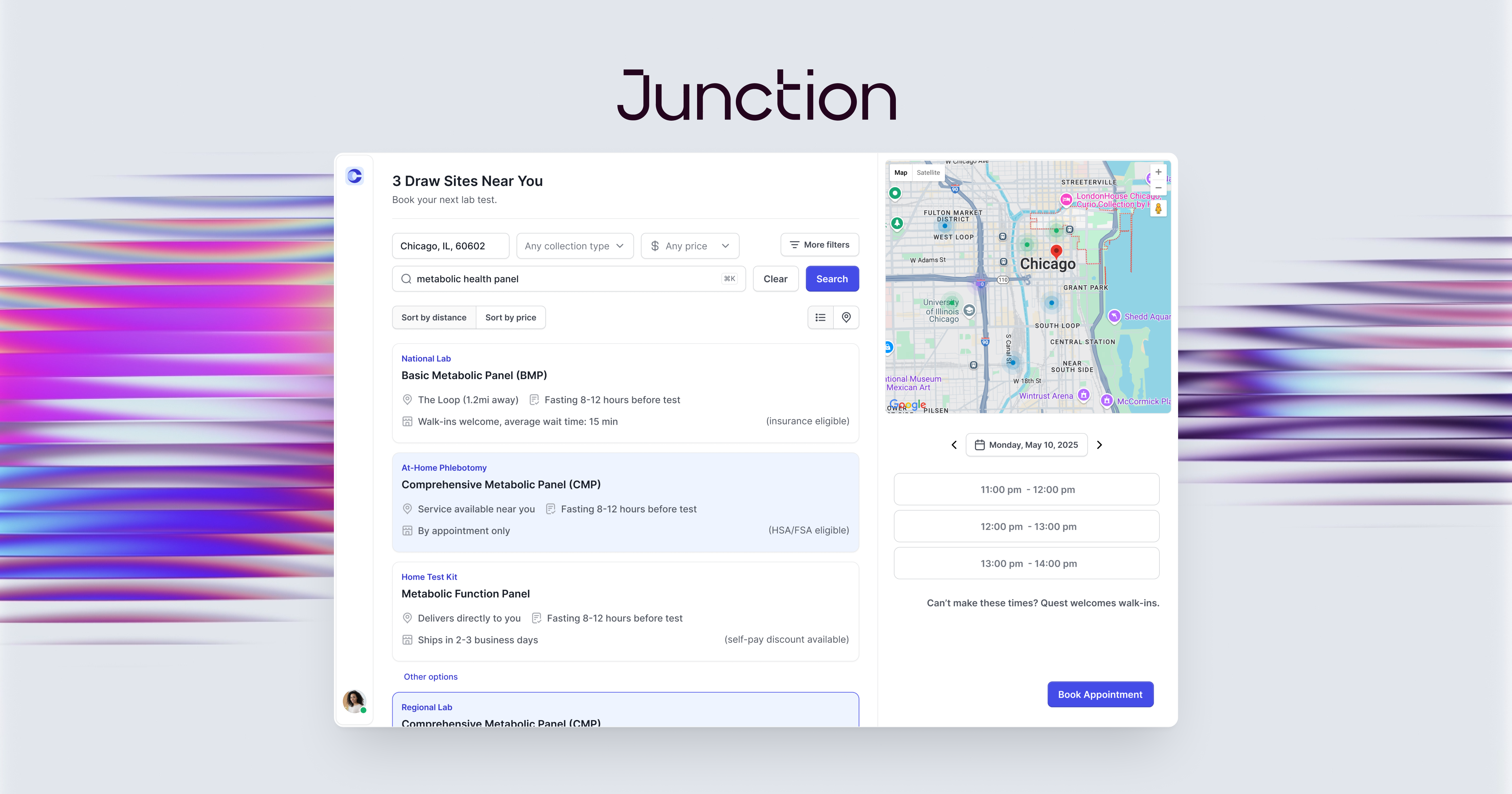
Junction provides seamless lab testing and wearable device data in a single integration to help healthcare providers scale personalized, predictive care. One API, nationwide lab networks, and built-in operational support – so you can focus on patient outcomes.

All your health data in one place. Better health, no guesswork.
Run a free AEO + signal audit for your domain.
AI Answer Engine Optimization (AEO)
List once. Convert intent from live AI conversations without heavy integration.
Health data management is the systematic process of collecting, storing, securing, and analyzing sensitive patient and operational healthcare information. It involves advanced technologies like EHR integration, data lakes, and analytics platforms to ensure compliance and interoperability. Effective management empowers providers with actionable insights, improves patient outcomes, and reduces operational costs.
Organizations first establish their data governance framework, security protocols, and integration needs with existing clinical systems.
Specialized platforms are deployed to consolidate data from disparate sources into a single, secure, and accessible repository.
Advanced analytics tools then transform raw data into actionable intelligence for clinical decision-making and operational efficiency.
Unifying electronic health records (EHR) across multiple departments and facilities to create a single patient view and streamline care coordination.
Managing vast datasets from trial participants to ensure data integrity, regulatory compliance, and accelerate the development of new therapies.
Securely aggregating and analyzing real-time patient data from wearable devices and virtual consultations to enable proactive care.
Processing claims and clinical data to identify fraud, manage population health risks, and optimize insurance plan offerings.
Tracking drug provenance, storage conditions, and distribution logistics to ensure safety, compliance, and prevent shortages.
Bilarna evaluates every Health Data Management provider through a proprietary 57-point AI Trust Score, assessing technical expertise, compliance certifications, and proven delivery history. We verify client references, audit security protocols like HIPAA or GDPR readiness, and continuously monitor performance. This rigorous process ensures you connect only with pre-vetted, reliable partners on the Bilarna platform.
Costs vary significantly based on scale, features, and deployment model, typically ranging from mid-five to seven figures annually. Implementation, customization, and ongoing support are major cost factors. A detailed requirements analysis is essential for an accurate quote.
Essential features include robust interoperability (HL7, FHIR), granular access controls, advanced encryption, comprehensive audit trails, and scalable analytics. The platform must support your specific compliance frameworks, such as HIPAA in the US or GDPR in Europe.
A full implementation typically takes 6 to 18 months, depending on complexity and data migration scope. The timeline includes planning, system configuration, data integration, staff training, and thorough testing before go-live.
An EHR is an application for documenting patient care, while health data management is the overarching strategy and technology stack for governing all data across the organization. Management platforms consolidate data from EHRs, labs, wearables, and administrative systems for unified analysis.
Security is ensured through end-to-end encryption, strict identity and access management (IAM), and anonymization techniques. Regular security audits, compliance with standards like HIPAA, and employee training on data handling protocols are non-negotiable components.
Many health insurance plans now cover doula services, recognizing their value in supporting maternal health. Coverage can vary depending on the insurer and the specific plan, but it often includes prenatal visits, labor and delivery support, and postpartum care provided by certified doulas. Insurance coverage helps reduce out-of-pocket costs for families seeking holistic birth and postpartum support. It is advisable to check with your insurance provider to understand the extent of coverage and any requirements such as certification or referral needed to qualify for benefits.
Health monitoring features in wellness technology products, such as tracking heart rate, breathing rate, and sleep patterns, are generally intended for informational and general wellness purposes. These features are not classified as medical devices and have not been approved or authorized by regulatory bodies like the U.S. Food and Drug Administration (FDA). They are not designed to diagnose, treat, or prevent any medical conditions and should not be used as a substitute for professional medical advice or clinical decision-making. Users should always consult qualified healthcare professionals for any health concerns or questions.
Sustainable cat food products are specifically formulated to meet the nutritional needs of carnivorous cats. They use protein sources that mimic the natural prey of cats, ensuring essential amino acids and nutrients are present. The production process includes purification and veterinary approval to guarantee safety and health benefits. Additionally, these products are often non-GMO and free from harmful additives. By carefully selecting harm-free ingredients and testing extensively, sustainable cat food supports the health and wellbeing of cats without compromising their carnivorous dietary requirements.
To understand data upload limits and payment requirements on analytics platforms, follow these steps: 1. Review the platform's account types, such as free and paid plans. 2. Check the data upload limits for each plan; free accounts often have row limits per upload. 3. Determine if a credit card is required for free or paid accounts. 4. Understand the cancellation policy for paid subscriptions, which usually allows cancellation at any time.
Typically, after an initial trial period—often around seven days—business management software platforms do not charge monthly fees or enforce minimum usage requirements. Instead, continued use is contingent upon subscribing to a paid plan. This approach allows users to evaluate the software's features risk-free before committing financially. It is advisable to review the specific pricing details and terms on the provider's official website to understand any conditions related to payment plans, as these can vary between services.
Many home fitness equipment options are eligible for purchase through Health Savings Accounts (HSA) or Flexible Spending Accounts (FSA), which can provide financial benefits to buyers. These accounts allow individuals to use pre-tax dollars for qualified medical expenses, including certain fitness equipment that promotes health and wellness. Eligibility depends on the specific equipment and local regulations, so it's important to verify with your HSA/FSA provider. Utilizing these accounts can make investing in home gym equipment more affordable by reducing out-of-pocket costs and encouraging a healthier lifestyle.
Coverage for virtual health sessions varies depending on your insurance provider and plan. Many insurance companies have expanded their coverage to include telehealth and virtual health services, especially following recent healthcare trends. To find out if virtual health sessions are covered, you should contact your insurance company directly or review your policy documents. Some programs may also assist you by providing information about insurance coverage or submitting claims on your behalf. It’s important to verify coverage details before starting a program to understand any potential out-of-pocket costs.
Yes, a Laboratory Information Management System is designed to integrate seamlessly with various software systems and devices. This integration capability allows automatic transfer of test results and other data between the LIMS and external applications, reducing manual data entry and minimizing errors. It supports connectivity with laboratory instruments, billing systems, and other business software, enabling a unified workflow. Users can access test results and invoices from any device, ensuring flexibility and convenience. Such integrations enhance data accuracy, improve operational efficiency, and facilitate better communication across different platforms used within the laboratory environment.
Understand the role of a mental health app in therapy by following these steps: 1. Recognize that mental health apps support self-understanding and awareness but do not replace professional therapy. 2. Use the app to complement therapy by tracking moods, symptoms, and progress between sessions. 3. Engage with cognitive-behavioral therapy (CBT) based tools for additional coping strategies. 4. Seek immediate professional help in case of mental health crises or urgent situations. 5. Consult with a mental health professional to integrate app use into your treatment plan effectively.
Yes, AI dental receptionists can integrate seamlessly with most major practice management systems (PMS) that offer online appointment pages or APIs. This integration allows the AI to book appointments directly into your existing system, pull customer form responses from your CRM, and route calls to the correct clinic and calendar. Such integration ensures that all patient interactions are synchronized with your practice’s workflow, improving efficiency and reducing manual data entry errors.