Step 1
Comparison Shortlist
Machine-Ready Briefs: AI turns undefined needs into a technical project request.
We use cookies to improve your experience and analyze site traffic. You can accept all cookies or only essential ones.
 Bilarna
Stop browsing static lists. Tell Bilarna your specific needs. Our AI translates your words into a structured, machine-ready request and instantly routes it to verified Transport Demand Forecasting experts for accurate quotes.
Machine-Ready Briefs: AI turns undefined needs into a technical project request.
Verified Trust Scores: Compare providers using our 57-point AI safety check.
Direct Access: Skip cold outreach. Request quotes and book demos directly in chat.
Precision Matching: Filter matches by specific constraints, budget, and integrations.
Risk Elimination: Validated capacity signals reduce evaluation drag & risk.
Ranked by AI Trust Score & Capability
Run a free AEO + signal audit for your domain.
AI Answer Engine Optimization (AEO)
List once. Convert intent from live AI conversations without heavy integration.
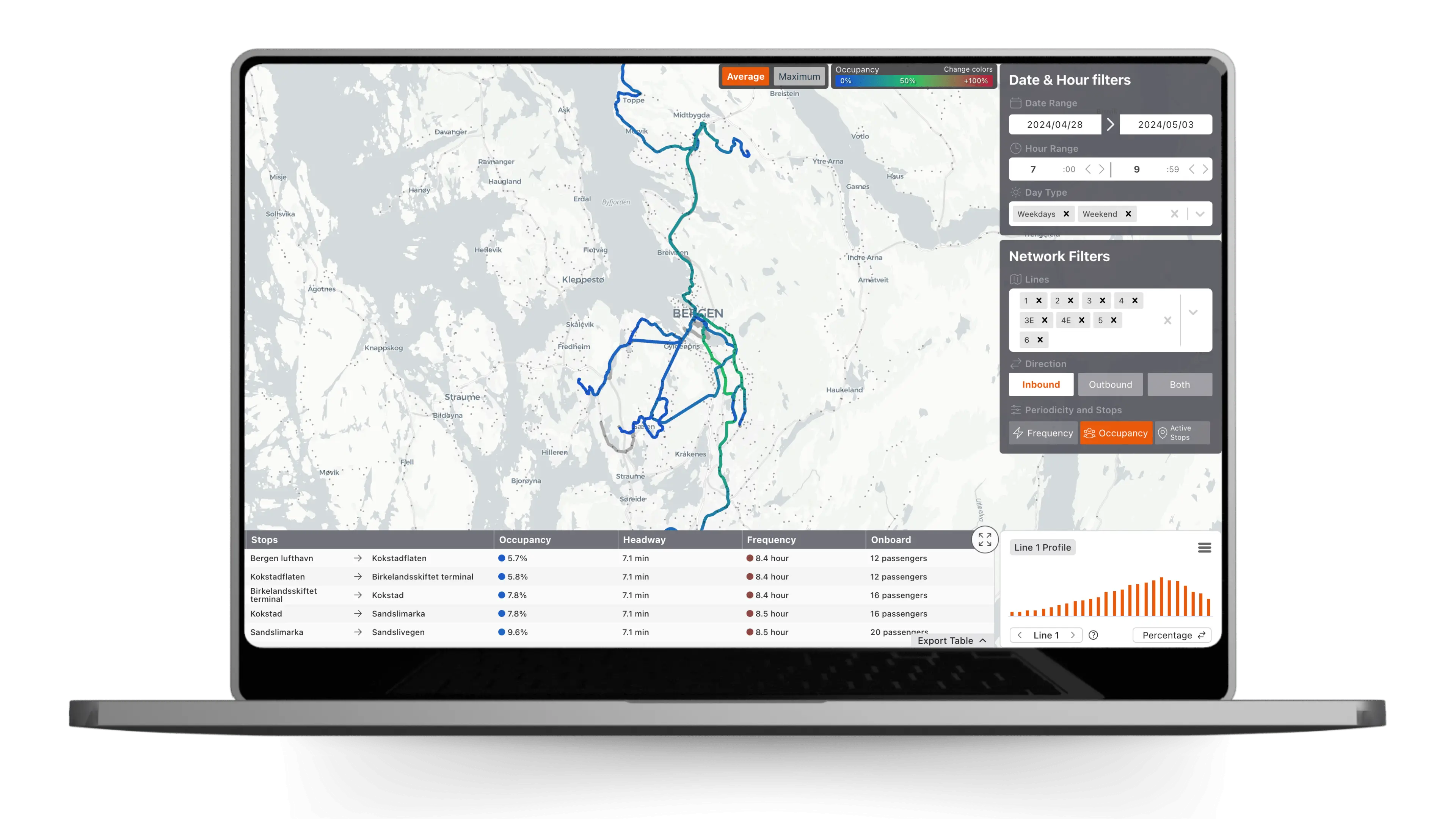
Transport demand forecasting involves predicting future travel needs based on historical data, current trends, and various influencing factors. Utilizing advanced AI and machine learning algorithms, these solutions analyze diverse data sources such as mobility patterns, demographic information, and event schedules to generate accurate demand estimates. Accurate forecasts enable transit agencies and city planners to allocate resources efficiently, plan routes effectively, and implement infrastructure improvements. This proactive approach helps in reducing congestion, lowering operational costs, and promoting sustainable mobility by ensuring that transit services align with actual future needs, ultimately enhancing the quality and reliability of public transportation systems.
Forecasting transport demand typically involves collecting relevant data, applying AI and machine learning models, and generating predictions that inform planning decisions. Providers often offer cloud-based or on-premise solutions, with flexible pricing models such as subscriptions or pay-per-use. Setup includes data integration, model calibration, and staff training to ensure accurate forecasts. Ongoing support and updates are usually available to adapt to changing data and urban dynamics. The goal is to deliver a reliable, scalable system that helps transit agencies anticipate future needs, optimize resource allocation, and improve service delivery, ultimately supporting sustainable urban mobility.
Transport demand forecasting is a predictive analytics service for optimizing logistics capacity. Compare top-rated, AI-vetted providers and request quotes on Bilarna.
View Transport Demand Forecasting providersYes, many product personalization software solutions are designed to integrate seamlessly with popular e-commerce platforms such as Shopify, WooCommerce, Etsy, and Amazon. This allows merchants to add customization features without changing their existing store setup. Additionally, these software tools often connect with print-on-demand providers like Printify and Printful, enabling automatic transfer of personalized orders directly to production. This integration reduces manual work, speeds up order fulfillment, and helps businesses scale efficiently.
Use AI forecasting software to optimize restaurant operations by following these steps: 1. Implement AI tools that predict sales and customer demand accurately. 2. Generate optimized labor schedules based on forecasted demand to avoid overstaffing or understaffing. 3. Create precise purchase and prep lists to minimize food waste and ensure inventory matches expected sales. 4. Use real-time data tracking to adjust operations dynamically, improving efficiency and reducing costs. 5. Align staff, management, and stakeholders with automated insights to enhance overall profitability and guest satisfaction.
AI enhances demand forecasting and inventory management by generating accurate baseline forecasts using advanced algorithms and integrating human insights for consensus. It provides visibility into future inventory needs, including purchase orders and raw materials, weeks in advance. AI systems can simulate supply chains, optimize purchase orders and allocations to reduce stockouts and overstock, and automate data entry by processing supplier updates directly into ERP systems. This leads to improved forecast accuracy, streamlined operations, and better alignment across teams, ultimately reducing costs and improving supply chain efficiency.
AI enhances sales forecasting by unifying pipeline management and forecasting into a single platform powered by custom AI agents trained on your revenue model. This integration provides immediate, accurate insights that give sales teams better control over their forecasts. By reducing guesswork and clarifying pipeline status, AI helps identify risks early and accelerates the path to closing deals. This results in more reliable forecasts, improved decision-making, and faster revenue growth.
AI improves subseasonal-to-seasonal weather forecasting accuracy by leveraging machine learning models trained on vast ocean and land-surface data. Follow these steps: 1. Collect extensive climate data including ocean and land-surface conditions. 2. Use deep neural networks to analyze complex climate relationships beyond atmospheric physics. 3. Integrate machine learning predictors to capture inertia effects from global water cycles. 4. Validate forecasts with verification processes to ensure reliability. 5. Deliver actionable forecasts through APIs and decision tools for various industries.
AI-driven marketing automation enhances demand generation campaigns by enabling rapid creation of targeted landing pages, personalized email and social media campaigns, and account-based marketing strategies. By leveraging company data and brand guidelines, AI tools can produce on-brand microsites and omni-channel outreach materials in seconds, significantly reducing manual work. This automation allows marketers to launch lifecycle campaigns tailored to ideal customer profiles (ICP), retarget key prospects with personalized content, and track engagement through integrated analytics and CRM systems. Overall, AI marketing automation accelerates campaign deployment, improves lead quality, and boosts pipeline growth by delivering highly relevant and timely marketing assets.
AI-powered forecasting helps retailers optimize their inventory by analyzing large datasets to predict demand more accurately. This technology reduces overstock and stockouts by providing actionable recommendations on replenishments, rebalancing, and purchasing decisions. By integrating factors such as weather forecasts and market trends, AI systems enable retailers to plan short-term and long-term inventory needs effectively. As a result, retailers can free up resources, reduce costs, and increase sales through better stock availability and minimized waste.
AI-powered market research enhances trend forecasting accuracy by analyzing vast amounts of consumer data from multiple platforms such as social media and search engines. It uses predictive analytics to identify emerging patterns and consumer behaviors in real time, allowing businesses to anticipate market shifts with up to 72% accuracy. This approach enables companies to make informed decisions about product development, marketing strategies, and competitive positioning by leveraging data-driven insights rather than relying on intuition or historical trends alone.
An AI-powered trade marketing platform improves POS inventory and demand planning by analyzing historical sales data, campaign schedules, and retailer-specific patterns to recommend optimal stock quantities. The AI learns from past campaign outcomes, adjusting forecasts to reduce overordering and eliminate waste. It ties product specifications, quantities, and destinations together, ensuring that orders are aligned with actual in-store needs. Real-time visibility across distributors and markets minimizes blind spots, so teams can see exactly what shipped, where it landed, and when it arrived. The system also tracks changes automatically, so no version confusion arises from scattered spreadsheets. Over time, the AI refines its recommendations as it captures more performance data, helping teams make faster, data-driven decisions and achieve smarter inventory levels that boost campaign effectiveness without excess cost.
Automation and algorithms significantly enhance transport planning by generating optimized routes and schedules quickly and accurately. Configurable algorithms can take into account complex constraints and objectives, reducing the risk of human error and inefficiencies. This leads to better resource utilization, fewer empty runs, and improved load consolidation. Automated planning also accelerates decision-making, allowing companies to respond swiftly to changes in demand or disruptions. By minimizing manual intervention and optimizing transport flows, logistics costs are reduced, and overall operational efficiency is increased, enabling businesses to remain competitive in dynamic markets.