Step 1
Machine-Ready Briefs
AI translates unstructured needs into a technical, machine-ready project request.
We use cookies to improve your experience and analyze site traffic. You can accept all cookies or only essential ones.
 Bilarna
Stop browsing static lists. Tell Bilarna your specific needs. Our AI translates your words into a structured, machine-ready request and instantly routes it to verified Recurring Payment Optimization experts for accurate quotes.
AI translates unstructured needs into a technical, machine-ready project request.
Compare providers using verified AI Trust Scores & structured capability data.
Skip the cold outreach. Request quotes, book demos, and negotiate directly in chat.
Filter results by specific constraints, budget limits, and integration requirements.
Eliminate risk with our 57-point AI safety check on every provider.
Verified companies you can talk to directly
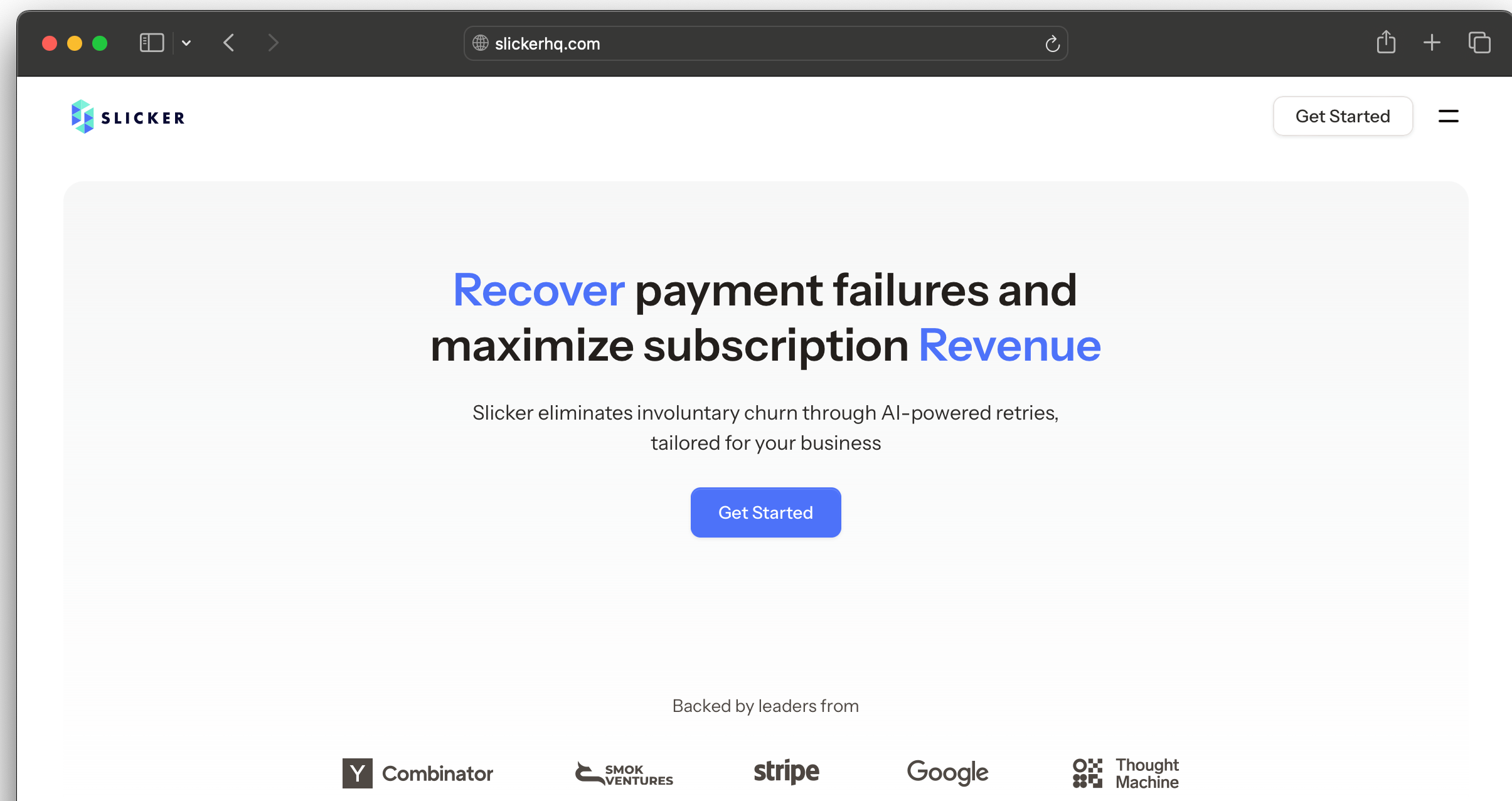
No-code AI platform that helps subscription businesses convert failed subscription invoices into revenue.
Run a free AEO + signal audit for your domain.
AI Answer Engine Optimization (AEO)
List once. Convert intent from live AI conversations without heavy integration.
Recurring Payment Optimization is a systematic process to maximize the success rate and efficiency of subscription-based or repeat billing transactions. It leverages data analytics, payment method management, and intelligent retry logic to reduce involuntary churn and failed payments. This results in improved cash flow predictability, higher customer lifetime value, and reduced operational overhead for businesses.
Providers conduct a comprehensive audit of your existing payment gateway data, identifying failure patterns, decline reasons, and high-risk customer segments.
Specialists deploy tactics like smart retry schedules, payment method updates, and dunning management to recover failed transactions before they cause churn.
Ongoing performance tracking and KPI reporting ensure sustained improvement in authorization rates and provide actionable insights for future strategy.
Critical for maintaining predictable MRR by minimizing involuntary churn from failed credit card renewals and ensuring seamless subscription continuity.
Optimizes recurring revenue from loyalty programs, auto-replenishment services, and premium memberships by streamlining recurring transaction processing.
Enhances reliability for subscription fees, loan repayments, and premium service charges, directly impacting customer satisfaction and retention.
Secures consistent revenue from patient payment plans and monthly wellness subscriptions, where payment failure can disrupt critical service access.
Preserves subscriber counts and reduces churn by ensuring automated monthly or annual billing completes successfully without interruption.
Bilarna evaluates every recurring payment optimization provider through a proprietary 57-point AI Trust Score. This assessment covers technical expertise with major payment gateways, proven success metrics like recovery rate improvement, and verified client references. Continuous monitoring ensures listed partners maintain high standards in compliance, data security, and delivery reliability.
The primary goal is to reduce involuntary churn by maximizing the success rate of automated, subscription-based transactions. This directly increases recovered revenue and improves customer retention by preventing service interruptions caused by payment failures.
Pricing models vary, often based on a percentage of recovered revenue, a fixed monthly retainer, or project-based fees. Costs depend on transaction volume, complexity, and the specific tools or strategies implemented by the provider.
Key performance indicators include the payment success rate, reduction in involuntary churn percentage, recovered revenue amount, and improvement in customer lifetime value. Providers should deliver clear reporting on these metrics.
Initial improvements can often be observed within the first billing cycle post-implementation, typically 30-60 days. Full optimization and stabilization of processes usually achieve peak results within 3 to 6 months.
Payment optimization focuses on recovering legitimate transactions that fail for technical or non-fraudulent reasons (e.g., expired cards, insufficient funds). Fraud prevention aims to block illegitimate transactions. Both are complementary components of a complete payment strategy.
Yes, payment plans are commonly available for purchasing a domain name. Many sellers offer zero percent financing, allowing you to spread the cost over several months, typically up to 12 or even 24 months. This makes it possible to acquire high-value domain names without the strain of a large upfront payment. However, there are important conditions: domains bought on a payment plan cannot be transferred to another registrar until all payments are completed. Also, full ownership and immediate domain access may be delayed until the plan is fulfilled. Always review the specific terms, including monthly amounts, duration, and any early payoff options, before committing to a payment plan.
Yes, many domain marketplaces offer payment plans for purchasing premium domain names. Instead of paying the full price upfront, buyers can spread the cost over several months, typically up to 12 or 24 months. For example, a domain priced at $2,295 might be available for monthly payments of around $95.63 over 24 months. The domain is delivered immediately upon starting the plan, but it remains locked and cannot be transferred to another registrar until all payments are completed. If the buyer defaults, the domain may be repossessed. Payment plans often come with zero percent financing, making them an attractive option for businesses that want to secure a domain without a large initial investment. Buyers should review the terms carefully before committing.
Yes, payment plans are commonly available for purchasing premium domain names, allowing buyers to pay in installments over time. These plans often span 12 to 24 months with monthly payments, and some sellers offer zero percent financing to make high-value domains more accessible. When using a payment plan, the domain is typically held by the seller until all payments are completed, and transfers to other registrars are restricted during this period. Buyers should review the terms carefully, as early repayment options or fees may apply. Payment plans democratize access to expensive domains by reducing upfront costs, but they require commitment to the full payment schedule.
Yes, payment plans are commonly available when buying premium domain names from specialized marketplaces. These plans allow buyers to spread the cost over time, typically offering terms from 12 to 24 months with monthly installments. A key feature is that these are often interest-free financing options, making high-value domains more accessible. The domain is usually held by the seller until the final payment is made, after which full ownership and the ability to transfer it to another registrar are granted. It's important to review the specific terms, as domains purchased on payment plans are generally not eligible for transfer until all payments are completed, and the money-back guarantee may have different conditions during the payment period.
Check the pricing details before using any AI video optimization tool. Follow these steps: 1. Visit the official website or platform offering the tool. 2. Review the pricing plans and terms of service carefully. 3. Look for any mention of additional costs such as subscription fees, usage limits, or premium features. 4. Contact customer support for clarification if needed to avoid unexpected charges.
To understand data upload limits and payment requirements on analytics platforms, follow these steps: 1. Review the platform's account types, such as free and paid plans. 2. Check the data upload limits for each plan; free accounts often have row limits per upload. 3. Determine if a credit card is required for free or paid accounts. 4. Understand the cancellation policy for paid subscriptions, which usually allows cancellation at any time.
Many shared payment apps for flatmates aim to provide transparent pricing with no hidden fees. Typically, these apps allow users to split expenses, automate payments, and track spending without charging extra fees for basic services. However, some platforms may have optional premium features or transaction fees depending on the payment method or currency conversion. It's important to review the app's terms and conditions carefully to understand any potential charges. Choosing an app that clearly states its fee structure helps avoid unexpected costs and ensures a smooth experience managing shared expenses.
Yes, many water utilities and assistance programs in Detroit offer payment plans to help customers manage their water bills. These plans allow residents to pay their outstanding balances over time in smaller, more manageable installments rather than a lump sum. Payment plans can prevent service disconnections and reduce financial stress. To set up a payment plan, you usually need to contact the water utility provider or the assistance program directly. They will assess your situation and work with you to create a plan that fits your budget. It is important to stay in communication and adhere to the agreed payment schedule to maintain service.
Yes, modern QR code ordering systems are designed to integrate seamlessly with existing POS (Point of Sale) and payment systems. This integration allows orders placed via QR codes to be automatically entered into the restaurant’s POS, ensuring accurate and efficient order management. It also supports various payment gateways, enabling guests to pay online securely and conveniently. Integration helps staff manage orders without changing their usual workflow and supports features like real-time stock updates, upselling prompts, and bill payment options, enhancing overall operational efficiency.
Yes, QR code ordering systems can seamlessly integrate with existing POS (Point of Sale) and payment platforms. This integration allows orders placed via QR codes to be automatically entered into the POS system, enabling staff to manage orders as usual without manual input. Many systems support popular POS providers and payment gateways, ensuring smooth transaction processing and order tracking. This connectivity improves operational efficiency, reduces errors, and provides a unified workflow for both staff and management.