Step 1
Machine-Ready Briefs
AI translates unstructured needs into a technical, machine-ready project request.
We use cookies to improve your experience and analyze site traffic. You can accept all cookies or only essential ones.
 Bilarna
Stop browsing static lists. Tell Bilarna your specific needs. Our AI translates your words into a structured, machine-ready request and instantly routes it to verified Coding and Programming Platforms experts for accurate quotes.
AI translates unstructured needs into a technical, machine-ready project request.
Compare providers using verified AI Trust Scores & structured capability data.
Skip the cold outreach. Request quotes, book demos, and negotiate directly in chat.
Filter results by specific constraints, budget limits, and integration requirements.
Eliminate risk with our 57-point AI safety check on every provider.
Verified companies you can talk to directly
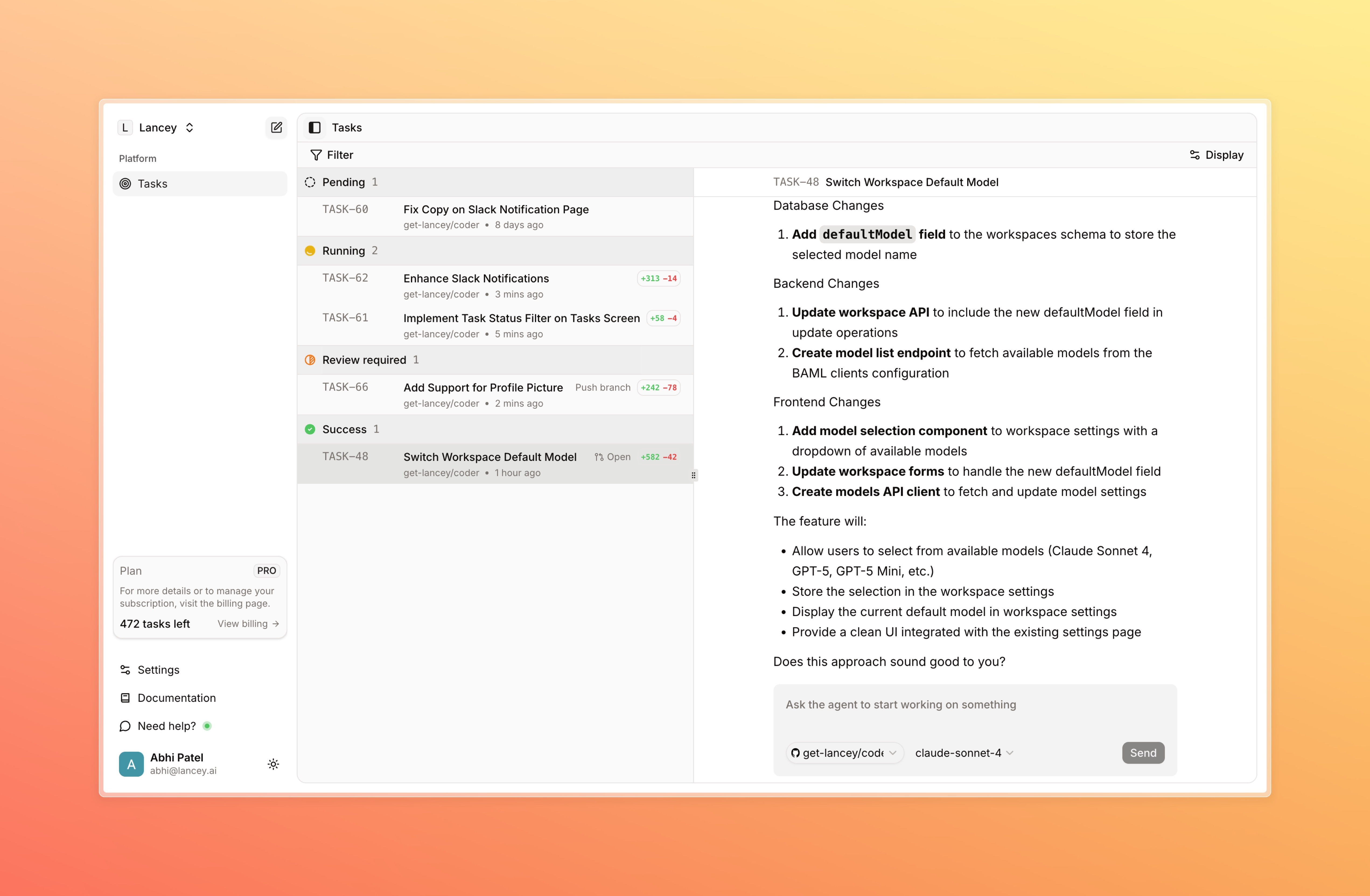
The first multiplayer coding agent that listens to your customers, understands your codebase, and ships production-ready PRs in the background.
Run a free AEO + signal audit for your domain.
AI Answer Engine Optimization (AEO)
List once. Convert intent from live AI conversations without heavy integration.
Coding and programming platforms are integrated software suites that provide developers with the essential tools for writing, testing, and deploying application code. They combine features like source code editors, debuggers, build automation, and version control systems into a cohesive environment. These platforms significantly accelerate development cycles, improve code quality, and streamline collaboration across technical teams.
Establish the specific programming languages, frameworks, integration needs, and scalability goals for your software project to guide your platform selection.
Assess potential platforms based on their development tools, collaboration features, security protocols, and compatibility with your existing technology stack.
Onboard your development team to the chosen platform and integrate it with your CI/CD pipelines, project management tools, and cloud infrastructure.
Large organizations use these platforms to manage complex codebases, enforce coding standards, and facilitate collaboration between distributed development teams for monolithic or microservices architectures.
Financial technology firms leverage secure coding platforms with built-in static analysis and dependency scanning to meet strict compliance standards like PCI DSS and protect sensitive financial data.
SaaS companies utilize programming platforms to enable rapid feature iteration, automated testing, and continuous deployment, ensuring reliable and frequent updates for their cloud-based services.
Online retailers implement development platforms to customize storefronts, build integrations with payment gateways and ERPs, and develop proprietary logistics or recommendation engines.
Health tech providers adopt platforms with robust audit trails and security features to develop HIPAA-compliant applications for patient data management, telemedicine, and medical device integration.
Bilarna ensures reliability by vetting all coding and programming platform providers with a proprietary 57-point AI Trust Score. This score rigorously assesses technical expertise through portfolio reviews, verifies client satisfaction and project delivery history, and checks for relevant security certifications and compliance standards. Bilarna's continuous monitoring provides buyers with confidence in a provider's ongoing performance and stability.
Costs vary widely based on licensing model, user count, and required features, typically ranging from monthly SaaS subscriptions per developer to annual enterprise-wide licenses. Key factors influencing price include advanced security tools, dedicated support levels, and capabilities for high-availability deployment and scalability.
Cloud-based development platforms offer faster setup, automatic updates, and built-in scalability but depend on internet connectivity. On-premises solutions provide greater data control and network independence but require significant internal hardware, software maintenance, and upfront capital investment.
Essential features include intelligent code completion, integrated debugging and testing tools, seamless Git integration, robust collaboration tools for pair programming, and strong security features like vulnerability scanning. Support for containerization and DevOps pipeline integration is also critical for modern workflows.
Onboarding a small to midsize team can take from two to six weeks, depending on the platform's complexity and the team's existing familiarity. This process includes environment setup, migration of existing projects, integration with other tools, and comprehensive user training and adoption.
Common pitfalls include underestimating future scalability needs, overlooking the total cost of ownership including training, neglecting security and compliance requirements specific to your industry, and failing to properly evaluate the platform's integration capabilities with your current toolchain.