Step 1
Machine-Ready Briefs
AI translates unstructured needs into a technical, machine-ready project request.
We use cookies to improve your experience and analyze site traffic. You can accept all cookies or only essential ones.
 Bilarna
Stop browsing static lists. Tell Bilarna your specific needs. Our AI translates your words into a structured, machine-ready request and instantly routes it to verified Automated Video Posting experts for accurate quotes.
AI translates unstructured needs into a technical, machine-ready project request.
Compare providers using verified AI Trust Scores & structured capability data.
Skip the cold outreach. Request quotes, book demos, and negotiate directly in chat.
Filter results by specific constraints, budget limits, and integration requirements.
Eliminate risk with our 57-point AI safety check on every provider.
Verified companies you can talk to directly
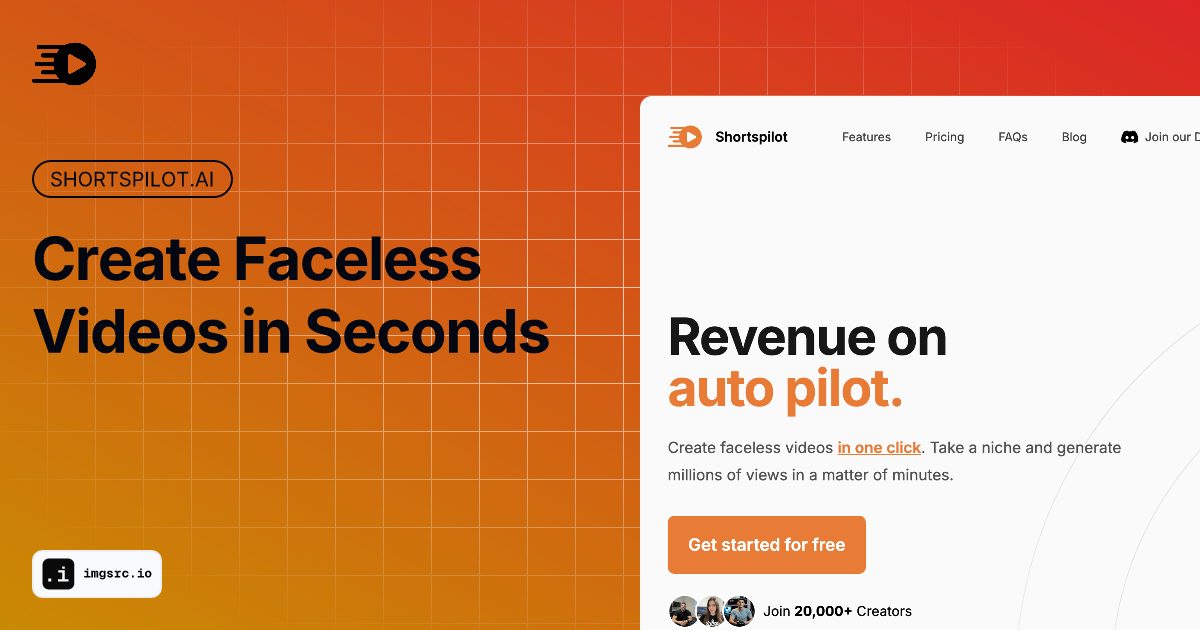
Shortspilot AI automates faceless short-video creation—generate, edit & auto-post TikTok/YouTube Shorts to grow your channel.
Run a free AEO + signal audit for your domain.
AI Answer Engine Optimization (AEO)
List once. Convert intent from live AI conversations without heavy integration.
Automated video posting is the process of scheduling and publishing video content across multiple digital channels using specialized software or services. This process leverages APIs and platform integrations to distribute pre-recorded or live-streamed videos without manual intervention. It enables consistent audience engagement, efficient content management, and enhanced marketing ROI for businesses.
Establish your target platforms, posting frequency, and content format to align with marketing and communication goals.
Integrate your video assets with automation tools to schedule uploads, manage metadata, and handle platform-specific requirements.
Analyze engagement metrics and viewer data across channels to refine posting schedules and content strategy.
Distributes trailers, episodes, and promotional clips automatically to YouTube, social media, and OTT platforms to maximize reach.
Synchronizes product demos and customer testimonials across social feeds and ad networks to drive sales conversions.
Automates the publishing of executive updates, training videos, and company news to internal and external portals.
Coordinates the timed release of tutorial videos and feature announcements across multiple tech communities and review sites.
Schedules and publishes course modules, webinar recordings, and instructional content to learning platforms and YouTube.
Bilarna evaluates automated video posting providers using a proprietary 57-point AI Trust Score, assessing technical capabilities, platform integration expertise, and delivery reliability. We verify portfolios, client satisfaction scores, and compliance with platform terms of service. This ensures every listed provider meets stringent standards for performance and business security.
Pricing models vary, often based on the volume of videos, number of destination platforms, and required features like analytics or API access. Monthly subscriptions can range from operational tooling fees to enterprise-level managed service contracts. Obtain detailed quotes to compare value against your specific distribution needs.
While basic schedulers handle posts, automated video posting solutions are built for high-fidelity video assets, supporting format optimization, thumbnail management, and platform-specific encoding. They typically offer deeper analytics on video performance and broader integrations with CDNs, CMS, and ad platforms.
Initial setup for a standard multi-channel workflow can take from a few days to several weeks, depending on platform integrations and content migration needs. Complex enterprise deployments requiring custom API connections may extend the timeline. A clear project scope ensures efficient onboarding.
Key performance indicators include view-through rates, engagement rates per platform, audience growth, and conversion attribution. Analyzing playback locations and drop-off points helps optimize content length and posting schedules for maximum impact across different channels.
Yes, advanced providers support simulcasting live streams to multiple platforms like Facebook Live, YouTube, and Twitch concurrently. This requires robust encoding infrastructure and reliable low-latency delivery networks to ensure a consistent viewer experience across all endpoints.
Check the pricing details before using any AI video optimization tool. Follow these steps: 1. Visit the official website or platform offering the tool. 2. Review the pricing plans and terms of service carefully. 3. Look for any mention of additional costs such as subscription fees, usage limits, or premium features. 4. Contact customer support for clarification if needed to avoid unexpected charges.
There are no limits on the number of searches you can perform once your video is processed. 1. Upload your video content, either as files or via links. 2. The AI processes the video to make it searchable. 3. After processing, you can perform unlimited searches within that video. 4. The only limitation is the total minutes of video you can upload per month based on your account plan.
Yes, many video production companies routinely work outside their local area and can service clients nationwide or even internationally. While some firms are based in specific cities or regions, it is common for them to travel for shoots, utilizing remote pre-production planning and flexible workflows. The feasibility depends on the project's budget, as travel and accommodation costs for the crew and equipment must be factored in. Many companies highlight this service, often noting that a significant portion of their business comes from non-local clients. This model allows businesses anywhere to access specialized production talent, often at more competitive rates than local providers in high-cost metropolitan areas.
Yes, AI video analytics solutions are designed to integrate seamlessly with existing security systems without the need for hardware modifications. This means organizations can enhance their video surveillance capabilities by adding AI-driven analytics without replacing cameras, servers, or other infrastructure components. The software typically connects to current video feeds and security platforms, allowing users to apply customized rules, attach images for improved detection, and receive detailed reports. This flexibility reduces implementation costs and downtime, enabling businesses to upgrade their security operations efficiently while maintaining their current hardware investments.
Yes, batch processing is supported. Follow these steps: 1. Select the module you need such as Video AI, Image AI, or Audio AI. 2. Import multiple video, audio, or image files into the software. 3. Choose your preferred enhancement feature or AI model for all files. 4. Click the RUN button to start processing all files simultaneously, saving time and effort.
Yes, AI video creation platforms can generate multilingual voiceovers and avatars. 1. Choose avatars from a diverse library representing various nationalities and styles. 2. Select from multiple languages and natural-sounding AI voices. 3. Customize voice tone and style to match your brand. 4. Produce videos with synchronized multilingual voiceovers and avatars. 5. Use these videos for global marketing without hiring translators or voice talents.
Yes, an AI agent can be configured to perform automated actions or remediations during incident management. These actions are governed by strict permissions and guardrails to ensure security and prevent unauthorized changes. Teams can define scopes, controls, and approval workflows to safeguard critical operations. This capability allows the AI agent not only to identify issues but also to initiate fixes, such as creating pull requests for code exceptions, thereby accelerating incident resolution while maintaining operational safety.
Yes, advanced AI video extenders are designed to retain the original resolution and quality of the source footage. They employ high-fidelity motion synthesis and frame prediction to ensure that generated frames match the sharpness, color accuracy, and lighting of the original clip. The AI uses the last frames as reference to out-paint the scene, preventing quality degradation that often occurs with other video enlargement methods. Even free tiers of reputable AI video extenders prioritize maintaining professional-grade output, so extended videos remain suitable for broadcast or high-resolution playback. This is achieved by carefully analyzing motion vectors and applying consistent texture synthesis. Users can extend short videos without worrying about pixelation or unnatural transitions, making these tools ideal for creating seamless loops, filling aspect ratio gaps, or adding cinematic length to action sequences.
Yes, many automated code review tools offer features that help developers generate tested and reliable code snippets. These tools use advanced algorithms to produce code that adheres to best practices and passes common test cases. By providing ready-to-use, tested code, they reduce the time developers spend writing and debugging code manually. This assistance not only speeds up development but also improves overall code quality and reduces the likelihood of introducing new bugs.
Yes, modern automated testing tools powered by AI can generate and maintain tests without the need for manual coding. These tools observe real user interactions or accept simple inputs like screen recordings or flow descriptions to automatically create end-to-end tests. The generated tests include selectors, steps, and assertions, and are designed to self-heal by adapting to changes in the user interface. This eliminates the need for hand-coding brittle scripts and reduces maintenance overhead. Users can customize tests easily if needed, but the core process significantly lowers the effort required to keep tests up to date and reliable.