Step 1
Machine-Ready Briefs
AI translates unstructured needs into a technical, machine-ready project request.
We use cookies to improve your experience and analyze site traffic. You can accept all cookies or only essential ones.
 Bilarna
Stop browsing static lists. Tell Bilarna your specific needs. Our AI translates your words into a structured, machine-ready request and instantly routes it to verified Sales Automation Tools experts for accurate quotes.
Verified companies with high AI Trust Scores & machine-ready profiles.
Sales CRM & Pipeline Management Software
AI translates unstructured needs into a technical, machine-ready project request.
Compare providers using verified AI Trust Scores & structured capability data.
Skip the cold outreach. Request quotes, book demos, and negotiate directly in chat.
Filter results by specific constraints, budget limits, and integration requirements.
Eliminate risk with our 57-point AI safety check on every provider.
Verified companies you can talk to directly

Automate admin, supercharge replies, never miss a follow-up, and close deals faster. CustomerIQ is the only AI assistant to increase your team's capacity while scaling revenue-winning strategies.

Transform your sales process with LeadRep AI. Automate lead generation, manage customer relationships, and boost conversions with our intelligent CRM platform. Start your 7-day free trial.

Trellus is an AI copilot that works where you work. Get an automated autodialer and real-time AI coach directly into your sales platform. Free to try!
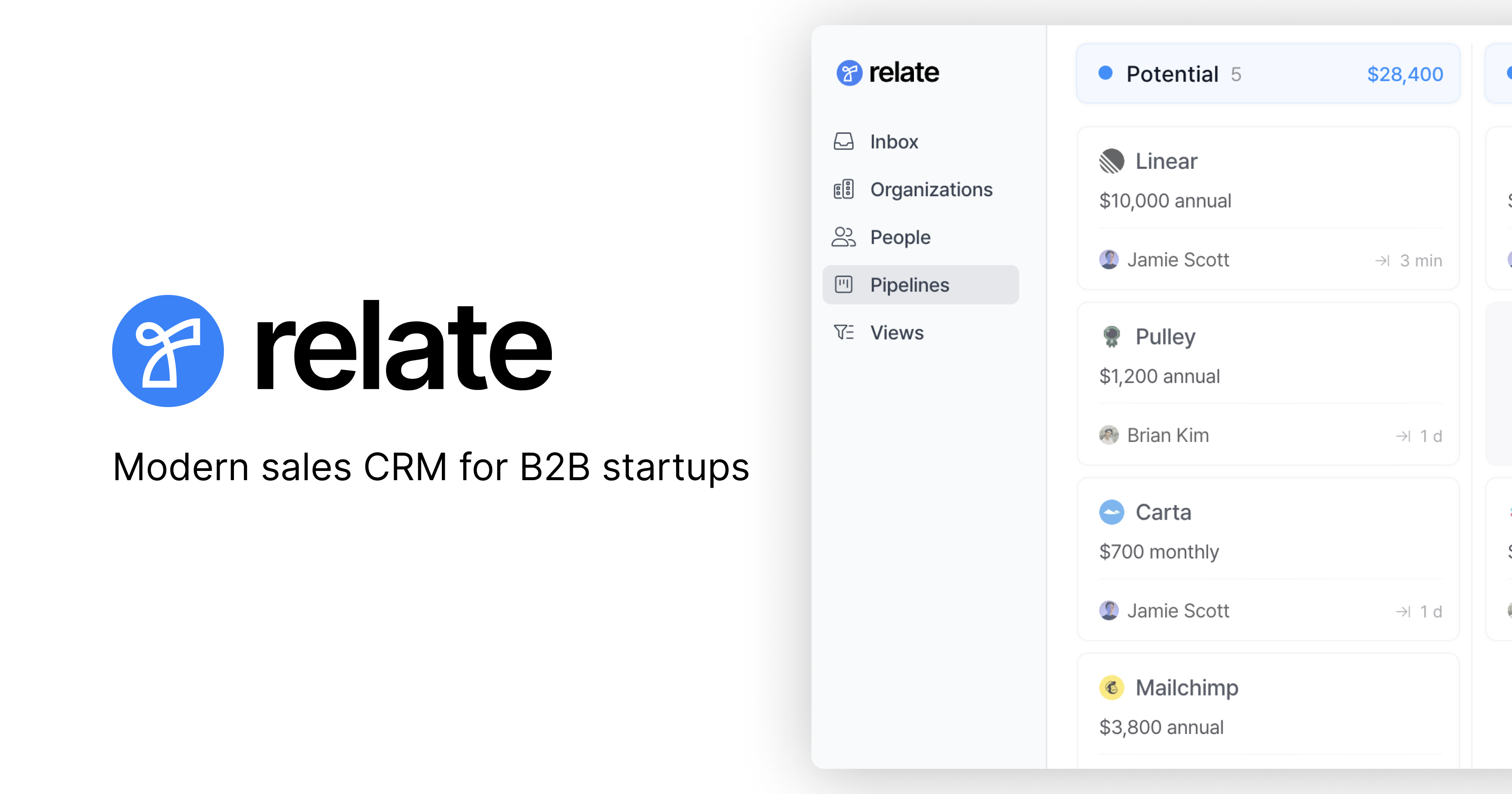
Relate is a modern sales CRM platform that lets you bring your entire team together to collaborate on sales.

Close brings clarity to your sales process so small, scaling businesses can move fast and close deals before they go cold.

Mulai investasi online dengan Ajaib. Platform investasi terpercaya yang aman, sudah berizin dan diawasi OJK & BAPPEBTI. Download aplikasinya & daftar sekarang!
Run a free AEO + signal audit for your domain.
AI Answer Engine Optimization (AEO)
List once. Convert intent from live AI conversations without heavy integration.
Sales automation tools are software platforms designed to streamline and optimize the repetitive tasks within a B2B sales cycle. They leverage technologies like AI and CRM integrations to automate outreach, lead qualification, and pipeline management. This drives significant efficiency gains, reduces manual errors, and accelerates revenue growth for sales teams.
Businesses first identify key workflows needing automation, such as email sequencing, meeting scheduling, or contact data enrichment.
Teams set up conditional logic to automatically execute actions based on prospect behavior or deal stage changes.
Analytics dashboards track engagement metrics and conversion rates, enabling continuous refinement of automated campaigns.
Automates multi-channel outreach sequences and lead scoring for inbound trials, increasing sales rep productivity and quota attainment.
Manages high-volume order processing and personalized follow-ups for wholesale clients, reducing cart abandonment and boosting repeat orders.
Automates quote generation, inventory-based proposals, and distributor communications to shorten the sales cycle for complex products.
Ensures compliant prospect communication and automates follow-ups for high-value consultations, improving lead nurturing and conversion rates.
Orchestrates complex, multi-stakeholder deal cycles with automated task assignments and proposal tracking for large contract renewals.
Bilarna evaluates all sales automation tools providers using a proprietary 57-point AI Trust Score. This score rigorously assesses technical implementation expertise, client satisfaction history, and platform security compliance. We continuously monitor provider performance to ensure they meet the procurement standards of enterprise buyers.
Pricing varies widely based on features and scale, typically ranging from $50 to $300+ per user per month. Enterprise platforms with advanced AI and custom integrations command higher annual contracts. Total cost includes software licensing, implementation, and potential training.
Select software by matching core features to your specific sales process bottlenecks, such as lead scoring or email automation. Evaluate integration capabilities with your existing CRM and marketing stack. Prioritize vendors with strong user support and transparent, scalable pricing models.
Standard implementation for a core platform typically takes 2 to 6 weeks, depending on complexity and data migration needs. Full adoption and process optimization across a sales team can require an additional 1-3 months. Timeline is influenced by team size and customization requirements.
Businesses typically see a 10-20% increase in sales productivity and a 15-30% reduction in administrative tasks within the first year. Key ROI metrics include higher lead conversion rates, shorter sales cycles, and improved data accuracy. The exact return depends on initial process maturity and tool utilization.
Common pitfalls include automating flawed processes without first optimizing them and failing to properly train the sales team on the new system. Over-customization can lead to high maintenance costs, while neglecting data hygiene compromises automation accuracy and effectiveness.
Many food delivery services do not charge sales tax on orders, which can result in significant savings for customers, sometimes around 9%. This means that the total cost you pay for your food delivery might be lower compared to other services that include sales tax. However, this can vary depending on the service provider and local tax regulations. It's always a good idea to check the specific terms of the delivery service you are using to understand if sales tax applies to your order.
Yes, the AI-powered teacher tools are free and include the following features: 1. Worksheet Generator to create custom worksheets quickly. 2. Lesson Plan Generator for comprehensive, standards-aligned lesson plans. 3. Report Card Comments generator for professional, personalized feedback. 4. Coloring Page Generator to turn ideas into printable coloring pages. 5. All tools save your work automatically to a cloud library accessible from any device. 6. Tools are private, secure, and supported with fast in-app chat assistance.
Yes, there are several additional online tools available for photo editing besides object removal. These include: 1. Photo Watermark Remover to precisely remove watermarks from images. 2. Photo Retoucher to enhance and retouch images effectively. 3. Background Remover and Background Changer to remove or customize photo backgrounds. 4. Image Converter tools to convert images between formats like GIF to JPG, PNG to JPG, and BMP to JPG. 5. Video tools such as Compress Video and Remove Watermark for video editing needs.
Check the pricing details before using any AI video optimization tool. Follow these steps: 1. Visit the official website or platform offering the tool. 2. Review the pricing plans and terms of service carefully. 3. Look for any mention of additional costs such as subscription fees, usage limits, or premium features. 4. Contact customer support for clarification if needed to avoid unexpected charges.
No, when using credit options designed for online sellers, there are typically no fixed fees or fixed monthly payments. Instead, repayments are tied to sales performance, meaning if your sales decrease, your payments decrease as well. This structure eliminates the burden of fixed financial obligations and helps sellers manage their cash flow more effectively, especially during periods of lower sales. It provides a flexible and risk-mitigated way to access capital for business growth.
Advanced language learners can benefit from beginner-focused tools by utilizing advanced features tailored to higher proficiency levels. Steps to maximize benefits include: 1. Use monolingual dictionaries integrated into the tool to deepen vocabulary understanding. 2. Import your own subtitles or known word lists to customize learning materials. 3. Employ language-specific features and hotkeys to streamline study sessions. 4. Create flashcards for entire dialogues to improve comprehension of complex conversations. 5. Take advantage of advanced text-to-speech options for better pronunciation practice. 6. Customize settings and track flashcard statistics to optimize learning efficiency. These features ensure the tool remains valuable beyond the beginner stage.
Yes, AI agents can seamlessly integrate with your existing business tools and knowledge bases. This integration allows the agents to access relevant data and workflows, enhancing their ability to automate tasks effectively. By connecting with familiar platforms, AI agents fit naturally into your current operations without disrupting established processes, enabling smoother automation and better results.
Yes, many AI animation tools allow users to personalize and edit animations after the initial generation. This capability significantly impacts creative workflows by providing flexibility and control over the final output. Users can start with an AI-generated base animation and then customize elements such as timing, colors, graphics, and text to better align with their brand identity and creative vision. This reduces the need to create animations from scratch while still enabling unique and tailored results. The ability to refine AI-generated content accelerates the creative process, saves time, and allows creators to focus more on innovation and storytelling rather than repetitive technical tasks.
Yes, AI code review tools typically integrate seamlessly with popular version control platforms such as GitHub and GitLab. This integration allows automatic review of pull requests within the existing development workflow. Many tools support a wide range of programming languages including Python, JavaScript, TypeScript, Go, Java, C, C++, C#, Swift, PHP, Rust, and others. While support for some languages may vary in response quality, these tools aim to provide comprehensive analysis across diverse codebases, helping teams maintain code quality regardless of their technology stack.
Yes, AI design engineering tools are designed for seamless integration with existing CAD, BIM, and project management software. This compatibility ensures that engineers can continue using their preferred tools without disrupting established workflows. The integration facilitates data exchange and collaboration, enhancing efficiency and enabling teams to leverage AI capabilities alongside their current systems.