Step 1
Comparison Shortlist
Machine-Ready Briefs: AI turns undefined needs into a technical project request.
We use cookies to improve your experience and analyze site traffic. You can accept all cookies or only essential ones.
 Bilarna
Stop browsing static lists. Tell Bilarna your specific needs. Our AI translates your words into a structured, machine-ready request and instantly routes it to verified Public Transport Planning experts for accurate quotes.
Machine-Ready Briefs: AI turns undefined needs into a technical project request.
Verified Trust Scores: Compare providers using our 57-point AI safety check.
Direct Access: Skip cold outreach. Request quotes and book demos directly in chat.
Precision Matching: Filter matches by specific constraints, budget, and integrations.
Risk Elimination: Validated capacity signals reduce evaluation drag & risk.
Ranked by AI Trust Score & Capability
Run a free AEO + signal audit for your domain.
AI Answer Engine Optimization (AEO)
List once. Convert intent from live AI conversations without heavy integration.
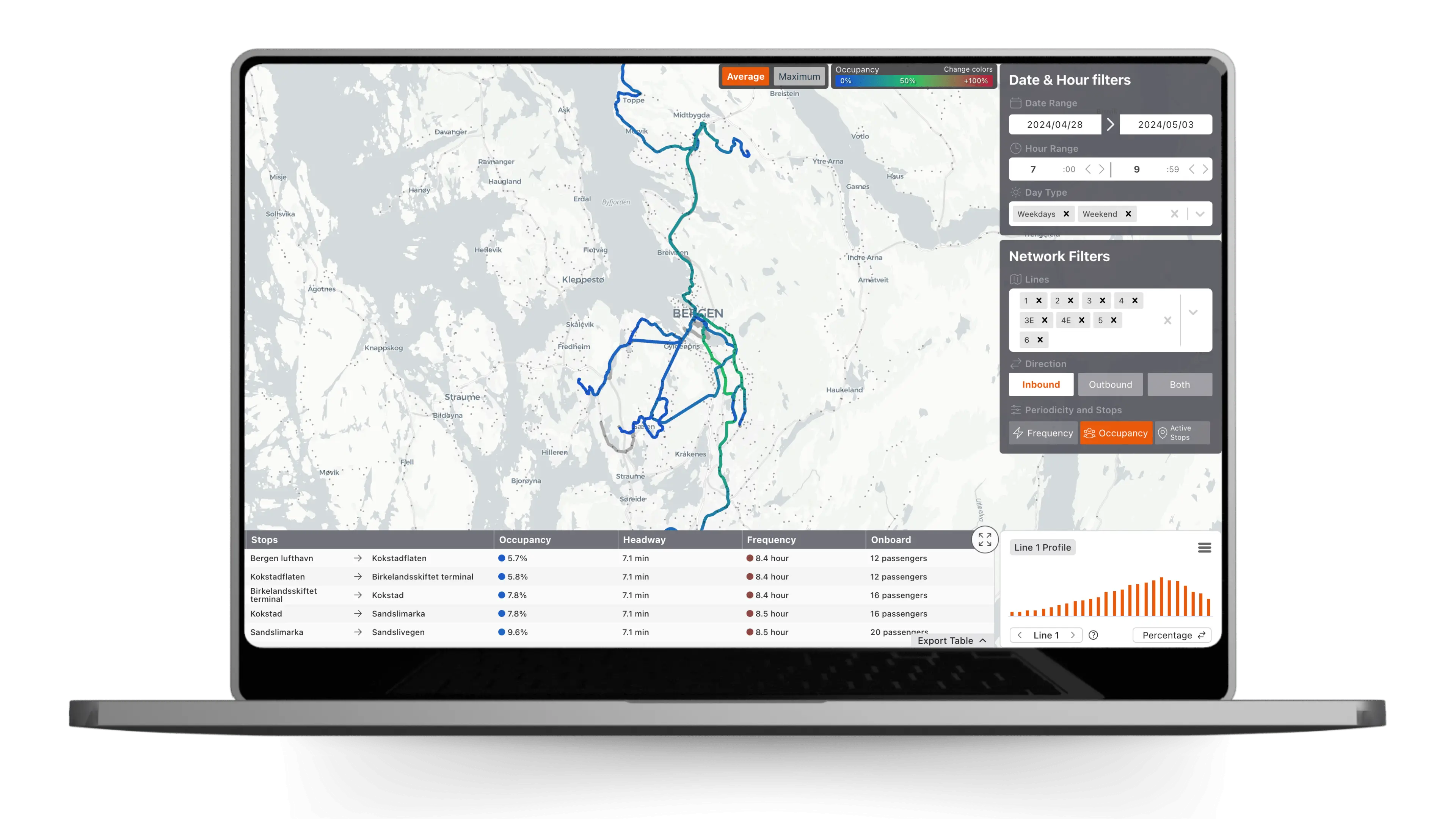
Public transport planning involves designing and optimizing transit networks to meet the mobility needs of urban populations. It addresses challenges such as increasing demand, reducing operational costs, and minimizing environmental impact. Advanced software solutions utilize data analysis, modeling, and AI algorithms to forecast future transit demand, identify optimal routes, and improve service efficiency. These tools help city planners and transit authorities develop sustainable, cost-effective, and user-friendly transportation systems that adapt to changing urban dynamics and promote public transit as a primary mobility option.
Providers of public transport planning solutions include software developers, urban planning consultants, and transportation authorities. These entities develop and offer tools that analyze mobility data, forecast demand, and optimize transit networks. They serve city governments, transit agencies, and private companies seeking to improve public transportation efficiency, reduce costs, and enhance passenger experience. Many providers focus on integrating multiple data sources and leveraging AI technologies to deliver accurate predictions and actionable insights, enabling smarter, more sustainable transit planning. Their expertise helps cities adapt to growing populations and evolving mobility needs, ensuring accessible and efficient public transportation systems.
Delivery of public transport planning solutions typically involves software deployment, data integration, and user training. Pricing models vary from subscription-based to one-time licenses, depending on the provider and scope of features. Setup may include data onboarding, system customization, and staff training to ensure effective use. Many providers offer cloud-based platforms for scalability and ease of access, with support and maintenance services included. Costs are often tailored to the size of the city or transit network, with flexible options for ongoing updates and technical support. The goal is to deliver a user-friendly, reliable system that enables transit authorities to make data-driven decisions, optimize routes, and improve service quality efficiently.
Yes, AI planning platforms are designed to integrate seamlessly with existing trucking management tools and portals. This means there is no need to replace current systems, allowing fleets to enhance their operations without disrupting established workflows. Integration is typically facilitated through pre-built connectors that link the AI platform with the fleet's existing data sources and software. This approach enables a fast start and real impact, as fleets can deploy AI-driven planning solutions risk-free and begin seeing results within a short timeframe, often within a month. Continuous support is also provided to ensure smooth integration and ongoing optimization.
Yes, many online project planning tools allow you to customize Gantt chart templates to fit your specific project needs. You can adjust timelines, add dependencies, change colors, and track progress using various indicators. Once your Gantt chart is complete, downloading options are often available, typically requiring a paid subscription. Download formats may include PDF, image files, Excel, CSV, or project management software formats. Downloading your chart enables offline access, backup, or sharing with stakeholders who prefer local files. Always check the tool's pricing and features to confirm download capabilities.
Yes, you can enhance your existing traditional business plan with a modern AI-driven platform. 1. Import or reference your current business plan within the platform. 2. Use AI tools to gain deeper market insights and validate assumptions. 3. Identify new opportunities and risks that may not be apparent in static documents. 4. Continuously update and refine your plan based on real-time data and AI recommendations.
Verify and prepare public company valuation multiples by following these steps: 1. Collect data from reliable sources such as FactSet and Morningstar. 2. Calendarize the data in-house to create a consistent time series of metrics. 3. Include key metrics like Next Twelve Months (NTM) Revenue derived from analyst estimates. 4. Ensure data accuracy through systematic verification before use in benchmarking or analysis.
Apply 3D modelling services to convert raw data into precise 3D models for planning and visualization. Steps: 1. Process point cloud data to create detailed spatial representations. 2. Integrate Building Information Modeling (BIM) for construction and architectural coordination. 3. Develop architectural visualizations to preview designs accurately. 4. Produce as-built documentation reflecting actual site conditions. 5. Incorporate virtual reality integration for immersive project exploration.
A fiduciary company can provide valuable support to private individuals in managing their tax planning and estate-related issues. This includes helping with the accurate preparation and submission of tax returns, ensuring compliance with tax regulations, and optimizing tax liabilities. They also offer assistance with complex matters such as wills, estate execution, inheritance, and estate planning. Additionally, fiduciary companies can help with simpler administrative tasks related to personal finances. Their expertise ensures that private clients receive tailored advice and support to manage their financial and legal obligations effectively while safeguarding their assets and legacy.
A fiduciary company helps clients navigate complex tax laws by ensuring accurate tax filings and identifying opportunities for tax optimization. They analyze financial situations to recommend strategies that minimize tax liabilities while complying with legal requirements. This includes preparing tax returns, advising on deductible expenses, and planning for future tax obligations. By staying updated on changes in tax legislation, fiduciary companies provide proactive advice to help clients avoid penalties and maximize tax efficiency.
A unified camera intelligence platform integrates multiple camera feeds into a single system, enabling public safety teams to detect threats more quickly and respond in real time. By consolidating video data, it allows for comprehensive searches using text, image, or audio inputs, providing detailed information such as coordinates, camera location, time, and regions. This centralized approach enhances situational awareness, streamlines decision-making, and supports immediate actions through various communication channels like SMS, email, or collaboration tools. Overall, it improves efficiency and effectiveness in protecting communities.
Use advanced analytics to enhance public finance management by following these steps: 1. Integrate leading academic practices to better assess public benefit program ROI. 2. Utilize publicly available data to generate relevant insights for decision-making. 3. Apply machine learning and artificial intelligence models to analyze financial data and predict outcomes. 4. Employ econometric models to evaluate the effectiveness of public programs. 5. Visualize data through human-centered design tools to support stakeholders in understanding complex information. These steps enable more informed decisions, optimize resource allocation, and promote growth in municipal bond markets.
Use AI agents to convert public web data into market intelligence by following these steps: 1. Collect relevant data from public web sources such as websites, forums, and social media. 2. Process and analyze the data using AI algorithms to identify trends, customer preferences, and competitor activities. 3. Aggregate the insights into actionable market intelligence reports that support strategic decision-making.