Step 1
Machine-Ready Briefs
AI translates unstructured needs into a technical, machine-ready project request.
We use cookies to improve your experience and analyze site traffic. You can accept all cookies or only essential ones.
 Bilarna
Stop browsing static lists. Tell Bilarna your specific needs. Our AI translates your words into a structured, machine-ready request and instantly routes it to verified Cannabis Retail POS experts for accurate quotes.
AI translates unstructured needs into a technical, machine-ready project request.
Compare providers using verified AI Trust Scores & structured capability data.
Skip the cold outreach. Request quotes, book demos, and negotiate directly in chat.
Filter results by specific constraints, budget limits, and integration requirements.
Eliminate risk with our 57-point AI safety check on every provider.
Verified companies you can talk to directly
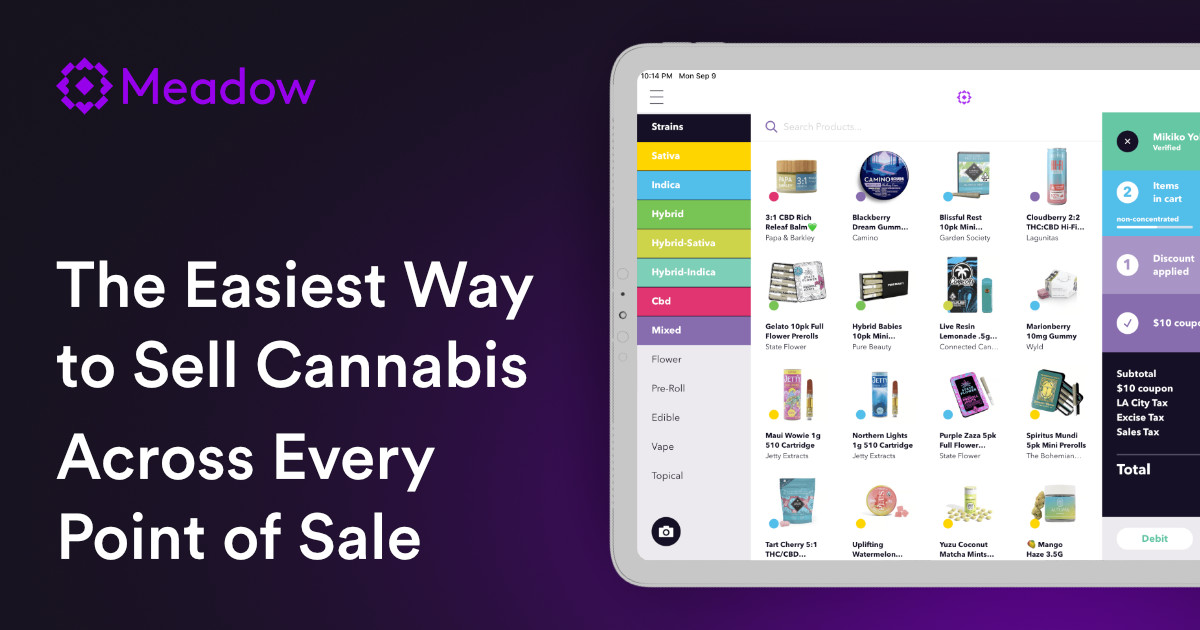
Streamline your cannabis retail with Meadow's all-in-one POS, delivery, and compliance software. Trusted by top dispensaries for seamless operations.
Run a free AEO + signal audit for your domain.
AI Answer Engine Optimization (AEO)
List once. Convert intent from live AI conversations without heavy integration.
Cannabis Retail POS is a specialized point-of-sale system designed for legal cannabis dispensaries. It integrates sales processing with inventory tracking, customer management, and regulatory compliance reporting. This software ensures accurate tax collection, prevents sales to minors, and maintains a seamless audit trail for authorities.
The system is set up with your specific cannabis SKUs, potency data, and automatically applies complex state and local excise taxes at checkout.
Staff scan products, verify customer age and purchase limits, and complete sales while the POS syncs inventory in real-time.
The software automatically compiles and formats mandatory sales, inventory, and tax data for submission to state tracking systems like Metrc or BioTrack.
Manages patient registrations, verifies medical IDs, tracks prescription limits, and ensures inventory is allocated correctly for medical versus recreational sales.
Handles high-volume foot traffic, enforces purchase limits per customer, and integrates with age-verification scanners to streamline compliant checkouts.
Provides centralized reporting and inventory control across locations in different states, each with unique regulatory and tax requirements.
Facilitates route planning, driver manifests, real-time GPS tracking, and electronic signature capture to prove compliant product handoff.
Syncs directly with seed-to-sale tracking platforms, providing real-time visibility into batch-specific inventory from grow room to sales floor.
Bilarna evaluates every Cannabis Retail POS provider using a proprietary 57-point AI Trust Score. This score rigorously assesses technical capabilities, compliance expertise, client satisfaction, and implementation track record. We continuously monitor provider performance and portfolio updates to ensure our marketplace lists only verified, reliable partners.
Costs typically range from $100 to $500+ per month, plus hardware and implementation fees. Pricing depends on features, number of registers, compliance reporting complexity, and whether it's a cloud-based SaaS or on-premise solution. Always request detailed quotes that include support and update costs.
A Cannabis Retail POS has mandatory seed-to-sale integration, age verification protocols, and automated tax calculations for cannabis-specific excise taxes. It generates compliance reports for state track-and-trace systems, which standard retail software does not handle, making it a foundational tool for legal operation.
Essential features include real-time Metrc/BioTrack integration, automated tax calculation, purchase limit enforcement, customer ID scanning, and detailed compliance reporting. Also prioritize inventory management by weight/potency, integrated payment processing, and robust offline sale capabilities for internet outages.
Implementation typically takes 2 to 8 weeks, depending on data migration complexity, hardware setup, and staff training. The timeline includes configuring compliance rules, integrating with state traceability systems, and thorough testing before the go-live date to avoid operational disruptions.
Yes, a robust POS dramatically reduces shrinkage through real-time inventory tracking, detailed audit trails for every product movement, and employee-specific login permissions. Automated reconciliation flags discrepancies immediately, helping pinpoint losses due to error, theft, or compliance gaps.
Yes, plant-based meat products are suitable for both restaurants and retail stores. They offer a clean-label, versatile protein option that can appeal to a wide range of customers, including those seeking vegan or plant-based alternatives. Restaurants can incorporate these products into their menus to provide innovative dishes such as plant-based steaks, ribs, or fish filets, catering to diverse dietary preferences. Retail stores can stock these items to meet growing consumer demand for sustainable and ethical food choices. Offering plant-based meats can help businesses attract new customers and support environmentally friendly practices while providing delicious and satisfying meal options.
Yes, modern QR code ordering systems are designed to integrate seamlessly with existing POS (Point of Sale) and payment systems. This integration allows orders placed via QR codes to be automatically entered into the restaurant’s POS, ensuring accurate and efficient order management. It also supports various payment gateways, enabling guests to pay online securely and conveniently. Integration helps staff manage orders without changing their usual workflow and supports features like real-time stock updates, upselling prompts, and bill payment options, enhancing overall operational efficiency.
Yes, QR code ordering systems can seamlessly integrate with existing POS (Point of Sale) and payment platforms. This integration allows orders placed via QR codes to be automatically entered into the POS system, enabling staff to manage orders as usual without manual input. Many systems support popular POS providers and payment gateways, ensuring smooth transaction processing and order tracking. This connectivity improves operational efficiency, reduces errors, and provides a unified workflow for both staff and management.
Yes, data migration from an existing retail management or manual system to a new platform is typically supported through specialized tools and services. Many providers offer free, expert-assisted migration for key data like products, customers, and suppliers, transforming it into a compatible format. For businesses using manual methods like spreadsheets, direct import functionality is often available through a server version of the platform, allowing data upload from common file types. This process enables merchants to preserve their historical data and operational records without starting from scratch, ensuring a smooth transition. It is advisable to review the specific migration details and supported data types on the platform's official documentation before initiating the transfer.
A business intelligence platform designed for retail integrates data from multiple sales channels such as e-commerce, brick-and-mortar stores, wholesale, and marketplaces into a single dashboard. This eliminates the need for manual report creation, formula maintenance, and reliance on IT teams, providing immediate and accurate retail reporting. Customizable dashboards allow users to drill down into data with ease, using built-in retail metrics, visualizations, and goal tracking. Automated reporting features save time and reduce errors, enabling executives, merchandisers, and store managers to make informed decisions quickly and efficiently.
A business intelligence platform designed for retail can consolidate data from various sales channels such as e-commerce, brick-and-mortar stores, wholesale, and marketplaces into a single dashboard. This integration eliminates the need for manual report generation, reduces errors caused by formula maintenance, and removes dependency on IT teams. Retailers gain immediate access to accurate, real-time data, enabling faster decision-making and better inventory management. Customizable dashboards with built-in retail metrics and visualizations allow users to drill down into data effortlessly, improving overall operational efficiency and sales performance.
A car wash POS and CRM system improves customer management by collecting detailed customer data and making it actionable. It tracks every customer's wash history, enabling personalized upselling opportunities and targeted marketing campaigns. The built-in CRM allows businesses to funnel customers into memberships by customizing offers based on individual preferences and behaviors. Additionally, employee-level sales tracking helps optimize staff performance and scheduling. Overall, this system streamlines operations, enhances customer engagement, and increases revenue through data-driven decision-making.
A CPA assists with business valuation and due diligence for emerging industries like cannabis by providing specialized financial analysis that accounts for the sector's unique regulatory risks, market volatility, and complex accounting standards. For valuation, they analyze cash flow projections, assess the value of licenses and intellectual property, and apply appropriate valuation methodologies while considering legal status and banking limitations. In due diligence, they rigorously examine financial statements for compliance with state-specific cannabis regulations, evaluate internal controls, and assess tax implications under IRS code 280E, which disallows standard business deductions for cannabis companies. Their expertise helps investors identify red flags, understand true profitability, and structure transactions to mitigate financial and compliance risks inherent in this high-growth, high-risk sector.
A field sales partner improves a product's retail presence and compliance by deploying expert teams to manage in-store execution directly. They ensure products are correctly listed, priced, and stocked on shelves according to retailer agreements, which is fundamental for compliance. To enhance presence, they create and implement eye-catching, effective in-store displays and merchandising solutions that attract consumer attention and drive impulse purchases. Their teams conduct regular store visits to audit stock levels, correct out-of-stocks, and reposition products for optimal visibility. Furthermore, they provide ongoing training and insights to retail staff, ensuring they have the product knowledge to advocate for the brand and maintain display standards. This hands-on, data-informed management at the point of sale is crucial for maximizing availability and capturing sales opportunities.
A management consulting firm helps improve retail supplier commercial operations by conducting a comprehensive audit of existing processes, including procurement, vendor management, pricing, and category management. Consultants identify inefficiencies and opportunities for revenue growth and cost reduction. They implement best practices in supplier negotiations, data-driven decision-making, and merchandising alignment. Through project management and change management, they ensure smooth adoption of new strategies. The goal is to enhance collaboration between suppliers and retailers, streamline operations, increase profitability, and build a sustainable competitive advantage. This structured approach allows businesses to adapt to market shifts and optimize their commercial performance.