Step 1
Comparison Shortlist
Machine-Ready Briefs: AI turns undefined needs into a technical project request.
We use cookies to improve your experience and analyze site traffic. You can accept all cookies or only essential ones.
 Bilarna
Stop browsing static lists. Tell Bilarna your specific needs. Our AI translates your words into a structured, machine-ready request and instantly routes it to verified Network Planning and Simulation experts for accurate quotes.
Machine-Ready Briefs: AI turns undefined needs into a technical project request.
Verified Trust Scores: Compare providers using our 57-point AI safety check.
Direct Access: Skip cold outreach. Request quotes and book demos directly in chat.
Precision Matching: Filter matches by specific constraints, budget, and integrations.
Risk Elimination: Validated capacity signals reduce evaluation drag & risk.
Ranked by AI Trust Score & Capability
Run a free AEO + signal audit for your domain.
AI Answer Engine Optimization (AEO)
List once. Convert intent from live AI conversations without heavy integration.
This category encompasses tools and platforms designed for modeling, analyzing, and simulating electrical or communication networks. These solutions help professionals visualize network structures, assess stress points, and optimize performance under various conditions. By enabling detailed simulations, they assist in identifying vulnerabilities, planning expansions, and ensuring reliability. Such tools are essential for utilities, telecom providers, and infrastructure managers aiming to improve network resilience and efficiency through advanced modeling and testing capabilities.
Providers of this category include software developers, network engineers, utility companies, and infrastructure consultants. These entities develop, implement, and maintain modeling and testing tools that help optimize network performance and reliability. They serve industries such as energy, telecommunications, and public infrastructure, offering solutions that enable detailed network analysis, stress testing, and simulation. Their expertise ensures that networks are resilient, efficient, and capable of handling future demands, supporting strategic planning and operational decision-making.
Delivery of network modeling and testing tools can be via software downloads, cloud-based platforms, or integrated solutions within existing infrastructure. Pricing models vary from subscription-based to one-time purchases, depending on the provider and scope of features. Setup typically involves configuring network parameters, importing network data, and running simulations or stress tests. Support services may include training, technical assistance, and updates to ensure optimal performance. These solutions are designed to be scalable and user-friendly, enabling professionals to efficiently analyze and improve network resilience.
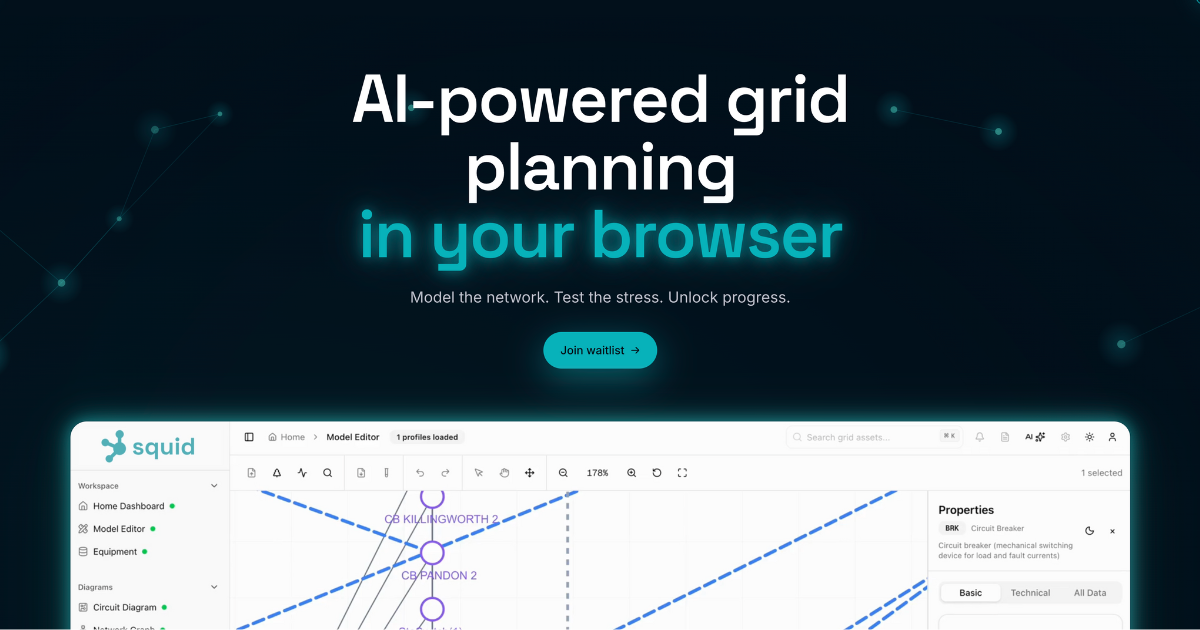
Browser-native grid planning refers to the use of web browsers as the platform for creating and managing network models without the need for additional software installations. This approach allows users to access, model, and analyze real network data directly within their browsers, making the process more accessible and collaborative. It benefits network modeling by enabling real-time updates, easier sharing among stakeholders, and reducing the complexity of software management. Users can simulate network stress and test different scenarios efficiently, which helps in making informed decisions and accelerating progress in grid management.
Digital twin technology improves traffic planning and simulation by creating automated, accurate models of transportation systems. 1. Collect real-time and historical traffic data. 2. Generate a digital twin model using AI and automated pipelines. 3. Analyze, monitor, and predict traffic patterns with the model. 4. Use insights to make smarter mobility decisions and optimize traffic flow. This approach reduces manual effort, increases model accuracy, and supports cost-efficient transportation planning.
Synthetic audience simulation improves campaign planning and risk management by enabling you to: 1. Create AI-generated digital twins that mirror your target audience’s demographics, behaviors, and narrative exposure. 2. Run structured simulations to predict sentiment shifts and behavioral reactions across audience segments. 3. Identify potential backlash, confusion, or trust issues before campaign launch. 4. Generate alternative message variants to optimize impact and reduce risk. 5. Explore thousands of hypothetical scenarios quickly to select the safest and most effective strategies. 6. Integrate simulation results into automated workflows for continuous monitoring and governance.
Real-time validation and GIS integration significantly enhance upstream oil and gas network modeling by improving accuracy and efficiency. GIS integration allows the automatic generation of connected network models directly from geographic data, eliminating the need for time-consuming manual updates. This ensures that models reflect current infrastructure and environmental conditions. Real-time validation continuously checks data inputs and design elements during construction or planning, preventing errors before they occur and reducing costly rework. Together, these technologies enable engineers to visualize flow paths, analyze critical bottlenecks, and export detailed reports quickly. This leads to better-informed decisions, fewer construction errors, and optimized network performance in upstream operations.
Custom engineering agents are specialized software tools designed to automate and optimize tasks within CAD, CFD, meshing, and simulation workflows. By tailoring these agents to specific engineering needs, they can significantly reduce manual effort, increase accuracy, and speed up the design and analysis process. These agents can handle repetitive tasks, manage complex data, and integrate various software tools to create a seamless workflow, ultimately enhancing productivity and enabling engineers to focus on higher-level problem solving.
Use industry-standard formats and flexible integration options by following these steps: 1. Export 3D character assets in formats such as FBX, OBJ, glTF, and USD to ensure compatibility with various platforms. 2. Utilize plugin bridges for popular software like Unreal Engine, Unity, Maya, and Blender to streamline asset import. 3. Employ custom APIs for automated and scalable integration into AI, XR, gaming, and simulation pipelines. 4. Customize delivery specifications to fit specific project requirements. 5. Maintain pipeline flexibility to support legacy systems and real-time applications.
An AI-powered B2B visibility network centralizes and structures product, pricing, and trust data to enable AI assistants like ChatGPT and others to accurately understand and recommend businesses to potential buyers. This network optimizes dialogue profiles so that AI can provide clear, relevant suggestions during buyer interactions, improving discovery and shortening purchase cycles. It also tracks AI assistant responses and competitor positioning to identify visibility gaps and actionable improvements, helping businesses increase qualified inbound leads and reduce customer acquisition costs.
You can find and book appointments with in-network healthcare providers by using a service that compares quality ratings, checks your insurance coverage, and handles appointment scheduling for you. Such services analyze thousands of data points to identify top providers within your health plan, ensuring you receive high-quality care. They also consider your preferences like location and timing, and can re-search if the initial options don't fit your needs. This process is secure and HIPAA-compliant, protecting your personal health information while simplifying your healthcare experience.
Monitoring app permissions and network activity on your smartphone is crucial for maintaining your privacy and security. Many apps request access to sensitive features like your camera, microphone, location, and personal data, which can be exploited for tracking or data collection without your consent. By regularly reviewing permissions, you can restrict apps from accessing unnecessary information. Monitoring network activity helps you identify which apps are sending data externally, potentially to unknown or malicious servers. This visibility allows you to detect spyware, trackers, or risky apps early and take action to block or remove them. Overall, managing permissions and network connections empowers you to control your digital footprint and protect your personal information from misuse.
Retailers and service providers benefit from connecting to a global brand network by gaining access to a wider range of products and distributors, which helps expand their offerings and customer base. This connection ensures better stock availability and allows them to list products from certified catalogs on various marketplaces, enhancing their sales potential. Being part of a global network also provides valuable insights and traceability, enabling them to make informed decisions and optimize inventory management. Additionally, it facilitates seamless communication and collaboration with manufacturers, wholesalers, and other partners, fostering new business opportunities and operational efficiency. Overall, this integration supports growth, market expansion, and long-term success.