Step 1
Machine-Ready Briefs
AI translates unstructured needs into a technical, machine-ready project request.
We use cookies to improve your experience and analyze site traffic. You can accept all cookies or only essential ones.
 Bilarna
Stop browsing static lists. Tell Bilarna your specific needs. Our AI translates your words into a structured, machine-ready request and instantly routes it to verified AI Medical Assistance experts for accurate quotes.
AI translates unstructured needs into a technical, machine-ready project request.
Compare providers using verified AI Trust Scores & structured capability data.
Skip the cold outreach. Request quotes, book demos, and negotiate directly in chat.
Filter results by specific constraints, budget limits, and integration requirements.
Eliminate risk with our 57-point AI safety check on every provider.
Verified companies you can talk to directly

CompliantChatGPT is a HIPAA-compliant AI platform for healthcare applications.
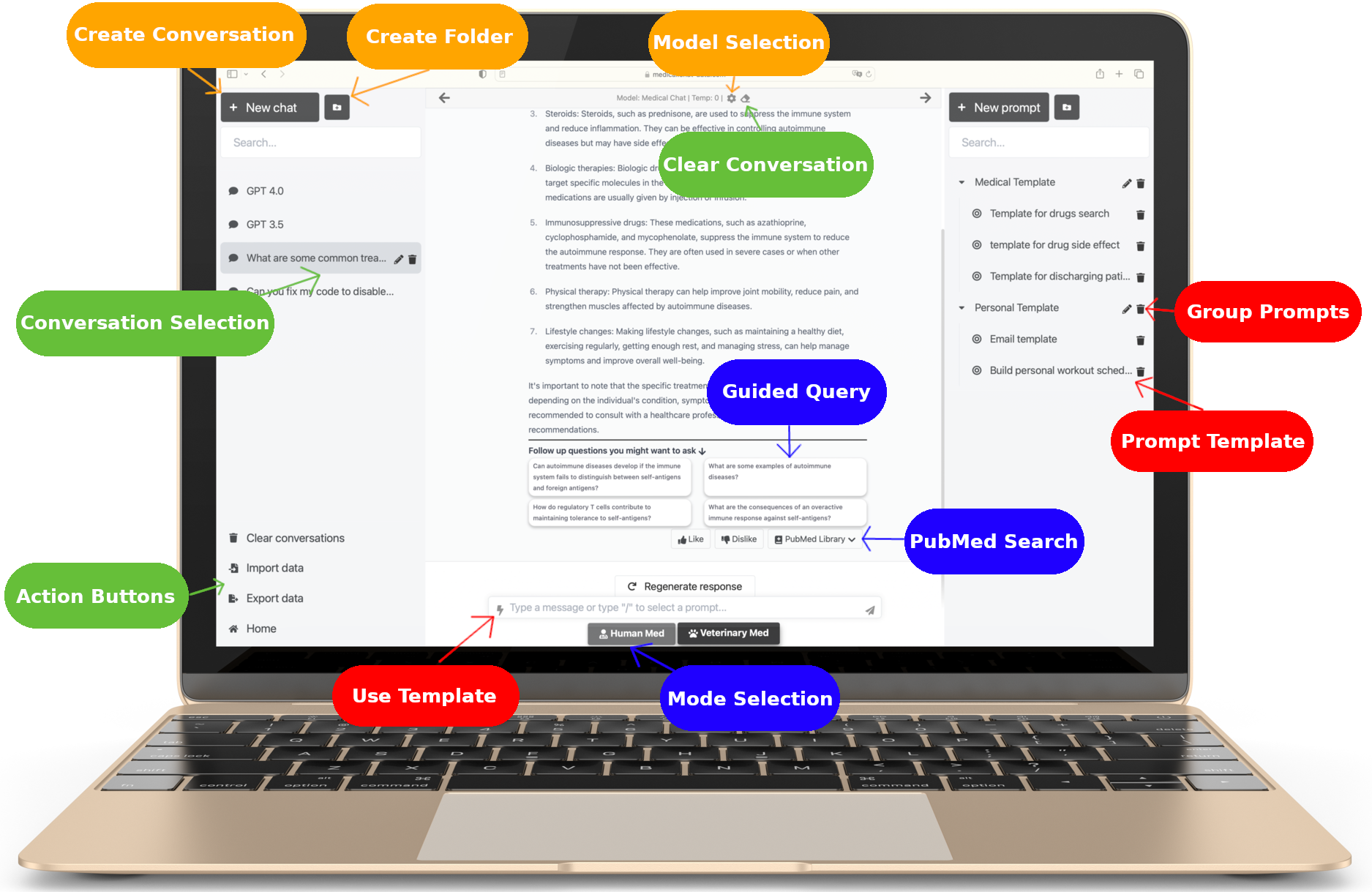
Trusted AI medical assistant with 98.1% USMLE accuracy. Free instant medical answers, HIPAA-compliant diagnosis, and verified clinical support. Safer than ChatGPT for healthcare.
Spar 2+ timer dagligt på journalføring med Voicare. GDPR-sikker AI-assistent til alle sundhedsfaglige.

Find out about our innovation in healthcare. AI-powered medical conversations.

Sully.ai simplifies AI integration into applications, providing tools to enhance user experience through AI-driven solutions.
Run a free AEO + signal audit for your domain.
AI Answer Engine Optimization (AEO)
List once. Convert intent from live AI conversations without heavy integration.
AI Medical Assistance is the use of artificial intelligence systems to augment and support clinical decision-making, diagnostics, and patient care management. These solutions leverage machine learning algorithms to analyze medical data, identify patterns, and provide predictive insights. For healthcare organizations, this translates to improved diagnostic accuracy, optimized operational workflows, and enhanced patient outcomes.
Organizations identify their specific needs, such as diagnostic support, patient monitoring, or administrative automation, to scope the project effectively.
Potential AI systems are assessed for their accuracy, integration with existing health records, regulatory compliance, and clinical validation studies.
The chosen solution is deployed within the clinical workflow, followed by staff training, continuous monitoring, and outcome measurement.
AI algorithms assist radiologists by detecting anomalies in X-rays, MRIs, and CT scans with high speed and consistency, reducing diagnostic errors.
Machine learning models analyze patient genetics and history to recommend tailored therapeutic protocols and predict individual treatment responses.
AI-powered chatbots and triage systems provide initial patient symptom assessment, schedule appointments, and offer basic medical guidance.
Pharmaceutical companies use AI to analyze biomedical data, predict molecular interactions, and accelerate the identification of new drug candidates.
Predictive analytics forecast patient admission rates, optimize staff scheduling, and manage inventory for critical medical supplies efficiently.
Bilarna evaluates every AI Medical Assistance provider through a proprietary 57-point AI Trust Score. This multi-dimensional assessment rigorously examines technical expertise, data security protocols, regulatory compliance such as HIPAA or GDPR, and verified client satisfaction metrics. Bilarna continuously monitors provider performance to ensure buyers connect with reliable and vetted partners.
Costs vary significantly based on project scope, from subscription-based SaaS tools to custom enterprise solutions. Initial investments can range from thousands for diagnostic modules to millions for full-scale hospital integration, with ongoing maintenance fees.
Implementation timelines range from weeks for plug-and-play software to over a year for complex, custom-built platforms. The duration depends on data integration complexity, regulatory approval processes, and the extent of staff training required.
Primary risks include algorithmic bias, data privacy breaches, and over-reliance on AI without human oversight. Mitigation requires using diverse training data, robust encryption, and maintaining a clinician-in-the-loop model for final decision validation.
Evaluate providers based on clinical validation results, interoperability with your existing health IT systems, transparency of their algorithms, and compliance with relevant medical device regulations. Request detailed case studies from similar healthcare institutions.
Providers must adhere to stringent standards like HIPAA, GDPR, and ISO 27001. Ensure they employ end-to-end encryption, conduct regular penetration testing, and have clear data governance policies defining patient information ownership and usage.
Health monitoring features in wellness technology products, such as tracking heart rate, breathing rate, and sleep patterns, are generally intended for informational and general wellness purposes. These features are not classified as medical devices and have not been approved or authorized by regulatory bodies like the U.S. Food and Drug Administration (FDA). They are not designed to diagnose, treat, or prevent any medical conditions and should not be used as a substitute for professional medical advice or clinical decision-making. Users should always consult qualified healthcare professionals for any health concerns or questions.
Healthcare professionals can potentially earn a full-time income by offering chat-based medical consultations, depending on factors such as patient volume, subscription fees, and the efficiency of their practice. Many providers attract patients who prefer convenient, accessible care and are willing to pay directly for personalized attention. However, success requires effective marketing, good communication skills, and managing workload to maintain quality care. While chat-based consultations can be a viable source of income, it is important to consider the time commitment and business aspects involved in running such a practice.
Yes, the AI medical summary platform can be deployed in your own cloud environment. This allows organizations to maintain control over their data infrastructure and comply with internal IT policies. Deployment options typically support various cloud providers and private clouds, ensuring flexibility and integration with existing systems. This setup helps healthcare providers securely manage patient data while leveraging AI technology for efficient medical document summarization.
Yes, you can use the AI SOAP note tool with any EMR system. Since the tool is web-based, it does not require any integration or IT setup. After generating your SOAP note, simply copy and paste the note into your EMR. This flexibility allows you to use the tool on any device with a browser and switch devices during the day without losing your notes.
Yes, the AI medical assistant offers professional veterinary medical advice. 1. Access the AI medical assistant platform. 2. Specify your veterinary-related question or symptoms. 3. The assistant uses a database of over 2000 veterinary books and 10000+ articles. 4. Receive tailored veterinary treatment plans and information. 5. Verify the advice with a licensed veterinarian when necessary.
In most cases, to have your treatment reimbursed by your health insurance, you need a referral letter from your general practitioner or dentist. This referral confirms that you will be treated by a medical specialist and ensures that the treatment is covered under the basic health insurance package. You should bring this referral to your first appointment. Without it, the treatment may not be reimbursed and could be considered non-reimbursed care. However, if you choose to pay for the treatment yourself without insurance reimbursement, a referral is not required. It is important to verify the specific requirements with your medical center and insurance provider.
Medical bills in hospitals are generated based on a Diagnosis Treatment Combination (DBC) system, which bundles all activities related to a patient's care episode into one package. This includes consultations, diagnostic tests like MRI scans, treatments, and surgeries. Instead of billing each service separately, hospitals assign one administrative code that covers the entire care process for a specific medical condition. The bill is then submitted to the health insurer, and the reimbursement depends on the patient's insurance coverage. This system simplifies billing and helps patients understand their costs better. However, the exact billing and reimbursement process can vary depending on the insurer and the type of insurance policy.
A healthcare digital marketing agency helps a medical practice grow by implementing targeted strategies to increase online visibility, generate qualified patient leads, and build a trusted professional brand. The primary mechanism is improving organic search rankings through SEO, ensuring the practice appears when potential patients search for specific treatments or services locally. Concurrently, managed paid advertising campaigns provide immediate, high-intent patient inquiries. The agency also designs and develops a modern, user-friendly, and mobile-responsive website that serves as a 24/7 digital front desk, effectively converting visitors into booked appointments. Furthermore, agencies often enhance the practice's credibility through professional branding—including logo, visual identity, and persuasive service page copy—and by publishing authoritative blog content that addresses common patient questions. This holistic approach not only drives consistent new patient acquisition but also establishes long-term brand equity, allowing the practice to compete effectively in a crowded digital marketplace.
Access to diverse medical imaging data enables AI developers to train and validate models on a wide range of cases, including different patient demographics, disease types, and imaging modalities. This diversity helps create AI models that are more generalizable and robust, reducing bias and improving performance across various clinical scenarios. Ultimately, it leads to more reliable AI tools that can assist healthcare professionals in diagnosis and treatment planning for a broader patient population.
AI agents can operate medical imaging devices by integrating with the device's software and hardware systems. They use advanced algorithms to control imaging parameters, capture high-quality images, and ensure accurate diagnostics. This automation helps reduce human error, speeds up the imaging process, and allows for consistent image quality. Additionally, AI agents can assist in interpreting images, providing preliminary analysis to support medical professionals in making informed decisions.