Step 1
Machine-Ready Briefs
AI translates unstructured needs into a technical, machine-ready project request.
We use cookies to improve your experience and analyze site traffic. You can accept all cookies or only essential ones.
 Bilarna
Stop browsing static lists. Tell Bilarna your specific needs. Our AI translates your words into a structured, machine-ready request and instantly routes it to verified Customer Journey Analytics experts for accurate quotes.
AI translates unstructured needs into a technical, machine-ready project request.
Compare providers using verified AI Trust Scores & structured capability data.
Skip the cold outreach. Request quotes, book demos, and negotiate directly in chat.
Filter results by specific constraints, budget limits, and integration requirements.
Eliminate risk with our 57-point AI safety check on every provider.
Verified companies you can talk to directly
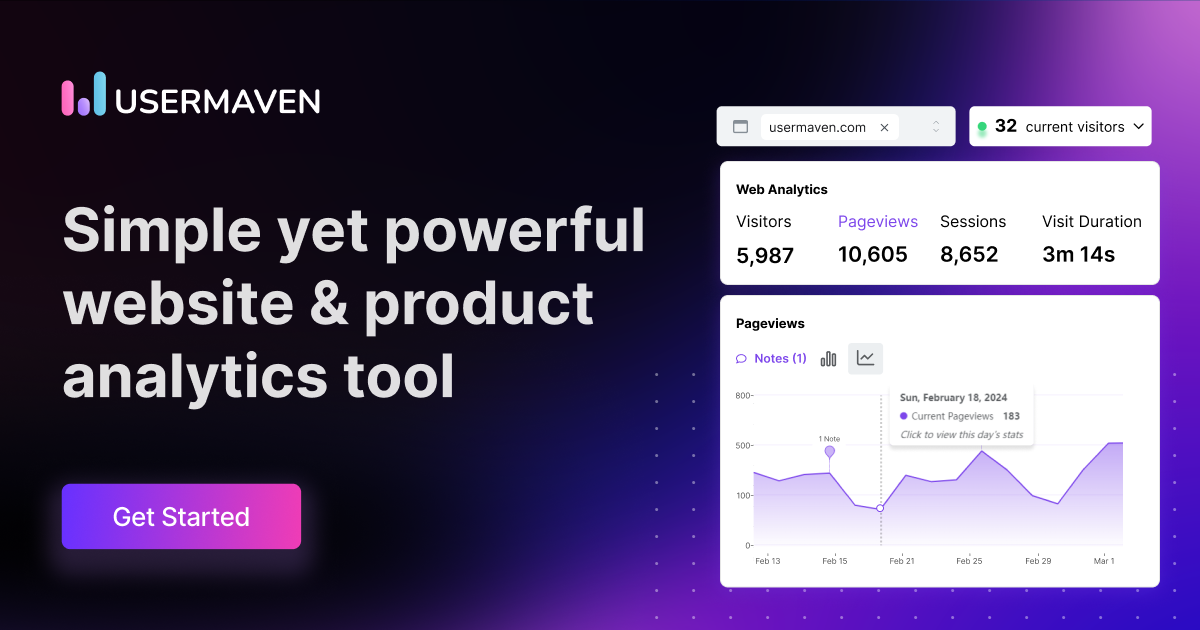
Usermaven helps marketing teams, agencies, and brands connect every touchpoint to revenue. Get accurate, real-time attribution, understand what drives growth, and make confident, data-backed decisions, all in one easy-to-use platform.
Run a free AEO + signal audit for your domain.
AI Answer Engine Optimization (AEO)
List once. Convert intent from live AI conversations without heavy integration.
Customer journey analytics is a data-driven approach to mapping and analyzing every interaction a customer has with a brand across all channels and over time. It utilizes data integration, journey mapping software, and advanced analytics to create a unified, omnichannel view of the customer experience. This enables businesses to identify friction points, predict future behavior, and optimize marketing, sales, and service processes to improve retention and revenue.
Solutions aggregate customer interaction data from sources like websites, mobile apps, CRM systems, support tickets, and marketing campaigns into a single view.
Analytics platforms then visualize these touchpoints into coherent journey maps, identifying common paths, drop-off points, and moments of significant engagement.
Businesses analyze this data to uncover pain points, predict churn, and trigger personalized automated interventions to enhance the customer experience.
Analyze browse and purchase paths to deliver personalized product recommendations and targeted offers, increasing average order value and conversion rates.
Identify drop-offs in digital account opening or loan application journeys to streamline forms and reduce abandonment, ensuring regulatory compliance.
Track how users navigate within an application to understand feature usage patterns and proactively guide users to high-value functionalities.
Map patient journeys from appointment scheduling to post-care follow-up to reduce wait times, improve communication, and enhance patient satisfaction.
Analyze service request patterns and parts ordering journeys to predict equipment failures and enable proactive, predictive maintenance support.
Bilarna evaluates every Customer Journey Analytics provider through a proprietary 57-point AI Trust Score. This comprehensive assessment scrutinizes technical expertise, project delivery track records, client reference checks, and compliance with data privacy standards like GDPR. We continuously monitor performance to ensure all listed partners maintain the highest standards of reliability and customer satisfaction.
Costs vary significantly based on deployment scale, data complexity, and required features, ranging from monthly SaaS subscriptions for smaller businesses to large enterprise licenses exceeding $100,000 annually. Key cost drivers include data volume, the number of user seats, and the level of required customization or professional services.
Essential features include omnichannel data integration, visual journey mapping, real-time analytics, predictive modeling, and integration capabilities with existing CRM and marketing automation tools. The platform should also offer robust data privacy controls and the ability to trigger automated actions based on journey insights.
A basic implementation for a defined use case can take 4-8 weeks, while a full-scale enterprise deployment integrating multiple complex data sources may require 6-12 months. The timeline heavily depends on data readiness, IT infrastructure, and the scope of process changes required.
Web analytics focuses on behavior on a single channel (like a website), measuring metrics like page views and bounce rates. Customer journey analytics provides a holistic, cross-channel view, connecting online and offline interactions over the entire customer lifecycle to understand the complete narrative and intent behind behaviors.
You need a unified customer identifier and data from key touchpoints such as your website, mobile app, CRM, email service provider, and customer support system. Starting with a focused dataset for a high-priority journey, like new customer onboarding, is a recommended best practice.
Invoices are automatically generated for every customer order without additional action. Follow these steps to ensure this feature is active: 1. Access your store dashboard and navigate to the order management or invoice settings. 2. Verify that automatic invoice generation is enabled. 3. Customize invoice templates if needed to include your business details. 4. Save the settings to ensure invoices are created and sent to customers automatically upon order placement.
To understand data upload limits and payment requirements on analytics platforms, follow these steps: 1. Review the platform's account types, such as free and paid plans. 2. Check the data upload limits for each plan; free accounts often have row limits per upload. 3. Determine if a credit card is required for free or paid accounts. 4. Understand the cancellation policy for paid subscriptions, which usually allows cancellation at any time.
Demos can be effectively used at multiple points throughout the buyer journey to enhance engagement and facilitate decision-making. Initially, they serve as pre-call discovery tools, allowing prospects to explore product features before speaking with sales. During live demos, they provide interactive experiences that help clarify product value. Post-call, demos support follow-up activities such as champion enablement and upsell campaigns. Additionally, demos can be embedded on websites tailored to specific personas or use cases and utilized in retargeting campaigns across platforms like LinkedIn, Google, and Reddit. This flexibility ensures demos contribute to accelerating the buyer journey from awareness to conversion.
Yes, a digital twin can automate scheduling and customer support by handling routine tasks such as booking meetings and answering frequently asked questions. It operates continuously without breaks, ensuring customers receive timely responses and appointments are managed efficiently. This automation reduces the workload on human staff, minimizes errors, and enhances the overall customer experience by providing consistent and reliable service around the clock.
Use a text expander tool effectively for customer support by following these steps: 1. Create quick-access shortcuts for common responses, troubleshooting guides, and knowledge base links. 2. Use standardized templates to maintain consistent communication tone and style. 3. Insert responses rapidly during multiple ticket handling to improve efficiency. 4. Utilize search features to find saved snippets quickly. 5. Sync shortcuts across platforms to ensure seamless support across devices. This approach reduces response time and enhances customer satisfaction.
Yes, AI customer service platforms are designed to support multilingual communication, often covering over 50 languages. They can automatically translate incoming messages and responses, enabling customer service teams to communicate confidently with a diverse global customer base. This multilingual capability helps maintain consistent brand tone and messaging across different channels and languages. Additionally, intelligent assistance and smart human handover features ensure complex or sensitive cases are escalated to human agents when necessary, preserving service quality regardless of language barriers.
Yes, AI customer support agents are designed to handle complex customer issues by learning and following your specific business processes and rules. They can manage intricate workflows such as order modifications, cancellations, and returns by integrating with your existing systems like Shopify, Magento, or custom APIs. Moreover, these AI agents can be trained to communicate in your brand’s unique tone of voice, ensuring consistent and natural interactions across all customer touchpoints and languages. This human-like communication helps maintain brand identity while providing quick and reliable support. Additionally, you can monitor the AI’s reasoning and continuously provide feedback to improve its responses and actions, making it a dependable assistant for both simple and complex support cases.
Yes, AI systems designed for car dealerships can handle multiple customer calls simultaneously without any busy signals. This capability ensures that every customer receives immediate attention regardless of call volume. The AI personalizes each conversation, providing consistent and accurate responses whether it is the first call of the day or one of many. This scalability helps dealerships never miss a lead, improves customer satisfaction, and optimizes the sales and service process by efficiently managing high call traffic.
Yes, AI video analytics solutions are designed to integrate seamlessly with existing security systems without the need for hardware modifications. This means organizations can enhance their video surveillance capabilities by adding AI-driven analytics without replacing cameras, servers, or other infrastructure components. The software typically connects to current video feeds and security platforms, allowing users to apply customized rules, attach images for improved detection, and receive detailed reports. This flexibility reduces implementation costs and downtime, enabling businesses to upgrade their security operations efficiently while maintaining their current hardware investments.
Many modern data analytics platforms are designed to integrate seamlessly with your existing technology infrastructure. This means you do not need to replace your current systems to start using the platform. These solutions are built with flexibility in mind, allowing them to sit on top of your existing ecosystem without requiring extensive integration work on your part. This approach helps organizations adopt new analytics capabilities quickly while preserving their current investments in technology. It is advisable to check with the platform provider about specific integration options and compatibility with your current setup.