Step 1
Machine-Ready Briefs
AI translates unstructured needs into a technical, machine-ready project request.
We use cookies to improve your experience and analyze site traffic. You can accept all cookies or only essential ones.
 Bilarna
Stop browsing static lists. Tell Bilarna your specific needs. Our AI translates your words into a structured, machine-ready request and instantly routes it to verified Live Dashboards Software experts for accurate quotes.
AI translates unstructured needs into a technical, machine-ready project request.
Compare providers using verified AI Trust Scores & structured capability data.
Skip the cold outreach. Request quotes, book demos, and negotiate directly in chat.
Filter results by specific constraints, budget limits, and integration requirements.
Eliminate risk with our 57-point AI safety check on every provider.
Verified companies you can talk to directly
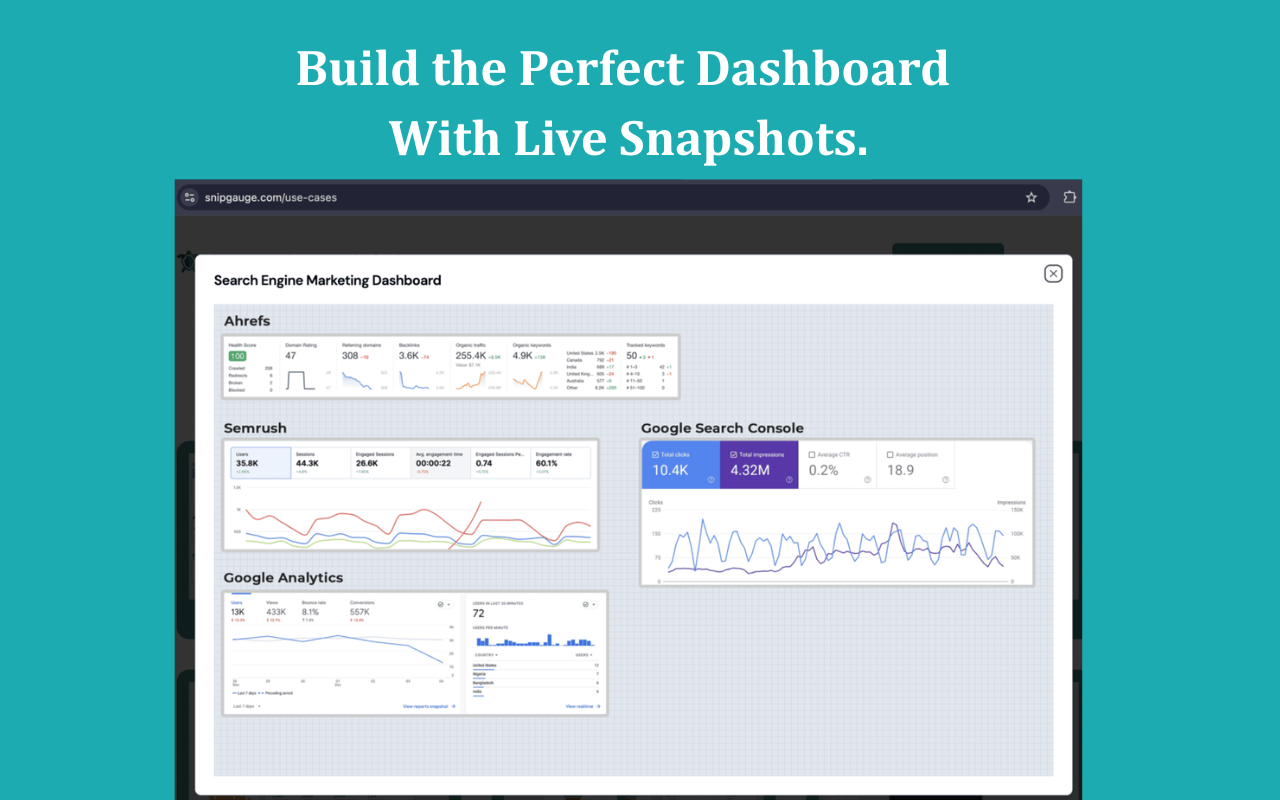
Boost your workflow with live dashboards using snapshots
Run a free AEO + signal audit for your domain.
AI Answer Engine Optimization (AEO)
List once. Convert intent from live AI conversations without heavy integration.
Live dashboards are dynamic data visualization tools that aggregate and display key performance indicators (KPIs) and metrics in real-time from multiple sources. They utilize data streaming technologies and interactive charts to provide an up-to-the-minute view of business operations, system health, or financial performance. This enables managers and executives to monitor trends, identify anomalies instantly, and make data-driven decisions without delay.
The software integrates with various databases, APIs, and cloud services to pull raw data streams into a centralized processing engine.
An analytics engine processes incoming data to calculate defined KPIs and renders them onto interactive, customizable visual widgets.
Updated visualizations are instantly pushed to user interfaces, providing stakeholders with continuous, actionable intelligence for monitoring.
Traders monitor live market data, portfolio performance, and risk exposure through dashboards that update with every tick for split-second decisions.
Teams track real-time sales, website traffic, conversion rates, and inventory levels to optimize marketing campaigns and logistics on the fly.
Operational dashboards display machine uptime, production line output, and quality control metrics to preempt downtime and maintain efficiency.
SOC teams use security dashboards to visualize network traffic, threat alerts, and system health in real time for immediate incident response.
Product managers monitor active users, feature adoption, and system performance metrics to guide development priorities and customer support.
Bilarna evaluates every live dashboards provider through a proprietary 57-point AI Trust Score, ensuring reliability for critical B2B operations. This score rigorously assesses technical expertise, proven delivery track records, and the robustness of client support structures. We continuously monitor performance and client feedback, so you engage only with top-tier, verified specialists.
Costs vary significantly based on data volume, sources, and customization, typically ranging from mid-tier SaaS subscriptions to large enterprise licenses. Implementation and integration services are often quoted separately. Always request detailed quotes that outline licensing, setup, and ongoing support fees.
A live dashboard updates data automatically and continuously, often within seconds, providing an immediate view of current performance. Static reports are snapshots of historical data, requiring manual generation. The core difference is the capacity for real-time monitoring versus retrospective analysis.
A basic implementation with common data sources can take 2-4 weeks, while complex, multi-source enterprise deployments may require 2-6 months. Timelines depend heavily on data accessibility, integration complexity, and the level of custom visualization development required.
Prioritize low-latency data processing, a wide range of native connectors, strong data security protocols, and customizable alerting. The ability to handle high-velocity data streams and provide role-based access controls are also critical for enterprise adoption and security.
A frequent mistake is dashboard overload—displaying too many metrics that obscure critical insights. Successful deployment starts by identifying the 5-10 core KPIs that drive decisions. Another pitfall is neglecting to establish clear data ownership and update protocols, leading to unreliable data.
Yes, a full-service branding agency can manage international live events as part of an integrated marketing strategy. This involves end-to-end management of events across multiple countries, ranging from business roundtables and trade show participation to large-scale bespoke events like air shows or international country branding initiatives. The agency typically handles everything from concept development and strategic planning to on-the-ground execution, leveraging a developed network of international partner companies for logistics, construction, and implementation. Key responsibilities include project management, vendor coordination, creative direction, audience engagement, and ensuring quality, delivery, and reliability. For B2B companies, such events are crucial for lead generation, brand visibility, and stakeholder engagement in key markets, requiring a hands-on approach to align the event experience with the overall brand identity and business objectives.
Live sports events on streaming platforms are typically organized and categorized by several criteria to facilitate user navigation. Common categorizations include sorting by sport type, such as football, basketball, or tennis. Within each sport, events are further divided by leagues, tournaments, or competitions, for example, the English Premier League or the NBA. Dates are also a key factor, with matches grouped into categories like 'Today', 'Tomorrow', or 'All Upcoming'. Some platforms also highlight 'Hot' or featured matches to attract viewers. Additionally, filters allow users to select specific leagues or sports, making it easier to find desired live events quickly and efficiently.
A browser extension designed for live product demos can significantly enhance their effectiveness by providing real-time presenter notes that guide the sales team on what to say during the demonstration. This ensures that every demo is consistent and aligned with the company's messaging, regardless of the presenter's experience level. The extension can synchronize talking points with the current view of the application, offering contextually relevant information that helps address customer questions promptly. Additionally, it allows seamless integration of various collateral such as slides, videos, and graphics, enabling a dynamic Tell-Show-Tell approach that keeps prospects engaged. By reducing the cognitive load on presenters and automating access to organizational knowledge, the extension helps convert demos into sales more efficiently and shortens the sales cycle by minimizing the need for follow-up calls.
A media group can ensure timely and engaging coverage of live events by leveraging a combination of real-time reporting tools, experienced journalists, and multimedia platforms. Utilizing social media channels, live blogs, and video streaming allows the group to deliver instant updates and interactive content to audiences. Coordination among editorial teams and technical staff is crucial to manage the flow of information efficiently. Additionally, incorporating audience interaction through comments and polls can increase engagement, making the coverage more dynamic and responsive to viewer interests.
AI can assist sales representatives during live calls by providing real-time guidance and support. It can offer instant battle cards, suggest effective objection handling techniques, and provide coaching prompts as the conversation unfolds. This helps sales reps respond promptly and accurately to prospects' concerns, improving the chances of closing deals. Additionally, AI can analyze live conversations to detect key patterns, surface relevant information, and recommend the best next steps, enabling reps to navigate complex discussions with confidence and efficiency.
AI-powered localization improves live sports commentary by providing real-time, multilingual voice translations that enhance accessibility and engagement. Steps: 1. Integrate AI-driven speech translation technology into live broadcasts. 2. Enable multi-speaker, expressive commentary in various languages. 3. Deliver synchronized live translations to global audiences via apps or streaming platforms. 4. Maintain emotional fidelity and cultural relevance in translations. 5. Expand reach by supporting numerous languages to cater to diverse fan bases.
Augmented reality enhances the live sports experience by providing interactive and immersive features. 1. Use 3D live replays to watch and rewatch key moments from any device. 2. Access live stats and goal tracking to stay updated in real time. 3. Engage with mini games and spatial audio for a more dynamic and realistic atmosphere. 4. Experience seamless interaction before, during, and after matches to deepen fan engagement.
Businesses can access real-time information and live updates for market monitoring through dedicated platforms and tools that provide immediate data feeds and alerts. This is achieved via application programming interfaces (APIs) that connect to data sources, automated web scraping for specific websites, and direct integrations with official databases or market data providers. These systems enable professionals to track critical metrics, such as pricing fluctuations, news developments, and competitive activities, as they happen. Access to live information allows companies to react swiftly to opportunities or threats, supports dynamic pricing strategies, and facilitates up-to-the-minute reporting, which is essential for maintaining agility and making time-sensitive decisions in fast-moving industries.
Implement live AI translation by following these steps: 1. Choose a live AI translation platform that supports multiple languages and real-time interpretation. 2. Set up your church's audio equipment to ensure high-quality sound input, as audio clarity directly affects translation accuracy. 3. Train or configure the AI with relevant terminology, especially biblical terms, to improve translation quality. 4. Use built-in tools to monitor audio quality during services and adjust as needed. 5. Provide support for your team, including access to sound technicians if available, to resolve any technical issues promptly. 6. Allow your congregation to access translations easily with minimal steps to enhance their experience.
Customizable dashboards enhance team productivity by allowing users to tailor their workspace to focus on the most important tasks and events. By embedding to-do lists, notes, folders, or even external content, team members can organize their projects and priorities in a way that suits their workflow. This personalized overview helps reduce time spent searching for information and increases clarity on deadlines and responsibilities. With a clear and structured design, dashboards support managing multiple projects and discussions simultaneously, ensuring that nothing is overlooked. Ultimately, customizable dashboards provide a centralized hub that keeps teams aligned and focused on their goals.