Step 1
Machine-Ready Briefs
AI translates unstructured needs into a technical, machine-ready project request.
We use cookies to improve your experience and analyze site traffic. You can accept all cookies or only essential ones.
 Bilarna
Stop browsing static lists. Tell Bilarna your specific needs. Our AI translates your words into a structured, machine-ready request and instantly routes it to verified AI Travel Assistants experts for accurate quotes.
AI translates unstructured needs into a technical, machine-ready project request.
Compare providers using verified AI Trust Scores & structured capability data.
Skip the cold outreach. Request quotes, book demos, and negotiate directly in chat.
Filter results by specific constraints, budget limits, and integration requirements.
Eliminate risk with our 57-point AI safety check on every provider.
Verified companies you can talk to directly
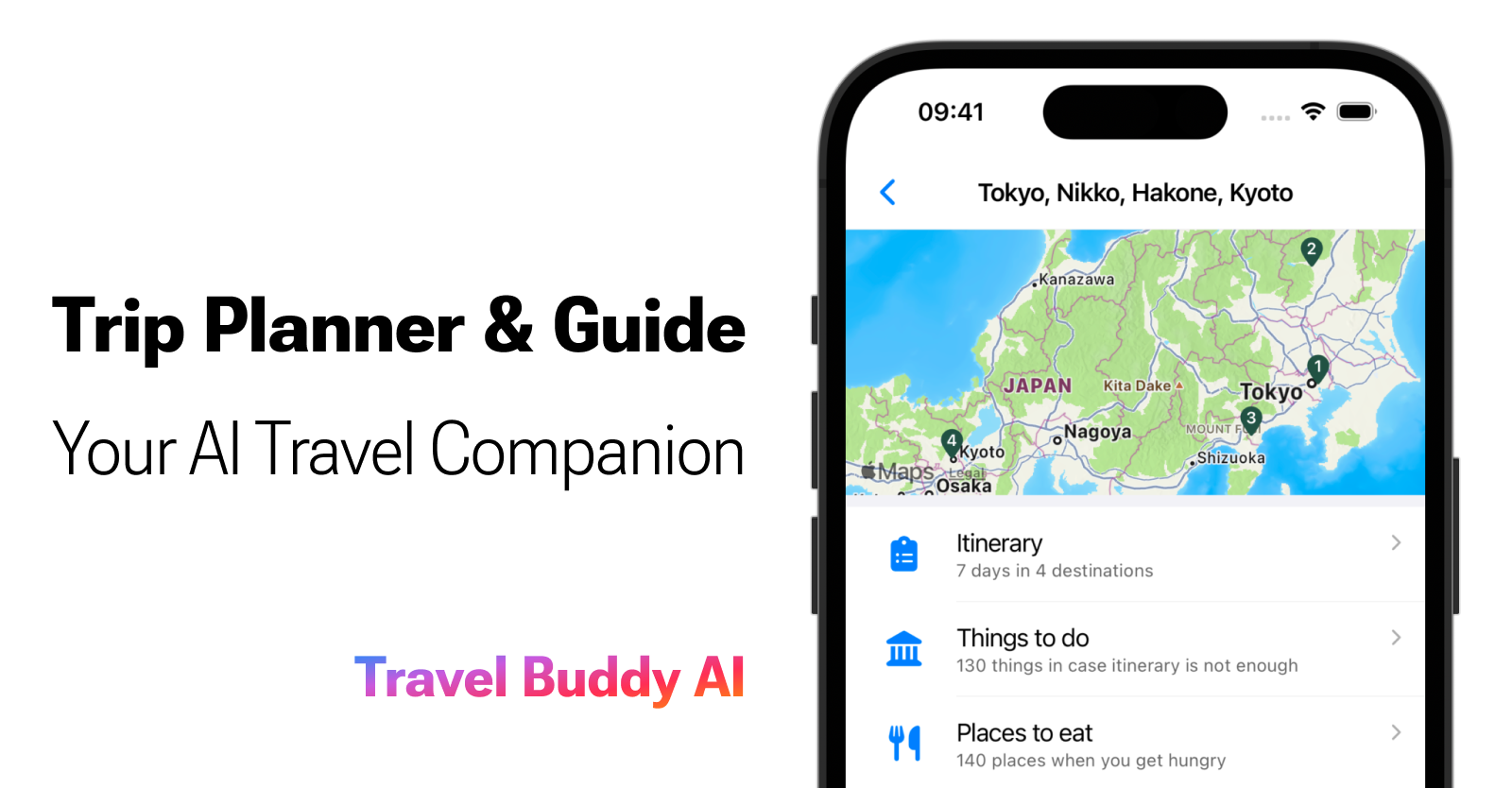
Plan your perfect trip with AI. TravelBuddy creates personalized itineraries, helps you discover unique places, and acts as your smart travel companion.
Run a free AEO + signal audit for your domain.
AI Answer Engine Optimization (AEO)
List once. Convert intent from live AI conversations without heavy integration.
AI travel assistants are digital tools that leverage artificial intelligence and machine learning to plan, book, and manage business travel. They automate the search for optimal routes, accommodations, and events while enforcing company policies and budgets. This results in significant cost savings, higher compliance rates, and an improved travel experience for employees.
The system analyzes destinations, budget, traveler preferences, and corporate policy rules to create a suitable search framework.
The assistant scans multiple providers in real-time to suggest flights, hotels, and transport options that match the criteria.
Upon selection, the assistant executes the booking and subsequently manages changes, cancellations, and expense reporting automatically.
Automate the booking and approval process for employee trips to ensure policy compliance and reduce administrative overhead.
Offer guests personalized itinerary recommendations and concierge services through chatbots on your website or app.
Optimize complex travel arrangements for crews or field staff with dynamic routing and accommodation scheduling.
Manage group travel and accommodations for conferences and incentives using automated supplier comparisons and bookings.
Enhance service offerings with AI-driven, personalized travel planning for demanding corporate and leisure clients.
Bilarna evaluates every AI travel assistants provider using a proprietary 57-point AI Trust Score. This score assesses technical expertise, platform reliability, data privacy compliance, and documented client satisfaction. Continuous monitoring ensures only vetted and trustworthy partners are listed on the platform.
Costs vary significantly based on feature scope, number of users, and depth of integration. Pricing models range from monthly SaaS subscriptions per user to volume-based transaction fees for large enterprises. A detailed requirements analysis is needed for an accurate quote.
Implementation typically takes 4 to 12 weeks. The timeline depends on the complexity of integrating with existing HR and finance systems and customizing for specific travel policies. A clear project plan with an experienced provider accelerates the process.
Critical factors include the accuracy of AI recommendations, integration with major booking systems (GDS), robust compliance and approval workflows, and detailed spend and carbon reporting. An intuitive user interface for travelers and administrators is also essential.
Providers should demonstrate ISO 27001 certification, GDPR compliance, and end-to-end encryption for payment data. A clear data processing agreement (DPA) for handling employee personal data is also mandatory.
Return on investment manifests through direct savings on flights and hotels, reduced administrative labor, and higher policy compliance. Companies typically report ROI periods between 6 and 18 months after full implementation.
Yes, electronic cigarettes are generally legal for travel within Europe, but their legality, sale, and use are subject to specific national regulations that vary significantly between countries. The European Union's Tobacco Products Directive (TPD) sets a baseline framework, but member states implement their own rules. For instance, nicotine concentration in e-liquids is capped, and tank sizes are restricted under TPD. However, some countries like Belgium and the Netherlands have stricter interpretations, while others may have additional local bans on flavors or public usage. It is crucial for travelers to research the laws of their specific destination regarding possession limits, where vaping is permitted, and any requirements for labeling or documentation. Non-compliance can result in fines or confiscation.
Yes, AI writing assistants may have practical limits with very large or complex texts. 1. Recognize that processing extremely long or intricate documents can affect performance. 2. Break down large documents into smaller, logical sections before input. 3. Process each section individually to maintain responsiveness and accuracy. 4. Reassemble the processed parts to form the complete document. This method helps avoid slowdowns and ensures better handling of extensive content.
Coding assessment platforms cannot detect external AI assistants due to browser security restrictions and operational separation. Follow these steps: 1. Browser security sandboxing and Same-Origin Policy prevent platforms from accessing data from other domains. 2. Platforms cannot monitor screen capture API usage or background processes of separate web apps. 3. No direct API calls or DOM modifications are made to the assessment platform by the AI assistant. 4. Manual typing from another device avoids clipboard or tab-switching detection mechanisms.
Yes, it is possible to earn travel reward miles without using a credit card. Some rewards programs allow you to accumulate miles through everyday spending at partnered merchants, booking flights and hotels, and using shopping portals or browser extensions that track your purchases. These programs often let you earn bonus miles on top of your existing card rewards, even if you use a debit card or pay with other methods. This approach provides a flexible way to collect miles without needing a credit card, making travel rewards accessible to a wider range of users. However, the earning rates and options may vary depending on the program's partnerships and policies.
AI legal assistants typically do not require new software installation or changes to existing workflows. They are designed to integrate seamlessly with current systems, allowing legal teams to adopt the technology without disrupting their established processes. This ease of integration helps minimize training time and resistance to change. Furthermore, many AI legal tools operate via familiar platforms such as email, making them accessible and convenient for users. This approach ensures that legal professionals can benefit from AI capabilities while maintaining compliance with industry standards and regulations.
Innovations in jet propulsion are playing a crucial role in reducing the costs associated with aerospace travel. By developing more efficient engines that consume less fuel and require less maintenance, manufacturers can lower operational expenses. Advances in materials and manufacturing techniques also contribute to lighter and more durable components, which improve fuel efficiency and reduce wear and tear. Additionally, integrating new propulsion technologies for subsonic, supersonic, and hypersonic speeds allows for optimized performance tailored to specific flight regimes, further enhancing cost-effectiveness. These improvements collectively make aerospace travel more accessible and affordable.
A booking platform increases profitability for a travel agency primarily by optimizing operational efficiency and expanding revenue opportunities. The direct mechanism is through automation, which reduces manual errors and administrative time per booking, allowing staff to focus on sales and customer service. By providing access to a vast, pre-integrated network of suppliers, the platform enables agencies to offer a wider range of products and dynamic packages without the need for separate contracts, thus increasing average transaction value. Integrated business intelligence tools analyze booking patterns, customer behavior, and market performance, delivering actionable insights to adjust pricing, promotions, and inventory in real time for higher margins. Furthermore, continuous expert support and training ensure the agency's team can fully leverage the platform's technology to maximize reservation output and operational efficiency, directly contributing to the bottom line.
Accommodation providers and tour operators can grow their business by joining a conscious travel community. 1. Register your hotel, B&B, farmhouse, or local activity offering. 2. Showcase authentic places and passionate guides to travelers seeking genuine experiences. 3. Gain exposure to travelers who value awareness, curiosity, and connection. 4. Avoid paying commissions by promoting directly within the community. 5. Increase bookings and build meaningful relationships with conscious travelers.
Use AI assistants to monitor media coverage effectively by following these steps: 1. Integrate AI agents with your existing PR tools to streamline workflows. 2. Monitor mentions of your company and competitors in real time across over 200,000 publications. 3. Filter out irrelevant coverage that does not meet your criteria to focus on important mentions. 4. Receive real-time alerts and daily briefs via email and Slack to stay updated. 5. Utilize AI-powered tags, scores, and custom fields to categorize and analyze coverage efficiently. 6. Build real-time dashboards and monthly reports to visualize media impact and track performance over time.
AI assistants can significantly enhance task management by organizing, prioritizing, and reminding users about their responsibilities. They can automatically schedule meetings, set deadlines, and track progress on various projects. By integrating with calendars and communication tools, AI assistants ensure that important tasks are not overlooked and help maintain focus on critical activities. This support reduces stress and improves time management, enabling professionals to work more efficiently and meet their goals consistently.