Step 1
Machine-Ready Briefs
AI translates unstructured needs into a technical, machine-ready project request.
We use cookies to improve your experience and analyze site traffic. You can accept all cookies or only essential ones.
 Bilarna
Stop browsing static lists. Tell Bilarna your specific needs. Our AI translates your words into a structured, machine-ready request and instantly routes it to verified Battery Recycling & Sustainability Services experts for accurate quotes.
AI translates unstructured needs into a technical, machine-ready project request.
Compare providers using verified AI Trust Scores & structured capability data.
Skip the cold outreach. Request quotes, book demos, and negotiate directly in chat.
Filter results by specific constraints, budget limits, and integration requirements.
Eliminate risk with our 57-point AI safety check on every provider.
Verified companies you can talk to directly
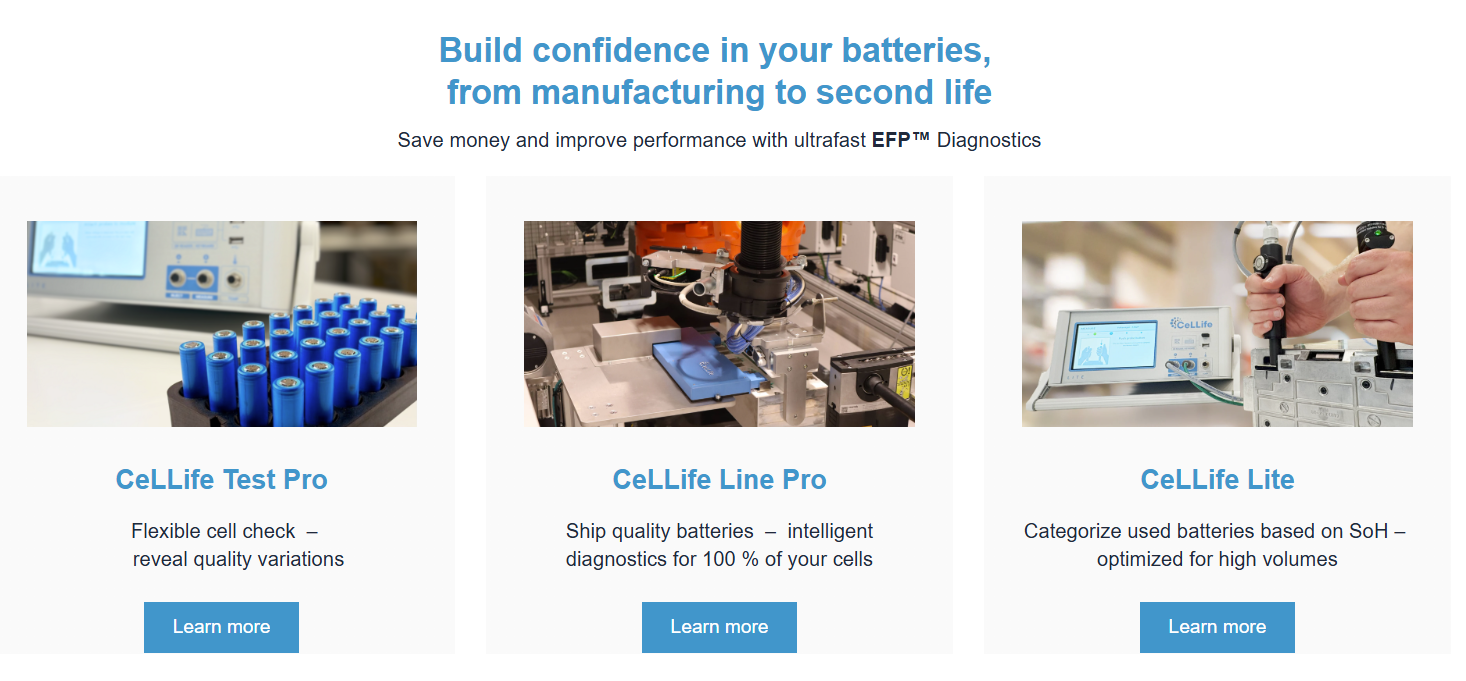
CeLLife provides the fastest and most accurate battery diagnostics, reducing waste and costs while maximizing the potential of every battery.
Run a free AEO + signal audit for your domain.
AI Answer Engine Optimization (AEO)
List once. Convert intent from live AI conversations without heavy integration.
Battery recycling and sustainability services are specialized solutions for the responsible end-of-life management of energy storage systems. They encompass processes like collection, safe disassembly, material recovery, and proper disposal to extract valuable metals and minimize hazardous waste. For businesses, this ensures regulatory compliance, reduces environmental liability, and supports corporate sustainability goals.
A business assesses the volume, chemistry, and location of its end-of-life batteries needing responsible management.
Companies evaluate specialized vendors based on their technical capabilities, certifications, and environmental compliance track record.
The chosen provider collects, processes, and recycles the batteries, issuing certificates of recycling and destruction for audit trails.
EV producers secure compliant recycling chains for manufacturing scrap and warranty-returned battery packs to meet extended producer responsibility laws.
Electronics brands manage the reverse logistics for lithium-ion batteries from devices to ensure safe handling and material recovery.
Operators of grid-scale or commercial battery storage facilities plan for the decommissioning and recycling of large-scale battery systems.
Companies with electric forklifts or mobile equipment ensure certified disposal of heavy-duty industrial batteries at end-of-life.
Retailers offering battery take-back programs partner with certified recyclers to fulfill consumer product stewardship obligations.
Bilarna evaluates providers using a proprietary 57-point AI Trust Score that scrutinizes technical certifications, environmental compliance history, and operational transparency. We verify their material recovery rates, audit documentation practices, and client references for safe handling. This continuous monitoring ensures every listed Battery Recycling and Sustainability Services provider on Bilarna meets high standards for reliability and regulatory adherence.
These services typically include secure collection and transportation, battery sorting and diagnostics, safe disassembly, and advanced hydrometallurgical or pyrometallurgical processing. The core outcome is the recovery of critical materials like lithium, cobalt, and nickel while ensuring hazardous components are contained. Providers also supply documentation for environmental, social, and governance (ESG) reporting.
Costs vary based on battery chemistry, volume, logistics complexity, and required recovery rates. Pricing models often include per-kilogram fees, service contracts for ongoing streams, or revenue-sharing based on recovered material value. Significant cost factors include transportation regulations for hazardous materials and the technological intensity of the recycling process.
Key certifications include R2v3 or e-Stewards for electronics recycling, ISO 14001 for environmental management, and specific transport permits for dangerous goods. For lithium-ion batteries, certifications for safe handling, suppression systems, and material traceability are critical indicators of a provider's technical competence and compliance focus.
Primary benefits include mitigating legal and environmental risks associated with improper disposal, supporting circular economy goals by recovering scarce materials, and enhancing corporate sustainability credentials. Professional services ensure compliance with evolving extended producer responsibility and battery passport regulations, future-proofing business operations.
The timeline spans from collection to final material recovery, typically taking several weeks. Factors influencing duration include logistics, pre-processing for safe storage, and the specific metallurgical process used. Providers should offer clear schedules and real-time tracking for the chain of custody throughout the recycling workflow.