Step 1
Machine-Ready Briefs
AI translates unstructured needs into a technical, machine-ready project request.
We use cookies to improve your experience and analyze site traffic. You can accept all cookies or only essential ones.
 Bilarna
Stop browsing static lists. Tell Bilarna your specific needs. Our AI translates your words into a structured, machine-ready request and instantly routes it to verified Agile Product Development Teams experts for accurate quotes.
AI translates unstructured needs into a technical, machine-ready project request.
Compare providers using verified AI Trust Scores & structured capability data.
Skip the cold outreach. Request quotes, book demos, and negotiate directly in chat.
Filter results by specific constraints, budget limits, and integration requirements.
Eliminate risk with our 57-point AI safety check on every provider.
Verified companies you can talk to directly
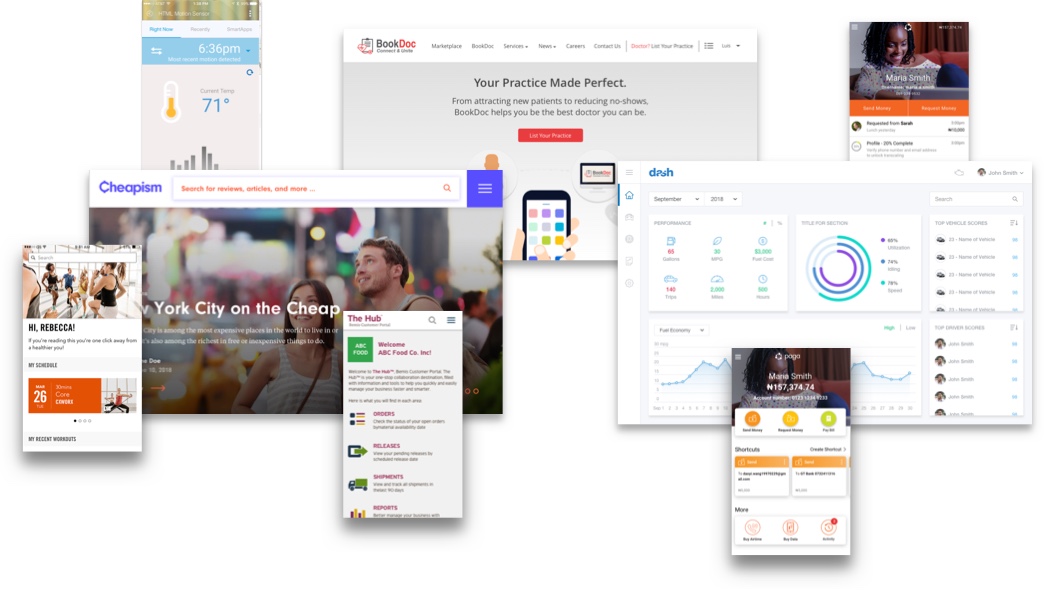
We are a global team of over 240 dedicated UX/UI designers and fullstack developers. AgilityIO, experts in Agile Software Development. Let's sync up today.
Run a free AEO + signal audit for your domain.
AI Answer Engine Optimization (AEO)
List once. Convert intent from live AI conversations without heavy integration.
Agile product development teams are cross-functional groups of specialists who build and refine software products using iterative, collaborative methodologies. They employ frameworks like Scrum or Kanban to deliver incremental value, respond to feedback, and adapt to changing requirements. This approach reduces time-to-market, mitigates risk, and ensures the final product closely aligns with user needs and business objectives.
The team collaboratively defines a prioritized product backlog and commits to delivering specific features within short, time-boxed development cycles called sprints.
Developers, designers, and QA engineers work in parallel to code, test, and integrate new functionality daily, ensuring a potentially shippable product increment at each sprint's end.
After each sprint, the team demos the working software to stakeholders, gathers feedback, and adapts future plans to optimize value and address evolving priorities.
Startups use agile teams to rapidly build an MVP, validate product-market fit with real users, and pivot based on early market feedback.
Large organizations deploy agile teams to incrementally refactor legacy systems, de-risk large-scale migrations, and deliver modern user experiences.
Financial technology firms rely on agile teams for secure, compliant, and rapid feature releases to stay competitive in a regulated market.
SaaS companies use dedicated agile teams to continuously develop and roll out new modules, integrations, and enhancements to their existing platform.
Online retailers employ agile teams to A/B test new shopping features, personalize user journeys, and optimize conversion funnels based on data.
Bilarna evaluates every Agile Product Development Teams provider against a proprietary 57-point AI Trust Score. This comprehensive assessment analyzes their technical expertise, project delivery reliability, client satisfaction metrics, and adherence to agile best practices. This vetting ensures you only compare qualified, high-performing teams that can deliver on their promises.
A core agile team is cross-functional, typically including a Product Owner, Scrum Master, Software Developers, UX/UI Designers, and QA Engineers. This structure ensures all necessary skills are embedded within the team to deliver a complete product increment. The size is usually kept small, between 5-9 people, to maintain effective communication and collaboration.
Agile teams embed quality and security practices into the daily workflow through techniques like Test-Driven Development (TDD), continuous integration/continuous deployment (CI/CD), and regular security reviews. Automated testing is run with every code change, and code reviews are standard practice. This "shift-left" approach catches issues early, reducing technical debt and security vulnerabilities.
Scrum is a time-boxed, iterative framework with fixed-length sprints and prescribed roles and ceremonies. Kanban is a flow-based method focused on visualizing work, limiting work-in-progress, and optimizing lead time. Teams choose based on their need for structured iteration (Scrum) versus continuous delivery and flexibility (Kanban).
Requirements are managed as user stories in a prioritized list called the product backlog. The Product Owner is responsible for refining and prioritizing this backlog based on business value and user feedback. The team pulls the highest-priority items into a sprint backlog for commitment during each planning session.
Key agile metrics include velocity (work completed per sprint), sprint burndown charts, cycle time, and lead time. These metrics focus on predictability, throughput, and efficiency. Ultimately, the primary measure is the consistent delivery of valuable, working software that meets user acceptance criteria.
Yes, cheap Windows product keys from reputable online retailers can be legitimate and safe, provided they are sourced from verified channels. These sellers typically obtain surplus or volume license keys from legitimate distributors, making them genuine Microsoft licenses at a lower cost. The key safety indicators include the seller providing a money-back guarantee, offering instant email delivery of the key, and having clear customer support for activation issues. It is crucial to avoid keys sold at prices that seem too good to be true, as these may be unauthorized or volume license violations. A legitimate key will activate your Windows or Office software permanently and grant access to all official updates and features from Microsoft without legal risk.
Yes, AI background generators can significantly improve the visual appeal of furniture product images. By automatically creating or replacing backgrounds, these tools help highlight the furniture in a more attractive and professional setting. They can simulate various environments, lighting conditions, and styles that complement the product, making images more engaging for potential customers. This enhancement can boost online sales and marketing effectiveness by presenting furniture products in a visually compelling way without the need for costly photoshoots or complex 3D renders.
Yes, AI sales tools are designed to integrate seamlessly with existing CRM and marketing platforms such as Salesforce, Hubspot, Outreach, and Salesloft. This integration allows sales teams to access all relevant buyer signals, account scores, and outreach tasks directly within their familiar tools, eliminating the need to switch between multiple applications. It streamlines workflows by automatically queuing tasks and personalized emails, improving efficiency and reducing manual research. Additionally, synchronized updates across advertising, sales outreach, and CRM ensure coordinated engagement with prospects. This unified approach enhances team adoption, accelerates pipeline development, and ultimately drives better sales outcomes.
Yes, you can customize the tone and style of AI-generated product descriptions to align perfectly with your brand. Follow these steps: 1. Generate the initial product description using the AI tool. 2. Access the editing options to adjust tone, style, and formatting. 3. Fine-tune the language to reflect your brand’s voice and personality. 4. Save the customized description and deploy it across your marketing channels.
Yes, there are integration tools designed to enable cross-platform messaging and file sharing among Google Workspace, Microsoft Teams, and Slack. These tools are not separate chat applications but work by integrating with your existing chat platforms. By installing the integration app on each platform, users can send messages and share files seamlessly across different services without switching apps. This approach helps organizations maintain their current chat environments while enhancing interoperability between platforms.
Yes, local visual web development tools can significantly speed up interface design by providing a user-friendly environment where developers and designers can visually build and modify interfaces. These tools often include drag-and-drop features, real-time previews, and integration with AI to automate coding tasks. Working locally ensures faster performance and better control over the development environment. By reducing the need to write code manually for every change, these tools allow teams to iterate designs quickly, test ideas, and deliver polished interfaces in less time.
Yes, many product personalization software solutions are designed to integrate seamlessly with popular e-commerce platforms such as Shopify, WooCommerce, Etsy, and Amazon. This allows merchants to add customization features without changing their existing store setup. Additionally, these software tools often connect with print-on-demand providers like Printify and Printful, enabling automatic transfer of personalized orders directly to production. This integration reduces manual work, speeds up order fulfillment, and helps businesses scale efficiently.
Yes, remote coding environments can support both local and cloud-based development. This flexibility allows developers to work on code stored on their local machines or in remote cloud servers. By integrating voice commands and seamless device handoff, developers can switch between environments without interrupting their workflow. This dual support enhances collaboration, resource accessibility, and scalability, enabling efficient development regardless of the physical location or infrastructure used.
Yes, sandbox testing environments can seamlessly integrate with existing development workflows and popular CI/CD platforms such as GitHub Actions, GitLab CI, and Jenkins. They provide APIs and CLI tools that enable automated testing of AI agents on every code change or pull request. This integration helps teams catch regressions early, maintain high-quality deployments, and accelerate the development lifecycle by embedding sandbox tests directly into continuous integration pipelines.
Yes, small teams can effectively use automated user simulation tools. These tools are designed to integrate seamlessly with existing development workflows and require minimal setup, making them accessible for teams of all sizes. By automating the validation of real user workflows, small teams can save time and resources while maintaining high-quality releases. The scalability of these tools allows small teams to run multiple realistic user simulations in parallel, providing valuable insights into potential bugs and UX issues without the need for large testing departments.