Step 1
Machine-Ready Briefs
AI translates unstructured needs into a technical, machine-ready project request.
We use cookies to improve your experience and analyze site traffic. You can accept all cookies or only essential ones.
 Bilarna
Stop browsing static lists. Tell Bilarna your specific needs. Our AI translates your words into a structured, machine-ready request and instantly routes it to verified Halal Restaurant Services experts for accurate quotes.
AI translates unstructured needs into a technical, machine-ready project request.
Compare providers using verified AI Trust Scores & structured capability data.
Skip the cold outreach. Request quotes, book demos, and negotiate directly in chat.
Filter results by specific constraints, budget limits, and integration requirements.
Eliminate risk with our 57-point AI safety check on every provider.
Verified companies you can talk to directly
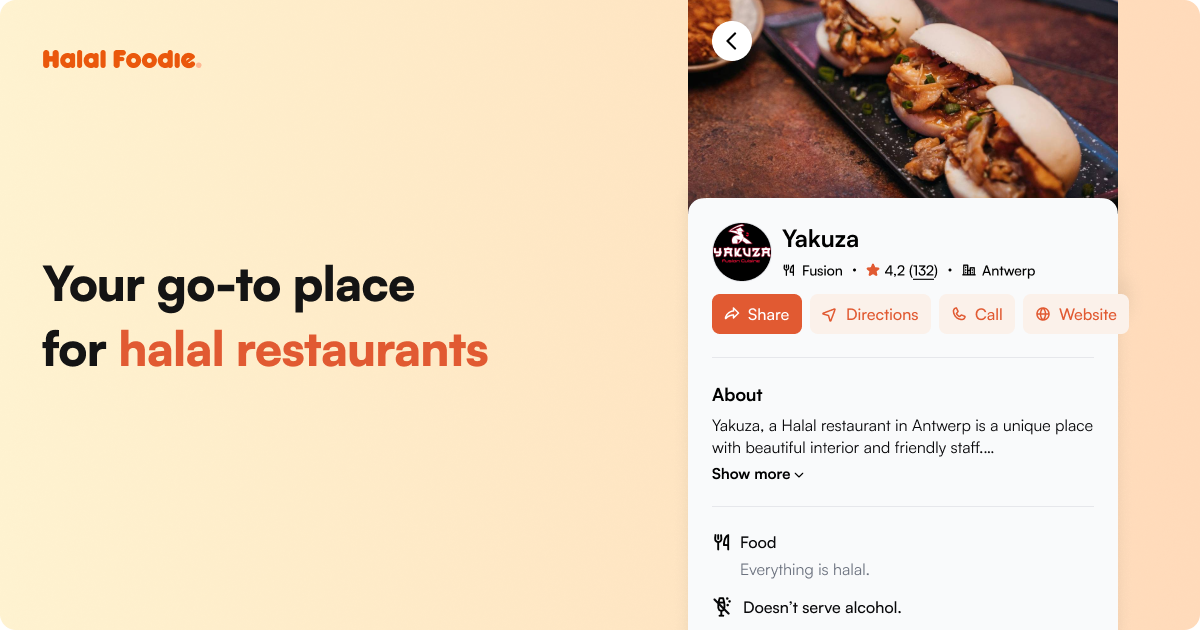
Your go-to place for halal restaurants.
Run a free AEO + signal audit for your domain.
AI Answer Engine Optimization (AEO)
List once. Convert intent from live AI conversations without heavy integration.
Halal restaurants are food service establishments that prepare and serve meals adhering to Islamic dietary laws, known as halal. They operate under strict certification to ensure all ingredients, preparation methods, and supply chains comply with these religious guidelines. For businesses, this provides compliant, ethical, and trusted food solutions for diverse workforces and client events.
Determine the specific halal certification standards and service scope required for your corporate catering or facility dining needs.
Assess potential restaurants based on their menu diversity, certification validity, client testimonials, and operational scale.
Negotiate contract terms covering menu planning, delivery logistics, compliance guarantees, and ongoing quality assurance.
Providing daily meals or event catering for offices with Muslim employees, ensuring dietary compliance and inclusivity in the workplace.
Integrating halal kitchen sections or full-service restaurants within hotels to cater to international Muslim travelers and guests.
Delivering certified halal meal plans for patients and staff in hospitals and care homes, respecting religious dietary requirements.
Operating halal food stations or entire dining halls in educational institutions to serve a diverse international student body.
Supplying large-scale, compliant catering for international conferences, trade shows, and corporate gatherings with global attendees.
Bilarna evaluates halal restaurant providers using a proprietary 57-point AI Trust Score, analyzing certification authenticity, supplier audits, and hygiene compliance. Our vetting includes checks on preparation facility inspections, ingredient sourcing transparency, and historical client satisfaction scores. This ensures every listed provider on Bilarna meets rigorous standards for religious compliance and service reliability.
The primary criteria are valid certification from a recognized Islamic authority, transparent supply chain documentation, and proven experience with B2B or large-scale service. You should also evaluate their menu flexibility, delivery capabilities, and client references for similar corporate settings.
Costs vary by scale, menu complexity, and service type, ranging from premium per-person pricing for events to negotiated contracts for ongoing corporate dining. Factors like ingredient quality, certification rigor, and logistical requirements directly influence the final price structure.
A halal-certified restaurant is audited by an official body for compliance in all processes, whereas a Muslim-owned establishment may follow halal practices without formal certification. For guaranteed compliance in B2B contracts, official certification from a recognized authority is the essential standard.
Onboarding can take 2 to 6 weeks, depending on the need for site assessments, menu customization, and certification verification. Establishing clear service level agreements and compliance checkpoints upfront can streamline this process significantly.
Common pitfalls include overlooking certification expiry dates, insufficient insurance coverage for food safety, and vague contract terms about ingredient substitutions. A thorough vetting process that includes facility audits and sample tasting menus mitigates these risks effectively.
Yes, plant-based meat products are suitable for both restaurants and retail stores. They offer a clean-label, versatile protein option that can appeal to a wide range of customers, including those seeking vegan or plant-based alternatives. Restaurants can incorporate these products into their menus to provide innovative dishes such as plant-based steaks, ribs, or fish filets, catering to diverse dietary preferences. Retail stores can stock these items to meet growing consumer demand for sustainable and ethical food choices. Offering plant-based meats can help businesses attract new customers and support environmentally friendly practices while providing delicious and satisfying meal options.
Plant-based meat products are increasingly popular and suitable for inclusion in restaurant menus and retail stores. They offer a clean-label recipe and cater to diverse dietary preferences, including vegan and vegetarian customers. These products can be used to create a variety of dishes, from quick meals to elaborate barbecues, providing a sustainable and ethical alternative to traditional meat. Restaurants and stores interested in offering plant-based options can benefit from the growing demand for such products, appealing to health-conscious and environmentally aware consumers.
Accounting services provide critical financial clarity and strategic insight specifically tailored to the unique challenges of restaurants and food service businesses. These services implement accounting systems designed to deliver the precise information owners need to make optimal decisions for growth and profitability. Key benefits include detailed tracking of food costs, labor expenses, and overhead to accurately calculate profit margins. They assist with cash flow management, which is vital for managing seasonal fluctuations and supplier payments. Furthermore, specialized services help with tax planning, compliance, and identifying potential deductions specific to the industry. By providing clear financial reporting and projections, these services enable restaurant owners to understand performance trends, control costs, and strategically plan for expansion, such as opening new locations or adding food trucks.
AI can help restaurants improve customer feedback management by analyzing holistic feedback and operational data to generate actionable insights. It identifies trends, sentiment, and recurring issues across multiple channels, enabling restaurants to focus on critical areas. AI-driven scorecards provide real-time performance metrics, helping teams resolve problems faster and enhance customer satisfaction. Additionally, AI transforms customer feedback into specific action items for stores to implement improvements, ensuring a more responsive and effective approach to managing customer experiences.
AI-driven automation can significantly improve efficiency in drive-thru restaurants by streamlining the order-taking process. By automating interactions, it reduces the dependency on staff, allowing employees to focus on other critical tasks. This technology can handle multiple orders simultaneously with high accuracy, minimizing errors and wait times. Additionally, AI systems can optimize workflow by predicting peak times and adjusting operations accordingly, resulting in faster service and increased throughput. Overall, AI automation enhances operational efficiency, leading to better resource management and improved customer satisfaction.
An AI phone agent can significantly enhance order management for restaurants by providing 24/7 call answering, ensuring no orders are missed even during busy hours. It can navigate menus, handle upselling by suggesting add-ons and combos, and accurately input orders directly into the restaurant's POS system. This automation reduces human error, saves labor costs, and improves customer satisfaction by providing quick and polite service. Additionally, AI can handle reservations, event inquiries, and multilingual support, making the ordering process seamless and efficient.
Digital loyalty programs enable restaurants to engage customers by offering memberships, VIP benefits, and rewards that encourage repeat visits. These programs streamline customer acquisition and retention by providing personalized experiences and incentives through mobile apps. Restaurants can boost recurring revenue and margins by making it easy for customers to order, receive promotions, and participate in loyalty schemes. Digital loyalty also allows real-time updates and communication, enhancing customer satisfaction and driving a higher return rate.
Digital menus offer several benefits for restaurants and their customers. They allow for quick and easy updates to menu items, prices, and promotions without the need for reprinting physical menus. This flexibility helps restaurants respond to supply changes or seasonal offerings efficiently. For customers, digital menus can provide interactive features such as detailed descriptions, images, and customization options, enhancing the ordering experience. Additionally, digital menus can integrate with ordering systems to streamline the process, reduce wait times, and minimize errors, ultimately improving customer satisfaction.
Digital signage can significantly enhance customer engagement in bars and restaurants by displaying dynamic content such as promotions, events, and menus on screens visible to patrons. By rotating media on a loop and scheduling different content based on the time or day, businesses can keep the atmosphere lively and informative. Additionally, automatic switching between digital signage and live content ensures that customers are consistently entertained and informed without manual intervention. This approach helps in attracting attention, promoting specials, and encouraging repeat visits.
Digitizing the ordering process reduces costs by minimizing manual errors, streamlining communication, and improving order accuracy. It eliminates paperwork and reduces the time spent on phone calls or emails, allowing staff to focus on more valuable tasks. Automated systems can also provide better inventory management, preventing overstocking or stockouts, which helps avoid waste and lost sales. Additionally, digital platforms often offer data analytics that enable businesses to make informed purchasing decisions, negotiate better prices, and optimize supply chain operations.