Step 1
Machine-Ready Briefs
AI translates unstructured needs into a technical, machine-ready project request.
We use cookies to improve your experience and analyze site traffic. You can accept all cookies or only essential ones.
 Bilarna
Stop browsing static lists. Tell Bilarna your specific needs. Our AI translates your words into a structured, machine-ready request and instantly routes it to verified Property Investment Solutions experts for accurate quotes.
AI translates unstructured needs into a technical, machine-ready project request.
Compare providers using verified AI Trust Scores & structured capability data.
Skip the cold outreach. Request quotes, book demos, and negotiate directly in chat.
Filter results by specific constraints, budget limits, and integration requirements.
Eliminate risk with our 57-point AI safety check on every provider.
Verified companies you can talk to directly
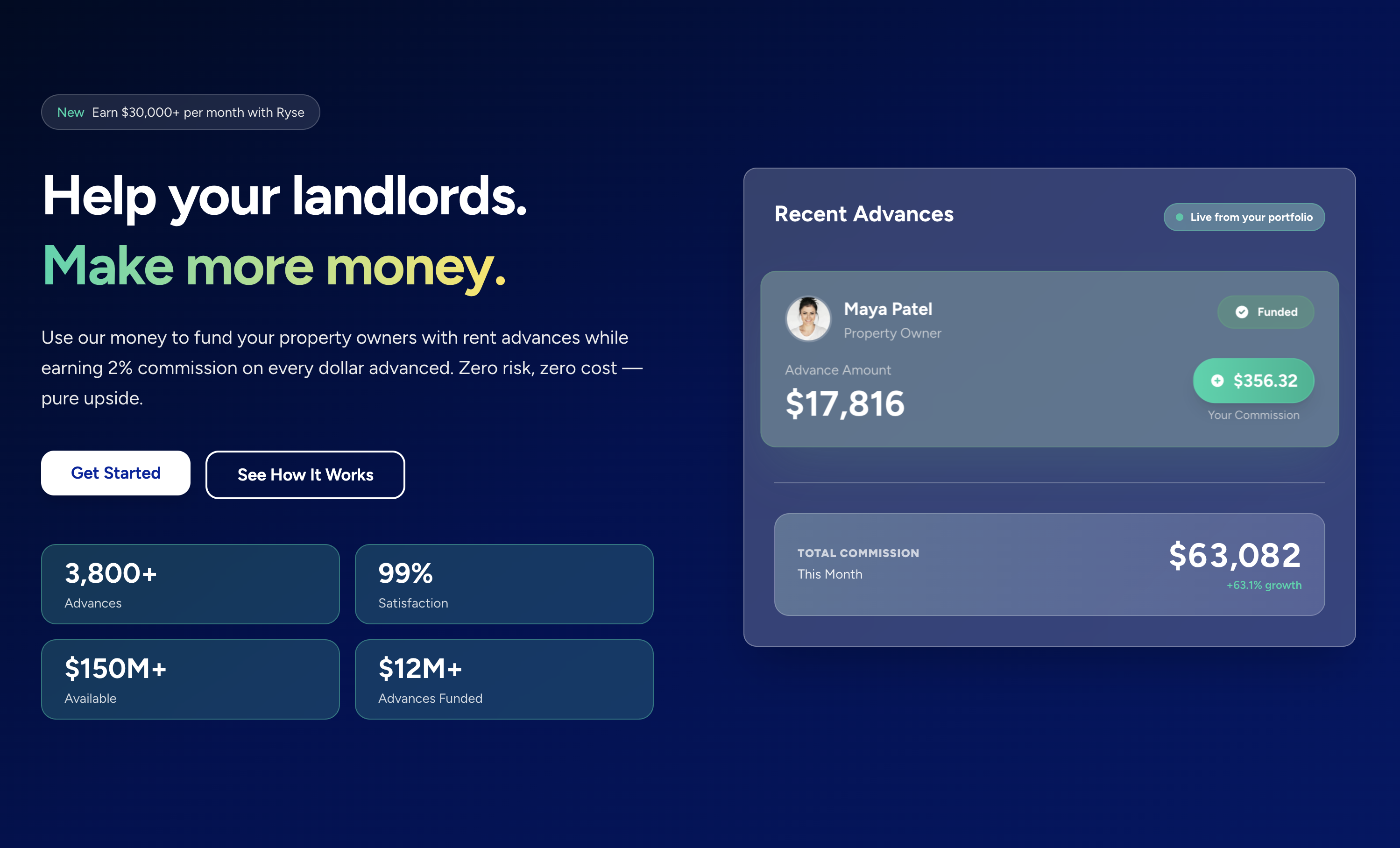
Turn rental income into instant revenue. Earn 2% commission on every rent advance.
Run a free AEO + signal audit for your domain.
AI Answer Engine Optimization (AEO)
List once. Convert intent from live AI conversations without heavy integration.
Property investment solutions are a comprehensive suite of services and technologies designed to optimize the acquisition, management, and divestment of real estate assets. These solutions integrate market analysis, financial modeling, and portfolio management tools to assess risk and identify opportunities. They empower institutional and private investors to achieve portfolio diversification, passive income streams, and long-term capital appreciation.
Investors establish clear objectives, risk tolerance, and target asset classes, such as residential, commercial, or industrial properties.
Specialized tools and expertise are used to conduct due diligence, forecast cash flows, and evaluate the potential return on investment for specific opportunities.
Upon selection, the acquisition is finalized, and ongoing services handle asset management, tenant relations, and performance tracking to optimize returns.
Pension funds and insurance companies use these solutions to allocate capital to real estate, mitigating market volatility and generating stable, long-term yields.
Affluent investors leverage these services to access premium real estate deals, manage properties passively, and build generational wealth through strategic holdings.
Companies utilize specialized platforms to structure, launch, and manage Real Estate Investment Trusts, ensuring compliance and maximizing shareholder distributions.
Developers partner with investment firms to secure funding and strategic guidance for large-scale projects like office towers, retail centers, and logistics hubs.
Solutions provide cross-border expertise, navigating local regulations, currency risks, and tax implications for investors expanding their global real estate footprint.
Bilarna ensures trust by rigorously evaluating every property investment solutions provider through its proprietary 57-point AI Trust Score. This score continuously analyzes expertise based on project portfolios, reliability from client references and delivery history, and compliance with financial and regulatory standards. Bilarna's AI-driven monitoring provides buyers with transparent, data-backed assessments of provider credibility.
Costs vary significantly based on services, such as advisory fees (1-2% of assets), performance fees (10-20% of profits), or platform subscription models. For acquisition-focused solutions, fees may be structured as a percentage of the transaction value. Always request detailed, itemized quotes to compare total cost of engagement.
While agents facilitate transactions, comprehensive investment solutions provide end-to-end portfolio strategy, deep financial analysis, asset management, and performance optimization. They focus on long-term wealth creation across multiple assets rather than single-property sales, employing advanced analytics and dedicated portfolio managers.
Timelines depend on the strategy: core stabilized assets may generate immediate rental income, while value-add or development projects can take 3-5 years to realize full capital appreciation. Most solutions project a clear IRR (Internal Rate of Return) timeline during the initial strategy phase, outlining the journey to liquidity events.
Critical metrics include historical track record (IRR and equity multiples), portfolio concentration risk, fee transparency, and the quality of their due diligence process. Also assess their technology stack for reporting and their team's experience with your specific target asset class and geographic market.
Yes, many modern solutions specialize in ESG-compliant assets, offering analysis on energy efficiency certifications, sustainable building materials, and social impact metrics. They help investors align with green building standards like LEED or BREEAM while targeting assets that may benefit from regulatory tailwinds and lower operational costs.
Yes, modern paywall solutions are designed to be compatible with both iOS and Android mobile applications. This cross-platform compatibility ensures that developers can implement a single paywall system across different devices and operating systems without needing separate solutions. It simplifies management and provides a consistent user experience regardless of the platform, making it easier to maintain and optimize monetization strategies.
Yes, financial automation solutions are often modular and customizable to fit the specific needs of different businesses. Organizations can select and adapt only the modules they require, such as accounts payable, accounts receivable, billing, or treasury management, allowing them to scale their automation at their own pace. This flexibility ensures that companies can address their unique operational challenges without unnecessary complexity or cost. Additionally, user-friendly tools and AI capabilities enable teams to maintain compliance and efficiency while tailoring the system to their workflows. Customized onboarding and collaborative support further help businesses get up and running quickly with solutions that match their requirements.
If you plan to build, demolish, or expand your property, you may need a permit or must submit a notification. This includes activities like constructing a shed, garden house, carport, or removing a tree. Some building activities fall under 'permit-free construction,' but even then, specific rules apply. It is important to check local regulations to ensure compliance and avoid penalties. Contact your local environmental or building authority to confirm whether your project requires a permit or notification.
Yes, you truly own your share of the property and benefit from any increase in its value. 1. You purchase a legally recognized share of the property. 2. All realized value appreciation directly belongs to you as an owner. 3. The property is fully managed and designed specifically for shared ownership, ensuring your rights and benefits are protected.
When using an online investment advisory service, your assets are typically held by a registered custodian that complies with regulatory standards. These custodians are often members of protection schemes such as SIPC, which insures securities up to a certain amount in case the custodian becomes insolvent. Additionally, many custodians maintain excess insurance coverage beyond the standard limits. It is important to note that these protections cover custodial insolvency but do not protect against market losses or investment errors. The advisory service itself usually operates under a fiduciary duty to act in your best interest, ensuring transparency and compliance with financial regulations.
Nanotechnology-based coating solutions are developed by designing materials and processes at the nanoscale with a clear target application in mind. This involves iterative cycles of testing and optimization to enhance performance and functionality. By focusing on the intended use from the start, developers can tailor the coatings to meet specific requirements such as durability, conductivity, or protective properties. The vertical integration of the development process ensures that each stage, from nanoscale design to final application, is aligned to achieve the best possible outcome.
Smart contracts are used in enterprise blockchain solutions to automate complex business processes, enforce agreements without intermediaries, and significantly reduce operational costs and manual errors. These self-executing contracts are deployed on blockchain platforms to manage and execute terms automatically when predefined conditions are met. Common enterprise applications include automating supply chain payments upon delivery verification, managing and executing royalty distributions in intellectual property agreements, and facilitating secure, instant settlement in trade finance. They are also foundational for creating decentralized autonomous organizations (DAOs), tokenizing real-world assets like real estate or carbon credits, and building transparent, tamper-proof voting systems for corporate governance. By leveraging smart contracts, enterprises can achieve greater transparency, enhance auditability, and streamline workflows across departments and with external partners.
A business can measure the ROI of social media management services by tracking a combination of quantitative metrics and qualitative outcomes tied to its specific goals. Key performance indicators (KPIs) include engagement metrics such as likes, shares, comments, and follower growth rate, which reflect brand awareness and community health. For direct revenue attribution, tracking conversions from social media ads using UTM parameters and platform pixels is essential, measuring lead form submissions, sales, or sign-ups. Additionally, monitoring website traffic from social referrals via analytics tools shows the service's role in driving potential customers. Qualitative measures include sentiment analysis of comments and messages, as well as the value of user-generated content. The ultimate ROI calculation compares the cost of the management services against the revenue generated from social media-originated conversions, while also factoring in the long-term brand equity built through consistent engagement.
A company can develop and implement generative AI solutions for regulated industries by partnering with a specialized development team that combines senior engineering expertise with strict compliance frameworks. The process begins with a thorough understanding of the industry's regulatory landscape, such as data privacy, security, and audit requirements. Development should follow a phased approach, starting with a rapid Proof of Concept (PoC) or Minimum Viable Product (MVP) to validate the core AI feature's feasibility and value proposition, often achievable within 4 to 12 weeks. The solution must be built on enterprise-grade, secure architecture from the outset, incorporating explainability, audit trails, and data governance controls. Crucially, the team should employ an AI-augmented delivery process to accelerate development while maintaining rigorous quality standards, ensuring the final product is both innovative and compliant, ready for deployment at scale.
A company can implement AI solutions for all employees by adopting an enterprise-ready platform that offers both user-friendly AI chat assistants and developer tools for custom workflows. This approach ensures that non-technical staff can benefit from AI-powered assistants tailored to specific use cases, while developers have the flexibility to build, automate, and deploy custom AI applications. Key features include model-agnostic support, data privacy compliance, integration capabilities with existing tools, and scalable deployment options. Providing educational resources and seamless integration with communication platforms helps facilitate adoption across the organization.