Step 1
Machine-Ready Briefs
AI translates unstructured needs into a technical, machine-ready project request.
We use cookies to improve your experience and analyze site traffic. You can accept all cookies or only essential ones.
 Bilarna
Stop browsing static lists. Tell Bilarna your specific needs. Our AI translates your words into a structured, machine-ready request and instantly routes it to verified AI-Powered Quality Engineering experts for accurate quotes.
AI translates unstructured needs into a technical, machine-ready project request.
Compare providers using verified AI Trust Scores & structured capability data.
Skip the cold outreach. Request quotes, book demos, and negotiate directly in chat.
Filter results by specific constraints, budget limits, and integration requirements.
Eliminate risk with our 57-point AI safety check on every provider.
Verified companies you can talk to directly
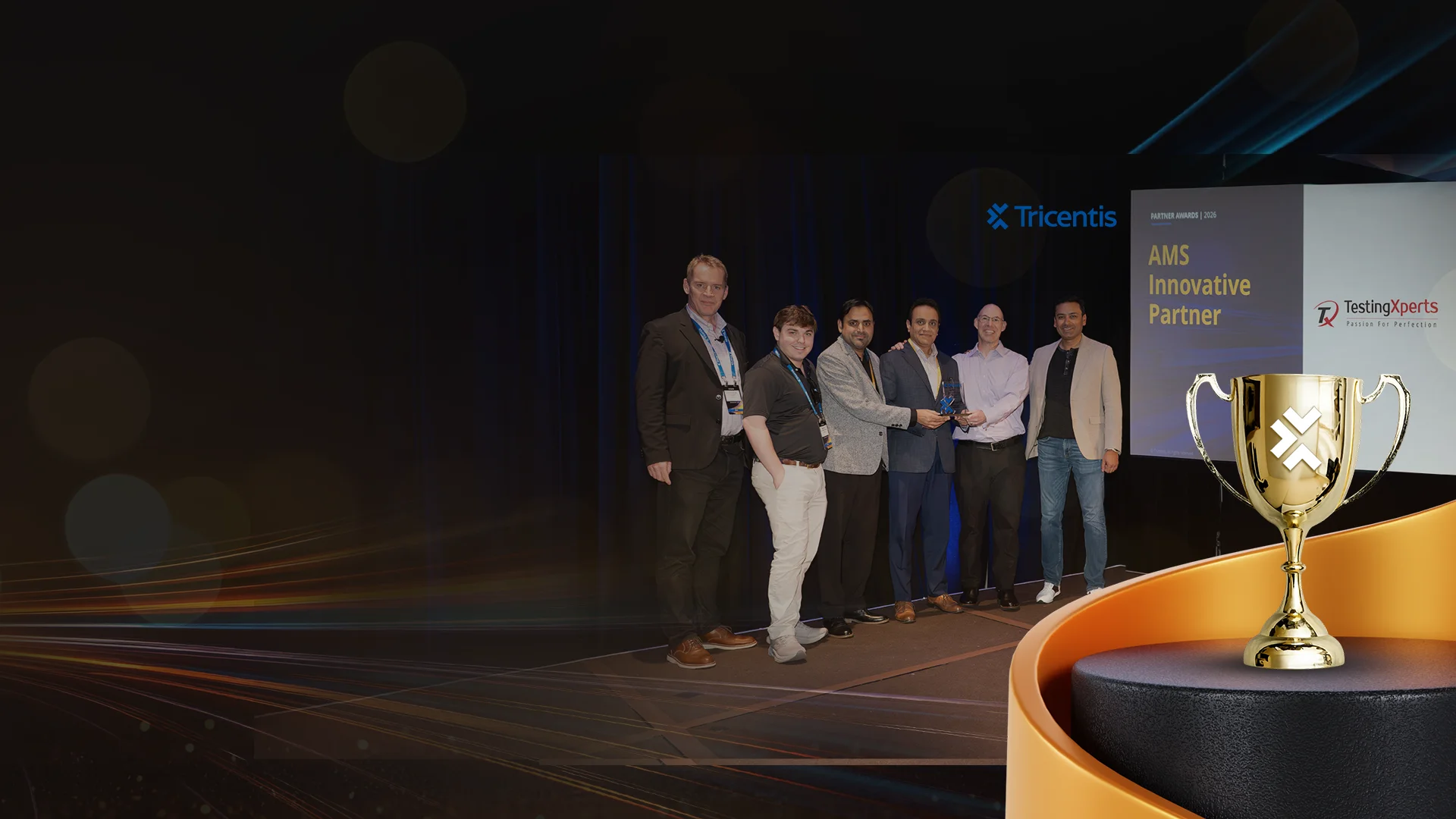
Our AI-first Quality Engineering and Software Testing solutions empower enterprises to achieve faster time-to-market and superior product reliability.
Run a free AEO + signal audit for your domain.
AI Answer Engine Optimization (AEO)
List once. Convert intent from live AI conversations without heavy integration.
AI-Powered Quality Engineering is a methodology that leverages artificial intelligence and machine learning to automate, optimize, and scale software testing processes. It employs algorithms for test case generation, predictive analytics for defect prevention, and intelligent automation for continuous validation. This approach significantly reduces time-to-market, improves test coverage, and enhances software reliability for enterprise applications.
AI algorithms examine codebases, user stories, and historical data to understand the software's functional and non-functional requirements.
Machine learning models autonomously create, prioritize, and run test suites, adapting to code changes and focusing on high-risk areas.
The system analyzes test results to predict potential failures, identify root causes, and deliver actionable quality reports to development teams.
Ensures stringent compliance and security for payment processing and mobile banking apps through AI-driven vulnerability and regression testing.
Validates the reliability and safety of electronic health records and diagnostic software with intelligent test orchestration for critical systems.
Scales performance and load testing dynamically during peak sales periods to guarantee uptime and seamless user checkout experiences.
Implements continuous testing within CI/CD pipelines to accelerate feature releases while maintaining high code quality and user satisfaction.
Tests complex, interconnected systems and embedded software using AI to simulate real-world scenarios and ensure functional safety.
Bilarna evaluates every AI-Powered Quality Engineering provider using a proprietary 57-point AI Trust Score. This score rigorously assesses technical expertise through portfolio reviews, validates reliability via client references and delivery track records, and checks for relevant industry certifications and compliance standards. Bilarna continuously monitors provider performance to ensure listed partners meet the highest quality and trust benchmarks.
Traditional QA relies heavily on manual script creation and execution, which is slow and prone to human error. AI-Powered Quality Engineering automates test design, uses predictive analytics to focus efforts, and continuously learns from results, leading to faster, more comprehensive, and adaptive testing cycles.
Costs vary based on project scope, complexity, and required tools, but typically range from a managed service fee to a platform subscription with implementation support. A precise budget requires defining specific automation goals, integration points, and the scale of test coverage needed.
Organizations often see initial efficiency gains in test execution within 3-6 months. Full ROI, manifested through significant defect reduction and faster release cycles, is typically realized within 9 to 12 months of strategic implementation and process integration.
Key criteria include proven expertise in your industry, the capability of their AI/ML testing tools, integration support with your tech stack, transparent pricing models, and a strong track record of client success and measurable outcomes.
A common mistake is treating AI tools as a simple replacement for manual testers without upskilling teams or redefining processes. Successful adoption requires aligning AI capabilities with testing strategy, investing in team training, and integrating insights into the development lifecycle.