Step 1
Machine-Ready Briefs
AI translates unstructured needs into a technical, machine-ready project request.
We use cookies to improve your experience and analyze site traffic. You can accept all cookies or only essential ones.
 Bilarna
Stop browsing static lists. Tell Bilarna your specific needs. Our AI translates your words into a structured, machine-ready request and instantly routes it to verified Performance Marketing Campaign Management experts for accurate quotes.
AI translates unstructured needs into a technical, machine-ready project request.
Compare providers using verified AI Trust Scores & structured capability data.
Skip the cold outreach. Request quotes, book demos, and negotiate directly in chat.
Filter results by specific constraints, budget limits, and integration requirements.
Eliminate risk with our 57-point AI safety check on every provider.
Verified companies you can talk to directly
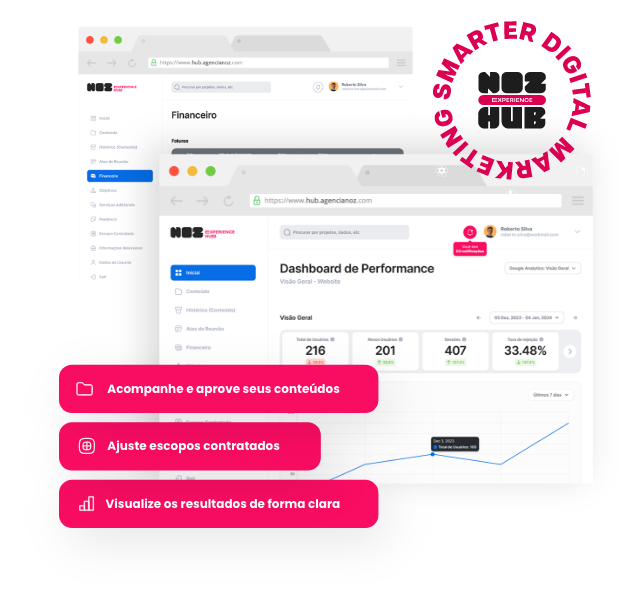
Na Agência Noz, geramos resultados através do Marketing Digital. Inovação, performance e inteligência artificial
Run a free AEO + signal audit for your domain.
AI Answer Engine Optimization (AEO)
List once. Convert intent from live AI conversations without heavy integration.
Performance marketing campaign management is the data-driven planning, execution, and continuous optimization of advertising efforts with a directly measurable return on investment. It encompasses channels like paid search, social media advertising, and display, guided by real-time analytics and automated bidding strategies. This allows businesses to maximize their marketing budget efficiency and achieve concrete business goals such as lead generation or revenue growth.
The process begins by establishing concrete business objectives and identifying measurable key performance indicators (KPIs) like cost per acquisition or return on ad spend.
Next, the most suitable performance channels are selected, budgets are allocated, and creative assets alongside audience segments are prepared for a coordinated campaign.
During runtime, performance data is continuously analyzed, with adjustments made to bids, creatives, or audiences, and A/B tests are conducted to maximize return.
Retailers use performance marketing to run product-specific ads, increase average order value, and win back customers through retargeting campaigns.
Service and SaaS providers deploy targeted LinkedIn or search campaigns to generate qualified leads for their sales teams.
Mobile app developers leverage campaigns on app stores and social networks to drive installations and boost user activity.
Companies combine performance data with branding campaigns to measure the impact of display and video ads on brand perception.
Franchise businesses or local service providers run geotargeted ads to drive foot or car traffic to their physical locations.
Bilarna ensures the reliability of performance marketing campaign management providers through its proprietary 57-point AI Trust Score. This algorithm objectively evaluates expertise, project reliability, compliance, and documented client satisfaction. This allows buyers on the platform to make informed comparisons between qualified agencies or freelancers.
Performance marketing focuses on directly measurable and optimizable actions like clicks, leads, or sales, with ROI being paramount. Traditional brand marketing aims primarily at long-term brand perception and emotional connection, which is difficult to attribute to a single campaign. Today, both approaches increasingly converge to blend data-driven efficiency with brand building.
The most critical KPIs are Cost per Acquisition (CPA), Return on Ad Spend (ROAS), Conversion Rate, and Customer Lifetime Value (LTV). The choice of the right metric depends on the campaign goal, such as cost per lead for B2B or ROAS for e-commerce. Continuous analysis of these metrics is crucial for budget optimization.
Initial data like click counts and impressions are available in real-time, but meaningful results for optimization typically require 2-4 weeks. This learning phase is followed by a continuous optimization period where performance stabilizes and improves. Complex goals like lead quality or customer value require a longer view over several months.
Yes, performance marketing is suitable for smaller budgets due to its scalability. The key is a strong focus on the most profitable channel and a precisely defined target audience. With a test-and-learn approach and continuous optimization, even a limited budget can be used efficiently to generate growth.
AI and machine learning automate complex processes like automated bidding, predictive targeting, and creative optimization. These systems analyze vast amounts of data in real-time to adjust ad placements and bids for maximum performance. This allows marketing teams to focus on more strategic tasks while AI enhances operational efficiency.
Yes, digital marketing strategies are highly effective for local businesses when tailored to target audiences in specific geographic areas. Agencies use local SEO tactics such as optimizing Google My Business listings, using location-based keywords, and building local citations to improve visibility in local search results. Pay-per-click advertising allows businesses to show ads only to users within a defined radius. Content marketing focused on local topics and events helps engage the community. Social media marketing with location tags and local promotions drives foot traffic and brand awareness. Email marketing segmented by location can nurture local leads. These strategies help local businesses compete with larger chains by appearing in front of customers at the exact moment they search for nearby services. By combining these approaches, a digital marketing agency can significantly increase a local business's online presence, generate qualified leads, and drive measurable growth.
Typically, after an initial trial period—often around seven days—business management software platforms do not charge monthly fees or enforce minimum usage requirements. Instead, continued use is contingent upon subscribing to a paid plan. This approach allows users to evaluate the software's features risk-free before committing financially. It is advisable to review the specific pricing details and terms on the provider's official website to understand any conditions related to payment plans, as these can vary between services.
Many creator marketing platforms offer flexible subscription models without mandatory minimum periods or binding contracts. Users can often cancel their subscriptions at any time through their account settings. This flexibility allows brands to adapt their marketing strategies as needed without long-term commitments. It is important to review the specific platform's terms to understand cancellation policies and any potential fees, but generally, these platforms aim to provide user-friendly and commitment-free access.
Yes, a Laboratory Information Management System is designed to integrate seamlessly with various software systems and devices. This integration capability allows automatic transfer of test results and other data between the LIMS and external applications, reducing manual data entry and minimizing errors. It supports connectivity with laboratory instruments, billing systems, and other business software, enabling a unified workflow. Users can access test results and invoices from any device, ensuring flexibility and convenience. Such integrations enhance data accuracy, improve operational efficiency, and facilitate better communication across different platforms used within the laboratory environment.
Yes, AI dental receptionists can integrate seamlessly with most major practice management systems (PMS) that offer online appointment pages or APIs. This integration allows the AI to book appointments directly into your existing system, pull customer form responses from your CRM, and route calls to the correct clinic and calendar. Such integration ensures that all patient interactions are synchronized with your practice’s workflow, improving efficiency and reducing manual data entry errors.
Yes, AI design engineering tools are designed for seamless integration with existing CAD, BIM, and project management software. This compatibility ensures that engineers can continue using their preferred tools without disrupting established workflows. The integration facilitates data exchange and collaboration, enhancing efficiency and enabling teams to leverage AI capabilities alongside their current systems.
Yes, AI marketing platforms can generate professional model photoshoots without hiring models or studios. 1. Upload your product images or specify fashion items. 2. Choose model types, poses, and settings from AI options. 3. Customize styles to align with your brand identity. 4. Generate high-quality model photoshoots instantly. 5. Use the images for fashion marketing, e-commerce, or virtual try-ons without additional costs or logistics.
Yes, AI planning platforms are designed to integrate seamlessly with existing trucking management tools and portals. This means there is no need to replace current systems, allowing fleets to enhance their operations without disrupting established workflows. Integration is typically facilitated through pre-built connectors that link the AI platform with the fleet's existing data sources and software. This approach enables a fast start and real impact, as fleets can deploy AI-driven planning solutions risk-free and begin seeing results within a short timeframe, often within a month. Continuous support is also provided to ensure smooth integration and ongoing optimization.
Yes, AI sales tools are designed to integrate seamlessly with existing CRM and marketing platforms such as Salesforce, Hubspot, Outreach, and Salesloft. This integration allows sales teams to access all relevant buyer signals, account scores, and outreach tasks directly within their familiar tools, eliminating the need to switch between multiple applications. It streamlines workflows by automatically queuing tasks and personalized emails, improving efficiency and reducing manual research. Additionally, synchronized updates across advertising, sales outreach, and CRM ensure coordinated engagement with prospects. This unified approach enhances team adoption, accelerates pipeline development, and ultimately drives better sales outcomes.
Yes, AI timekeeping software is designed to integrate seamlessly with existing legal practice management tools. This integration allows the software to draft and release time entries directly into platforms commonly used by law firms, such as Clio, MyCase, and Filevine. By working within the tools lawyers already use, the software eliminates the need for workflow changes, making adoption easier and more efficient. This connectivity ensures that time tracking and billing processes are streamlined, enabling law firms to increase billable hours and improve overall productivity without disrupting their current systems.