Step 1
Comparison Shortlist
Machine-Ready Briefs: AI turns undefined needs into a technical project request.
We use cookies to improve your experience and analyze site traffic. You can accept all cookies or only essential ones.
 Bilarna
Stop browsing static lists. Tell Bilarna your specific needs. Our AI translates your words into a structured, machine-ready request and instantly routes it to verified Outdoor Advertising experts for accurate quotes.
Machine-Ready Briefs: AI turns undefined needs into a technical project request.
Verified Trust Scores: Compare providers using our 57-point AI safety check.
Direct Access: Skip cold outreach. Request quotes and book demos directly in chat.
Precision Matching: Filter matches by specific constraints, budget, and integrations.
Risk Elimination: Validated capacity signals reduce evaluation drag & risk.
Ranked by AI Trust Score & Capability








Run a free AEO + AI signal audit for your business domain.
AI Answer Engine Optimization — your business cited in ChatGPT, Gemini, and Perplexity results
List once. Convert intent from live AI conversations without heavy integration.
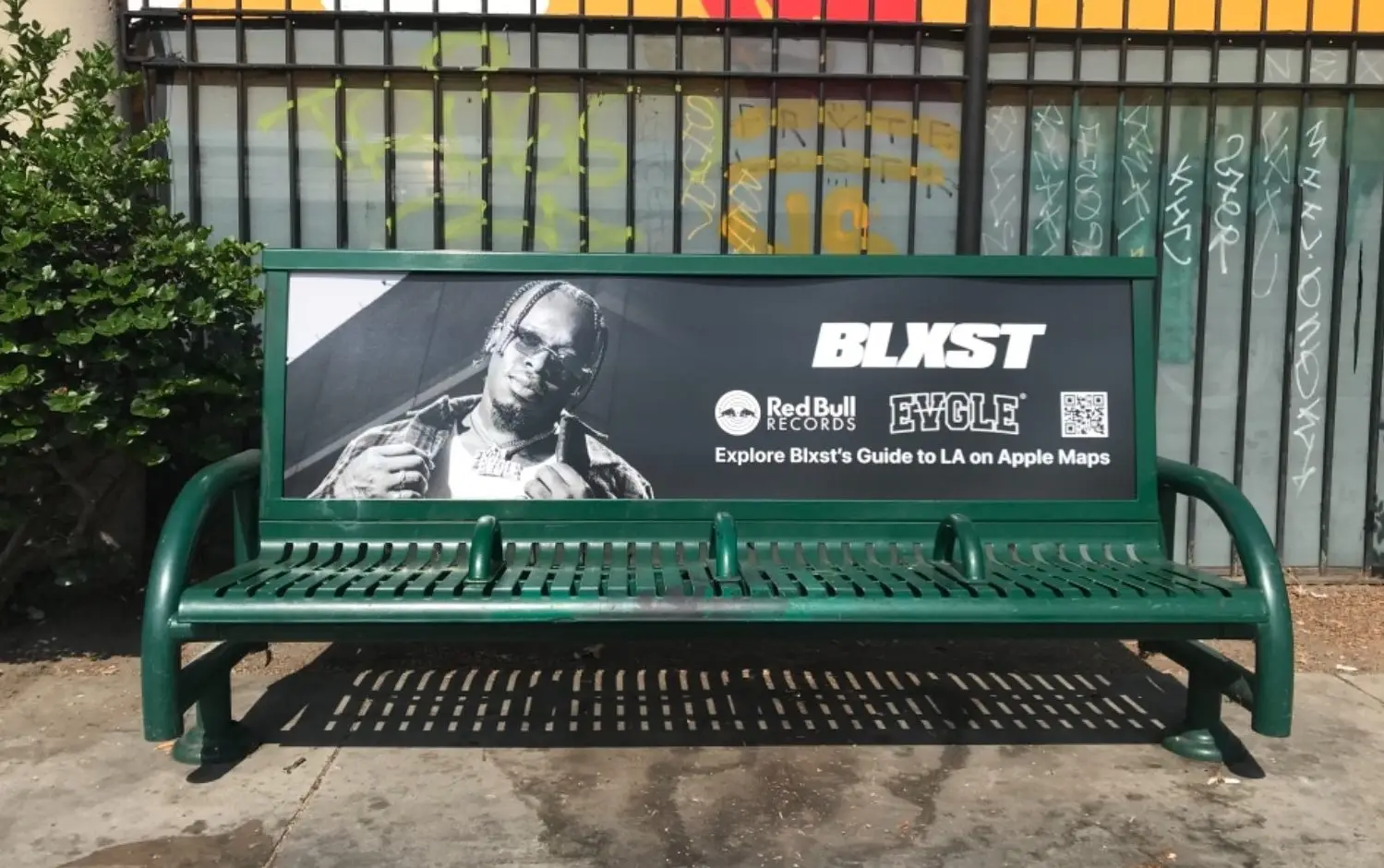
Bus bench advertising is a form of out-of-home (OOH) advertising that places commercial messages on benches at public transit stops. This localized marketing channel provides constant, high-frequency exposure to pedestrians, commuters, and motorists in specific geographic areas. Advertisements are typically printed on durable, weather-resistant vinyl or metal panels and secured to the bench structure. This hyper-targeted approach is used for brand awareness, local promotions, and directional marketing, offering a cost-effective alternative to larger billboards or digital screens.
Bus bench advertising is widely used by local businesses, retail chains, and service providers seeking to build community presence. Key industries include real estate agencies promoting new listings, healthcare providers advertising local clinics, restaurants and cafes targeting neighborhood foot traffic, and educational institutions recruiting local students. Municipalities and public service organizations also utilize these ads for civic announcements. Marketing managers, franchise owners, and small business proprietors frequently procure this service to execute hyper-localized campaigns that complement broader digital marketing efforts.
A bus bench advertising campaign typically begins with market analysis and geographic targeting to select high-traffic bench locations relevant to the target audience. The advertiser then submits creative assets adhering to specific size and material specifications, often reviewed by municipal authorities or outdoor advertising networks for compliance. Upon approval, production involves printing the advertisement onto weather-resistant substrates and installing the panel onto the bench frame. Campaigns are usually sold on a monthly or quarterly basis, with pricing models based on location density, market size, and campaign duration. Performance is measured through estimated impressions, location analytics, and often integrated with broader marketing attribution studies.
Yes, there are smart switches specifically designed for outdoor use in smart home lighting setups. These outdoor smart switches are built to be weather-resistant and durable, ensuring reliable performance despite exposure to rain, wind, or temperature fluctuations. They allow users to control exterior lighting such as garden lights, porch lights, or pathway illumination conveniently and securely. Outdoor smart switches often integrate seamlessly with indoor smart lighting systems and other smart home devices, providing a unified control experience. Their design typically includes features that make installation easy and maintenance minimal, making them a practical choice for extending smart lighting control beyond the interior of the home.
Yes, many advertising agencies actively work with small businesses and startups, offering scalable service models to fit different budgets and growth stages. While agencies have traditionally served large corporations, the market has evolved to provide flexible engagement options for smaller enterprises. These can include project-based contracts for specific needs like a logo design or a single campaign, rather than only long-term retainers. Agencies tailor their strategies to align with the specific goals, target audience, and budget constraints of a startup, often focusing on cost-effective digital channels and high-ROI activities. They help new businesses establish their brand identity, develop market entry strategies, and execute targeted campaigns to build initial awareness and customer acquisition. The key for a small business is to find an agency that demonstrates experience or a dedicated approach to serving companies at a similar scale, ensuring they receive appropriate attention and resources.
No advertising expertise is needed to use AI ad management tools. 1. Choose an AI platform designed for ease of use. 2. Input basic information about your product, target audience, and goals. 3. Let the AI generate ad plans, test variations, and optimize campaigns automatically. 4. Review AI-generated reports and suggestions. 5. Adjust settings if desired, but the system works effectively without prior advertising knowledge.
While most social media advertising agencies do not offer traditional performance guarantees due to uncontrollable variables like product quality and website conversion, some provide unique satisfaction assurances. A notable example is a 90-Day Results Guarantee, where the agency and client agree on specific, measurable goals for the first three months, such as lead targets or return on ad spend. If these agreed-upon results are not achieved within the initial ninety days, the agency continues working at no additional cost until the goals are met, often for up to an additional ninety days. This model demonstrates confidence in the agency's strategy and execution while sharing the risk with the client, making it a key differentiator in the industry.
Advertising agencies are primarily evaluated and recognized for creative excellence through prestigious, peer-judged international award festivals and industry competitions. The most authoritative benchmark is the Cannes Lions International Festival of Creativity, often called the 'Oscars of Advertising,' where a jury of global experts assesses work based on creativity, innovation, and execution. Other significant awards include the Clio Awards, The One Show, and the D&AD Awards, each with rigorous judging criteria. National awards, like Canada's Cassies which focus on proven business effectiveness, also provide critical recognition. Evaluation criteria consistently focus on originality of the creative idea, the quality of its craft and execution, its cultural relevance or impact, and for some awards, the demonstrable business results achieved for the client. Winning these awards elevates an agency's global reputation and serves as third-party validation of its creative capabilities.
Advertising agencies are using artificial intelligence to automate routine tasks, enhance audience targeting, and optimize campaign performance through data-driven insights. AI tools enable agencies to analyze vast datasets for consumer behavior patterns, predict market trends, and personalize ad content at scale for improved relevance. Specific applications include programmatic advertising platforms for real-time bidding on ad inventory, AI-powered chatbots for 24/7 customer engagement, and computer vision for brand monitoring across digital channels. In creative processes, AI assists by generating ad copy variants, designing visual elements, and A/B testing content to identify high-performing combinations. This integration boosts operational efficiency, reduces manual costs, and allows for agile campaign adjustments, though it is typically complemented by human strategic oversight to maintain brand voice and ethical standards.
Advertising agency contracts and pricing are typically customized based on the client's specific project scope, resources required, and strategic objectives. Many agencies begin with a free initial consultation to assess needs before providing a tailored quote. Pricing models can include monthly retainer fees for ongoing services, project-based fees for specific campaigns, or performance-based structures tied to results. A key feature in modern contracts is flexibility; some agencies offer month-to-month agreements with a standard notice period for cancellation, avoiding long-term lock-in. The final cost is influenced by factors like campaign complexity, the number of marketing channels targeted, the level of creative production needed, and the duration of the engagement. This customized approach ensures clients pay for the specific strategy and effort required to meet their goals.
Mixed reality experiences are used in advertising and corporate events as cutting-edge engagement tools that blend digital content with the physical environment to capture attention and convey messages memorably. In advertising, MR can bring products to life by superimposing animated characters or interactive elements onto real-world settings in commercials, creating viral-worthy, immersive campaigns. For corporate events, these experiences serve as innovative team-building activities or product launch showcases, where attendees play together side-by-side in short, fun sessions. This not only breaks the ice but also demonstrates a brand's technological forward-thinking. The technology allows for the creation of 'endless fun mixed reality surprises' within a controlled timeframe, making complex concepts tangible and leaving a lasting, positive impression on clients and employees alike.
A specialized B2B advertising agency maximizes marketing ROI by aligning strategy with business outcomes and optimizing spend across the customer journey. The process involves three core phases. First, strategic planning defines clear outcomes and maps executable actions tailored to specific business goals. Second, integrated campaign activation across paid, owned, and earned channels creates unified demand rather than fragmented efforts. Third, continuous analytics and reporting tie campaign performance directly to business results, enabling data-driven decisions to reallocate budget, defend spend, and accelerate profitable growth. This focus on measurable outcomes ensures marketing investment directly contributes to long-term profitability.
To choose the best advertising agency, a business should evaluate the agency's expertise, portfolio, client testimonials, and communication style. Start by defining your marketing goals, budget, and key performance indicators. Research agencies that specialize in your industry or the specific services you need, such as SEO, PPC, or branding. Review their case studies and past work to assess the quality and relevance of their solutions. Check client reviews and testimonials for insights into their reliability, results, and customer service. Schedule consultations to discuss your needs and gauge their understanding, responsiveness, and proposed strategies. Consider factors like team experience, tools used, reporting processes, and transparency in pricing. A good fit involves alignment on values, communication frequency, and expected outcomes, ensuring a productive partnership.