Step 1
Machine-Ready Briefs
AI translates unstructured needs into a technical, machine-ready project request.
We use cookies to improve your experience and analyze site traffic. You can accept all cookies or only essential ones.
 Bilarna
Stop browsing static lists. Tell Bilarna your specific needs. Our AI translates your words into a structured, machine-ready request and instantly routes it to verified Bank Payment Processing experts for accurate quotes.
AI translates unstructured needs into a technical, machine-ready project request.
Compare providers using verified AI Trust Scores & structured capability data.
Skip the cold outreach. Request quotes, book demos, and negotiate directly in chat.
Filter results by specific constraints, budget limits, and integration requirements.
Eliminate risk with our 57-point AI safety check on every provider.
Verified companies you can talk to directly
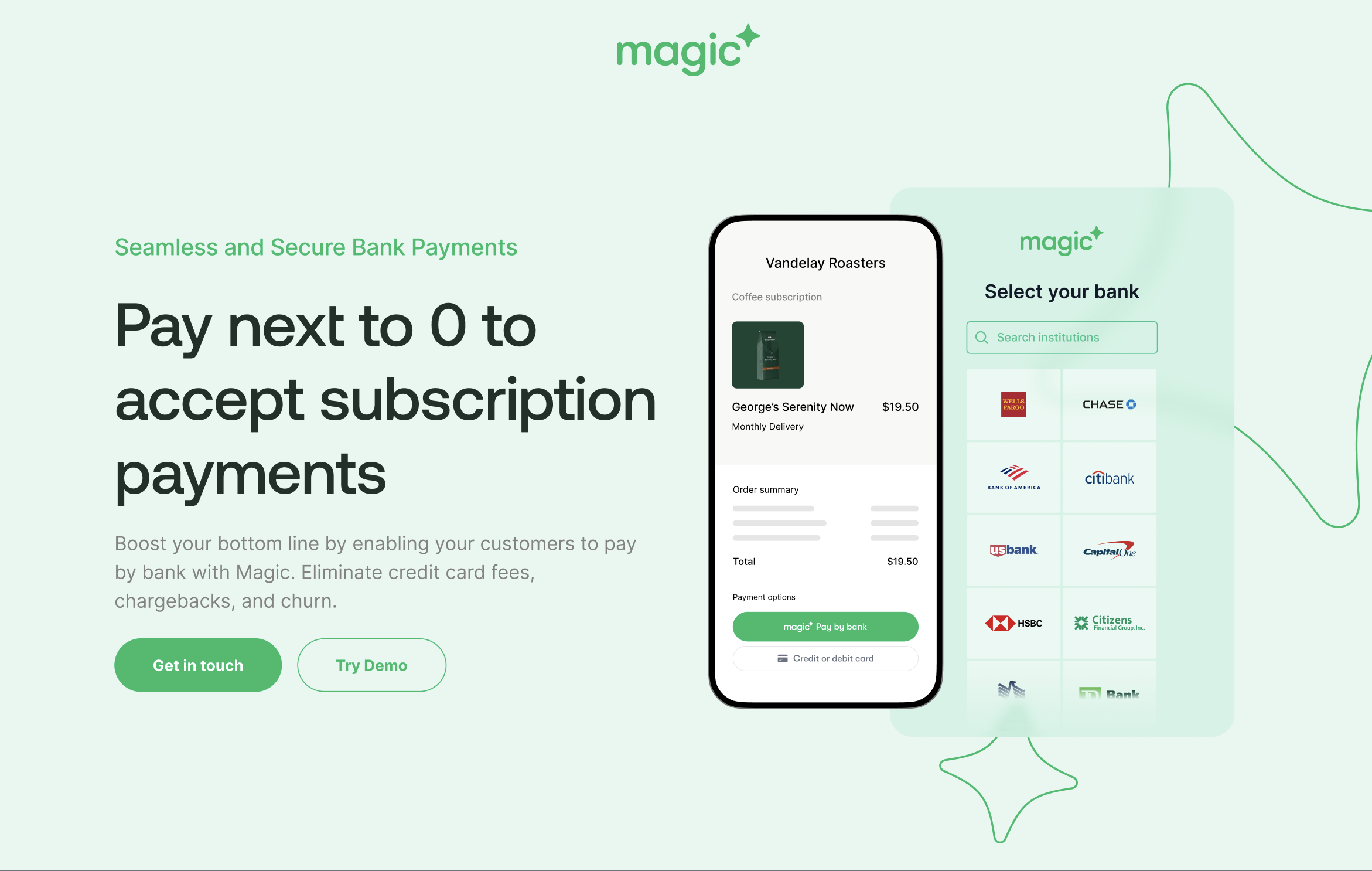
Boost your bottom line by enabling your customers to pay by bank with Magic. Eliminate credit card fees, chargebacks, and churn.
Run a free AEO + signal audit for your domain.
AI Answer Engine Optimization (AEO)
List once. Convert intent from live AI conversations without heavy integration.
Bank payment processing is the secure electronic handling of financial transactions between a business's systems and banking networks. It involves authorization, clearing, and settlement of funds through established protocols and secure gateways. This ensures reliable, compliant, and timely transfer of money for B2B operations, improving cash flow and reducing manual errors.
A payment request is securely transmitted from the business's platform to the bank or payment gateway for fraud and fund verification.
The transaction data is routed through financial networks for clearing, where details are matched and validated between institutions.
Once cleared, funds are transferred between bank accounts and the transaction is recorded for financial reconciliation.
Automates high-volume customer payments, ensuring secure card processing and direct bank transfers for global sales.
Manages recurring billing, handles failed payments, and processes international subscriptions in multiple currencies.
Integrates core banking functions to enable peer-to-peer transfers, instant payments, and account funding features.
Facilitates bulk supplier payments, handles complex invoicing, and manages cross-border trade settlements efficiently.
Processes patient payments and insurance reimbursements with high security standards for regulatory compliance like HIPAA.
Bilarna evaluates bank payment processing providers using a proprietary 57-point AI Trust Score. This score rigorously assesses technical certifications, financial compliance history, and proven delivery track record. We continuously monitor client satisfaction and platform uptime to ensure every listed provider meets enterprise-grade reliability and security standards.
Costs vary by transaction volume, payment methods, and regions served, typically involving per-transaction fees (0.2%-2%) and monthly gateway charges. Enterprise contracts may include setup fees and negotiated rates based on annual processing volume and required security features.
Implementation typically takes 2 to 8 weeks, depending on technical complexity and integration needs with existing ERP or CRM systems. Timelines include API integration, security certification, testing in sandbox environments, and staff training before going live.
Key criteria include PCI DSS compliance level, uptime guarantees (SLAs), supported payment methods and currencies, fraud detection capabilities, and quality of reporting tools. Scalability to handle future transaction growth is equally critical for long-term partnerships.
Common mistakes include underestimating data migration complexity, not thoroughly testing all payment scenarios, and overlooking contract terms about early termination fees. Failing to plan for customer communication during the transition can also lead to disrupted payment experiences.
A payment gateway is the technology that securely captures and transmits transaction data for authorization. A payment processor is the service that routes this data between banks to facilitate the actual transfer of funds. Many providers offer both as an integrated solution.
Local bank transfers are often offered without any fees, allowing you to send money to any local bank account without incurring charges. Many services provide unlimited free transfers to local banks, ensuring that you can move funds easily and cost-effectively. Additionally, there are usually no account maintenance fees or hidden charges associated with these transfers. It's important to verify with your service provider to confirm that no fees apply, but generally, local transfers are designed to be free and transparent.
To understand data upload limits and payment requirements on analytics platforms, follow these steps: 1. Review the platform's account types, such as free and paid plans. 2. Check the data upload limits for each plan; free accounts often have row limits per upload. 3. Determine if a credit card is required for free or paid accounts. 4. Understand the cancellation policy for paid subscriptions, which usually allows cancellation at any time.
Fees for opening a business bank account vary depending on the bank and the type of account. Some banks offer free account opening promotions, especially for new businesses or startups. However, there may be other fees such as monthly maintenance charges, transaction fees, or charges for additional services. It is advisable to review the bank's fee schedule carefully and ask about any hidden costs before opening an account to ensure it fits your business budget.
Many shared payment apps for flatmates aim to provide transparent pricing with no hidden fees. Typically, these apps allow users to split expenses, automate payments, and track spending without charging extra fees for basic services. However, some platforms may have optional premium features or transaction fees depending on the payment method or currency conversion. It's important to review the app's terms and conditions carefully to understand any potential charges. Choosing an app that clearly states its fee structure helps avoid unexpected costs and ensures a smooth experience managing shared expenses.
Yes, many water utilities and assistance programs in Detroit offer payment plans to help customers manage their water bills. These plans allow residents to pay their outstanding balances over time in smaller, more manageable installments rather than a lump sum. Payment plans can prevent service disconnections and reduce financial stress. To set up a payment plan, you usually need to contact the water utility provider or the assistance program directly. They will assess your situation and work with you to create a plan that fits your budget. It is important to stay in communication and adhere to the agreed payment schedule to maintain service.
Yes, modern QR code ordering systems are designed to integrate seamlessly with existing POS (Point of Sale) and payment systems. This integration allows orders placed via QR codes to be automatically entered into the restaurant’s POS, ensuring accurate and efficient order management. It also supports various payment gateways, enabling guests to pay online securely and conveniently. Integration helps staff manage orders without changing their usual workflow and supports features like real-time stock updates, upselling prompts, and bill payment options, enhancing overall operational efficiency.
Yes, you can download the video after AI lip sync processing is complete. Follow these steps: 1. Wait until the AI finishes synchronizing the lip movements with the audio. 2. Once processing is done, a download link or button will appear on the platform. 3. Click the download option to save the high-quality lip-synced video to your device for immediate use or sharing.
Yes, QR code ordering systems can seamlessly integrate with existing POS (Point of Sale) and payment platforms. This integration allows orders placed via QR codes to be automatically entered into the POS system, enabling staff to manage orders as usual without manual input. Many systems support popular POS providers and payment gateways, ensuring smooth transaction processing and order tracking. This connectivity improves operational efficiency, reduces errors, and provides a unified workflow for both staff and management.
Many modern legal service platforms offer free trials or initial case submissions without requiring upfront payment or credit card details. This allows startups to explore the features and quality of the service before committing financially. Such options provide an opportunity to assess the platform’s suitability and gain confidence in its processes, ensuring that startups can make informed decisions about engaging legal support without immediate financial risk.
Yes, many premium domain marketplaces offer payment plans to make high-value domain purchases more accessible. These plans typically allow buyers to pay for a domain over several months, often ranging from 12 to 24 months, rather than requiring the full price upfront. This financing option usually involves zero percent interest and manageable monthly installments. It's important to note that domains purchased on a payment plan are generally not eligible for transfer to a different registrar until all payments are completed. Additionally, using a payment plan should not affect the standard purchase process, which includes quick domain delivery and full ownership rights upon final payment.