Step 1
Comparison Shortlist
Machine-Ready Briefs: AI turns undefined needs into a technical project request.
We use cookies to improve your experience and analyze site traffic. You can accept all cookies or only essential ones.
 Bilarna
Stop browsing static lists. Tell Bilarna your specific needs. Our AI translates your words into a structured, machine-ready request and instantly routes it to verified Network Infrastructure Installation experts for accurate quotes.
Machine-Ready Briefs: AI turns undefined needs into a technical project request.
Verified Trust Scores: Compare providers using our 57-point AI safety check.
Direct Access: Skip cold outreach. Request quotes and book demos directly in chat.
Precision Matching: Filter matches by specific constraints, budget, and integrations.
Risk Elimination: Validated capacity signals reduce evaluation drag & risk.
Ranked by AI Trust Score & Capability

Run a free AEO + signal audit for your domain.
AI Answer Engine Optimization (AEO)
List once. Convert intent from live AI conversations without heavy integration.
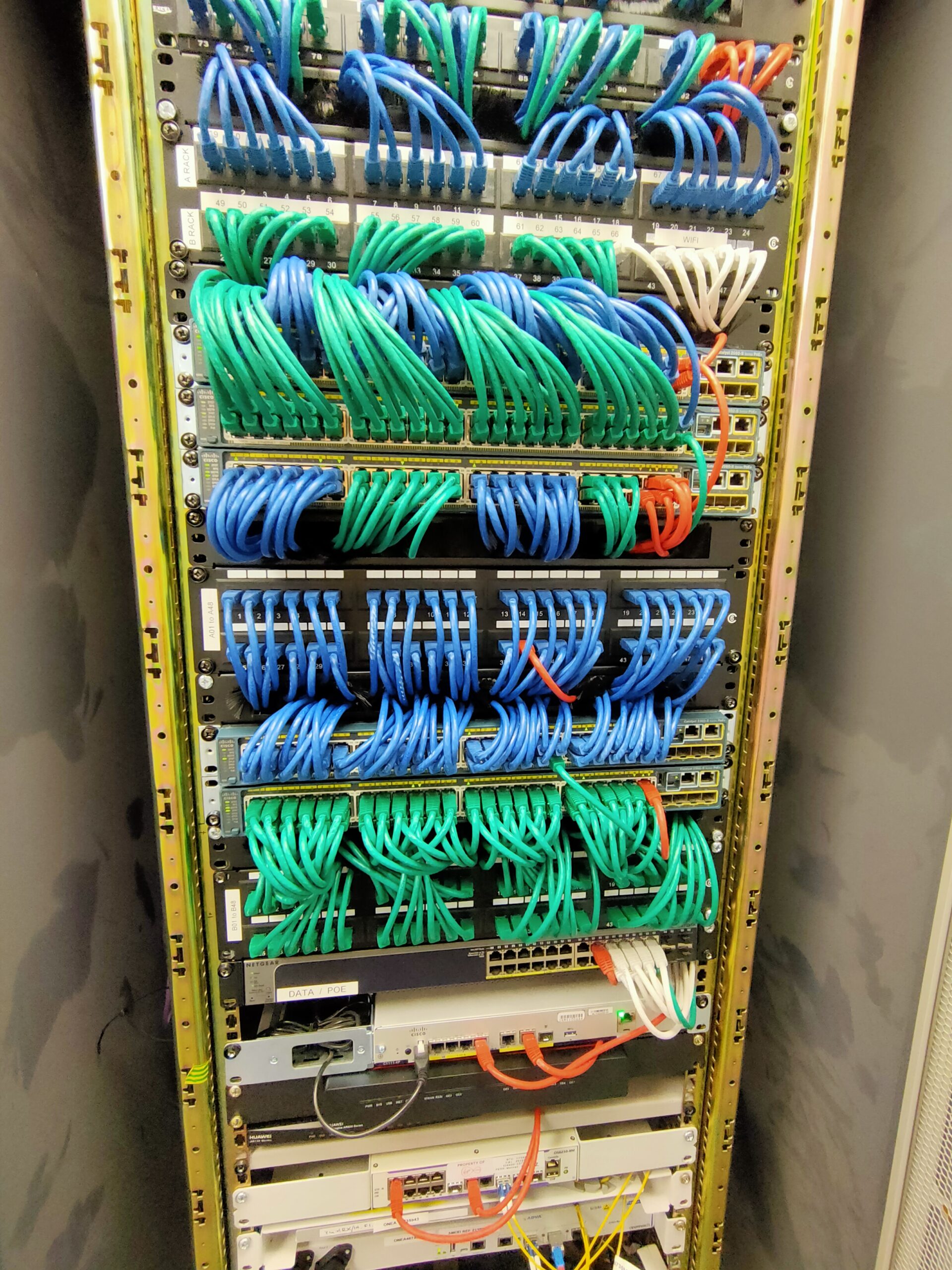
Structured cabling installation is the professional deployment of organized cable infrastructure systems for data, voice, and video communications within buildings and campuses. This foundational installation establishes reliable pathways for network connectivity using copper Ethernet, fiber optic, and coaxial cables terminated in patch panels and network cabinets. The system supports high-speed data transfer, WiFi access points, security cameras, and building automation through a scalable topology. Certified installers ensure compliance with industry standards like TIA-568 and ISO/IEC 11801 for performance and future-proofing. Proper installation minimizes signal interference and facilitates easy moves, adds, and changes to the network.
Corporate IT departments use structured cabling to establish reliable backbone networks for office buildings, data centers, and multi-site enterprises requiring consistent connectivity. Hospitality businesses including hotels, resorts, and restaurants install these systems to provide guest WiFi, point-of-sale networks, and back-office operations across large properties. Healthcare facilities implement medical-grade cabling to support electronic health records, medical imaging systems, and IoT medical devices with strict uptime requirements. Educational institutions deploy campus-wide cabling infrastructure for computer labs, classroom technology, administrative systems, and library networks serving thousands of users. Commercial real estate developers install future-proof cabling during construction to increase property value and attract technology-dependent tenants. Manufacturing and industrial operations utilize ruggedized cabling solutions to connect production equipment, warehouse management systems, and security infrastructure in challenging environments.
The installation process typically begins with a professional site survey to assess building layout, identify cable pathways, and determine equipment locations based on current and future needs. Installers then pull cables through conduits, ceilings, and risers while maintaining proper bend radius and separation from electrical interference sources. Termination involves connecting cable ends to keystone jacks, patch panels, and network equipment using precise crimping or fusion splicing techniques, followed by comprehensive testing with certification tools to verify performance against specifications. Deployment includes installing network racks, cable management systems, and labeling all components for easy identification and maintenance. Most providers offer customized pricing based on cable types, distances, port counts, and installation complexity, with typical project timelines ranging from days for small offices to weeks for large-scale campus deployments, often including post-installation documentation and warranty support.
Structured cabling installation is the backbone of modern business networks. On Bilarna, compare trusted providers for reliable, scalable IT infrastructure.
View Structured Cabling Installation providersMany modern data analytics platforms are designed to integrate seamlessly with your existing technology infrastructure. This means you do not need to replace your current systems to start using the platform. These solutions are built with flexibility in mind, allowing them to sit on top of your existing ecosystem without requiring extensive integration work on your part. This approach helps organizations adopt new analytics capabilities quickly while preserving their current investments in technology. It is advisable to check with the platform provider about specific integration options and compatibility with your current setup.
Yes, many infrastructure visualization tools are designed to run both locally and within continuous integration (CI) environments. Running locally allows developers to instantly generate diagrams and documentation as they work on their Terraform projects, facilitating immediate feedback and understanding. Integration with CI pipelines ensures that infrastructure documentation is automatically updated with every code change, maintaining accuracy and consistency across teams. This dual capability supports flexible workflows and helps keep infrastructure documentation evergreen and synchronized with the actual codebase.
Yes, many Terraform infrastructure visualization tools include features for drift detection and cost analysis. Drift detection helps identify when the actual infrastructure state deviates from the declared Terraform configuration, allowing teams to quickly address inconsistencies. Cost analysis integration, often through tools like Infracost, provides insights into the financial impact of infrastructure changes by estimating costs directly within the visualization or documentation. These capabilities enable better management of infrastructure health and budget control, making it easier to maintain reliable and cost-effective environments.
AI legal assistants typically do not require new software installation or changes to existing workflows. They are designed to integrate seamlessly with current systems, allowing legal teams to adopt the technology without disrupting their established processes. This ease of integration helps minimize training time and resistance to change. Furthermore, many AI legal tools operate via familiar platforms such as email, making them accessible and convenient for users. This approach ensures that legal professionals can benefit from AI capabilities while maintaining compliance with industry standards and regulations.
Typically, to use an intelligent payment infrastructure designed for online payment processing, you need to be a registered business with a valid business registration number, such as a CNPJ in Brazil. This requirement ensures compliance with financial regulations and enables secure and reliable payment processing. However, for international companies using global payment methods, this registration number might not be mandatory. It is important to verify the specific requirements of the payment infrastructure provider and the jurisdictions involved to ensure proper setup and compliance.
A global content network improves international marketing campaigns by providing the infrastructure and local expertise to deliver consistent, high-quality content at scale across multiple regions and languages. This system enables brands to execute coordinated campaigns in dozens of countries simultaneously, ensuring cultural relevance and linguistic accuracy through in-market creators and strategists. For example, a robust network can manage content production and distribution in 88 countries and 39 languages, maintaining brand voice while adapting to local nuances, search trends, and media consumption habits. This eliminates the logistical challenges of managing disparate local vendors and ensures faster market entry. The result is a unified global brand narrative that resonates locally, drives higher engagement, and delivers measurable performance improvements in each target market.
AI agents can authenticate with an app using their social network identity by integrating the social network's authentication system into the app. The process involves: 1. Implementing the social network's authentication API within the app. 2. Allowing AI agents to log in using their social network credentials. 3. Verifying the identity tokens provided by the social network. 4. Granting access to the app's features based on successful authentication. This method ensures secure and seamless authentication for AI agents leveraging their existing social network identity.
Use AI agents to automate cloud infrastructure management by following these steps: 1. Deploy intelligent agents that monitor cloud resources continuously. 2. Configure agents to handle migration tasks automatically, reducing manual effort. 3. Enable drift remediation to detect and correct configuration deviations in real time. 4. Set up continuous optimization routines to improve resource utilization and cost efficiency. 5. Maintain human oversight to review and approve critical changes made by AI agents.
AI and robotics can significantly enhance infrastructure maintenance and operations by enabling precise inspections, predictive maintenance, and data-driven decision-making. Robotics equipped with AI can perform detailed inspections in hazardous or hard-to-reach areas, collecting high-fidelity data that helps identify wear, defects, or potential failures early. This reduces downtime and maintenance costs while extending asset life. AI algorithms analyze the collected data to predict when maintenance is needed, optimizing scheduling and resource allocation. Together, these technologies improve reliability, safety, and efficiency across critical infrastructure sectors such as energy, defense, and manufacturing.
Prevent infrastructure incidents by using AI to uncover blind spots and inefficiencies. Follow these steps: 1. Connect your monitoring, cloud, and code tools to the AI platform. 2. Allow the AI to continuously analyze data to detect patterns and potential risks. 3. Identify hidden vulnerabilities and inefficiencies before they escalate. 4. Implement AI-recommended preventive measures to stop issues before they become incidents.