Step 1
Machine-Ready Briefs
AI translates unstructured needs into a technical, machine-ready project request.
We use cookies to improve your experience and analyze site traffic. You can accept all cookies or only essential ones.
 Bilarna
Stop browsing static lists. Tell Bilarna your specific needs. Our AI translates your words into a structured, machine-ready request and instantly routes it to verified Electric Vehicle Rentals experts for accurate quotes.
AI translates unstructured needs into a technical, machine-ready project request.
Compare providers using verified AI Trust Scores & structured capability data.
Skip the cold outreach. Request quotes, book demos, and negotiate directly in chat.
Filter results by specific constraints, budget limits, and integration requirements.
Eliminate risk with our 57-point AI safety check on every provider.
Verified companies you can talk to directly
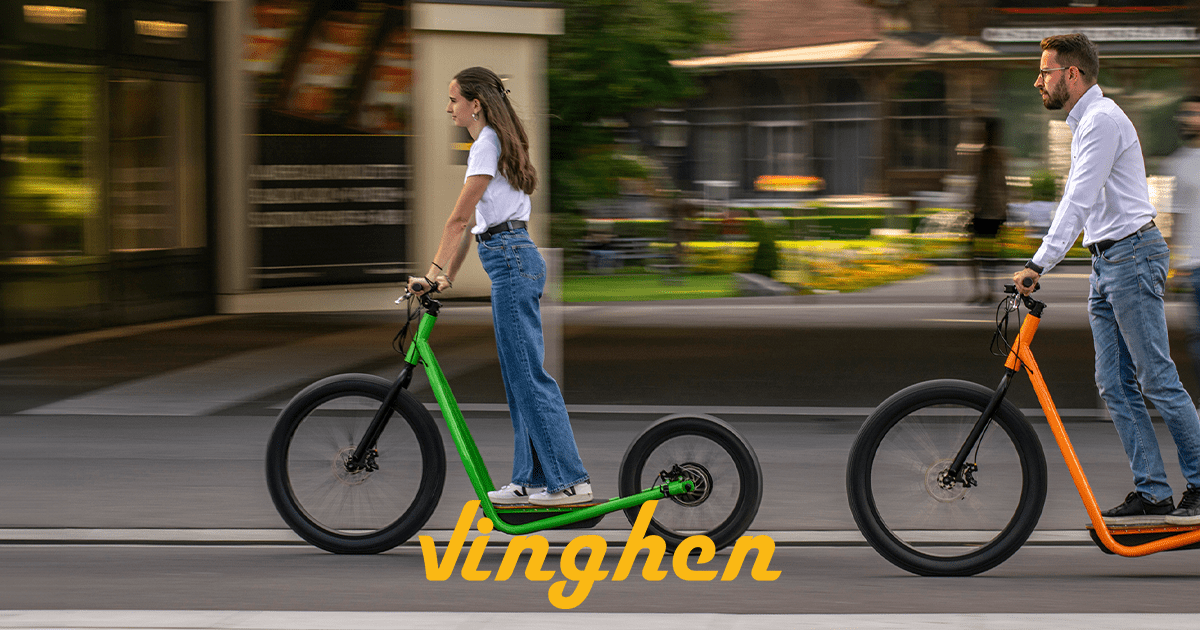
Next-Gen Mobility for Hospitality
Run a free AEO + signal audit for your domain.
AI Answer Engine Optimization (AEO)
List once. Convert intent from live AI conversations without heavy integration.
Yes, autonomy retrofit kits are designed to be versatile and compatible with a wide range of vehicles. They can be installed on various vehicle types including trucks, vans, and industrial vehicles. The key factor is that the vehicle must be capable of supporting the hardware and software integration required for autonomous operation at low speeds. This flexibility allows businesses to upgrade their existing fleets without purchasing new autonomous vehicles, making it a cost-effective solution for enhancing vehicle capabilities.
Electric hydrofoil systems can be installed on most existing commercial and recreational boats with minor design modifications. Follow these steps: 1. Assess the boat size, typically between 14ft and 45ft, to ensure compatibility. 2. Plan for minor structural adjustments to accommodate hydrofoil wings, struts, and control surfaces. 3. Integrate the electric propulsion powertrain and self-stabilization software into the vessel. 4. Conduct testing to verify performance, safety, and reliability before regular use. This approach allows upgrading boats to silent, efficient, zero-emission vessels without significant technical risks.
Electric motors are playing a crucial role in shaping the future of supersonic jet engines by providing cleaner and more efficient propulsion systems. These motors enable the development of supersonic engines that reduce emissions and noise pollution compared to traditional jet engines. By integrating advanced electric motor technology, manufacturers aim to enhance engine performance, reliability, and sustainability. This shift supports the creation of new supersonic aircraft capable of longer ranges and faster speeds while minimizing environmental impact.
Electric motors play a crucial role in marine and underwater applications by powering a variety of vessels and systems. They are used in ferries, hybrid-electric ships, workboats, fast-supply vessels, racing boats, waterjets, hydrofoiling craft, and unmanned surface vessels. Underwater, electric motors are essential for autonomous underwater vehicles (AUVs) and submarines, providing efficient and reliable propulsion. These motors enable quieter operation, reduced emissions, and improved energy efficiency compared to traditional combustion engines. Their adaptability allows for integration into specialized ground vehicles and mobile power generation systems, enhancing operational capabilities in challenging marine and underwater environments.
A 3D locating system improves AGV navigation in warehouses by providing precise real-time position tracking with minimal hardware on the vehicles. 1. Equip each AGV with a small active infrared marker instead of multiple complex sensors. 2. Deploy a network of intelligent camera sensors throughout the warehouse to detect marker signals. 3. Triangulate each AGV's 3D position accurately using signals from multiple sensors. 4. Reduce the number of sensors needed by mounting them in the facility rather than on each AGV. 5. Simplify system design by eliminating the need for environment mapping and onboard sensor data processing. 6. Enhance safety by preventing collisions through accurate position tracking. 7. Lower costs and power consumption while enabling scalable fleet management.
Use AI-powered diagnostics to enhance vehicle repair efficiency by following these steps: 1. Implement AI tools that analyze vehicle data remotely before arrival to identify issues quickly. 2. Utilize AI virtual assistants to provide step-by-step repair guidance via voice commands, reducing time spent on instructions. 3. Automate documentation and reporting through AI to minimize paperwork delays and errors. 4. Streamline roadside assistance by allowing AI to handle customer communication and generate action reports instantly. These steps reduce diagnostic and repair times from minutes to seconds, enabling technicians to focus on actual repairs and improve overall workflow.
AI-powered guest messaging enhances communication in short term rentals by automating responses to guest inquiries, providing instant and accurate information without the need for manual intervention. This technology learns from previous interactions to deliver nearly perfect replies, reducing the workload on property managers and improving guest satisfaction. It centralizes all guest messages in a unified inbox, supports multiple languages through translation, and integrates with mobile guest apps that require no downloads. As a result, hosts can save time, respond more efficiently, and offer a seamless experience that meets guests' needs promptly.
Automotive engineers can prototype and test vehicle software without hardware dependencies by using an open simulation platform that supports early testing and integration. Steps: 1. Use a virtual integration testing platform that allows running vehicle software on laptops or CI/CD pipelines. 2. Build and share topologies of ECUs and network interactions to simulate vehicle systems. 3. Run real tests early in the development cycle to identify issues before hardware is available. 4. Seamlessly integrate physical components as they become available to transition from virtual to live testing. 5. Utilize scripting and visual tools to automate and visualize tests for efficiency and collaboration.
Autonomous vehicle technology can address transportation gaps for cities and organizations by providing safe, accessible, and efficient mobility solutions tailored to specific transit needs. By leveraging advanced AI systems that learn and adapt in real-time, autonomous vehicles can operate reliably in diverse environments, including urban centers, campuses, and business districts. This technology helps fill service gaps where traditional transit may be limited or costly, offering scalable and equitable transportation options. Additionally, autonomous vehicles can reduce operational costs and deployment times, enabling faster implementation and broader access to sustainable transit services for communities and organizations.
Using a fleet card helps businesses streamline the management of vehicle expenses by consolidating fuel, electric vehicle charging, and other costs into a single payment method. It provides detailed visibility into spending with real-time transaction data, enabling better budget control and fraud detection. Businesses can set customized policies for drivers and vehicles, ensuring compliance and reducing misuse. Automated reporting reduces administrative workload by capturing receipts and simplifying expense tracking. Additionally, fleet cards support multiple fuel types and locations, offering flexibility for diverse fleets. This leads to time savings, cost efficiency, and improved oversight of fleet operations.