Step 1
Machine-Ready Briefs
AI translates unstructured needs into a technical, machine-ready project request.
We use cookies to improve your experience and analyze site traffic. You can accept all cookies or only essential ones.
 Bilarna
Stop browsing static lists. Tell Bilarna your specific needs. Our AI translates your words into a structured, machine-ready request and instantly routes it to verified Marketing Analytics Tools experts for accurate quotes.
AI translates unstructured needs into a technical, machine-ready project request.
Compare providers using verified AI Trust Scores & structured capability data.
Skip the cold outreach. Request quotes, book demos, and negotiate directly in chat.
Filter results by specific constraints, budget limits, and integration requirements.
Eliminate risk with our 57-point AI safety check on every provider.
Verified companies you can talk to directly
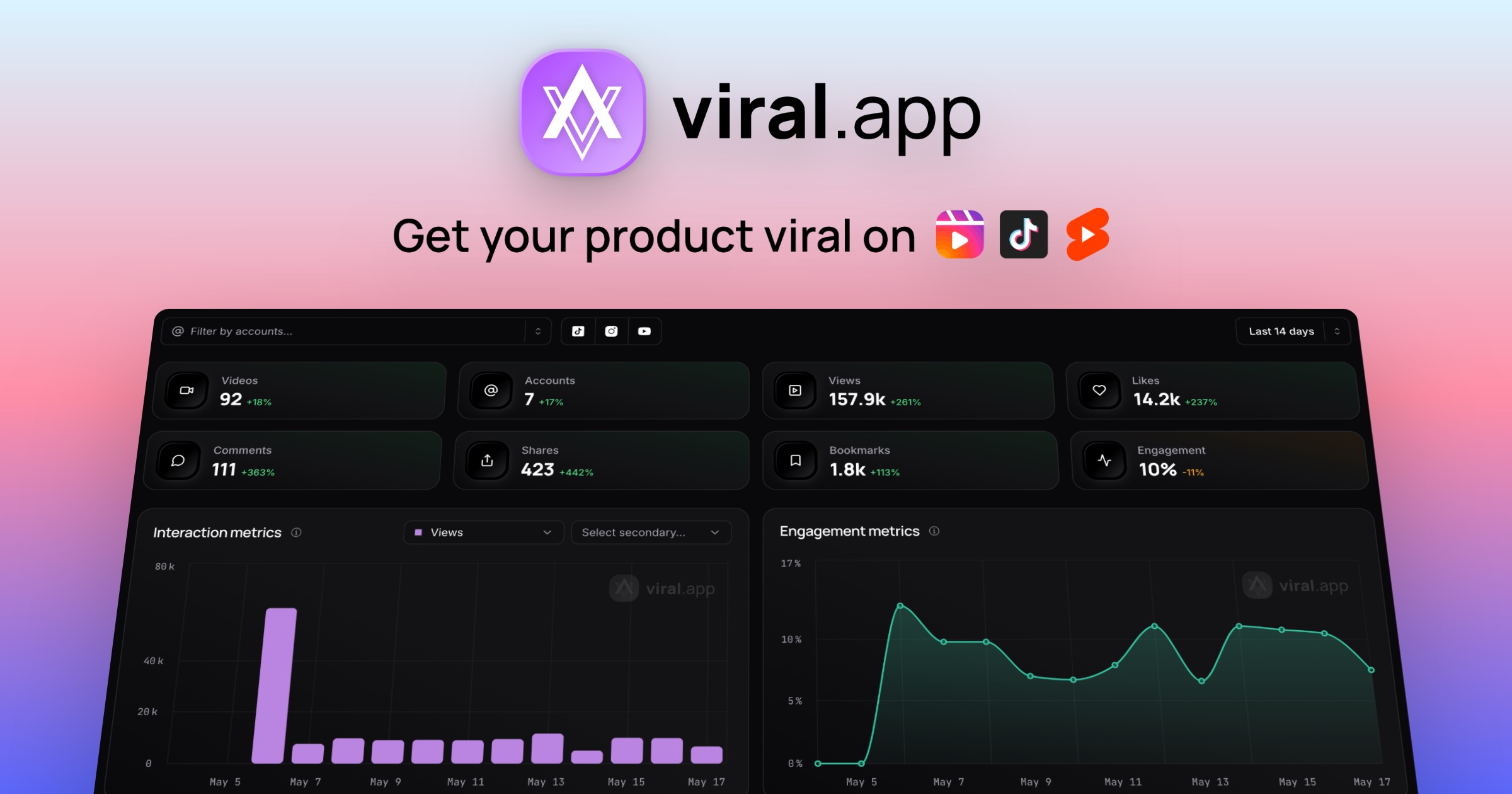
Track analytics for unlimited accounts and short-form videos. Get deep AI-powered marketing insights. Manage UGC creator campaigns.
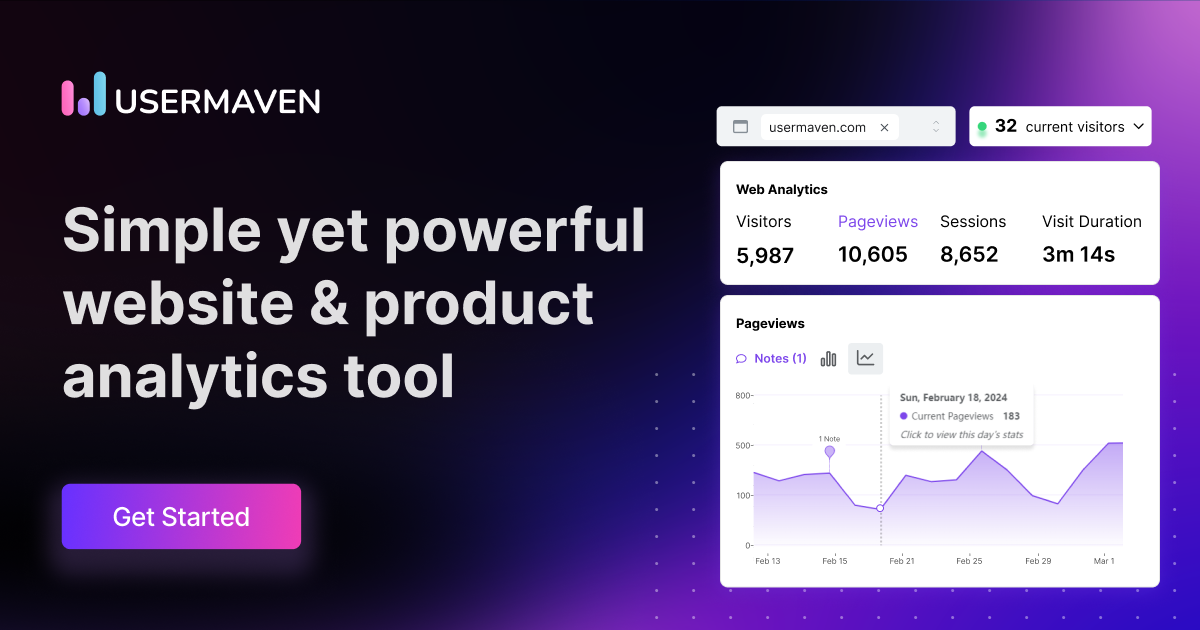
Usermaven helps marketing teams, agencies, and brands connect every touchpoint to revenue. Get accurate, real-time attribution, understand what drives growth, and make confident, data-backed decisions, all in one easy-to-use platform.
Run a free AEO + signal audit for your domain.
AI Answer Engine Optimization (AEO)
List once. Convert intent from live AI conversations without heavy integration.
Marketing analytics tools are software platforms that automate the collection, measurement, and analysis of marketing performance data. They integrate with channels like websites, social media, and email to create unified reports. Businesses use them to make data-driven decisions, increase efficiency, and maximize marketing return on investment.
The tools automatically aggregate performance data from various marketing channels like web analytics, social platforms, and ad networks into a central platform.
Using dashboards and reports, they surface and compare KPIs such as conversion rates, customer acquisition costs, and engagement metrics for clear insight.
Attribution and audience behavior analyses provide actionable recommendations to precisely adjust marketing budgets and campaign strategies for better results.
Track the full customer journey to measure product campaign performance and increase customer lifetime value through personalized marketing actions.
Analyze the lead flow from marketing to sales to quantitatively evaluate the effectiveness of content marketing and account-based marketing initiatives.
Monitor advertising campaign compliance and accurately measure the profitability of different customer channels within a highly regulated environment.
Evaluate the success of awareness campaigns and patient communication while adhering to data privacy regulations like GDPR and HIPAA.
Measure lead generation and brand awareness from B2B marketing activities such as trade shows, whitepapers, and targeted industry outreach.
Bilarna evaluates every marketing analytics tools provider using a proprietary 57-point AI Trust Score that measures expertise and reliability. Verification includes rigorous checks of technical certifications, analysis of client references and case studies, and continuous monitoring of service delivery quality. This ensures decision-makers on Bilarna find only qualified and trustworthy partners.
Costs vary widely based on features and company size, ranging from a few hundred dollars monthly for basic tools to five-figure sums for enterprise suites. Pricing models often depend on data volume, user count, or tracking pixels. A detailed quote request is essential for accurate pricing.
Essential features include multi-channel data aggregation, customizable dashboards, conversion attribution, ROI calculation, and predictive analytics. Seamless integration with existing CRM and ad platforms is equally critical, as are privacy-compliant reporting functions. Selection should align with specific business goals.
Implementation can range from a few weeks for cloud-based SaaS with standard integrations to several months for complex on-premise or customized enterprise deployments. The timeline depends heavily on data migration, configuration, and integration with the existing MarTech stack.
A common mistake is selecting an overly complex tool that lacks user adoption, or one that cannot integrate with core marketing platforms. Decision-makers should first define clear KPIs and then choose a solution that meets those specific needs, rather than seeking every possible feature.
An effective tool can significantly increase marketing ROI through more precise budget allocation and campaign optimization. Tangible expectations include reduced Customer Acquisition Cost (CAC), increased conversion rates, and better measurement of each channel's contribution to revenue. ROI should become visible within 6-12 months post-implementation.
Yes, digital marketing strategies are highly effective for local businesses when tailored to target audiences in specific geographic areas. Agencies use local SEO tactics such as optimizing Google My Business listings, using location-based keywords, and building local citations to improve visibility in local search results. Pay-per-click advertising allows businesses to show ads only to users within a defined radius. Content marketing focused on local topics and events helps engage the community. Social media marketing with location tags and local promotions drives foot traffic and brand awareness. Email marketing segmented by location can nurture local leads. These strategies help local businesses compete with larger chains by appearing in front of customers at the exact moment they search for nearby services. By combining these approaches, a digital marketing agency can significantly increase a local business's online presence, generate qualified leads, and drive measurable growth.
Yes, the AI-powered teacher tools are free and include the following features: 1. Worksheet Generator to create custom worksheets quickly. 2. Lesson Plan Generator for comprehensive, standards-aligned lesson plans. 3. Report Card Comments generator for professional, personalized feedback. 4. Coloring Page Generator to turn ideas into printable coloring pages. 5. All tools save your work automatically to a cloud library accessible from any device. 6. Tools are private, secure, and supported with fast in-app chat assistance.
Yes, there are several additional online tools available for photo editing besides object removal. These include: 1. Photo Watermark Remover to precisely remove watermarks from images. 2. Photo Retoucher to enhance and retouch images effectively. 3. Background Remover and Background Changer to remove or customize photo backgrounds. 4. Image Converter tools to convert images between formats like GIF to JPG, PNG to JPG, and BMP to JPG. 5. Video tools such as Compress Video and Remove Watermark for video editing needs.
Check the pricing details before using any AI video optimization tool. Follow these steps: 1. Visit the official website or platform offering the tool. 2. Review the pricing plans and terms of service carefully. 3. Look for any mention of additional costs such as subscription fees, usage limits, or premium features. 4. Contact customer support for clarification if needed to avoid unexpected charges.
To understand data upload limits and payment requirements on analytics platforms, follow these steps: 1. Review the platform's account types, such as free and paid plans. 2. Check the data upload limits for each plan; free accounts often have row limits per upload. 3. Determine if a credit card is required for free or paid accounts. 4. Understand the cancellation policy for paid subscriptions, which usually allows cancellation at any time.
Many creator marketing platforms offer flexible subscription models without mandatory minimum periods or binding contracts. Users can often cancel their subscriptions at any time through their account settings. This flexibility allows brands to adapt their marketing strategies as needed without long-term commitments. It is important to review the specific platform's terms to understand cancellation policies and any potential fees, but generally, these platforms aim to provide user-friendly and commitment-free access.
Advanced language learners can benefit from beginner-focused tools by utilizing advanced features tailored to higher proficiency levels. Steps to maximize benefits include: 1. Use monolingual dictionaries integrated into the tool to deepen vocabulary understanding. 2. Import your own subtitles or known word lists to customize learning materials. 3. Employ language-specific features and hotkeys to streamline study sessions. 4. Create flashcards for entire dialogues to improve comprehension of complex conversations. 5. Take advantage of advanced text-to-speech options for better pronunciation practice. 6. Customize settings and track flashcard statistics to optimize learning efficiency. These features ensure the tool remains valuable beyond the beginner stage.
Yes, AI agents can seamlessly integrate with your existing business tools and knowledge bases. This integration allows the agents to access relevant data and workflows, enhancing their ability to automate tasks effectively. By connecting with familiar platforms, AI agents fit naturally into your current operations without disrupting established processes, enabling smoother automation and better results.
Yes, many AI animation tools allow users to personalize and edit animations after the initial generation. This capability significantly impacts creative workflows by providing flexibility and control over the final output. Users can start with an AI-generated base animation and then customize elements such as timing, colors, graphics, and text to better align with their brand identity and creative vision. This reduces the need to create animations from scratch while still enabling unique and tailored results. The ability to refine AI-generated content accelerates the creative process, saves time, and allows creators to focus more on innovation and storytelling rather than repetitive technical tasks.
Yes, AI code review tools typically integrate seamlessly with popular version control platforms such as GitHub and GitLab. This integration allows automatic review of pull requests within the existing development workflow. Many tools support a wide range of programming languages including Python, JavaScript, TypeScript, Go, Java, C, C++, C#, Swift, PHP, Rust, and others. While support for some languages may vary in response quality, these tools aim to provide comprehensive analysis across diverse codebases, helping teams maintain code quality regardless of their technology stack.