Step 1
Comparison Shortlist
Machine-Ready Briefs: AI turns undefined needs into a technical project request.
We use cookies to improve your experience and analyze site traffic. You can accept all cookies or only essential ones.
 Bilarna
Stop browsing static lists. Tell Bilarna your specific needs. Our AI translates your words into a structured, machine-ready request and instantly routes it to verified Legal Practice Management experts for accurate quotes.
Machine-Ready Briefs: AI turns undefined needs into a technical project request.
Verified Trust Scores: Compare providers using our 57-point AI safety check.
Direct Access: Skip cold outreach. Request quotes and book demos directly in chat.
Precision Matching: Filter matches by specific constraints, budget, and integrations.
Risk Elimination: Validated capacity signals reduce evaluation drag & risk.
Ranked by AI Trust Score & Capability







Run a free AEO + signal audit for your domain.
AI Answer Engine Optimization (AEO)
List once. Convert intent from live AI conversations without heavy integration.
Legal practice management encompasses specialized software and services designed to digitize and automate the administrative and operational workflows of law firms. These solutions leverage technologies like artificial intelligence (AI), cloud computing, and workflow automation to optimize client intake, case management, time tracking, billing, and document handling. They primarily serve to increase efficiency, reduce operational costs, and mitigate risk by replacing manual processes and aiding compliance with legal standards. Core benefits include improved client communication, more accurate billing, and data-driven insights for strategic firm governance.
Providers of legal practice management solutions are specialized legal technology (LegalTech) companies, established software developers for professional services, and IT service providers focused on the legal sector. These vendors typically possess deep industry expertise and develop their products in close collaboration with practicing lawyers and firm administrators. Many hold certifications for data security standards like ISO 27001 or ensure compliance with industry-specific regulations. They offer tailored solutions for solo practitioners, mid-sized firms, and large international practices, with a focus on scalability, integration with existing systems, and continuous innovation.
Legal practice management solutions typically operate as cloud-based Software-as-a-Service (SaaS), accessible via web browsers or mobile apps. Implementation starts with a needs assessment, followed by integration into existing systems like document management or accounting software, often facilitated by APIs. Common workflows include digital client onboarding, automated scheduling, AI-assisted document review, and report generation. Pricing is predominantly subscription-based (monthly or annual), structured around the number of users, feature tiers, or firm revenue. Costs often start in the low three-figures per month for smaller practices. The entire process—from online quoting and demo requests to file uploads for data migration and ongoing feedback channels—is digitized to ensure a seamless onboarding and support experience.
Yes, electronic cigarettes are generally legal for travel within Europe, but their legality, sale, and use are subject to specific national regulations that vary significantly between countries. The European Union's Tobacco Products Directive (TPD) sets a baseline framework, but member states implement their own rules. For instance, nicotine concentration in e-liquids is capped, and tank sizes are restricted under TPD. However, some countries like Belgium and the Netherlands have stricter interpretations, while others may have additional local bans on flavors or public usage. It is crucial for travelers to research the laws of their specific destination regarding possession limits, where vaping is permitted, and any requirements for labeling or documentation. Non-compliance can result in fines or confiscation.
The legality of offshore casinos for US players depends on local and state laws, as these casinos operate under licenses from jurisdictions outside the United States, such as Curaçao or Panama. Many Americans use established offshore brands because they openly accept US players, offer a wide game selection, and provide fast crypto payouts. It is the player's responsibility to check their local regulations and each casino's terms of service before playing. These casinos are independent entities, and while they provide a legal service in their licensed jurisdiction, their accessibility to individual US players is not governed by federal US gambling laws.
Typically, after an initial trial period—often around seven days—business management software platforms do not charge monthly fees or enforce minimum usage requirements. Instead, continued use is contingent upon subscribing to a paid plan. This approach allows users to evaluate the software's features risk-free before committing financially. It is advisable to review the specific pricing details and terms on the provider's official website to understand any conditions related to payment plans, as these can vary between services.
Yes, a Laboratory Information Management System is designed to integrate seamlessly with various software systems and devices. This integration capability allows automatic transfer of test results and other data between the LIMS and external applications, reducing manual data entry and minimizing errors. It supports connectivity with laboratory instruments, billing systems, and other business software, enabling a unified workflow. Users can access test results and invoices from any device, ensuring flexibility and convenience. Such integrations enhance data accuracy, improve operational efficiency, and facilitate better communication across different platforms used within the laboratory environment.
Yes, AI dental receptionists can integrate seamlessly with most major practice management systems (PMS) that offer online appointment pages or APIs. This integration allows the AI to book appointments directly into your existing system, pull customer form responses from your CRM, and route calls to the correct clinic and calendar. Such integration ensures that all patient interactions are synchronized with your practice’s workflow, improving efficiency and reducing manual data entry errors.
Yes, AI design engineering tools are designed for seamless integration with existing CAD, BIM, and project management software. This compatibility ensures that engineers can continue using their preferred tools without disrupting established workflows. The integration facilitates data exchange and collaboration, enhancing efficiency and enabling teams to leverage AI capabilities alongside their current systems.
Yes, AI planning platforms are designed to integrate seamlessly with existing trucking management tools and portals. This means there is no need to replace current systems, allowing fleets to enhance their operations without disrupting established workflows. Integration is typically facilitated through pre-built connectors that link the AI platform with the fleet's existing data sources and software. This approach enables a fast start and real impact, as fleets can deploy AI-driven planning solutions risk-free and begin seeing results within a short timeframe, often within a month. Continuous support is also provided to ensure smooth integration and ongoing optimization.
Yes, AI receptionist systems are designed to integrate seamlessly with a wide range of dental practice management software and phone systems. They support popular dental software platforms such as OpenDental, EagleSoft, and Denticon, among others. On the telephony side, they are compatible with providers like Weave, Mango, GoTo, Jive, RevenueWealth PBX, and Telco. This integration allows the AI system to access scheduling data, update appointments, and route calls efficiently without disrupting existing workflows. The one-click integration feature simplifies setup, enabling dental practices to quickly adopt AI receptionist technology without extensive IT overhead.
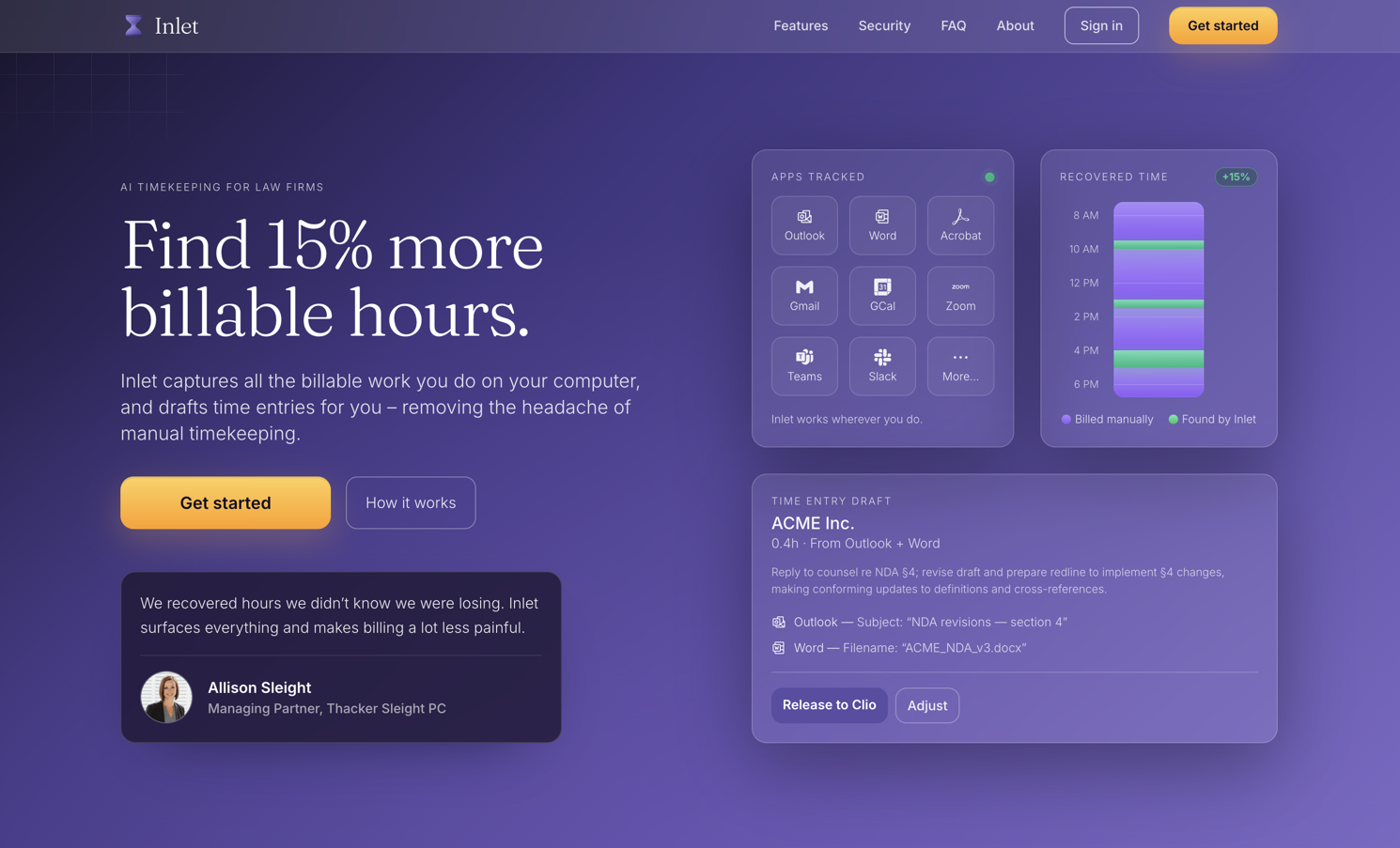
Yes, AI timekeeping software is designed to integrate seamlessly with existing legal practice management tools. This integration allows the software to draft and release time entries directly into platforms commonly used by law firms, such as Clio, MyCase, and Filevine. By working within the tools lawyers already use, the software eliminates the need for workflow changes, making adoption easier and more efficient. This connectivity ensures that time tracking and billing processes are streamlined, enabling law firms to increase billable hours and improve overall productivity without disrupting their current systems.
Yes, an AI agent can be configured to perform automated actions or remediations during incident management. These actions are governed by strict permissions and guardrails to ensure security and prevent unauthorized changes. Teams can define scopes, controls, and approval workflows to safeguard critical operations. This capability allows the AI agent not only to identify issues but also to initiate fixes, such as creating pull requests for code exceptions, thereby accelerating incident resolution while maintaining operational safety.