Step 1
Machine-Ready Briefs
AI translates unstructured needs into a technical, machine-ready project request.
We use cookies to improve your experience and analyze site traffic. You can accept all cookies or only essential ones.
 Bilarna
Stop browsing static lists. Tell Bilarna your specific needs. Our AI translates your words into a structured, machine-ready request and instantly routes it to verified AI Language Tutor Platforms experts for accurate quotes.
AI translates unstructured needs into a technical, machine-ready project request.
Compare providers using verified AI Trust Scores & structured capability data.
Skip the cold outreach. Request quotes, book demos, and negotiate directly in chat.
Filter results by specific constraints, budget limits, and integration requirements.
Eliminate risk with our 57-point AI safety check on every provider.
Verified companies you can talk to directly

AITalk is a languages learning app, it provides ai tutors for speaking
Chat about any topic and get instant feedback from the world's most advanced AI language model, powerd by ChatGPT technology.Teacher ai,ai language

Learn languages with AI tutors through immersive conversations and gamified practice. Connect with global learners on Talkit for free.

German with Nik - Learn German with the your personal AI tutor
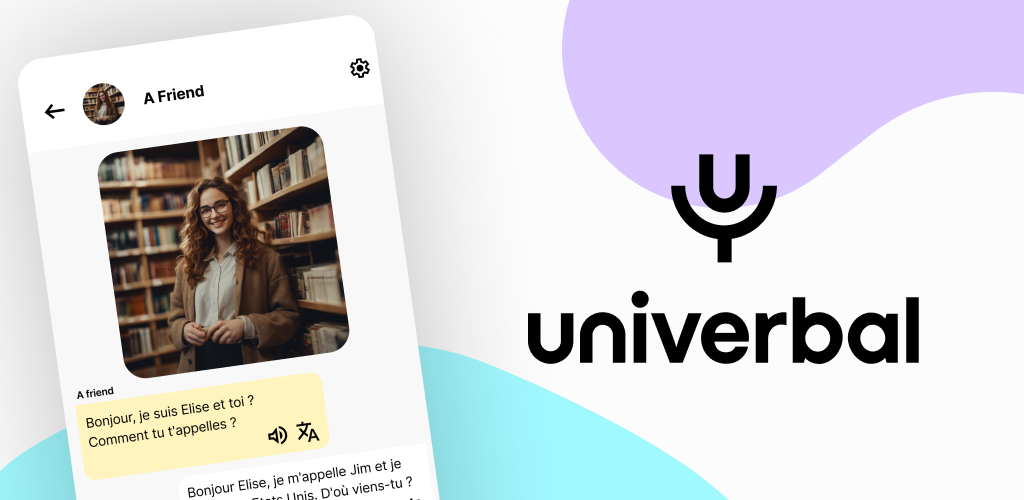
Univerbal is your AI language tutor for real conversation practice and fluency. Choose from 100+ scenarios, get instant feedback, and learn English, Spanish, French, and more - with confidence. Try for free!
Run a free AEO + signal audit for your domain.
AI Answer Engine Optimization (AEO)
List once. Convert intent from live AI conversations without heavy integration.
An AI Language Tutor is a software platform that provides personalized, interactive language instruction using artificial intelligence. These systems leverage natural language processing, speech recognition, and adaptive learning algorithms to simulate one-on-one tutoring. For businesses, they offer scalable, cost-effective solutions for upskilling multilingual workforces and improving cross-border communication.
Companies first establish specific proficiency goals, target languages, and the required business vocabulary for their teams.
The AI platform assesses each learner's level and tailors a dynamic curriculum with interactive conversations and pronunciation drills.
Managers and learners access dashboards showing real-time progress, skill gaps, and competency certifications for compliance reporting.
Trains support agents in multiple languages to provide consistent, native-level service and reduce resolution times for international customers.
Rapidly upskills merging teams in a common business language to ensure smooth collaboration and alignment on operational procedures.
Ensures employees in regulated industries master mandatory technical terminology and communication protocols in their local languages.
Prepares senior leaders for international negotiations, presentations, and media engagements with fluency and cultural nuance.
Equips engineering and product teams with the specialized vocabulary needed to collaborate on global development projects and documentation.
Bilarna evaluates every AI Language Tutor provider through a proprietary 57-point AI Trust Score, analyzing technical capabilities, pedagogical methodology, and data security compliance. We conduct portfolio reviews, validate client references on training outcomes, and audit the platform's scalability and integration features. Continuous performance monitoring ensures providers on Bilarna maintain high standards for corporate client success.
Pricing is typically subscription-based, quoted per user per month, and scales with learner volume and feature tiers. Enterprise contracts often include implementation, custom content development, and dedicated success management, with annual costs ranging from tens to hundreds of thousands depending on deployment size.
A standard enterprise deployment takes 4 to 8 weeks from contract to launch. This timeline covers technical integration, SSO setup, custom content upload, administrator training, and pilot user onboarding. Large, multinational rollouts with multiple language cohorts may extend to 12 weeks.
Key ROI metrics include improved customer satisfaction (CSAT/NPS) scores for support teams, reduced time-to-proficiency for employees in new roles, increased employee retention, and quantifiable gains in cross-border collaboration efficiency. Providers should supply detailed analytics dashboards to track these business outcomes.
Leading platforms offer real-time speech analysis with accent correction, industry-specific vocabulary modules, integration with collaboration tools like Microsoft Teams or Slack, and advanced reporting for compliance. The quality of the conversational AI and the adaptability of the learning path are critical differentiators.
Common pitfalls include overlooking data privacy certifications like GDPR or SOC 2, failing to pilot the tool with actual employee cohorts, and choosing a generic consumer-grade platform lacking business-specific content. A rigorous selection process should prioritize pedagogical effectiveness and enterprise-grade security.
Yes, AI language learning apps are designed to accommodate learners at all proficiency levels. Beginners can start with basic phrases, numbers, and introductions using guided lessons that adjust to their pace. Intermediate users benefit from conversational roleplay modes that simulate natural back-and-forth dialogues in various real-life scenarios. Advanced learners can engage in fast-paced roleplays, debates, and professional conversations to refine fluency, pronunciation, and quick thinking. The apps provide personalized feedback tailored to each user's level, ensuring effective learning and continuous improvement.
Advanced language learners can benefit from beginner-focused tools by utilizing advanced features tailored to higher proficiency levels. Steps to maximize benefits include: 1. Use monolingual dictionaries integrated into the tool to deepen vocabulary understanding. 2. Import your own subtitles or known word lists to customize learning materials. 3. Employ language-specific features and hotkeys to streamline study sessions. 4. Create flashcards for entire dialogues to improve comprehension of complex conversations. 5. Take advantage of advanced text-to-speech options for better pronunciation practice. 6. Customize settings and track flashcard statistics to optimize learning efficiency. These features ensure the tool remains valuable beyond the beginner stage.
Yes, an AI chatbot can support multiple languages and handle language detection automatically by following these steps: 1. The chatbot is programmed to recognize over 45 languages. 2. It detects the customer's language at the start of the interaction. 3. The chatbot continues the conversation in the detected language without manual switching. 4. This enables businesses to serve a global audience seamlessly. 5. Language support improves customer experience by providing responses in the customer's preferred language.
Use an AI math solver as a supplementary tool alongside a human tutor. 1. It provides instant, patient, and repeatable step-by-step explanations. 2. It allows learners to practice and master concepts at their own pace. 3. It is available 24/7, offering help whenever needed. 4. However, it does not fully replace the personalized guidance and interaction a human tutor provides but serves as a perfect study partner.
Yes, you can customize voice and language settings in an AI voice generator by following these steps: 1. Access the AI voice generator interface. 2. Locate the voice selection menu and choose from available voice options. 3. Select the preferred language for the speech output. 4. Adjust additional settings such as speech speed, pitch, and tone if available. 5. Preview the voice to ensure it meets your requirements before generating the final audio.
Language learning apps offer flexible, accessible, and engaging alternatives to traditional classroom methods. They allow learners to practice anytime and anywhere, often incorporating gamification and interactive content to maintain motivation. While apps provide valuable tools for vocabulary building, listening, and speaking practice, they may lack the personalized feedback and social interaction found in classrooms. Combining app-based learning with traditional methods or conversation practice can yield the best results, leveraging the strengths of both approaches to enhance fluency and comprehension.
Yes, natural language queries can be used to interact with SQL databases through AI-powered tools integrated into the development environment. These tools translate user questions posed in everyday language into precise SQL commands that the database can execute. This approach makes data querying more accessible to users who may not be familiar with SQL syntax, allowing them to retrieve insights and perform analysis without writing complex code. It bridges the gap between technical and non-technical users, facilitating better data-driven decision-making.
Large language models (LLMs) are evolving beyond basic query-response interactions by incorporating multimodal capabilities and more advanced contextual understanding. Instead of solely processing text inputs and generating text outputs, modern LLMs can now interpret and integrate data from images, audio, and other modalities, enabling richer and more dynamic conversations. Additionally, these models are improving in their ability to maintain context over longer interactions, understand nuanced user intents, and generate more coherent and relevant responses. This evolution allows AI systems to support complex tasks such as content creation, decision support, and interactive assistance across diverse domains.
A natural language DevOps platform enhances software delivery for hybrid teams by enabling seamless communication and collaboration across different geographies and time zones. It processes and organizes incoming engineering tasks such as bug reports and deployment requests, ensuring that all team members have the necessary context regardless of when or where they work. This reduces delays and misunderstandings, allowing teams to focus on building and innovating rather than managing workflow disruptions. Additionally, such platforms automate routine processes, which accelerates delivery cycles and improves overall efficiency.
A podcast app can be an effective tool for language learning and practice by providing access to a variety of language-focused podcasts. Users can listen to episodes in languages such as Chinese, English, French, German, Hindi, Portuguese, and Spanish. These podcasts often include conversations, lessons, and cultural insights that help improve listening skills, vocabulary, and pronunciation. Regularly engaging with language podcasts allows learners to immerse themselves in the language at their own pace, making it easier to retain information and build confidence in speaking and comprehension.