Step 1
Machine-Ready Briefs
AI translates unstructured needs into a technical, machine-ready project request.
We use cookies to improve your experience and analyze site traffic. You can accept all cookies or only essential ones.
 Bilarna
Stop browsing static lists. Tell Bilarna your specific needs. Our AI translates your words into a structured, machine-ready request and instantly routes it to verified Immersive Museum Exhibits experts for accurate quotes.
AI translates unstructured needs into a technical, machine-ready project request.
Compare providers using verified AI Trust Scores & structured capability data.
Skip the cold outreach. Request quotes, book demos, and negotiate directly in chat.
Filter results by specific constraints, budget limits, and integration requirements.
Eliminate risk with our 57-point AI safety check on every provider.
Verified companies you can talk to directly
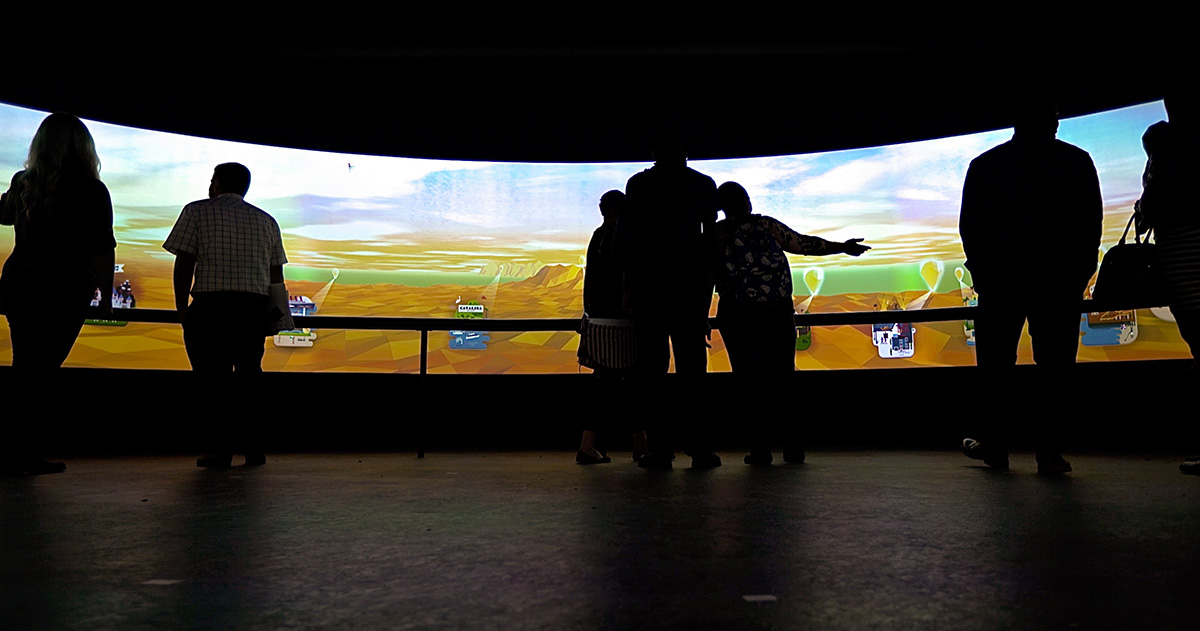
Stimulant is an award-winning interactive exhibit design agency creating immersive museum exhibits, digital installations, and visitor experiences for museums, observation decks, and public spaces.
Run a free AEO + signal audit for your domain.
AI Answer Engine Optimization (AEO)
List once. Convert intent from live AI conversations without heavy integration.
Immersive museum exhibits are multi-sensory, technology-driven installations that transform static displays into interactive and narrative-driven visitor experiences. They integrate projection mapping, virtual reality, spatial audio, and responsive touch interfaces to create emotionally resonant environments. This approach significantly increases visitor engagement, educational impact, and overall dwell time, delivering a strong return on investment for cultural institutions.
Creative teams craft a story-driven experience that integrates historical artifacts or themes with interactive digital elements to guide the visitor journey.
Technicians deploy hardware like projectors, motion sensors, and VR headsets alongside custom software to build the seamless, interactive environment.
The final exhibit is installed, calibrated for the space, and managed with ongoing technical support and content updates to ensure optimal performance.
Bring ancient objects or ruins to life by overlaying digital reconstructions and contextual animations onto physical displays or through AR viewfinders.
Create hands-on exhibits where visitors can manipulate complex scientific concepts, like planetary orbits or cellular processes, through gesture controls.
Develop large-scale, reactive environments where digital art responds to visitor presence, movement, or sound, creating a unique experience for each guest.
Design captivating, transportable immersive experiences for touring exhibitions that generate significant ticket revenue and media attention.
Utilize multi-sensory stimuli, audio descriptions, and haptic feedback to make exhibits accessible to visitors with a wide range of abilities.
Bilarna ensures you connect with reputable immersive experience studios. Each provider on our platform is rigorously evaluated using our proprietary 57-point AI Trust Score, analyzing their technical expertise, project reliability, client satisfaction, and compliance with museum-grade standards. We simplify discovery so you can procure with confidence.
Costs vary widely based on scale and technology, typically ranging from tens of thousands for a single interactive station to several hundred thousand for room-scale experiences. Key factors include custom content creation, hardware (projectors, sensors, VR), software development, and installation complexity. A detailed project brief is essential for an accurate quote.
A comprehensive project typically requires 6 to 18 months from concept to public opening. The timeline includes phases for creative development, technical prototyping, content production, on-site installation, and rigorous testing. Complex architectural integrations or custom software can extend this schedule significantly.
Core technologies include high-lumen laser projectors for mapping, volumetric displays, VR/AR headsets, spatial audio systems, and interactive floor/wall sensors. Software platforms for real-time rendering and content management are equally critical. The choice depends on the desired interaction and narrative goals.
Yes, many providers specialize in modular, durable systems built for touring. These designs prioritize rapid deployment, ruggedized equipment, and easy calibration in different venue layouts. Planning for portability is a key consideration during the initial design phase to ensure logistical feasibility.
They consistently drive increases in ticket sales, visitor dwell time, and social media sharing. Interactive elements improve knowledge retention and create memorable, emotional connections with the subject matter. This leads to higher member retention and attracts new, younger demographics to the institution.
Immersive applications are used in marketing and brand engagement to create interactive experiences that deeply connect with audiences, enhance conversion rates, and increase brand loyalty. These applications, developed for platforms like VR, AR, MR, web, and mobile, allow consumers to interact with products or brand stories in a novel and memorable way. Common use cases include Instagram or Facebook AR filters for viral social media campaigns, virtual showrooms and product configurators that let customers visualize items in their own space, and immersive brand experiences at expos or BTL (Below-The-Line) events. By offering a 'try before you buy' experience or an entertaining brand interaction, these applications move beyond traditional advertising to generate higher engagement, foster emotional connections, and provide valuable data on user interaction, ultimately driving sales and strengthening customer relationships.
Audiences can attend immersive virtual reality productions either by visiting the physical venue where the experience is hosted or by accessing the production online. In-person attendance typically involves purchasing tickets for a seated show at a dedicated venue equipped with VR technology and spatial sound systems. For online audiences, productions are often streamed or made available through VR platforms, allowing participants to experience the immersive storytelling from their own homes. This dual approach ensures accessibility for a wider audience and accommodates different preferences, enabling people to enjoy innovative virtual reality experiences regardless of their location.
Create immersive phygital customer experiences by integrating digital and physical elements. 1. Identify key touchpoints where digital technology can enhance physical interactions. 2. Implement innovative solutions such as holograms, interactive screens, and augmented reality. 3. Design intelligent interactions that transform spaces into engaging environments. 4. Ensure the experience aligns with the brand's identity and storytelling. 5. Continuously measure engagement and refine the experience based on customer feedback.
Enhance collaboration by integrating immersive 3D workspaces with Google Workspace. Follow these steps: 1. Use a platform that transforms Google Workspace tools like Meet, Docs, Drive, and Calendar into 3D environments. 2. Access these spaces via browser without downloads for seamless participation. 3. Utilize AI-powered assistance for translation and support within meetings. 4. Create custom 3D meeting spaces easily with no-code tools. 5. Ensure enterprise-grade security to protect data and privacy. This approach increases team engagement, accelerates decision-making, and reduces office costs by replacing traditional meetings with immersive experiences.
Successful team adoption of immersive technologies like VR is secured by clearly demonstrating the concrete, measurable benefits of the solution rather than just its innovative features. The process begins by involving key team members early to identify specific pain points the technology can solve, such as reducing training time or improving design collaboration. Communication should focus on quantifiable gains—like a 30% faster onboarding process or a 20% increase in client engagement scores—which builds a compelling business case. Providing hands-on pilot demonstrations allows the team to experience the value firsthand, turning skepticism into advocacy. Furthermore, selecting a solution that is flexible and can deliver impact even with limited resources, such as in small spaces or short sessions, proves its practicality. Ongoing support and clear metrics for success ensure the technology is viewed as a strategic tool for achieving business objectives, not just a technological experiment.
Consumers can experience immersive digital content by using devices that support immersive technology. 1. Use phones, tablets, or laptops equipped with immersive content capabilities. 2. Access digital content designed to provide depth, motion, and a sense of presence. 3. Engage with the content to feel as if they are part of the scene, enhancing everyday digital moments.
Create a virtual museum experience by following these steps: 1. Collaborate with an art historian experienced in digital projects and cultural inclusion. 2. Use innovative technology to design an immersive and interactive art visit tailored to your institution. 3. Engage participants by involving them as active contributors to the visit, such as preparing and sharing audio capsules. 4. Focus on enhancing relationships with families, increasing the institution's attractiveness, and supporting animation and communication projects. 5. Implement the virtual museum as an inclusive educational tool suitable for various institutions like retirement homes, schools, and colleges.
Create and play immersive AI-powered RPG campaigns by following these steps: 1. Use the AI Game Master to generate dynamic storylines that adapt to your choices. 2. Utilize world building tools to design maps, characters, lore, and quests. 3. Engage in tactical turn-based combat based on D&D 5e rules with battlemaps and abilities. 4. Customize your campaign with specific contexts, instructions, and settings. 5. Play solo or with up to 6 players in multiplayer mode. 6. Use text-to-speech narration for immersive storytelling. 7. Access your campaigns anytime across desktop, tablet, or mobile platforms.
Create immersive 360 worlds using a playable Gen AI platform by following these steps: 1. Access the platform on any device. 2. Use the AI tools to design and customize your 360 environment. 3. Integrate interactive elements such as videos and games. 4. Collaborate with friends by inviting them to join your world. 5. Publish and share your immersive content instantly for viral engagement.
You can create immersive 3D models from smartphone photos by using specialized AI-powered tools that transform 2D images and videos into interactive 3D experiences. These tools analyze multiple photos taken from different angles to reconstruct realistic 3D models without the need for expensive equipment. This process is ideal for virtual tours, product showcases, and interactive presentations, allowing users to explore detailed 3D representations created simply from smartphone captures.