Step 1
Comparison Shortlist
Machine-Ready Briefs: AI turns undefined needs into a technical project request.
We use cookies to improve your experience and analyze site traffic. You can accept all cookies or only essential ones.
 Bilarna
Stop browsing static lists. Tell Bilarna your specific needs. Our AI translates your words into a structured, machine-ready request and instantly routes it to verified Infrastructure Inspection experts for accurate quotes.
Machine-Ready Briefs: AI turns undefined needs into a technical project request.
Verified Trust Scores: Compare providers using our 57-point AI safety check.
Direct Access: Skip cold outreach. Request quotes and book demos directly in chat.
Precision Matching: Filter matches by specific constraints, budget, and integrations.
Risk Elimination: Validated capacity signals reduce evaluation drag & risk.
Ranked by AI Trust Score & Capability
Run a free AEO + signal audit for your domain.
AI Answer Engine Optimization (AEO)
List once. Convert intent from live AI conversations without heavy integration.
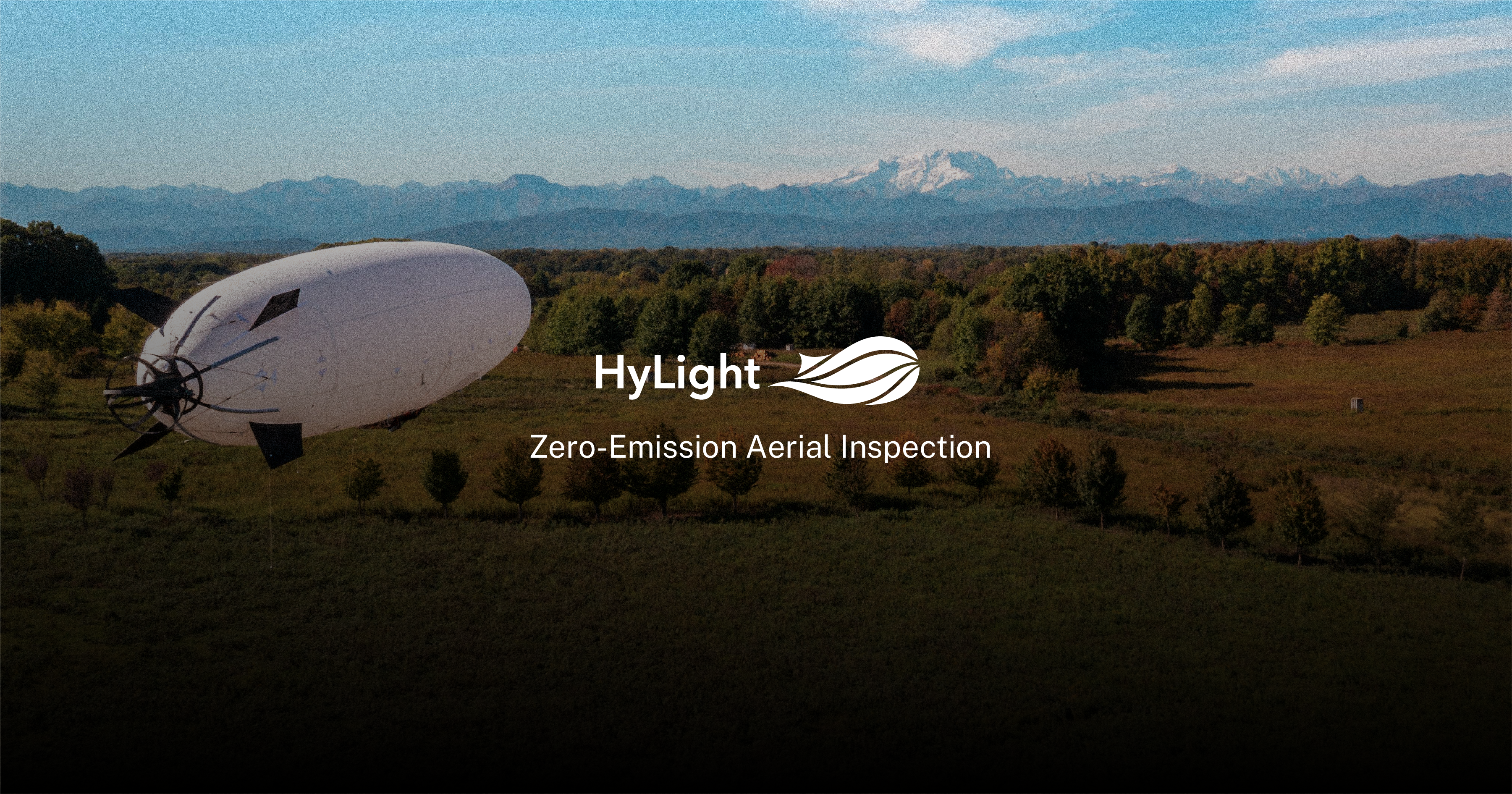
This category encompasses services focused on inspecting critical infrastructure assets such as power lines, pipelines, railways, and industrial zones. Utilizing advanced aerial technologies like autonomous drones and airships, these services provide high-resolution, millimeter-level data to detect faults, damages, or potential hazards. They address the need for efficient, safe, and environmentally friendly inspection methods that can cover large-scale infrastructure quickly and accurately, reducing reliance on traditional methods like helicopters or short-range drones. These solutions are vital for maintaining safety, preventing failures, and ensuring the continuous operation of essential services in sectors such as energy, transportation, and utilities.
Providers of infrastructure inspection services include specialized aerospace companies, drone technology firms, and environmental monitoring organizations. These providers develop and operate autonomous aerial systems such as airships and drones equipped with advanced sensors and AI for high-resolution data collection. They serve government agencies, utility companies, transportation authorities, and industrial operators seeking efficient, safe, and environmentally friendly inspection solutions. Their expertise lies in deploying long-endurance, zero-emission aerial platforms capable of covering large areas with minimal human intervention, ensuring safety and operational continuity while reducing costs and environmental impact.
Inspection services are delivered through the deployment of autonomous aerial platforms such as airships and drones, which are equipped with advanced sensors and AI for high-resolution data collection. Pricing varies based on the scope and scale of the inspection, with options for long-term contracts or project-based fees. Setup involves initial planning, calibration of sensors, and deployment of the aerial systems to the target areas. These services often include real-time data processing, remote operation capabilities, and ongoing maintenance to ensure optimal performance. Cost-effectiveness is achieved through the ability to cover large areas quickly, reduce manpower, and minimize environmental impact, making these solutions suitable for large-scale infrastructure monitoring and maintenance programs.
Infrastructure inspection — ensure your physical assets are safe and compliant. Use Bilarna to discover, compare, and connect with verified specialists via AI-assisted sourcing.
View Infrastructure Inspection Services providersMany modern data analytics platforms are designed to integrate seamlessly with your existing technology infrastructure. This means you do not need to replace your current systems to start using the platform. These solutions are built with flexibility in mind, allowing them to sit on top of your existing ecosystem without requiring extensive integration work on your part. This approach helps organizations adopt new analytics capabilities quickly while preserving their current investments in technology. It is advisable to check with the platform provider about specific integration options and compatibility with your current setup.
Yes, many infrastructure visualization tools are designed to run both locally and within continuous integration (CI) environments. Running locally allows developers to instantly generate diagrams and documentation as they work on their Terraform projects, facilitating immediate feedback and understanding. Integration with CI pipelines ensures that infrastructure documentation is automatically updated with every code change, maintaining accuracy and consistency across teams. This dual capability supports flexible workflows and helps keep infrastructure documentation evergreen and synchronized with the actual codebase.
Yes, many modern inspection software solutions can automatically read and interpret geometric dimensioning and tolerancing (GD&T) data, including Feature Control Frames (FCFs). These systems use advanced algorithms to infer tolerances and apply them during the inspection process, improving accuracy and efficiency. While accuracy rates may vary, some software can achieve up to 95% accuracy in reading FCFs. This automation reduces manual input errors and speeds up quality control workflows, making it easier for manufacturers to maintain compliance with engineering specifications.
Many modern inspection software solutions are capable of interpreting geometric dimensioning and tolerancing (GD&T) data, including Feature Control Frames (FCFs). These systems use advanced algorithms to read and understand GD&T symbols and tolerances, often achieving high accuracy rates. Some software can automatically infer and apply tolerances based on the GD&T data, streamlining the inspection process and reducing manual input errors. However, the accuracy and capabilities can vary between products, so it is important to verify the software's ability to handle specific GD&T standards and the level of precision it offers before making a selection.
Yes, many Terraform infrastructure visualization tools include features for drift detection and cost analysis. Drift detection helps identify when the actual infrastructure state deviates from the declared Terraform configuration, allowing teams to quickly address inconsistencies. Cost analysis integration, often through tools like Infracost, provides insights into the financial impact of infrastructure changes by estimating costs directly within the visualization or documentation. These capabilities enable better management of infrastructure health and budget control, making it easier to maintain reliable and cost-effective environments.
Typically, to use an intelligent payment infrastructure designed for online payment processing, you need to be a registered business with a valid business registration number, such as a CNPJ in Brazil. This requirement ensures compliance with financial regulations and enables secure and reliable payment processing. However, for international companies using global payment methods, this registration number might not be mandatory. It is important to verify the specific requirements of the payment infrastructure provider and the jurisdictions involved to ensure proper setup and compliance.
Use AI agents to automate cloud infrastructure management by following these steps: 1. Deploy intelligent agents that monitor cloud resources continuously. 2. Configure agents to handle migration tasks automatically, reducing manual effort. 3. Enable drift remediation to detect and correct configuration deviations in real time. 4. Set up continuous optimization routines to improve resource utilization and cost efficiency. 5. Maintain human oversight to review and approve critical changes made by AI agents.
AI and robotics can significantly enhance infrastructure maintenance and operations by enabling precise inspections, predictive maintenance, and data-driven decision-making. Robotics equipped with AI can perform detailed inspections in hazardous or hard-to-reach areas, collecting high-fidelity data that helps identify wear, defects, or potential failures early. This reduces downtime and maintenance costs while extending asset life. AI algorithms analyze the collected data to predict when maintenance is needed, optimizing scheduling and resource allocation. Together, these technologies improve reliability, safety, and efficiency across critical infrastructure sectors such as energy, defense, and manufacturing.
Prevent infrastructure incidents by using AI to uncover blind spots and inefficiencies. Follow these steps: 1. Connect your monitoring, cloud, and code tools to the AI platform. 2. Allow the AI to continuously analyze data to detect patterns and potential risks. 3. Identify hidden vulnerabilities and inefficiencies before they escalate. 4. Implement AI-recommended preventive measures to stop issues before they become incidents.
Use AI to enhance predictive maintenance by following these steps: 1. Collect data from logs, IoT sensors, tickets, and environmental sources. 2. Apply AI models to detect anomalies, forecast failure risks, and identify duplicate errors. 3. Generate detailed diagnostics explaining root causes with confidence. 4. Create step-by-step repair plans including required parts and safety checklists. 5. Automate workflow orchestration by assigning tasks based on skills, SLA, and proximity to optimize maintenance schedules and reduce downtime.