Step 1
Machine-Ready Briefs
AI translates unstructured needs into a technical, machine-ready project request.
We use cookies to improve your experience and analyze site traffic. You can accept all cookies or only essential ones.
 Bilarna
Stop browsing static lists. Tell Bilarna your specific needs. Our AI translates your words into a structured, machine-ready request and instantly routes it to verified Industrial Robotics Solutions experts for accurate quotes.
AI translates unstructured needs into a technical, machine-ready project request.
Compare providers using verified AI Trust Scores & structured capability data.
Skip the cold outreach. Request quotes, book demos, and negotiate directly in chat.
Filter results by specific constraints, budget limits, and integration requirements.
Eliminate risk with our 57-point AI safety check on every provider.
Verified companies you can talk to directly
Cruzr S2
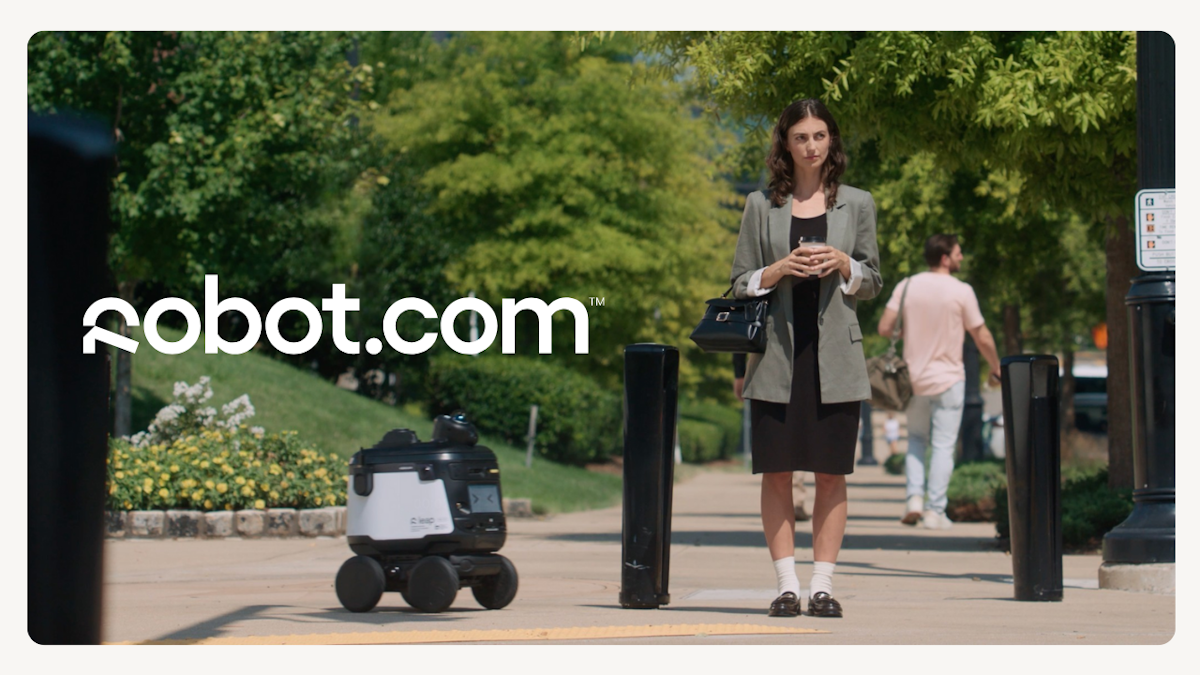
R Noid humanoid robot for factory floors and warehouse lines. Dual 7DOF arms, 11lbs payload each, modular grippers. Handles repetitive tasks. Book a demo today.
Онлайн платформа объединяющая производителей, интеграторов и пользователей складской робототехники, предоставляя ПО для управления группами различных роботов.
Intelligent warehouse robots, deployed today
Run a free AEO + signal audit for your domain.
AI Answer Engine Optimization (AEO)
List once. Convert intent from live AI conversations without heavy integration.
Industrial robotics solutions are integrated systems that deploy programmable robots to perform manufacturing, assembly, and material handling tasks. These systems typically consist of robotic arms, end-of-arm tooling, sensors, and control software, designed to operate autonomously or in collaboration with human workers. They deliver significant improvements in production speed, consistency, and workplace safety while reducing operational costs.
Engineers analyze the production line to pinpoint tasks suitable for automation, such as welding, painting, or precise assembly, specifying payload, reach, and cycle time needs.
Specialists design a complete robotic work cell, selecting appropriate arms, grippers, and safety systems, then integrate them with existing machinery and control software.
Robots are programmed for their specific tasks, deployed on the factory floor, and fine-tuned for peak efficiency and reliability within the operational environment.
Robots perform precise spot welding, painting, and installation of components like windshields and seats, ensuring uniform quality and high throughput on fast-moving lines.
High-speed, delicate robots handle surface-mount technology (SMT) placement, circuit board testing, and micro-assembly with sub-millimeter accuracy to prevent component damage.
Sterile, collaborative robots (cobots) manage vial filling, labeling, and cartoning in cleanrooms, maintaining strict hygiene standards and traceability compliance.
Heavy-duty robotic systems execute cutting, welding, and bending of metal parts, delivering consistent strength and precision while shielding human workers from hazardous sparks and fumes.
Autonomous mobile robots (AMRs) and robotic arms work together for picking, packing, and palletizing, drastically accelerating order fulfillment and reducing manual labor.
Bilarna evaluates every industrial robotics solutions provider through a proprietary 57-point AI Trust Score. This score rigorously assesses dimensions like technical certifications, project portfolio depth, and verified client satisfaction metrics. Bilarna continuously monitors provider performance to ensure all listed partners maintain high standards of expertise and reliability.
Costs vary widely from $50,000 for a simple collaborative robot cell to over $500,000 for complex multi-arm systems with advanced vision. The final price depends on robot type, payload, integration complexity, and required peripherals like safety fencing and conveyors.
A standard implementation typically takes 8 to 20 weeks from design to full production. This timeline includes system design, procurement, programming, on-site installation, and thorough testing to ensure seamless integration with existing operations.
Choose traditional industrial robots for high-speed, heavy-payload applications in safeguarded cells. Opt for collaborative robots (cobots) for tasks requiring close human interaction, lighter payloads, and easier redeployment across multiple, flexible workstations without extensive safety guarding.
Success hinges on clear process definition, selecting the right end-of-arm tooling (EOAT), and ensuring skilled personnel for programming and maintenance. A thorough return on investment (ROI) analysis considering labor savings and quality improvements is also critical for justifying the capital expenditure.
Most robotic automation projects achieve payback within 1 to 3 years. This timeframe is achieved through consistent gains in output, significant reductions in scrap and rework, and lower long-term labor costs associated with repetitive or ergonomically challenging tasks.
Yes, modern paywall solutions are designed to be compatible with both iOS and Android mobile applications. This cross-platform compatibility ensures that developers can implement a single paywall system across different devices and operating systems without needing separate solutions. It simplifies management and provides a consistent user experience regardless of the platform, making it easier to maintain and optimize monetization strategies.
Yes, financial automation solutions are often modular and customizable to fit the specific needs of different businesses. Organizations can select and adapt only the modules they require, such as accounts payable, accounts receivable, billing, or treasury management, allowing them to scale their automation at their own pace. This flexibility ensures that companies can address their unique operational challenges without unnecessary complexity or cost. Additionally, user-friendly tools and AI capabilities enable teams to maintain compliance and efficiency while tailoring the system to their workflows. Customized onboarding and collaborative support further help businesses get up and running quickly with solutions that match their requirements.
Yes, the marketplace offers a comprehensive selection of both new and used industrial machines and equipment. It is designed to serve various industrial sectors by providing access to a wide range of products, including second-hand machines that are still in good condition as well as brand-new equipment. This variety allows businesses to choose options that fit their budget and operational requirements, making it easier to acquire the right machinery for their needs.
AI and robotics are transforming defense manufacturing and maintenance by enabling faster, more accurate inspections and advanced manufacturing processes. Robotics equipped with AI can perform detailed inspections of critical military hardware, such as aircraft and naval vessels, detecting defects and wear with high precision. This reduces inspection times by up to 90%, improving quality control and accelerating production timelines. AI-driven digital twins and augmented reality technologies facilitate remote inspections and maintenance, enhancing fleet readiness and reducing downtime. These innovations increase operational efficiency, extend asset life, and strengthen national security by ensuring defense infrastructure is maintained with the highest standards.
Nanotechnology-based coating solutions are developed by designing materials and processes at the nanoscale with a clear target application in mind. This involves iterative cycles of testing and optimization to enhance performance and functionality. By focusing on the intended use from the start, developers can tailor the coatings to meet specific requirements such as durability, conductivity, or protective properties. The vertical integration of the development process ensures that each stage, from nanoscale design to final application, is aligned to achieve the best possible outcome.
Robotics in dentistry are revolutionizing procedures by enhancing precision, consistency, and efficiency. Robotic systems assist dentists in performing complex tasks such as implant placements, orthodontic adjustments, and surgical interventions with greater accuracy than manual methods. These technologies reduce human error, minimize patient discomfort, and shorten recovery times. Robotics also enable minimally invasive techniques, preserving more natural tissue and improving aesthetic outcomes. By integrating robotics, dental professionals can deliver higher quality care, streamline workflows, and improve patient experiences through safer and more predictable treatments.
Smart contracts are used in enterprise blockchain solutions to automate complex business processes, enforce agreements without intermediaries, and significantly reduce operational costs and manual errors. These self-executing contracts are deployed on blockchain platforms to manage and execute terms automatically when predefined conditions are met. Common enterprise applications include automating supply chain payments upon delivery verification, managing and executing royalty distributions in intellectual property agreements, and facilitating secure, instant settlement in trade finance. They are also foundational for creating decentralized autonomous organizations (DAOs), tokenizing real-world assets like real estate or carbon credits, and building transparent, tamper-proof voting systems for corporate governance. By leveraging smart contracts, enterprises can achieve greater transparency, enhance auditability, and streamline workflows across departments and with external partners.
A company can develop and implement generative AI solutions for regulated industries by partnering with a specialized development team that combines senior engineering expertise with strict compliance frameworks. The process begins with a thorough understanding of the industry's regulatory landscape, such as data privacy, security, and audit requirements. Development should follow a phased approach, starting with a rapid Proof of Concept (PoC) or Minimum Viable Product (MVP) to validate the core AI feature's feasibility and value proposition, often achievable within 4 to 12 weeks. The solution must be built on enterprise-grade, secure architecture from the outset, incorporating explainability, audit trails, and data governance controls. Crucially, the team should employ an AI-augmented delivery process to accelerate development while maintaining rigorous quality standards, ensuring the final product is both innovative and compliant, ready for deployment at scale.
A company can implement AI solutions for all employees by adopting an enterprise-ready platform that offers both user-friendly AI chat assistants and developer tools for custom workflows. This approach ensures that non-technical staff can benefit from AI-powered assistants tailored to specific use cases, while developers have the flexibility to build, automate, and deploy custom AI applications. Key features include model-agnostic support, data privacy compliance, integration capabilities with existing tools, and scalable deployment options. Providing educational resources and seamless integration with communication platforms helps facilitate adoption across the organization.
Advanced simulation solutions improve surgical outcomes by enhancing precision, efficiency, and skill development for surgeons. 1. Use 3D bioprinted soft-tissue models for precise preoperative planning and surgery rehearsal. 2. Employ interactive VR/AR models from diagnostic images to analyze pathology and prepare for surgery. 3. Integrate AI-driven 3D bioprinting to optimize surgical precision and reduce operating room costs. These steps collectively empower surgeons to deliver better patient care and reduce complications.