Step 1
Machine-Ready Briefs
AI translates unstructured needs into a technical, machine-ready project request.
We use cookies to improve your experience and analyze site traffic. You can accept all cookies or only essential ones.
 Bilarna
Stop browsing static lists. Tell Bilarna your specific needs. Our AI translates your words into a structured, machine-ready request and instantly routes it to verified Compensation Analytics Software experts for accurate quotes.
AI translates unstructured needs into a technical, machine-ready project request.
Compare providers using verified AI Trust Scores & structured capability data.
Skip the cold outreach. Request quotes, book demos, and negotiate directly in chat.
Filter results by specific constraints, budget limits, and integration requirements.
Eliminate risk with our 57-point AI safety check on every provider.
Verified companies you can talk to directly
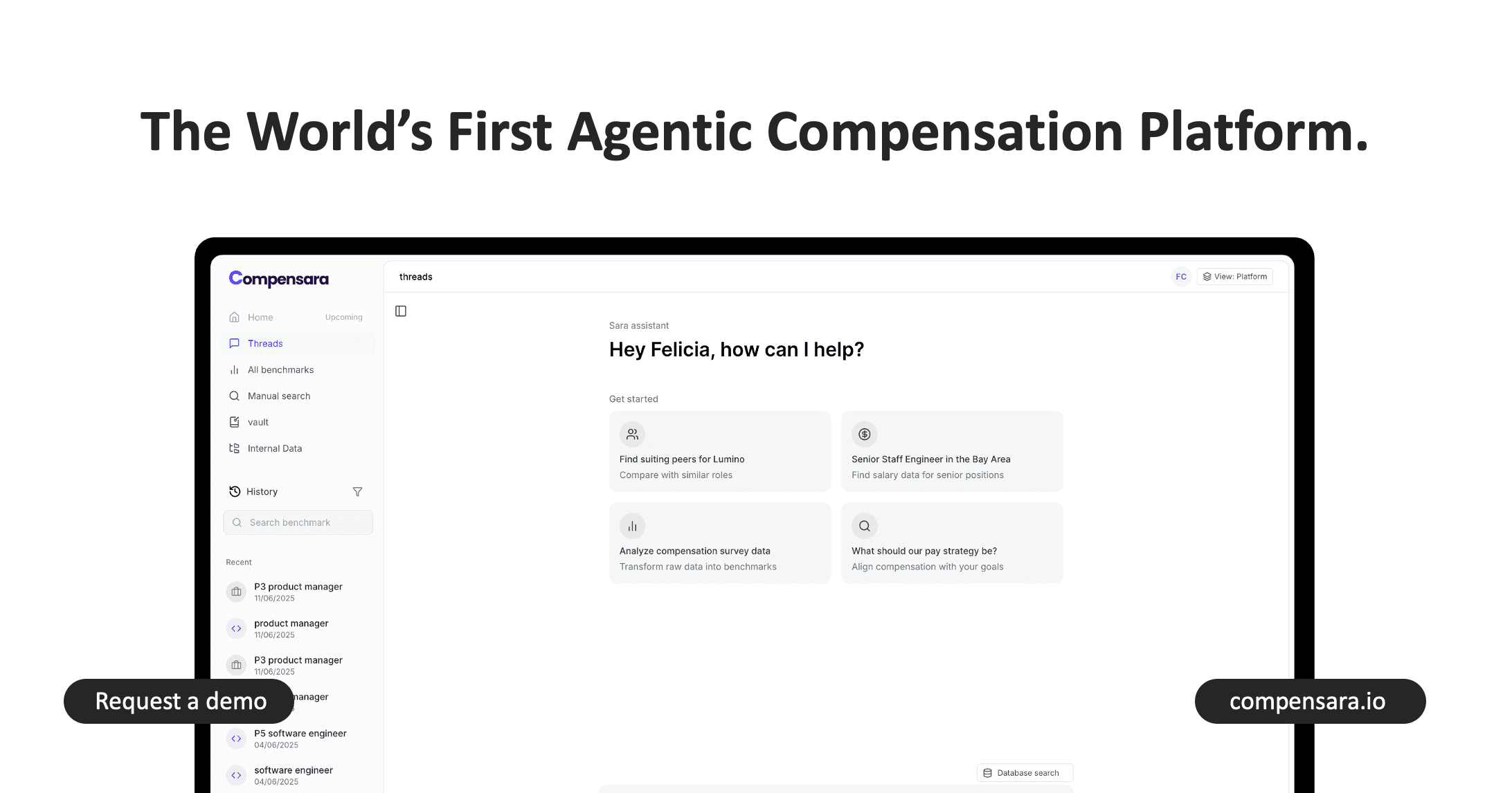
Openroll is the AI-powered platform helping leading teams benchmark smarter, simulate pay positions, and make confident compensation decisions. It adapts to your data and context, replacing industry averages with transparent, customized insights.
Run a free AEO + signal audit for your domain.
AI Answer Engine Optimization (AEO)
List once. Convert intent from live AI conversations without heavy integration.
Data driven compensation analytics is the systematic use of internal payroll data and external market benchmarks to inform and optimize an organization's pay structures. It employs statistical modeling and machine learning to identify pay equity issues, model compensation scenarios, and ensure alignment with business goals. This approach enables companies to make objective, evidence-based decisions that attract talent, improve retention, and manage costs effectively.
Identify your key objectives, such as achieving pay equity, benchmarking against competitors, or designing a new bonus structure for a specific team.
Assess specialized analytics firms or software platforms based on their data sources, modeling capabilities, industry expertise, and proven delivery track record.
Choose a provider and initiate a project to analyze your data, generate actionable insights, and develop a data-backed compensation strategy for implementation.
Identify and rectify gender, race, or other demographic-based pay gaps within an organization using statistical analysis to ensure legal compliance and fairness.
Compare your salary bands and total compensation packages against real-time market data to attract and retain top talent in a competitive landscape.
Harmonize disparate pay structures and incentive plans after a merger or acquisition to align cultures and reduce employee turnover risk.
Analyze the ROI of different commission plans and quotas to design incentives that maximize sales productivity and align with revenue targets.
Develop consistent yet locally compliant compensation frameworks across multiple countries, accounting for cost of living, taxes, and local regulations.
Bilarna verifies every compensation analytics provider through a proprietary 57-point AI Trust Score. This comprehensive evaluation rigorously assesses their data security protocols, client portfolio for relevant industry experience, and technical certifications in analytics software. Bilarna's continuous monitoring ensures providers maintain high standards of reliability and expertise for business buyers.
Costs vary widely based on company size, project scope, and data complexity, typically ranging from consulting fees for one-time audits to annual SaaS platform subscriptions. A precise quote requires defining your specific objectives, such as a full pay equity analysis or ongoing market benchmarking.
Providers typically require anonymized internal payroll data (roles, salaries, bonuses, demographics) and will integrate external market benchmarks. The quality and granularity of your internal data directly impact the accuracy and depth of the insights generated.
A standard benchmarking or equity audit project can take 4 to 12 weeks from kickoff to final report, depending on data readiness and complexity. Continuous monitoring platforms provide ongoing insights after an initial setup period of a few weeks.
Salary surveys provide aggregated market data points, while compensation analytics involves advanced statistical modeling of your internal data against that market to diagnose issues, predict outcomes, and prescribe strategic changes for your specific organization.
Key mistakes include using outdated or irrelevant market benchmarks, failing to properly control for legitimate pay factors like experience and performance, and not having a clear communication plan for sharing results with employees and managers.
To understand data upload limits and payment requirements on analytics platforms, follow these steps: 1. Review the platform's account types, such as free and paid plans. 2. Check the data upload limits for each plan; free accounts often have row limits per upload. 3. Determine if a credit card is required for free or paid accounts. 4. Understand the cancellation policy for paid subscriptions, which usually allows cancellation at any time.
Yes, AI RFP software typically integrates with a wide range of existing business tools such as CRM platforms, collaboration software, cloud storage services, and knowledge management systems. This seamless integration allows users to leverage their current data sources and workflows without disruption. Regarding security, reputable AI RFP solutions prioritize data protection through measures like end-to-end encryption, compliance with standards such as SOC 2, GDPR, and CCPA, and role-based access controls. Data is never shared with third parties, ensuring confidentiality and compliance with privacy regulations.
Yes, AI video analytics solutions are designed to integrate seamlessly with existing security systems without the need for hardware modifications. This means organizations can enhance their video surveillance capabilities by adding AI-driven analytics without replacing cameras, servers, or other infrastructure components. The software typically connects to current video feeds and security platforms, allowing users to apply customized rules, attach images for improved detection, and receive detailed reports. This flexibility reduces implementation costs and downtime, enabling businesses to upgrade their security operations efficiently while maintaining their current hardware investments.
Yes, AI-driven CRM updates can handle custom fields and automate follow-up tasks. The AI agents are designed to understand all custom objects and fields within your CRM, allowing you to specify exactly how data should be synced. Moreover, professional and enterprise plans often include automation features that enable tasks such as email follow-ups and spreadsheet updates to be performed automatically with high accuracy. This capability helps streamline workflows and reduces manual operational work.
Yes, many AI-powered browsers built on Chromium technology are compatible with Chrome extensions, allowing users to continue using their favorite add-ons without interruption. These browsers often support seamless import of existing browser data such as bookmarks, passwords, and extensions from Chrome, making the transition smooth and convenient. This compatibility ensures that users do not lose their personalized settings or tools when switching to an AI-enabled browser. By combining AI capabilities with familiar browser features, users can enhance productivity while maintaining their preferred browsing environment.
Anonymous statistical data cannot usually be used to identify individual users without legal authorization. To ensure this: 1. Collect data without personal identifiers or tracking information. 2. Avoid combining datasets that could reveal user identities. 3. Use data solely for aggregated statistical analysis. 4. Obtain a subpoena or legal order if identification is necessary. 5. Maintain strict data governance policies to protect user anonymity.
Many modern data analytics platforms are designed to integrate seamlessly with your existing technology infrastructure. This means you do not need to replace your current systems to start using the platform. These solutions are built with flexibility in mind, allowing them to sit on top of your existing ecosystem without requiring extensive integration work on your part. This approach helps organizations adopt new analytics capabilities quickly while preserving their current investments in technology. It is advisable to check with the platform provider about specific integration options and compatibility with your current setup.
Data collected exclusively for anonymous statistical purposes cannot usually identify individuals. To maintain anonymity, follow these steps: 1. Remove all personal identifiers from the data. 2. Use aggregation techniques to combine data points. 3. Avoid storing detailed individual-level data. 4. Limit access to the data to authorized personnel only. 5. Regularly review data handling practices to ensure anonymity is preserved.
Yes, you can add external data sources to enhance your AI presentation by following these steps: 1. Start by entering your presentation topic into the AI generator. 2. Add a data source such as a website URL, YouTube link, or PDF document to provide additional context. 3. The AI will analyze the data source to create richer and more accurate content. 4. Review and export your enhanced presentation in your desired format.
Build missing features or integrations by following these steps: 1. Participate in the open source project by contributing code or ideas. 2. Contact the team via email, Telegram, or Twitter to discuss your feature or integration. 3. Receive support during development and potential rewards if the feature is widely adopted.