Step 1
Machine-Ready Briefs
AI translates unstructured needs into a technical, machine-ready project request.
We use cookies to improve your experience and analyze site traffic. You can accept all cookies or only essential ones.
 Bilarna
Stop browsing static lists. Tell Bilarna your specific needs. Our AI translates your words into a structured, machine-ready request and instantly routes it to verified Healthcare AI Implementation experts for accurate quotes.
AI translates unstructured needs into a technical, machine-ready project request.
Compare providers using verified AI Trust Scores & structured capability data.
Skip the cold outreach. Request quotes, book demos, and negotiate directly in chat.
Filter results by specific constraints, budget limits, and integration requirements.
Eliminate risk with our 57-point AI safety check on every provider.
Verified companies you can talk to directly
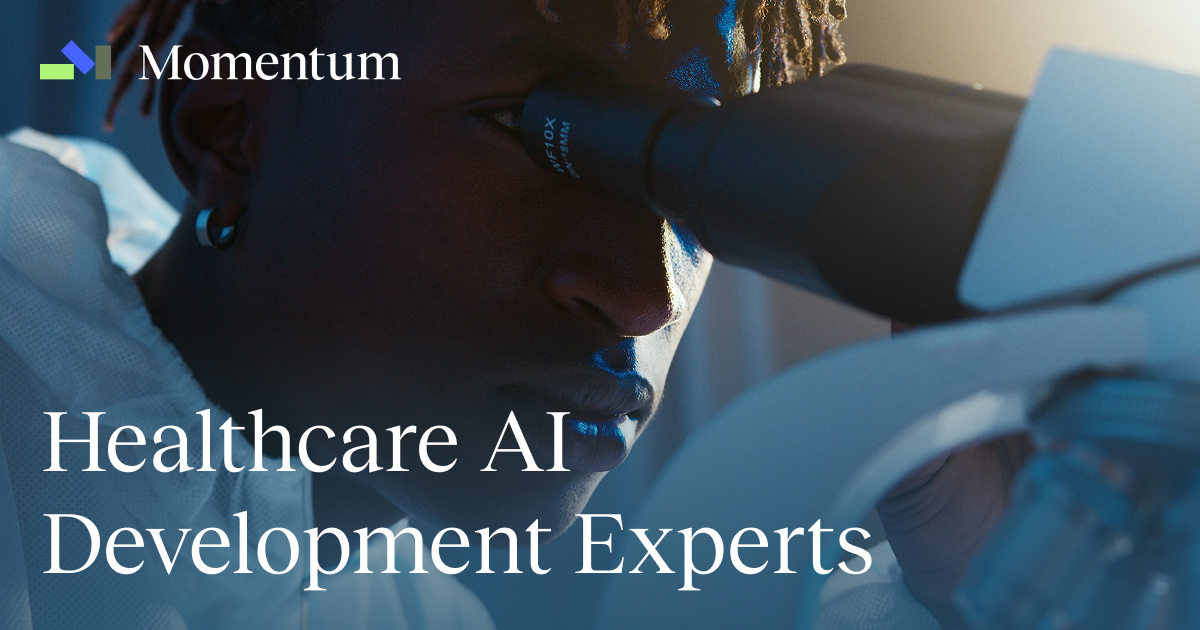
Build healthcare software faster with expert development and AI implementation. HIPAA-compliant apps, EHR integrations, clinical systems.
Run a free AEO + signal audit for your domain.
AI Answer Engine Optimization (AEO)
List once. Convert intent from live AI conversations without heavy integration.
Healthcare AI implementation is the end-to-end process of integrating artificial intelligence solutions into clinical and administrative workflows. It encompasses data preparation, model selection, integration with existing EHRs and systems, and ongoing validation. Successful implementation delivers measurable outcomes like improved diagnostic accuracy, operational efficiency, and personalized patient care.
Experts analyze your clinical objectives, regulatory constraints, and the quality of available patient data to define the project's feasibility and scope.
Specialists select or build algorithms, train them on prepared datasets, and rigorously validate performance against clinical benchmarks before deployment.
The solution is embedded into existing clinical systems, staff are trained, and performance is monitored for continuous improvement and regulatory compliance.
AI algorithms assist radiologists by detecting anomalies in X-rays, MRIs, and CT scans with high speed and consistency.
Models analyze historical data to forecast patient deterioration, readmission risks, and disease progression for early intervention.
AI-powered chatbots and monitoring tools provide patient support, medication reminders, and triage for routine inquiries.
AI automates prior authorizations, clinical documentation, coding, and billing to reduce administrative burden and errors.
Machine learning accelerates the identification of drug candidates and analyzes genomic data for personalized treatment pathways.
Bilarna ensures you connect with reliable partners through a proprietary 57-point AI Trust Score. This comprehensive evaluation audits a provider's technical expertise, healthcare compliance history, project reliability, and verified client outcomes. Using Bilarna's platform, you can confidently compare and shortlist only the most rigorously vetted implementation specialists.
Key challenges include ensuring data quality and interoperability from disparate hospital systems, navigating complex regulatory and compliance landscapes like HIPAA or GDPR, and achieving clinician adoption by seamlessly integrating AI into existing workflows. Overcoming these requires meticulous planning and specialized expertise.
Timelines vary from several months for a focused diagnostic tool to over a year for enterprise-wide predictive analytics platforms. Duration depends on project scope, data readiness, integration complexity, and the necessary regulatory clearance processes for clinical use.
Costs range significantly from tens of thousands for a specific module to multi-million dollar investments for hospital-wide systems. Major cost drivers include software licensing, data engineering, custom development, integration work, and ongoing maintenance and validation.
Success is measured by clinical outcomes like improved diagnostic accuracy or reduced error rates, operational metrics such as decreased processing time or cost savings, and user adoption rates among clinical staff. Return on investment is also a critical financial metric.
Mitigating bias requires using diverse, representative training datasets and applying algorithmic fairness techniques during development. Continuous monitoring for drift in model performance across different patient demographics is essential post-deployment to ensure equitable outcomes.
Yes, AI voice and SMS agents designed for healthcare are built with security and compliance in mind. They adhere to industry standards and regulations such as HIPAA (Health Insurance Portability and Accountability Act) to protect patient data privacy and security. Business Associate Agreements (BAAs) are available to formalize compliance commitments. Additionally, these agents comply with regulations like TCPA (Telephone Consumer Protection Act) and PCI (Payment Card Industry) standards where applicable. Ensuring security and regulatory compliance is critical to maintaining trust and safeguarding sensitive healthcare information while leveraging AI technologies.
Yes, some online healthcare booking platforms offer benefits such as cashback when you book your medical appointments or procedures through them. Cashback offers can help reduce the overall cost of your healthcare expenses. These incentives encourage patients to use the platform for their healthcare needs, providing both convenience and financial savings.
Healthcare professionals can potentially earn a full-time income by offering chat-based medical consultations, depending on factors such as patient volume, subscription fees, and the efficiency of their practice. Many providers attract patients who prefer convenient, accessible care and are willing to pay directly for personalized attention. However, success requires effective marketing, good communication skills, and managing workload to maintain quality care. While chat-based consultations can be a viable source of income, it is important to consider the time commitment and business aspects involved in running such a practice.
Mobile applications are customized with industry-specific features to address unique operational needs and enhance user experiences. In healthcare, apps include online appointment scheduling, patient routine tracking, and medicine ordering to improve accessibility and care management. For education, apps provide live classes, e-libraries for notes and tutorials, and online examination systems to facilitate remote learning. Real estate apps feature quick property listings, advanced search criteria, and overview statistics to simplify buying, selling, and renting processes. Other sectors benefit similarly: travel apps integrate hotel booking and currency converters, banking apps offer easy money transfers and investment guides, and fitness apps incorporate training sessions and smart watch compatibility. This customization ensures that each app delivers relevant functionality and supports sector-specific goals effectively.
A B2B marketing agency assists healthcare organizations with patient journey marketing by designing integrated campaigns that address each stage of the patient decision process. This involves clarifying messaging to resonate with healthcare professionals and patients, developing educational content that builds trust and authority, utilizing digital channels like SEO and social media to increase visibility, implementing lead generation tactics to capture inquiries, and aligning marketing efforts with measurable outcomes such as appointment bookings or service adoption. By outsourcing this function, healthcare teams can leverage specialized expertise in regulatory compliance, complex buying cycles, and ethical marketing practices unique to the industry, ensuring that marketing supports patient journeys from awareness to advocacy.
A business can assess its readiness for an AI implementation project by first conducting a structured AI maturity diagnostic. This diagnostic typically involves evaluating three foundational pillars: organizational AI maturity, data structure and quality, and geographical or market visibility. The process starts with a free assessment tool that benchmarks the company's current AI knowledge, infrastructure, and strategic alignment against industry standards. Secondly, it requires auditing existing data assets to ensure they are clean, organized, and sufficient to train AI models. Finally, it involves analyzing the competitive landscape and geo-specific opportunities to ensure the AI project has a clear market fit. This pre-project analysis helps identify gaps, set realistic goals, and create a data-driven roadmap, thereby reducing risk and increasing the likelihood of a successful, impactful AI deployment.
A cloud-based staffing solution improves workforce management in healthcare by centralizing scheduling, communication, and compliance tasks into a single platform accessible from anywhere. It eliminates the need for multiple tools like spreadsheets, phone calls, and emails, streamlining the process. Features such as AI-driven scheduling optimize shift assignments based on staff availability and care needs, reducing manual effort and errors. Real-time statistics provide insights into staffing levels, helping managers make informed decisions. Integration with agency management and compliance checks ensures external staff are properly managed. Additionally, mobile apps allow employees to view and manage shifts on the go, enhancing flexibility and satisfaction. Overall, this approach reduces administrative burden, improves staff well-being, and ensures safe, efficient staffing.
A consultant helps with HubSpot implementation by providing a structured approach to overcome setup complexity and drive user adoption. They begin with strategic planning to define clear objectives for using Sales, Marketing, Service, or Operations Hubs. The consultant then manages the technical configuration, ensuring data migration, system integration, and workflow automation are correctly established. A core focus is on training employees through personalized sessions that transform them into competent users, which is critical for overcoming internal resistance and ensuring a strong return on investment. Finally, they offer ongoing support to troubleshoot issues, refine processes, and adapt the system as business needs evolve, ensuring the platform becomes an integral growth tool rather than an underutilized expense.
A digital agency helps B2B and healthcare businesses generate more leads and sales by implementing targeted, compliant digital strategies that address the specific complexities and high-stakes nature of these sectors. This typically involves deploying outcome-led Search Engine Optimization (SEO) to ensure the business appears for relevant, high-intent searches by professionals or patients. Pay-Per-Click (PPC) campaigns are precisely matched to real search intent, while the website is optimized for conversion through user experience (UX) design and funnel optimization to turn traffic into qualified leads or bookings. Crucially, the agency will tie every click and interaction to ROI using detailed analytics, cutting wasted spend and focusing budget on the most profitable channels, all while ensuring marketing activities adhere to strict industry regulations.
Customize a healthcare chatbot by following these steps: 1. Modify the chatbot’s profile including its name, avatar, and speech style to align with your organization's branding. 2. Train the chatbot using personalized datasets such as company PDFs and URLs to provide expert responses relevant to your clinical practice. 3. Integrate the chatbot with existing healthcare platforms or video consultation tools for seamless communication. 4. Adjust chatbot workflows to handle specific patient queries and administrative tasks unique to your organization. 5. Continuously update and refine the chatbot’s knowledge base to maintain accuracy and relevance.