Step 1
Comparison Shortlist
Machine-Ready Briefs: AI turns undefined needs into a technical project request.
We use cookies to improve your experience and analyze site traffic. You can accept all cookies or only essential ones.
 Bilarna
Stop browsing static lists. Tell Bilarna your specific needs. Our AI translates your words into a structured, machine-ready request and instantly routes it to verified Genetic Material Synthesis experts for accurate quotes.
Machine-Ready Briefs: AI turns undefined needs into a technical project request.
Verified Trust Scores: Compare providers using our 57-point AI safety check.
Direct Access: Skip cold outreach. Request quotes and book demos directly in chat.
Precision Matching: Filter matches by specific constraints, budget, and integrations.
Risk Elimination: Validated capacity signals reduce evaluation drag & risk.
Ranked by AI Trust Score & Capability
Run a free AEO + signal audit for your domain.
AI Answer Engine Optimization (AEO)
List once. Convert intent from live AI conversations without heavy integration.
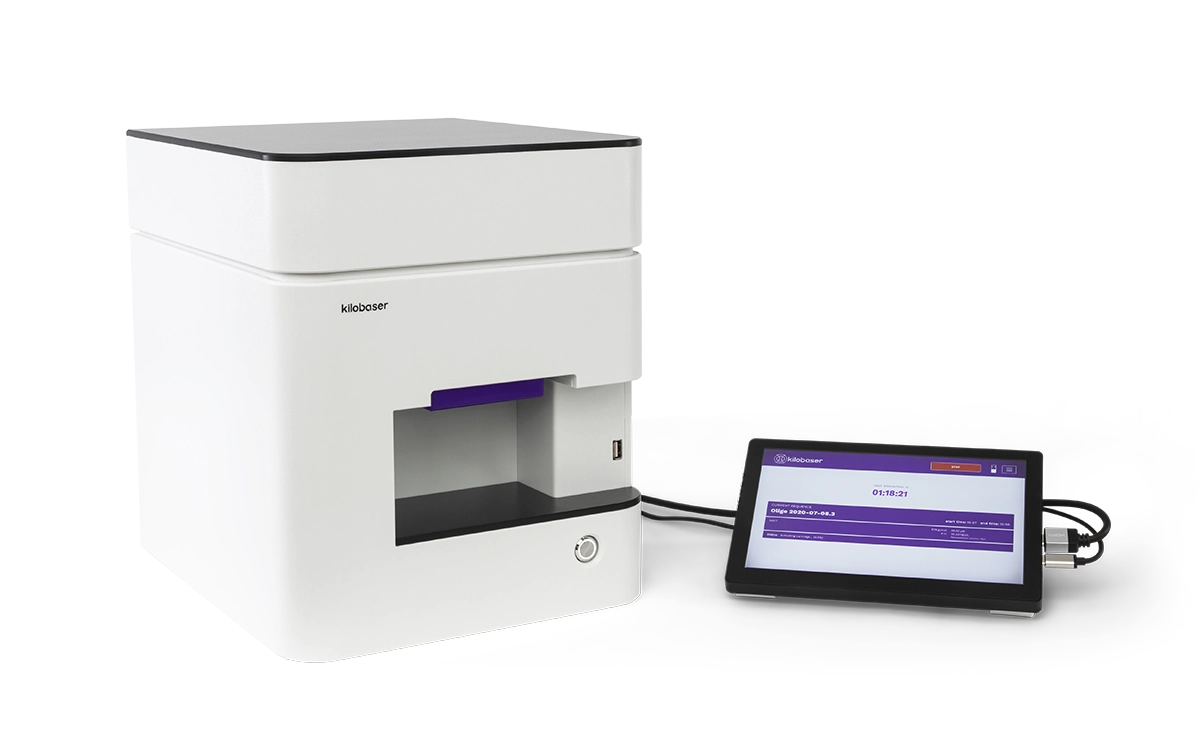
This category encompasses services and products related to the in-house synthesis of DNA and RNA molecules, enabling researchers and laboratories to produce custom genetic sequences on demand. These solutions address needs for rapid, affordable, and independent access to molecular tools essential for genetic research, diagnostics, and biotech applications. By utilizing advanced microfluidic technologies, these services facilitate the creation of oligonucleotides, probes, and other genetic materials, reducing reliance on external suppliers and streamlining workflows.
Providers of this category are typically biotech companies, research laboratories, and scientific instrument manufacturers specializing in genetic research tools. They develop and supply advanced synthesis equipment and consumables that enable users to produce custom DNA and RNA sequences efficiently. These providers focus on innovation, quality, and affordability to meet the growing demand for in-house genetic material synthesis in research, diagnostics, and biotech industries.
Delivery and setup for genetic material synthesis services typically involve providing advanced synthesizers, consumables, and technical support. Pricing varies based on the complexity of the synthesis, volume, and customization options. Many providers offer training and remote assistance to ensure users can operate the equipment effectively. Turnaround times are generally quick, often within hours to days, depending on the order size. Flexible subscription or purchase models are common, allowing laboratories to scale their genetic synthesis capabilities as needed.
Academic literature synthesis helps biopharma companies by systematically collecting and analyzing vast amounts of scientific research. This process ensures that regulatory submissions are backed by comprehensive and reliable evidence, facilitating market access and compliance with regulatory standards. By synthesizing relevant studies, companies can present clear, evidence-based arguments to regulatory bodies, improving the chances of approval and accelerating the introduction of new therapies.
AI can analyze blueprints to extract detailed information about materials required for a project. By processing the plans, AI generates accurate cost breakdowns quickly, reducing the time spent on manual estimations. This helps businesses create precise budgets and improve their chances of winning contracts by providing reliable cost data early in the planning phase.
AI can enhance material matching in manufacturing catalogs by automatically comparing materials based on visual attributes such as color, texture, grain, and finish. This process helps identify equivalent, alternate, or near-duplicate materials across complex product catalogs, reducing manual effort and errors. By leveraging AI, manufacturers can ensure more accurate material identification, streamline inventory management, and improve product consistency throughout the supply chain.
Use biotechnology and material science to develop sustainable carbon removal solutions. 1. Identify natural regulators that control carbon levels in the environment. 2. Engineer scalable technologies that mimic these natural processes. 3. Implement these technologies to capture and remove carbon dioxide from the atmosphere. 4. Continuously improve the solutions to achieve gigaton-scale carbon removal needed globally.
Samples for genetic testing in cattle and pigeons are typically collected using minimally invasive methods such as plucking a single hair or feather. This approach is convenient and reduces stress on the animal while providing sufficient DNA material for accurate analysis. Proper sample collection is crucial to ensure reliable results. It is important to follow guidelines provided by the testing service, such as avoiding contamination and ensuring the sample is properly labeled and stored before submission. These methods allow breeders and farmers to obtain swift and reliable DNA insights without complex procedures.
Construction material manufacturers can generate and verify Environmental Product Declarations (EPDs) efficiently by using an integrated platform that automates data collection and EPD generation. Steps: 1. Collect product environmental data through a guided interface integrated with ERP and energy management systems. 2. Use automated tools to generate standard-compliant EPDs with a few clicks. 3. Submit EPDs for independent third-party verification within the platform. 4. Select a publishing partner based on the target market for EPD release. This process reduces time and cost significantly compared to traditional methods.
Construction software can significantly enhance material management and procurement by automating the processes of finding, ordering, tracking, and managing materials. This automation reduces labor hours and minimizes errors, leading to cost savings on materials and fewer schedule delays. By providing a single dashboard with an audit trail for each transaction, it offers unprecedented visibility from order to delivery, helping project managers and contractors make informed decisions. Additionally, features like predictive scheduling help prevent missed deadlines by indicating 'must order by' dates, ensuring materials arrive on time to meet project schedules. Overall, construction software streamlines workflows, improves data capture, and reduces business risks associated with supply chain issues.
Genetic counseling helps you understand your health risks by analyzing your personal and family medical history. 1. Schedule a session with a certified genetic counselor. 2. Provide detailed personal and family health information. 3. The counselor assesses your risk for genetic conditions. 4. Discuss the benefits and risks of genetic testing if appropriate. 5. Receive guidance on testing options and interpretation of results. 6. Get support for making informed health decisions and management plans.
Healthcare providers can integrate virtual genetic assistants into their workflow by sharing a secure link with patients before appointments to collect family and personal history via chat. The assistant educates patients on genetic testing eligibility and guides them through pre-test information remotely. Providers receive notifications when patients complete chats, including clinical summaries and eligibility status. Ordering tests becomes streamlined as patient data auto-populates order forms. Results can be delivered automatically or reviewed by providers, with options to schedule genetic counseling. This integration enhances efficiency, patient engagement, and supports informed decision-making.
Create live exams by uploading your study material to the platform. Follow these steps: 1. Prepare your study content in a supported format. 2. Upload the material to the exam creation tool. 3. Configure exam settings such as question types and time limits. 4. Generate the live exam and review it. 5. Publish the exam for students to access and take.