Step 1
Comparison Shortlist
Machine-Ready Briefs: AI turns undefined needs into a technical project request.
We use cookies to improve your experience and analyze site traffic. You can accept all cookies or only essential ones.
 Bilarna
Stop browsing static lists. Tell Bilarna your specific needs. Our AI translates your words into a structured, machine-ready request and instantly routes it to verified Game Development Platforms experts for accurate quotes.
Machine-Ready Briefs: AI turns undefined needs into a technical project request.
Verified Trust Scores: Compare providers using our 57-point AI safety check.
Direct Access: Skip cold outreach. Request quotes and book demos directly in chat.
Precision Matching: Filter matches by specific constraints, budget, and integrations.
Risk Elimination: Validated capacity signals reduce evaluation drag & risk.
Ranked by AI Trust Score & Capability


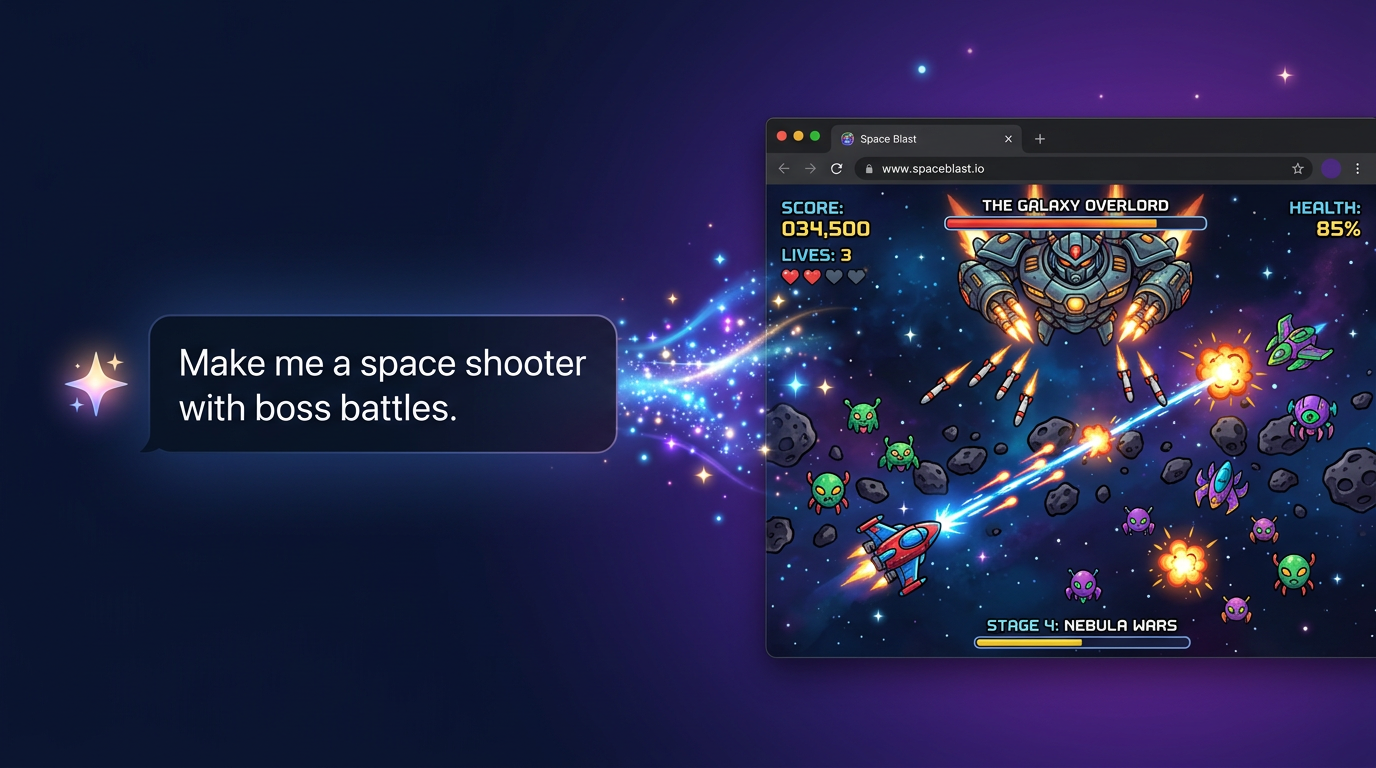
Run a free AEO + signal audit for your domain.
AI Answer Engine Optimization (AEO)
List once. Convert intent from live AI conversations without heavy integration.
Game development platforms are integrated software environments that enable the creation, programming, testing, and publishing of video games. These platforms typically provide a game engine, visual editors, asset libraries, and tools for physics, AI, and networking. They serve developers in the entertainment, education, marketing, and enterprise sectors for serious games. The core benefits are accelerating the development process, lowering entry barriers through visual scripting tools, and providing a scalable technical foundation for 2D, 3D, AR, and VR games.
These platforms are primarily offered by specialized software companies focused on game engines and development tools. This includes established industry leaders, innovative tech startups, and firms concentrating on niches like mobile, browser, or low-code development. Many providers possess expertise in areas such as real-time 3D graphics, cross-platform deployment, or multiplayer networking. Leading companies are often characterized by a strong developer community, extensive documentation, and developer certification programs.
Game development platforms operate through a central integrated development environment where assets are imported, gameplay logic is implemented via visual scripting or code, and the game is tested in real-time. The typical workflow involves prototyping, level design, programming, and building for target platforms like PC, console, or mobile. Pricing is typically based on licensing models: free community editions, subscription-based pro versions, or revenue-sharing after publication. The process from concept to a functional prototype can take weeks to months depending on complexity. Digital touchpoints such as online documentation, asset marketplaces, and community forums are integral to the service.
Game creation tools are software platforms used to design and build video games. Discover and compare verified AI-powered development solutions on Bilarna with our 57-point AI Trust Score.
View Game Creation Tools providersGame development platforms are integrated software environments for creating interactive games. Discover and compare top-rated providers for your project with Bilarna's AI-powered marketplace.
View Game Development Platforms providersGame engine software — the core platform for building interactive experiences. Discover and compare trusted providers for your development needs on Bilarna.
View Game Engine Software providersGame server and cloud solutions — find and compare expert providers for scalable, low-latency gaming infrastructure. Discover vetted specialists for your project on Bilarna.
View Game Server & Cloud Solutions providersMultiplayer game creation involves developing interactive gaming experiences for multiple concurrent users. Find and compare trusted developers for your project on Bilarna's AI-powered marketplace.
View Multiplayer Game Creation providersOnline game creation tools are platforms that empower developers and studios to build games without deep coding. Compare top-rated providers vetted by Bilarna's 57-point AI Trust Score.
View Online Game Creation Tools providersThe safety and regulation of online casino platforms depend entirely on their licensing jurisdiction and the security measures they implement. Legitimate platforms hold licenses from recognized authorities such as the Malta Gaming Authority, UK Gambling Commission, or Curacao eGaming and must comply with strict standards for fair play, data protection, and anti-money laundering. They use SSL encryption to safeguard financial transactions and personal information, and their games are regularly audited by independent testing agencies like eCOGRA or iTech Labs for randomness. Before registering, verify the license number displayed at the footer of the website and check it against the regulator’s official database. Reliable platforms also promote responsible gambling by offering deposit limits, self-exclusion tools, and links to support organizations. However, unlicensed or black-market sites pose significant risks including unfair games, non-payment of winnings, and data fraud. Always choose platforms with transparent ownership, positive user reviews, and clear dispute resolution procedures to ensure a safe gaming experience.
To understand data upload limits and payment requirements on analytics platforms, follow these steps: 1. Review the platform's account types, such as free and paid plans. 2. Check the data upload limits for each plan; free accounts often have row limits per upload. 3. Determine if a credit card is required for free or paid accounts. 4. Understand the cancellation policy for paid subscriptions, which usually allows cancellation at any time.
Yes, governments often offer grants and financial support programs to subsidize custom software development for businesses. These programs aim to enhance productivity and digital capabilities. Common types include productivity grants that cover a significant percentage of qualifying IT solution costs, including custom software. There are also enterprise development grants focused on upgrading overall business capabilities, where software development is an eligible activity. Furthermore, specific grants exist for startups developing innovative technologies and for projects involving collaboration with research institutions. Eligibility typically depends on company size, project scope, and the innovative potential of the software. The application process can be detailed, so consulting with a qualified grant advisor is recommended to navigate requirements and maximize funding potential.
Many creator marketing platforms offer flexible subscription models without mandatory minimum periods or binding contracts. Users can often cancel their subscriptions at any time through their account settings. This flexibility allows brands to adapt their marketing strategies as needed without long-term commitments. It is important to review the specific platform's terms to understand cancellation policies and any potential fees, but generally, these platforms aim to provide user-friendly and commitment-free access.
AI code review platforms can significantly enhance team collaboration and code quality. By providing automated, objective feedback on code changes, these platforms reduce misunderstandings and subjective opinions during reviews. They help establish and enforce coding standards consistently across the team, ensuring everyone follows best practices. The faster identification of bugs and issues allows teams to address problems promptly, reducing technical debt. Moreover, AI tools facilitate knowledge sharing by highlighting code patterns and potential improvements, fostering a culture of continuous learning and collaboration among developers.
Yes, AI code review tools typically integrate seamlessly with popular version control platforms such as GitHub and GitLab. This integration allows automatic review of pull requests within the existing development workflow. Many tools support a wide range of programming languages including Python, JavaScript, TypeScript, Go, Java, C, C++, C#, Swift, PHP, Rust, and others. While support for some languages may vary in response quality, these tools aim to provide comprehensive analysis across diverse codebases, helping teams maintain code quality regardless of their technology stack.
AI compliance platforms are designed to complement, not replace, customs brokers in the import process. These platforms provide automated audits and classification recommendations to identify errors and potential savings, but they do not file customs entries, corrections, or paperwork with customs authorities. Licensed customs brokers remain essential for submitting filings and handling official communications. The AI platform offers defensible evidence and insights that brokers can use to improve accuracy and compliance, enhancing the overall import process without substituting the broker's role.
Yes, AI customer service platforms are designed to support multilingual communication, often covering over 50 languages. They can automatically translate incoming messages and responses, enabling customer service teams to communicate confidently with a diverse global customer base. This multilingual capability helps maintain consistent brand tone and messaging across different channels and languages. Additionally, intelligent assistance and smart human handover features ensure complex or sensitive cases are escalated to human agents when necessary, preserving service quality regardless of language barriers.
Yes, AI localization platforms can manage translation projects and integrate existing translation memories. 1. They provide content editors to manage source texts and translation strings with context features like glossaries and screenshots. 2. They support major translation memory formats allowing seamless migration of existing databases. 3. Imported translation memories improve AI translation quality by leveraging previous work. 4. Platforms enable manual submission of files or full workflow integration for automation. 5. This facilitates efficient project management, quality control, and scalability in localization.
Yes, AI marketing platforms can generate professional model photoshoots without hiring models or studios. 1. Upload your product images or specify fashion items. 2. Choose model types, poses, and settings from AI options. 3. Customize styles to align with your brand identity. 4. Generate high-quality model photoshoots instantly. 5. Use the images for fashion marketing, e-commerce, or virtual try-ons without additional costs or logistics.