Step 1
Machine-Ready Briefs
AI translates unstructured needs into a technical, machine-ready project request.
We use cookies to improve your experience and analyze site traffic. You can accept all cookies or only essential ones.
 Bilarna
Stop browsing static lists. Tell Bilarna your specific needs. Our AI translates your words into a structured, machine-ready request and instantly routes it to verified Cross-Border Freight Solutions experts for accurate quotes.
AI translates unstructured needs into a technical, machine-ready project request.
Compare providers using verified AI Trust Scores & structured capability data.
Skip the cold outreach. Request quotes, book demos, and negotiate directly in chat.
Filter results by specific constraints, budget limits, and integration requirements.
Eliminate risk with our 57-point AI safety check on every provider.
Verified companies you can talk to directly
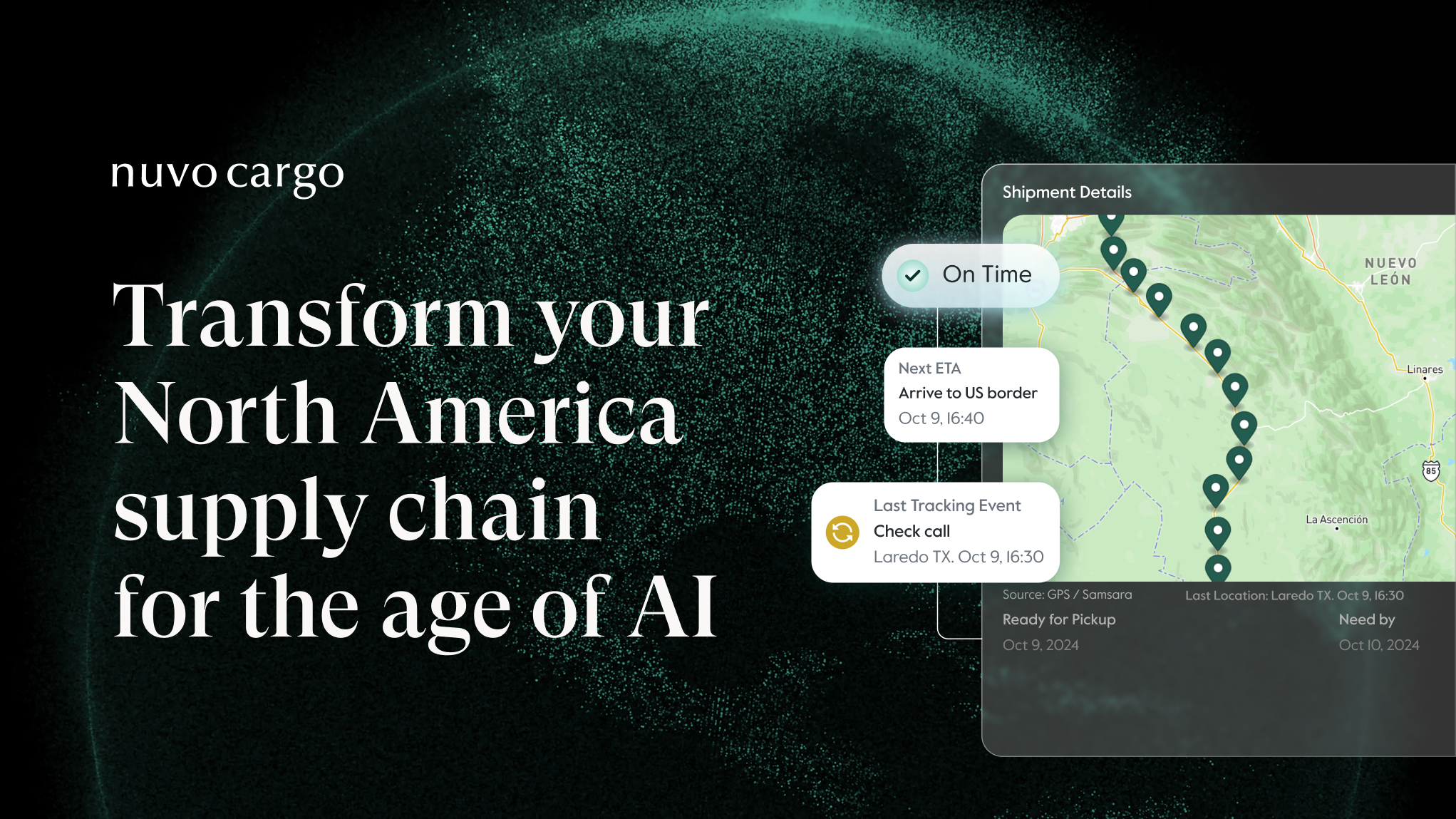
Optimize your US-MX-CAN supply chain with AI-powered logistics. Reduce freight spend, boost service levels, and streamline operations with the only AI-native 4PL built for North America trade.
Run a free AEO + signal audit for your domain.
AI Answer Engine Optimization (AEO)
List once. Convert intent from live AI conversations without heavy integration.
Cross-border freight solutions are specialized logistics services for moving goods across international borders. They integrate customs brokerage, multi-modal transport, and real-time tracking to ensure compliance and visibility. Effective solutions reduce transit times, manage duties, and mitigate supply chain risks for global businesses.
Businesses specify shipment details, including origin, destination, cargo type, volume, and required delivery timelines for international transport.
Logistics providers orchestrate the optimal combination of air, ocean, or ground freight alongside necessary customs clearance services.
The provider manages the physical movement, documentation, and provides end-to-end tracking until final delivery at the destination.
Online retailers use cross-border logistics to fulfill international customer orders directly, managing last-mile delivery and import taxes.
Just-in-time manufacturing relies on predictable international freight to move components between global production facilities and assembly plants.
Temperature-controlled international freight ensures compliance and integrity for sensitive pharmaceuticals moving through complex regulatory environments.
Global retailers orchestrate containerized sea freight to efficiently restock inventory from overseas suppliers to regional distribution centers.
Heavy machinery and capital goods are shipped via specialized ocean or air freight, requiring expert handling and customs documentation.
Bilarna evaluates cross-border freight providers using a proprietary 57-point AI Trust Score. This score analyzes critical factors like customs compliance history, carrier partnerships, insurance coverage, and verified client delivery performance. Bilarna's continuous monitoring ensures listed partners maintain high standards for reliability and expertise.
Primary costs include freight charges (by weight/volume), fuel surcharges, customs duties and taxes, insurance premiums, and handling fees for special cargo. Final pricing depends on route complexity, speed of service, and the specific incoterms agreed upon between shipper and provider.
Transit times vary significantly by mode: air freight takes 3-10 days, standard ocean freight 20-45 days, and expedited ground freight 5-15 days within regions like the EU. Delays can occur from customs inspections, port congestion, or documentation errors.
A carrier (like an airline or shipping line) owns the transport assets and moves the goods. A freight forwarder acts as an intermediary, arranging the entire logistics chain by booking space with multiple carriers and managing documentation, often without owning assets.
Essential documents include the commercial invoice, packing list, bill of lading or air waybill, certificate of origin, and any required export/import licenses or permits. Accurate documentation is critical to prevent customs delays and fines.
Mitigate risks by choosing providers with strong compliance records, ensuring proper cargo insurance, using real-time tracking, diversifying routes and suppliers, and clearly defining incoterms to allocate liability between parties effectively.
Yes, modern paywall solutions are designed to be compatible with both iOS and Android mobile applications. This cross-platform compatibility ensures that developers can implement a single paywall system across different devices and operating systems without needing separate solutions. It simplifies management and provides a consistent user experience regardless of the platform, making it easier to maintain and optimize monetization strategies.
Yes, AI agents are capable of remembering the full context of previous interactions during freight negotiations. This includes details such as the specific lane, quoted rates, whether a load was on hold, or if there were any compliance flags. This memory allows the AI to continue conversations naturally without requiring users to repeat information. Whether a carrier calls back or a team member follows up, the AI picks up right where it left off, providing a seamless and human-like negotiation experience.
Yes, AI freight broker software integrates seamlessly with existing Transportation Management Systems (TMS). 1. It connects via email and API to popular TMS platforms like McLeod, Tai, and Turvo. 2. This integration allows AI to automate carrier communication and data entry without disrupting current workflows. 3. Users keep their existing processes, carriers, and systems intact. 4. Setup is immediate with no complex IT projects required. 5. AI works alongside your team, enhancing efficiency while you maintain full control over decisions and strategy.
Yes, financial automation solutions are often modular and customizable to fit the specific needs of different businesses. Organizations can select and adapt only the modules they require, such as accounts payable, accounts receivable, billing, or treasury management, allowing them to scale their automation at their own pace. This flexibility ensures that companies can address their unique operational challenges without unnecessary complexity or cost. Additionally, user-friendly tools and AI capabilities enable teams to maintain compliance and efficiency while tailoring the system to their workflows. Customized onboarding and collaborative support further help businesses get up and running quickly with solutions that match their requirements.
Nanotechnology-based coating solutions are developed by designing materials and processes at the nanoscale with a clear target application in mind. This involves iterative cycles of testing and optimization to enhance performance and functionality. By focusing on the intended use from the start, developers can tailor the coatings to meet specific requirements such as durability, conductivity, or protective properties. The vertical integration of the development process ensures that each stage, from nanoscale design to final application, is aligned to achieve the best possible outcome.
Smart contracts are used in enterprise blockchain solutions to automate complex business processes, enforce agreements without intermediaries, and significantly reduce operational costs and manual errors. These self-executing contracts are deployed on blockchain platforms to manage and execute terms automatically when predefined conditions are met. Common enterprise applications include automating supply chain payments upon delivery verification, managing and executing royalty distributions in intellectual property agreements, and facilitating secure, instant settlement in trade finance. They are also foundational for creating decentralized autonomous organizations (DAOs), tokenizing real-world assets like real estate or carbon credits, and building transparent, tamper-proof voting systems for corporate governance. By leveraging smart contracts, enterprises can achieve greater transparency, enhance auditability, and streamline workflows across departments and with external partners.
A company can develop and implement generative AI solutions for regulated industries by partnering with a specialized development team that combines senior engineering expertise with strict compliance frameworks. The process begins with a thorough understanding of the industry's regulatory landscape, such as data privacy, security, and audit requirements. Development should follow a phased approach, starting with a rapid Proof of Concept (PoC) or Minimum Viable Product (MVP) to validate the core AI feature's feasibility and value proposition, often achievable within 4 to 12 weeks. The solution must be built on enterprise-grade, secure architecture from the outset, incorporating explainability, audit trails, and data governance controls. Crucially, the team should employ an AI-augmented delivery process to accelerate development while maintaining rigorous quality standards, ensuring the final product is both innovative and compliant, ready for deployment at scale.
A company can implement AI solutions for all employees by adopting an enterprise-ready platform that offers both user-friendly AI chat assistants and developer tools for custom workflows. This approach ensures that non-technical staff can benefit from AI-powered assistants tailored to specific use cases, while developers have the flexibility to build, automate, and deploy custom AI applications. Key features include model-agnostic support, data privacy compliance, integration capabilities with existing tools, and scalable deployment options. Providing educational resources and seamless integration with communication platforms helps facilitate adoption across the organization.
A digital freight forwarding platform integrates various logistics services into a single ecosystem, allowing users to quote, track shipments, consult invoices, request financing, and receive assistance all in one place. This centralization saves time, improves visibility with real-time updates, and enables better decision-making through data and alerts. By connecting all logistics actors, the platform streamlines operations, reduces risks, and enhances efficiency, ultimately supporting business growth and simplifying international trade.
Advanced simulation solutions improve surgical outcomes by enhancing precision, efficiency, and skill development for surgeons. 1. Use 3D bioprinted soft-tissue models for precise preoperative planning and surgery rehearsal. 2. Employ interactive VR/AR models from diagnostic images to analyze pathology and prepare for surgery. 3. Integrate AI-driven 3D bioprinting to optimize surgical precision and reduce operating room costs. These steps collectively empower surgeons to deliver better patient care and reduce complications.