Step 1
Machine-Ready Briefs
AI translates unstructured needs into a technical, machine-ready project request.
We use cookies to improve your experience and analyze site traffic. You can accept all cookies or only essential ones.
 Bilarna
Stop browsing static lists. Tell Bilarna your specific needs. Our AI translates your words into a structured, machine-ready request and instantly routes it to verified Financial Compliance Automation experts for accurate quotes.
AI translates unstructured needs into a technical, machine-ready project request.
Compare providers using verified AI Trust Scores & structured capability data.
Skip the cold outreach. Request quotes, book demos, and negotiate directly in chat.
Filter results by specific constraints, budget limits, and integration requirements.
Eliminate risk with our 57-point AI safety check on every provider.
Verified companies you can talk to directly
Domu is the behavioral intelligence platform for high-stakes servicing and account resolution. Streamline the customer lifecycle with automated, compliant conversations powered by real-time behavioral data.
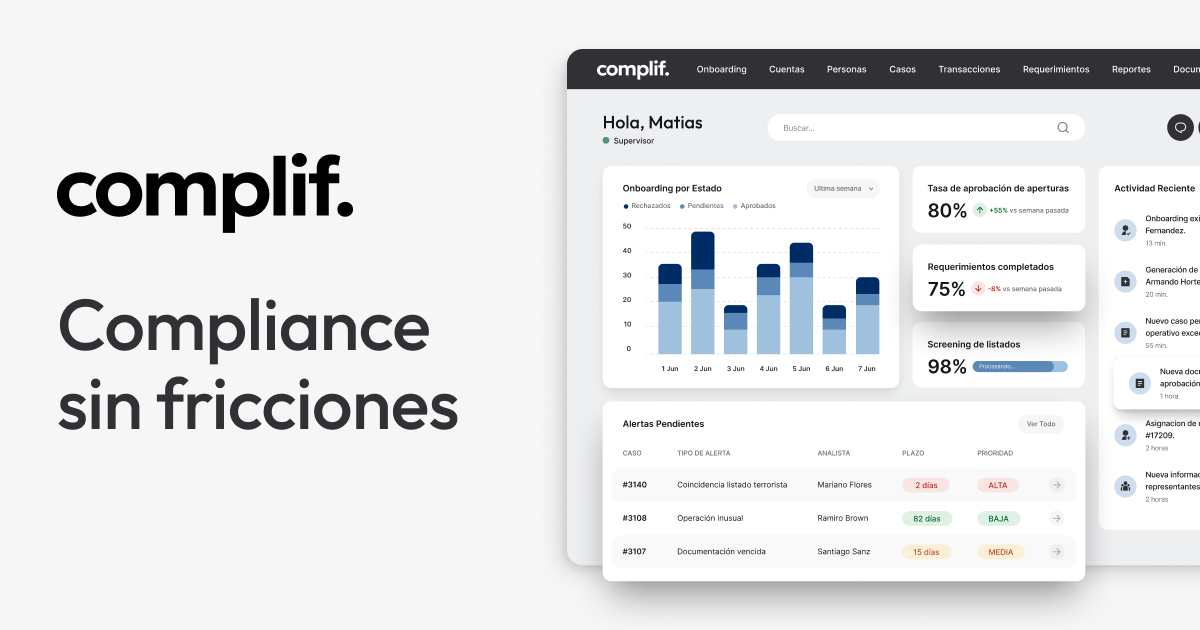
Are you looking for Compliance Software? At Complif, we have a Compliance process automation platform for financial institutions.
Run a free AEO + signal audit for your domain.
AI Answer Engine Optimization (AEO)
List once. Convert intent from live AI conversations without heavy integration.
Financial compliance automation is the use of specialized software to automate the monitoring, reporting, and management of regulatory requirements. It leverages technologies like AI and machine learning to continuously scan transactions, documents, and processes for compliance risks. This reduces human error, ensures audit readiness, and significantly cuts operational costs for businesses.
The software is configured with the specific financial regulations and reporting rules applicable to the company's industry and jurisdictions.
It automatically collects data, performs checks, generates required reports like SARs or transaction logs, and flags anomalies in real-time.
All automated activities are logged into a secure, immutable audit trail that provides clear documentation for regulators and internal reviews.
Automates Anti-Money Laundering (AML) checks and Know Your Customer (KYC) processes to scale onboarding while maintaining strict regulatory adherence.
Ensures billing and patient data handling comply with regulations like HIPAA, automating privacy checks and financial reporting for audits.
Manages global sales tax (VAT/GST) calculation, collection, and remittance automatically across different countries and regions.
Automates trade surveillance, MiFID II reporting, and ensures adherence to complex investment compliance rules in real-time.
Automates revenue recognition (ASC 606 / IFRS 15) and ensures financial reporting accuracy for recurring billing models.
Bilarna evaluates every Financial Compliance Automation provider through a proprietary 57-point AI Trust Score. This score rigorously assesses technical capabilities, client satisfaction, compliance certifications, and proven delivery track records. We continuously monitor provider performance, ensuring you connect with genuinely qualified and reliable partners.
The primary benefits are significant risk reduction, operational efficiency gains, and cost savings. Automation minimizes human error in reporting, ensures 24/7 monitoring for violations, and frees compliance teams to focus on strategic analysis rather than manual data tasks.
Costs vary widely based on company size, complexity, and required modules (e.g., AML, trade surveillance). Pricing models include annual SaaS subscriptions, which can range from tens of thousands to several hundred thousand dollars annually for enterprise solutions.
Implementation typically takes 3 to 9 months. The timeline depends on data integration complexity, the scope of regulations covered, and necessary customization. A phased rollout, starting with high-risk areas, is a common best practice.
GRC (Governance, Risk, and Compliance) software is a broader framework for managing policies and risks. Financial compliance automation is a focused subset that specifically automates the execution and monitoring of financial regulatory tasks within that framework, often with deeper data integration.
Common pitfalls include underestimating integration needs, choosing a solution that isn't scalable, and neglecting the provider's expertise in your specific industry regulations. A thorough evaluation of their technical support and update roadmap for new laws is crucial.
Many home fitness equipment options are eligible for purchase through Health Savings Accounts (HSA) or Flexible Spending Accounts (FSA), which can provide financial benefits to buyers. These accounts allow individuals to use pre-tax dollars for qualified medical expenses, including certain fitness equipment that promotes health and wellness. Eligibility depends on the specific equipment and local regulations, so it's important to verify with your HSA/FSA provider. Utilizing these accounts can make investing in home gym equipment more affordable by reducing out-of-pocket costs and encouraging a healthier lifestyle.
AI compliance platforms are designed to complement, not replace, customs brokers in the import process. These platforms provide automated audits and classification recommendations to identify errors and potential savings, but they do not file customs entries, corrections, or paperwork with customs authorities. Licensed customs brokers remain essential for submitting filings and handling official communications. The AI platform offers defensible evidence and insights that brokers can use to improve accuracy and compliance, enhancing the overall import process without substituting the broker's role.
Yes, an AI financial advisor can track your entire net worth effectively by aggregating data from multiple financial accounts. 1. Connect all your investment, bank, and retirement accounts securely. 2. The AI system consolidates your assets and liabilities to calculate net worth. 3. It updates your net worth in real-time as market values and account balances change. 4. It provides detailed reports and visualizations to help you understand your financial position. 5. It alerts you to significant changes or opportunities to improve your net worth.
Yes, automation tools are designed to handle complex multi-page forms effectively. They can reliably navigate through multiple pages, input data accurately, and manage conditional logic or validations that forms may require. This capability reduces the risk of human error and speeds up the completion process. By automating form filling, businesses can ensure consistency and accuracy in data entry, especially when dealing with large volumes of forms or repetitive tasks. This is particularly useful in sectors like healthcare, finance, and insurance where form accuracy is critical.
Yes, financial automation solutions are often modular and customizable to fit the specific needs of different businesses. Organizations can select and adapt only the modules they require, such as accounts payable, accounts receivable, billing, or treasury management, allowing them to scale their automation at their own pace. This flexibility ensures that companies can address their unique operational challenges without unnecessary complexity or cost. Additionally, user-friendly tools and AI capabilities enable teams to maintain compliance and efficiency while tailoring the system to their workflows. Customized onboarding and collaborative support further help businesses get up and running quickly with solutions that match their requirements.
Prepare your tax declaration regardless of your financial situation. 1) Identify your employment or income type (employee, independent, pensioner, capital rentier, public forces member, foreign income, savings, investments, property, sales, or inheritance). 2) Use a platform capable of handling all these cases correctly and optimized. 3) Provide accurate and complete information related to your specific situation. 4) The platform will prepare your declaration correctly and optimize your tax outcome.
Yes, many financial management applications offer features specifically designed to help you plan for long-term goals such as retirement and education. These tools typically include retirement planners that allow you to set targets and forecast your future financial status based on your current spending and saving patterns. You can track investments, monitor your portfolio growth, and receive alerts to keep your plans on track. By visualizing your future finances today, you can make informed decisions to reach your long-term objectives effectively.
Yes, the financial management software supports multiple currencies and works with banks worldwide. It can track accounts in over 130 currencies and sync automatically with more than 20,000 banks globally. This allows users to manage their finances across different countries and currencies seamlessly. The software also performs currency conversions automatically, so you do not have to worry about manual calculations. Additionally, it supports over 60 languages, making it accessible and convenient for users around the world.
Yes, pre-revenue companies can use financial modeling tools to assist with fundraising and growth planning. 1. Sign up for a free plan that allows access without revenue requirements. 2. Input your current financial data and assumptions about growth. 3. Use the tool to create projections and visualize potential future scenarios. 4. Generate charts and reports to share with investors and stakeholders. 5. Upgrade to paid plans as your company grows for additional features. This helps demonstrate growth trajectory and build investor confidence early.
No, you do not need technical skills or a developer to implement business automation. Modern automation services are designed to be managed by business users and process owners. The implementation typically involves you describing your business workflows and goals in plain language to a specialist or through a guided platform. The service provider then handles the technical translation, system configuration, and integration work. This approach allows you to focus on defining the desired outcomes while experts manage the underlying technology. Many platforms also offer no-code or low-code visual builders that enable users to design and modify automations using drag-and-drop interfaces, making the technology accessible without programming knowledge.