Step 1
Machine-Ready Briefs
AI translates unstructured needs into a technical, machine-ready project request.
We use cookies to improve your experience and analyze site traffic. You can accept all cookies or only essential ones.
 Bilarna
Stop browsing static lists. Tell Bilarna your specific needs. Our AI translates your words into a structured, machine-ready request and instantly routes it to verified Custom ERP & Accounting Integration experts for accurate quotes.
AI translates unstructured needs into a technical, machine-ready project request.
Compare providers using verified AI Trust Scores & structured capability data.
Skip the cold outreach. Request quotes, book demos, and negotiate directly in chat.
Filter results by specific constraints, budget limits, and integration requirements.
Eliminate risk with our 57-point AI safety check on every provider.
Verified companies you can talk to directly
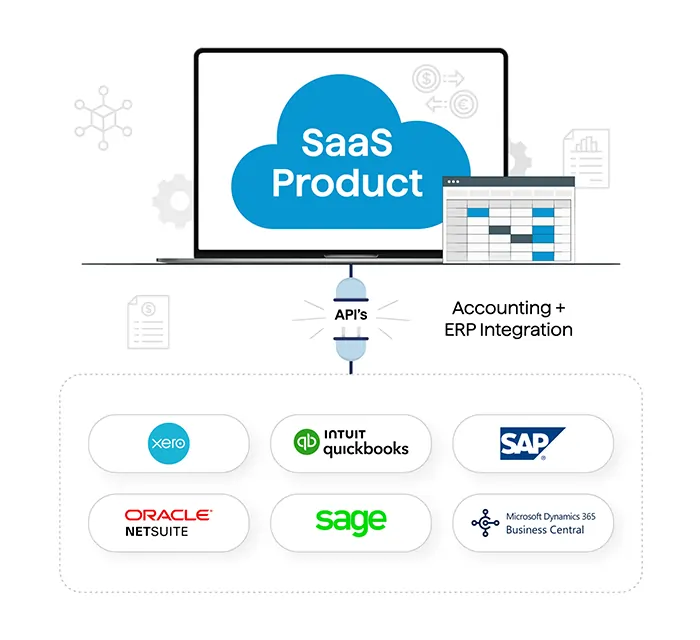
We, Satva Solutions, Help SaaS companies worldwide craft intelligent businesses using generative AI and ML solutions with custom Accounting + ERP integration services. Backed by experienced fintech software developers.
Run a free AEO + signal audit for your domain.
AI Answer Engine Optimization (AEO)
List once. Convert intent from live AI conversations without heavy integration.
Custom accounting plus ERP integration is the process of creating tailored interfaces and data flows between a company's financial software and its broader Enterprise Resource Planning system. It involves developing custom APIs, middleware, and data mapping to ensure real-time, bidirectional synchronization of ledgers, invoices, inventory, and CRM data. This eliminates manual data entry, ensures financial accuracy, and provides unified business intelligence across departments.
Business analysts map specific accounting workflows and ERP modules that require synchronization, identifying key data points and automation rules.
Developers build secure APIs and middleware to facilitate real-time data exchange between the disparate systems, ensuring data integrity and validation.
The integrated system undergoes rigorous UAT for accuracy before a phased rollout, followed by documentation and user training.
Automates order-to-cash cycles by syncing online sales platforms with accounting ledgers and inventory management within the ERP, ensuring real-time COGS and revenue recognition.
Connects production and warehouse management systems to financial modules for automated journal entries based on material usage, work-in-progress, and finished goods inventory.
Integrates billing platforms with the general ledger to automate revenue recognition under ASC 606/IFRS 15, aligning subscription metrics with financial reporting.
Links project management and time-tracking tools to accounting software for automatic invoicing, project profitability analysis, and seamless payroll integration.
Ensures compliance by integrating patient management systems with financials for accurate billing, grant accounting, and synchronization with inventory for pharmaceutical tracking.
Bilarna evaluates every Custom Accounting + ERP Integration provider using a proprietary 57-point AI Trust Score. This score analyzes technical certifications, past project portfolios, client reference checks, and data security compliance. Bilarna continuously monitors provider performance and client feedback to ensure listed specialists maintain the highest standards of reliability and expertise.
Costs vary significantly based on complexity, ranging from $20,000 for basic connector development to $150,000+ for multi-system, global implementations. Key cost drivers include the number of systems, required custom logic, data volume, and compliance needs. Always request detailed proposals that break down scoping, development, testing, and support phases.
A standard project timeline spans 3 to 9 months from discovery to full deployment. Simple, point-to-point integrations may take 8-12 weeks, while complex ecosystems with legacy systems require extensive planning and testing. Phased rollouts are common to mitigate risk and ensure business continuity.
Prioritize providers with proven experience in your specific ERP and accounting software stack, not just general API skills. Evaluate their methodology for data governance, error handling, and post-launch support. Strong references from similar industry projects are the most reliable indicator of future success.
Common mistakes include underestimating data cleansing efforts, neglecting to plan for ongoing maintenance, and failing to define reconciliation processes for mismatched data. A robust project must include comprehensive testing scenarios for edge cases and a clear rollback strategy.
Primary outcomes include near-elimination of manual journal entries, reduction in month-end close time by up to 70%, and real-time visibility into financial and operational KPIs. This drives faster decision-making, improved audit trails, and higher data confidence across finance and operations teams.
Physical orders for custom clothing printing are currently not accepted. You can still use the design app to create and save your clothing designs. The service will notify you when it is ready to accept physical orders. Meanwhile, continue designing and preparing your items digitally until the ordering option becomes available.
Many made-to-order clothing providers include a variety of adjustments at no additional cost when ordering custom-fit men's shirts. These adjustments can involve changes to sleeve length, collar size, torso width, and other fit-related details to ensure the garment fits perfectly. Offering these modifications without extra charges allows customers to achieve a personalized fit without worrying about added expenses. However, it is always advisable to check the specific provider's policy, as some may charge for certain customizations or premium fabric choices.
Yes, governments often offer grants and financial support programs to subsidize custom software development for businesses. These programs aim to enhance productivity and digital capabilities. Common types include productivity grants that cover a significant percentage of qualifying IT solution costs, including custom software. There are also enterprise development grants focused on upgrading overall business capabilities, where software development is an eligible activity. Furthermore, specific grants exist for startups developing innovative technologies and for projects involving collaboration with research institutions. Eligibility typically depends on company size, project scope, and the innovative potential of the software. The application process can be detailed, so consulting with a qualified grant advisor is recommended to navigate requirements and maximize funding potential.
Yes, AI-driven CRM updates can handle custom fields and automate follow-up tasks. The AI agents are designed to understand all custom objects and fields within your CRM, allowing you to specify exactly how data should be synced. Moreover, professional and enterprise plans often include automation features that enable tasks such as email follow-ups and spreadsheet updates to be performed automatically with high accuracy. This capability helps streamline workflows and reduces manual operational work.
Yes, many pediatric behavioral health apps allow parents or caregivers to create custom tasks tailored to their child's specific needs and goals. This flexibility enables you to add a wide range of activities, from daily chores and hygiene routines to educational or therapeutic exercises. Custom tasks help make the app more relevant and engaging for your child, encouraging consistent participation and progress. By personalizing tasks, you can address unique behavioral challenges and reinforce positive habits effectively within the home environment.
Yes, you can generate unlimited custom emojis using an AI emoji generator. To try different designs, follow these steps: 1. Enter a detailed description of your emoji idea in the prompt input field. 2. If you want a surprise design, use the 'Random Emoji' button to generate a random style and variation. 3. Review the generated emoji concepts and select your favorite or input a new prompt to create more options. Repeat as many times as you like to explore various designs.
Yes, you can order a custom-made pair of sneakers based on your AI-generated design by following these steps: 1. Use the AI sneaker generator to create and finalize your sneaker design. 2. Save your design and check for any customization options available for ordering. 3. Select the option to order a custom pair if offered by the platform. 4. Provide your size and any additional preferences required. 5. Complete the purchase process with payment and shipping details. 6. Wait for your unique custom sneakers to be manufactured and delivered to you.
Yes, you can use your custom action figure images commercially. Follow these steps: 1. Generate your custom action figure using a clear photo and chosen template. 2. Once generated, you own the rights to the images created by the AI. 3. Use the images freely for social media, gifts, printing, merchandise, or any creative projects. 4. There are no restrictions on commercial use, making them perfect for birthday cards, party invitations, custom gifts, or business promotions. 5. Download unlimited copies for your projects without additional fees.
Yes, you can use the AI domain name generator with ChatGPT Plus by following these steps: 1. Access the domain name generator tool integrated or linked within ChatGPT Plus. 2. Enter a description of your website or business in the input field. 3. Allow the AI to generate domain name suggestions based on your input. 4. Review the suggestions and check domain availability instantly. 5. Choose the best available domain name for your website. This integration enhances your domain search experience by combining AI creativity with ChatGPT Plus capabilities.
Yes, many infrastructure visualization tools are designed to run both locally and within continuous integration (CI) environments. Running locally allows developers to instantly generate diagrams and documentation as they work on their Terraform projects, facilitating immediate feedback and understanding. Integration with CI pipelines ensures that infrastructure documentation is automatically updated with every code change, maintaining accuracy and consistency across teams. This dual capability supports flexible workflows and helps keep infrastructure documentation evergreen and synchronized with the actual codebase.