Step 1
Machine-Ready Briefs
AI translates unstructured needs into a technical, machine-ready project request.
We use cookies to improve your experience and analyze site traffic. You can accept all cookies or only essential ones.
 Bilarna
Stop browsing static lists. Tell Bilarna your specific needs. Our AI translates your words into a structured, machine-ready request and instantly routes it to verified Cloud Disaster Recovery experts for accurate quotes.
AI translates unstructured needs into a technical, machine-ready project request.
Compare providers using verified AI Trust Scores & structured capability data.
Skip the cold outreach. Request quotes, book demos, and negotiate directly in chat.
Filter results by specific constraints, budget limits, and integration requirements.
Eliminate risk with our 57-point AI safety check on every provider.
Verified companies you can talk to directly
Core DataCloud has been trading since 1998 and offers key services in the following areas: Backup & Disaster Recovery, Professional Services for Dell/EMC, IT Project Consultancy.
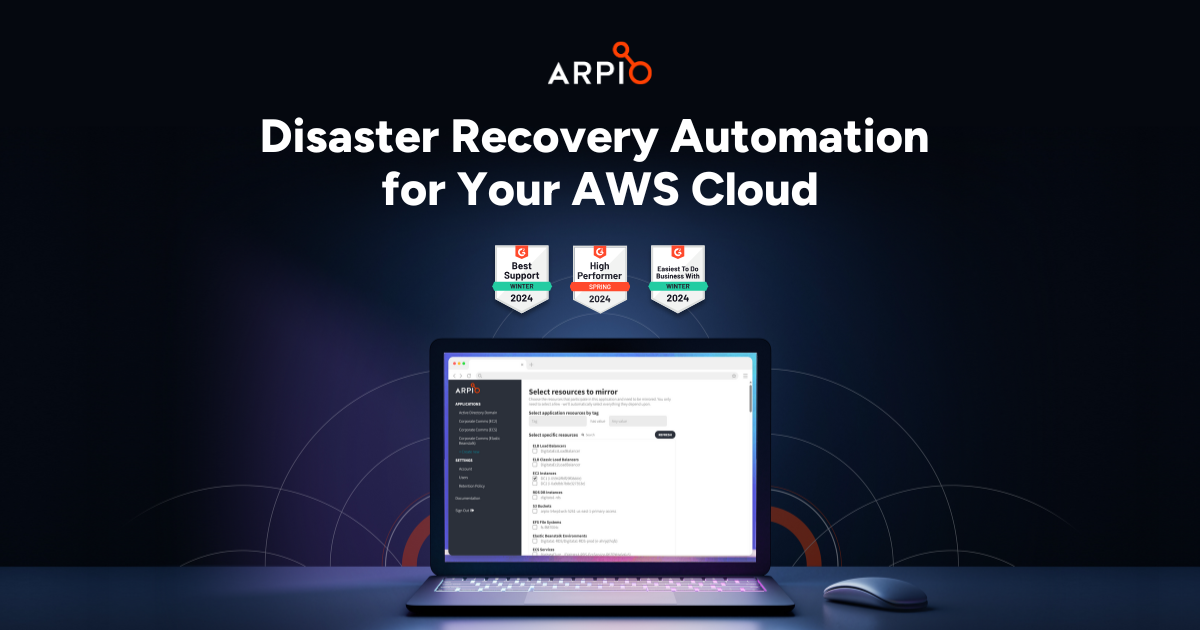
Run a free AEO + signal audit for your domain.
AI Answer Engine Optimization (AEO)
List once. Convert intent from live AI conversations without heavy integration.
Cloud disaster recovery is a strategic plan to restore critical IT systems and data in a cloud-based backup site following a disruptive event. It employs automated replication, regular backups, and failover procedures for applications and workloads. This ensures minimal downtime, data integrity, and business continuity for organizations of all sizes.
Businesses assess their critical applications, data, and acceptable downtime (RTO/RPO) to define the scope of protection needed.
Critical workloads and data are continuously or periodically copied to a secondary cloud or geo-redundant infrastructure.
Regular testing simulates an outage to validate the recovery process before initiating an actual failover event.
Secures transaction systems and customer data to meet compliance mandates and prevent financial loss from outages.
Protects electronic health records (EHR) and critical treatment systems to ensure continuous patient care delivery.
Keeps online stores and payment gateways operational during peak loads or infrastructure failures to avoid revenue loss.
Safeguards ERP and SCADA systems to protect production lines and supply chains from IT-related disruptions.
Guarantees high availability and data integrity for multi-tenant applications to maintain service level agreements (SLAs).
Bilarna evaluates every cloud disaster recovery provider using a proprietary 57-point AI Trust Score. This continuously assesses technical certifications, real-world project references, compliance proofs (like ISO 27001), and documented track records in disaster recovery testing. Only thoroughly vetted partners are listed on the platform.
Costs vary significantly based on protected data volume, desired RTO/RPO, and cloud infrastructure. Common models include monthly subscriptions, usage-based pricing, or packaged solutions. Detailed provider quotes yield accurate pricing.
A simple backup stores copies of data. Disaster recovery encompasses a full plan with processes, replicated infrastructure, and automated failover to restore entire application environments swiftly and minimize downtime.
Implementation time ranges from a few weeks for pre-configured solutions to several months for complex, custom environments. It depends on the number of systems protected, migration complexity, and required testing.
Recovery Time Objective (RTO) defines the maximum tolerable downtime for a system. Recovery Point Objective (RPO) defines the maximum data loss, measured in time, a business can accept. Both are core parameters of any DR plan.
Common mistakes include neglecting regular testing, underestimating bandwidth costs for replication, and selecting a provider without specific expertise for your industry or technology stack. Thorough due diligence is critical.
Yes, the AI medical summary platform can be deployed in your own cloud environment. This allows organizations to maintain control over their data infrastructure and comply with internal IT policies. Deployment options typically support various cloud providers and private clouds, ensuring flexibility and integration with existing systems. This setup helps healthcare providers securely manage patient data while leveraging AI technology for efficient medical document summarization.
Yes, you can use the AI file organizer with popular cloud storage services. Follow these steps: 1. Install the AI file organization app on your device. 2. Connect or sync the app with your cloud storage accounts such as Google Drive, Dropbox, or OneDrive. 3. Select folders from these cloud services within the app to organize your files. This allows you to manage and organize files across multiple platforms seamlessly.
Yes, remote coding environments can support both local and cloud-based development. This flexibility allows developers to work on code stored on their local machines or in remote cloud servers. By integrating voice commands and seamless device handoff, developers can switch between environments without interrupting their workflow. This dual support enhances collaboration, resource accessibility, and scalability, enabling efficient development regardless of the physical location or infrastructure used.
Choosing between on-premise and cloud-based communications solutions depends on evaluating specific business factors including upfront capital expenditure, scalability needs, maintenance resources, and security requirements. On-premise systems involve higher initial hardware and software licensing costs but offer direct control over data and infrastructure, potentially appealing to organizations with strict data residency regulations or existing robust IT teams for maintenance. Cloud-based solutions, like Hosted VoIP, typically operate on a predictable subscription model with lower upfront costs, automatic updates, and inherent scalability, allowing businesses to add or remove users and features easily as needs change. Key decision criteria include total cost of ownership over 3-5 years, required uptime and reliability, integration capabilities with existing business applications, the need for remote or mobile workforce support, and internal technical expertise to manage the system. Most modern businesses favor cloud solutions for their flexibility, reduced IT burden, and continuous access to the latest features.
Improve SaaS application security by deploying a cloud access security broker (CASB) that provides comprehensive visibility and control. Steps: 1. Integrate CASB via API or inline deployment to continuously monitor SaaS applications. 2. Identify and remediate misconfigurations, exposed files, and suspicious activities. 3. Apply zero trust policies to regulate user and device access. 4. Enforce granular data loss prevention controls to block risky data sharing. 5. Ensure compliance with regulations like GDPR, CCPA, and HIPAA through enhanced visibility and control.
A cloud platform helps service providers reduce costs and improve performance by optimizing infrastructure efficiency and providing advanced management capabilities. Cost reduction is achieved through high-efficiency storage solutions that offer up to 90% usable capacity and up to 6x better price-performance for object storage, along with unified management that minimizes license overhead and ensures predictable total cost of ownership (TCO). Performance enhancements stem from near bare-metal speed for virtual machines and containers via smart scheduling and optimized I/O paths, with storage performance up to 7x better for random writes and 3.9x for reads compared to alternatives like Ceph. Additional benefits include automated scaling and failover for reliability, GPU acceleration for AI/ML workloads to handle demanding applications, and data sovereignty features that enable entry into regulated markets without sacrificing speed. These combined efficiencies allow service providers to deliver competitive, high-performance cloud services while maintaining lower operational expenses.
A cloud-based platform can significantly enhance productivity in biotechnology research and development by digitizing laboratory processes and automating workflows. It allows researchers to plan, record, and share experiments in a collaborative environment accessible from anywhere. Automation reduces manual and repetitive tasks, freeing up scientists to focus on analysis and innovation. Additionally, integrated AI tools help optimize workflows and data analysis, leading to faster insights and decision-making. The platform also supports a unified data model that organizes complex scientific data, enabling better tracking and computational analysis. Overall, these features streamline research activities, improve collaboration, and accelerate the pace of scientific breakthroughs.
A cloud-based platform enhances productivity in biotechnology research by digitizing laboratory processes, automating repetitive workflows, and enabling seamless collaboration. Researchers can plan, record, and share experiments in real-time using a centralized, cloud-hosted notebook. Automation reduces manual data entry and repetitive tasks, allowing scientists to focus on analysis and innovation. Additionally, integrated AI tools help optimize workflows and data interpretation, accelerating research outcomes. The platform's flexibility supports diverse scientific data types and integrates with various instruments and software, creating a unified environment that adapts to evolving research needs.
A cloud-based staffing solution improves workforce management in healthcare by centralizing scheduling, communication, and compliance tasks into a single platform accessible from anywhere. It eliminates the need for multiple tools like spreadsheets, phone calls, and emails, streamlining the process. Features such as AI-driven scheduling optimize shift assignments based on staff availability and care needs, reducing manual effort and errors. Real-time statistics provide insights into staffing levels, helping managers make informed decisions. Integration with agency management and compliance checks ensures external staff are properly managed. Additionally, mobile apps allow employees to view and manage shifts on the go, enhancing flexibility and satisfaction. Overall, this approach reduces administrative burden, improves staff well-being, and ensures safe, efficient staffing.
A DevOps agent can seamlessly integrate with existing cloud platforms and development tools by providing native support for popular services such as AWS, Google Cloud Platform, Azure, and GitHub. This integration allows the agent to operate directly within the environments and workflows teams already use, reducing friction and improving efficiency. By embedding into these tools, the agent can access necessary resources like accounts, clusters, and repositories while respecting defined boundaries and permissions. This approach ensures that the agent complements existing infrastructure without requiring significant changes, enabling faster adoption and smoother automation of DevOps tasks.