Step 1
Machine-Ready Briefs
AI translates unstructured needs into a technical, machine-ready project request.
We use cookies to improve your experience and analyze site traffic. You can accept all cookies or only essential ones.
 Bilarna
Stop browsing static lists. Tell Bilarna your specific needs. Our AI translates your words into a structured, machine-ready request and instantly routes it to verified Bank-to-Online Payment Systems experts for accurate quotes.
AI translates unstructured needs into a technical, machine-ready project request.
Compare providers using verified AI Trust Scores & structured capability data.
Skip the cold outreach. Request quotes, book demos, and negotiate directly in chat.
Filter results by specific constraints, budget limits, and integration requirements.
Eliminate risk with our 57-point AI safety check on every provider.
Verified companies you can talk to directly
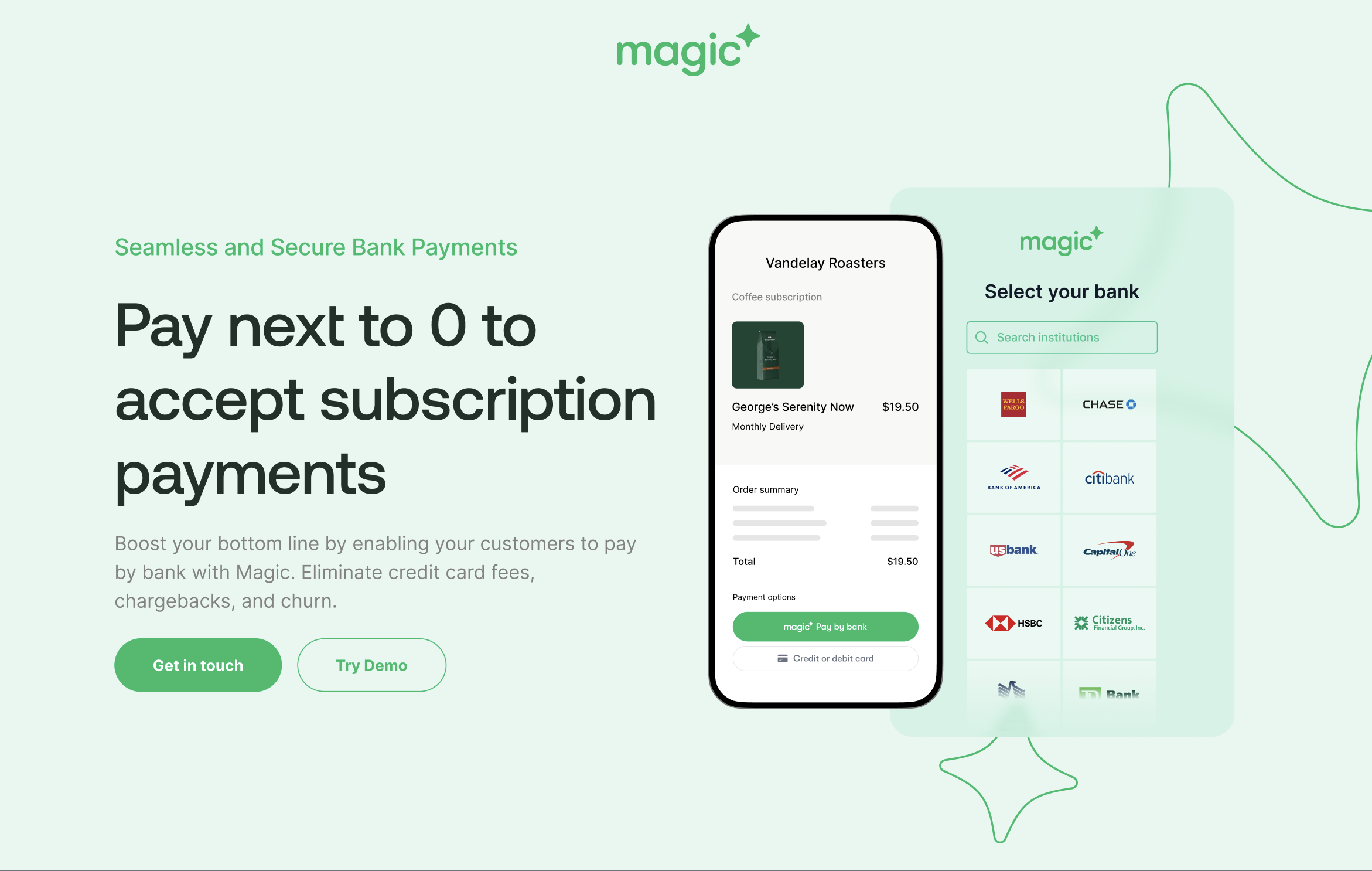
Boost your bottom line by enabling your customers to pay by bank with Magic. Eliminate credit card fees, chargebacks, and churn.
Run a free AEO + signal audit for your domain.
AI Answer Engine Optimization (AEO)
List once. Convert intent from live AI conversations without heavy integration.
Bank-to-online payment systems are specialized solutions that integrate electronic bank transfers directly into digital shopping carts, apps, and platforms. They leverage technologies like PSD2-compliant APIs, instant payment schemes, and enhanced security protocols such as 3D Secure. This enables businesses to process fast, secure payments with reduced fees and improved conversion rates.
Businesses specify technical needs, compliance standards, and desired payment methods for their digital platform.
The selected system is integrated via APIs into the existing infrastructure to process bank transactions.
The system routes payments, performs security checks, and syncs payment status in real-time with the platform.
Integrate direct bank transfers into their apps to offer customers faster settlements and lower fees.
Provide a secure alternative to credit cards, reducing cart abandonment and increasing customer trust.
Facilitate bulk payments between vendors and buyers with automated reconciliation and simplified financial control.
Automate recurring invoicing and direct debit collection from bank accounts with high success rates.
Handle high-volume transactions for hotel and flight bookings with instant payment confirmation for the provider.
Bilarna evaluates bank-to-online payment system providers using a proprietary 57-point AI Trust Score. This score analyzes technical certifications, PSD2/PCI DSS compliance, API stability, and documented delivery history. Continuous monitoring of client feedback and system performance ensures only reliable partners are listed.
Bank-to-online systems route payments directly between bank accounts, bypassing card networks to lower fees. Payment gateways act as intermediaries for various card payments. The former offers deeper bank infrastructure integration for faster settlement.
Typical implementation ranges from 2 to 8 weeks, depending on API complexity and required compliance checks. Well-documented SDKs and developer support can expedite the process. A proof-of-concept phase is recommended for complex infrastructures.
Leading systems must comply with PSD2 Strong Customer Authentication (SCA), PCI DSS Level 1, and ISO 27001. They employ tokenization, encrypted communication, and real-time fraud detection. Regular audits by financial regulators are mandatory.
Yes, modern systems support SEPA, SWIFT, and often local schemes like iDEAL or giropay. Exchange rates and cross-border fees vary by provider. Settlement typically occurs in real-time with full cost transparency.
Cost structures often include setup fees, transaction-based percentages (0.1%-0.5%), and monthly maintenance. Volume discounts are common. Compared to credit cards, businesses can save 30-60% on transaction costs.
Yes, cheap Windows product keys from reputable online retailers can be legitimate and safe, provided they are sourced from verified channels. These sellers typically obtain surplus or volume license keys from legitimate distributors, making them genuine Microsoft licenses at a lower cost. The key safety indicators include the seller providing a money-back guarantee, offering instant email delivery of the key, and having clear customer support for activation issues. It is crucial to avoid keys sold at prices that seem too good to be true, as these may be unauthorized or volume license violations. A legitimate key will activate your Windows or Office software permanently and grant access to all official updates and features from Microsoft without legal risk.
Local bank transfers are often offered without any fees, allowing you to send money to any local bank account without incurring charges. Many services provide unlimited free transfers to local banks, ensuring that you can move funds easily and cost-effectively. Additionally, there are usually no account maintenance fees or hidden charges associated with these transfers. It's important to verify with your service provider to confirm that no fees apply, but generally, local transfers are designed to be free and transparent.
The safety and regulation of online casino platforms depend entirely on their licensing jurisdiction and the security measures they implement. Legitimate platforms hold licenses from recognized authorities such as the Malta Gaming Authority, UK Gambling Commission, or Curacao eGaming and must comply with strict standards for fair play, data protection, and anti-money laundering. They use SSL encryption to safeguard financial transactions and personal information, and their games are regularly audited by independent testing agencies like eCOGRA or iTech Labs for randomness. Before registering, verify the license number displayed at the footer of the website and check it against the regulator’s official database. Reliable platforms also promote responsible gambling by offering deposit limits, self-exclusion tools, and links to support organizations. However, unlicensed or black-market sites pose significant risks including unfair games, non-payment of winnings, and data fraud. Always choose platforms with transparent ownership, positive user reviews, and clear dispute resolution procedures to ensure a safe gaming experience.
Yes, online slot games are legitimate when offered by properly licensed and regulated operators in jurisdictions where online gambling is legal. Legitimacy is ensured through licensing from reputable authorities like the Malta Gaming Authority, UK Gambling Commission, or Curacao eGaming, which enforce strict standards for fair play, security, and responsible gaming. Legitimate games use certified Random Number Generators (RNGs) that are regularly audited by independent testing agencies (e.g., eCOGRA, iTech Labs) to guarantee randomness and fairness of outcomes. Furthermore, legitimate platforms implement advanced encryption technologies, such as SSL, to protect player data and financial transactions. Players should always verify the operator's license, review terms and conditions, and check for seals of approval from independent auditors before participating.
Yes, many online study communities offer 24/7 access to focus rooms and study groups, allowing students from different time zones to participate whenever it suits them. This continuous availability supports diverse schedules and promotes consistent study habits. Students can join sessions at any hour, find study partners, and benefit from a global network of learners, making it easier to stay motivated and connected regardless of location or time.
Yes, online therapy sessions are designed to be fully confidential and secure. Reputable platforms follow strict privacy protocols and data security measures to protect your personal information. All communications during therapy sessions are encrypted, ensuring that what you share remains private. Additionally, therapists adhere to professional confidentiality standards similar to those in face-to-face therapy. This means your information is safeguarded under professional secrecy laws, providing a safe environment for emotional support and healing.
Yes, payment plans are commonly available for purchasing a domain name. Many sellers offer zero percent financing, allowing you to spread the cost over several months, typically up to 12 or even 24 months. This makes it possible to acquire high-value domain names without the strain of a large upfront payment. However, there are important conditions: domains bought on a payment plan cannot be transferred to another registrar until all payments are completed. Also, full ownership and immediate domain access may be delayed until the plan is fulfilled. Always review the specific terms, including monthly amounts, duration, and any early payoff options, before committing to a payment plan.
Yes, many domain marketplaces offer payment plans for purchasing premium domain names. Instead of paying the full price upfront, buyers can spread the cost over several months, typically up to 12 or 24 months. For example, a domain priced at $2,295 might be available for monthly payments of around $95.63 over 24 months. The domain is delivered immediately upon starting the plan, but it remains locked and cannot be transferred to another registrar until all payments are completed. If the buyer defaults, the domain may be repossessed. Payment plans often come with zero percent financing, making them an attractive option for businesses that want to secure a domain without a large initial investment. Buyers should review the terms carefully before committing.
Yes, payment plans are commonly available for purchasing premium domain names, allowing buyers to pay in installments over time. These plans often span 12 to 24 months with monthly payments, and some sellers offer zero percent financing to make high-value domains more accessible. When using a payment plan, the domain is typically held by the seller until all payments are completed, and transfers to other registrars are restricted during this period. Buyers should review the terms carefully, as early repayment options or fees may apply. Payment plans democratize access to expensive domains by reducing upfront costs, but they require commitment to the full payment schedule.
Yes, payment plans are commonly available when buying premium domain names from specialized marketplaces. These plans allow buyers to spread the cost over time, typically offering terms from 12 to 24 months with monthly installments. A key feature is that these are often interest-free financing options, making high-value domains more accessible. The domain is usually held by the seller until the final payment is made, after which full ownership and the ability to transfer it to another registrar are granted. It's important to review the specific terms, as domains purchased on payment plans are generally not eligible for transfer until all payments are completed, and the money-back guarantee may have different conditions during the payment period.