Step 1
Machine-Ready Briefs
AI translates unstructured needs into a technical, machine-ready project request.
We use cookies to improve your experience and analyze site traffic. You can accept all cookies or only essential ones.
 Bilarna
Stop browsing static lists. Tell Bilarna your specific needs. Our AI translates your words into a structured, machine-ready request and instantly routes it to verified Electronic Signature Solutions experts for accurate quotes.
AI translates unstructured needs into a technical, machine-ready project request.
Compare providers using verified AI Trust Scores & structured capability data.
Skip the cold outreach. Request quotes, book demos, and negotiate directly in chat.
Filter results by specific constraints, budget limits, and integration requirements.
Eliminate risk with our 57-point AI safety check on every provider.
Verified companies you can talk to directly
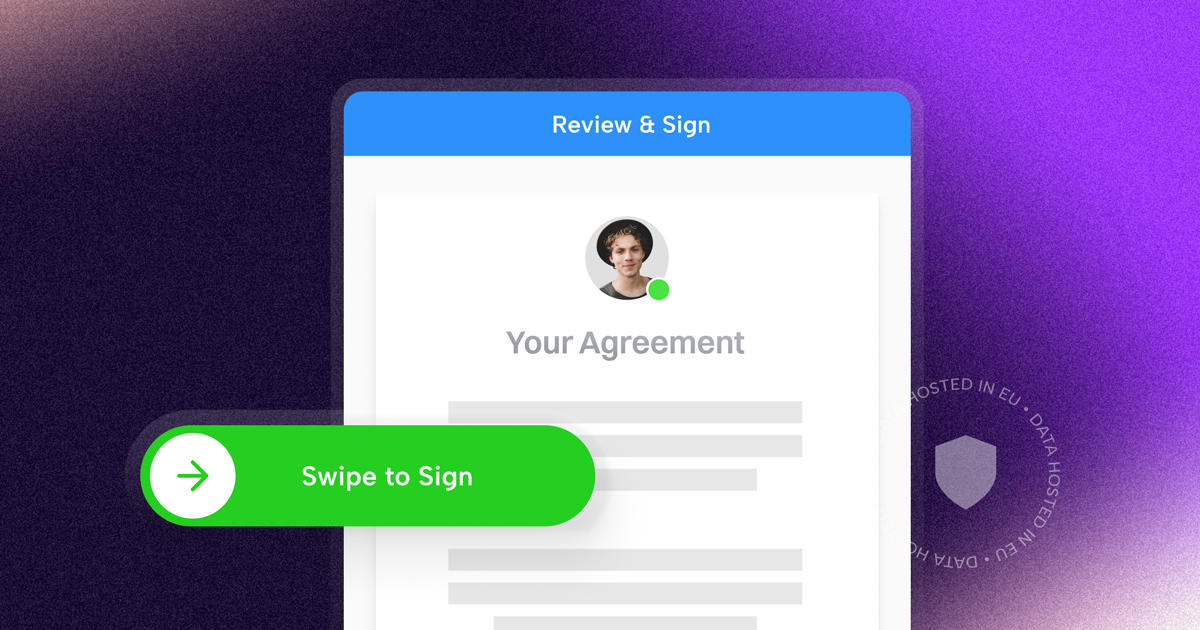
Create, send and sign in minutes. Connie is the EU-hosted, GDPR-compliant e-signature tool built for film, television and content production teams.
Run a free AEO + signal audit for your domain.
AI Answer Engine Optimization (AEO)
List once. Convert intent from live AI conversations without heavy integration.
Electronic signature solutions are digital platforms that enable the secure and legally binding signing of documents over the internet. They employ encryption, identity verification, and audit trails to authenticate signers and ensure document integrity. These solutions streamline contract execution, reduce operational costs, and enhance compliance for remote business transactions.
Upload the document requiring signatures into the platform and define the signature fields for all relevant parties.
Send secure signing invitations via email and verify the identity of each signer using methods compliant with the required signature standard.
Parties sign digitally, triggering the creation of a tamper-evident audit log and a completion certificate as legal proof.
For account openings, loan agreements, and policy binders, cutting processing time from days to hours while ensuring regulatory adherence.
To execute employment contracts, NDAs, and onboarding paperwork digitally, simplifying processes for remote and hybrid workforces.
For instant closing of sales contracts, service agreements, and quotes, boosting conversion rates and shortening sales cycles.
To securely sign patient consent forms, referrals, and insurance claims, maintaining strict compliance with data privacy regulations like HIPAA.
For executing SLAs, Terms of Service, and software license agreements at scale, supporting global customer bases efficiently.
Bilarna evaluates electronic signature providers using a proprietary 57-point AI Trust Score assessing expertise and reliability. Verification includes checking for technical certifications (e.g., eIDAS, SOC 2), compliance frameworks, and analyzing client satisfaction and delivery history. Only vetted and continuously monitored providers are listed on our platform.
Business pricing varies based on volume, feature needs, and compliance standards. Common models include pay-per-signature subscriptions or monthly plans for advanced workflow automation, integration APIs, and enterprise-level security features.
Yes, electronic signatures are legally recognized in most jurisdictions, including under the ESIGN Act in the U.S. and eIDAS in the EU. Their enforceability depends on implementing proper consent, attribution, and audit trail procedures.
Key selection criteria include compliance with relevant regulations (eIDAS, GDPR), ease of integration with your existing tech stack, user experience for signers, scalability, and the robustness of the security and audit trail features.
Implementation can range from a few days for cloud-based SaaS platforms to several weeks for complex on-premise deployments. Timeline depends on integration depth, custom workflow design, and necessary security reviews.
Basic signatures provide a simple record of intent (like a clicked checkbox). Advanced electronic signatures (AES) are uniquely linked to the signer, created using means under the signer's sole control, and are capable of identifying data changes post-signing, offering higher legal assurance.
Yes, electronic cigarettes are generally legal for travel within Europe, but their legality, sale, and use are subject to specific national regulations that vary significantly between countries. The European Union's Tobacco Products Directive (TPD) sets a baseline framework, but member states implement their own rules. For instance, nicotine concentration in e-liquids is capped, and tank sizes are restricted under TPD. However, some countries like Belgium and the Netherlands have stricter interpretations, while others may have additional local bans on flavors or public usage. It is crucial for travelers to research the laws of their specific destination regarding possession limits, where vaping is permitted, and any requirements for labeling or documentation. Non-compliance can result in fines or confiscation.
Yes, electronic signatures are legally valid for most business contracts as long as they meet compliance requirements. They carry the same legal weight as handwritten signatures but offer additional benefits such as faster processing, enhanced security through encryption and authentication, and easier management. Digital signatures use cryptographic methods to verify identity and ensure tamper resistance. Modern electronic signature software provides audit trails and compliance with international standards, making electronic signatures enforceable and reliable for businesses handling contracts, NDAs, invoices, and other agreements.
Yes, modern paywall solutions are designed to be compatible with both iOS and Android mobile applications. This cross-platform compatibility ensures that developers can implement a single paywall system across different devices and operating systems without needing separate solutions. It simplifies management and provides a consistent user experience regardless of the platform, making it easier to maintain and optimize monetization strategies.
Yes, financial automation solutions are often modular and customizable to fit the specific needs of different businesses. Organizations can select and adapt only the modules they require, such as accounts payable, accounts receivable, billing, or treasury management, allowing them to scale their automation at their own pace. This flexibility ensures that companies can address their unique operational challenges without unnecessary complexity or cost. Additionally, user-friendly tools and AI capabilities enable teams to maintain compliance and efficiency while tailoring the system to their workflows. Customized onboarding and collaborative support further help businesses get up and running quickly with solutions that match their requirements.
Yes, you can add a signature to your PDF documents using an online editor by following these steps: 1. Upload your PDF file to the editor. 2. Select the signature tool. 3. Create your signature by drawing it by hand, typing your name to generate a styled version, or uploading an image of your signature. 4. Place the signature anywhere needed in the document. 5. Save and export the edited PDF file to your device.
Yes, you can use an email signature generator for your entire team. Follow these steps: 1. Choose a signature generator that supports multi-user access or team plans. 2. Set up a company-wide template to ensure brand consistency. 3. Allow each team member to customize their personal details within the template. 4. Manage and update signatures centrally if the tool provides team management features. 5. Distribute installation instructions or automate signature deployment across email clients. This approach ensures uniform, professional signatures for all team members.
Yes, you can use the AI SOAP note tool with any EMR system. Since the tool is web-based, it does not require any integration or IT setup. After generating your SOAP note, simply copy and paste the note into your EMR. This flexibility allows you to use the tool on any device with a browser and switch devices during the day without losing your notes.
Modern psychiatric care providers often use electronic systems designed to be accessible and user-friendly for patients. These systems allow easy scheduling, communication with providers, and management of treatment plans. Unlike many traditional medical software platforms, these electronic systems prioritize patient experience, making it simpler to navigate appointments, access medical records, and receive timely support. This accessibility helps patients stay engaged with their care and reduces barriers to receiving proper treatment.
Nanotechnology-based coating solutions are developed by designing materials and processes at the nanoscale with a clear target application in mind. This involves iterative cycles of testing and optimization to enhance performance and functionality. By focusing on the intended use from the start, developers can tailor the coatings to meet specific requirements such as durability, conductivity, or protective properties. The vertical integration of the development process ensures that each stage, from nanoscale design to final application, is aligned to achieve the best possible outcome.
Smart contracts are used in enterprise blockchain solutions to automate complex business processes, enforce agreements without intermediaries, and significantly reduce operational costs and manual errors. These self-executing contracts are deployed on blockchain platforms to manage and execute terms automatically when predefined conditions are met. Common enterprise applications include automating supply chain payments upon delivery verification, managing and executing royalty distributions in intellectual property agreements, and facilitating secure, instant settlement in trade finance. They are also foundational for creating decentralized autonomous organizations (DAOs), tokenizing real-world assets like real estate or carbon credits, and building transparent, tamper-proof voting systems for corporate governance. By leveraging smart contracts, enterprises can achieve greater transparency, enhance auditability, and streamline workflows across departments and with external partners.