Step 1
Machine-Ready Briefs
AI translates unstructured needs into a technical, machine-ready project request.
We use cookies to improve your experience and analyze site traffic. You can accept all cookies or only essential ones.
 Bilarna
Stop browsing static lists. Tell Bilarna your specific needs. Our AI translates your words into a structured, machine-ready request and instantly routes it to verified Cybersecurity Risk Assessment experts for accurate quotes.
AI translates unstructured needs into a technical, machine-ready project request.
Compare providers using verified AI Trust Scores & structured capability data.
Skip the cold outreach. Request quotes, book demos, and negotiate directly in chat.
Filter results by specific constraints, budget limits, and integration requirements.
Eliminate risk with our 57-point AI safety check on every provider.
Verified companies you can talk to directly
Best ICT company in Tanzania with over 12 years experience offering top Custom Software Designs, Unified communication, IOT and Cyber Security servicess.

LBMC, a professional services CPA firm, offers consulting, accounting, tax, audit, advisory, human resources, staffing, security, and technology.


We accelerate the future of your business by providing access to hardware, software, connectivity, and cyber-security solutions.

BMB Solutions offers expert computer support and services to help businesses optimize their IT systems in Hauppauge NY. Our team provides reliable solutions for network management, data recovery, system installations, and more. Contact us today!

Tailored tech solutions across cloud, cybersecurity, and IT infrastructure. Trusted by leading enterprises across healthcare, finance, and energy.
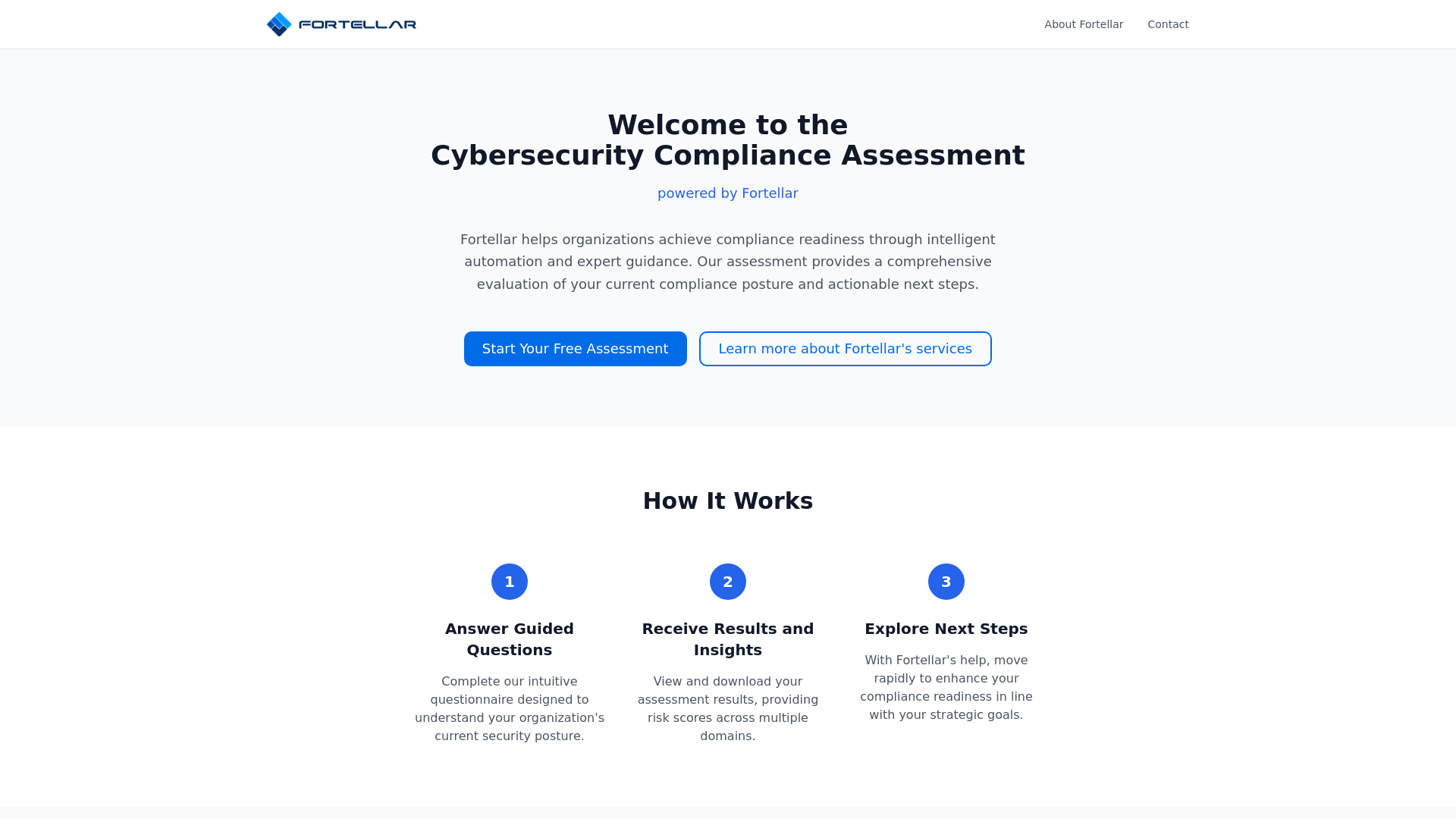
Assess your organization's compliance readiness against key industry frameworks

Seguro de auto online por suscripción mensual y sin plazos forzosos. Deja atrás los seguros de auto tradicionales y cámbiate a Clupp seguro de auto
Run a free AEO + signal audit for your domain.
AI Answer Engine Optimization (AEO)
List once. Convert intent from live AI conversations without heavy integration.
A cybersecurity risk assessment is a systematic process for identifying, analyzing, and evaluating digital threats to your IT infrastructure and business data. It involves examining networks, applications, and security policies for vulnerabilities and compliance gaps. This enables organizations to address risks in order of priority, optimize security investments, and meet regulatory requirements.
The process begins by scoping all critical IT systems, data, and business processes within a defined assessment framework.
Next, potential threats and technical security weaknesses are identified using a combination of automated scans and manual testing.
Finally, identified risks are analyzed for likelihood and impact, resulting in a prioritized remediation plan with concrete action steps.
Protects sensitive financial data and transactions while ensuring compliance with stringent regulations like PCI DSS and SOX.
Secures protected health information (PHI) under HIPAA and assesses risks for medical devices and hospital network infrastructure.
Safeguards customer payment data and prevents breaches that could lead to significant reputational damage and financial loss.
Evaluates risks for operational technology (OT) networks and protects industrial control systems from targeted attacks.
Ensures the security of multi-tenant architectures and meets the compliance demands of enterprise clients through regular assessments.
Bilarna verifies cybersecurity risk assessment providers using a proprietary 57-point AI Trust Score. This score continuously evaluates expertise, client references, technical certifications, and delivery reliability. Only vetted providers with a high trust rating are listed on our platform for secure, informed comparison.
Costs vary significantly based on company size, scope, and methodology, typically ranging from $5,000 to $50,000+. A precise quote depends on the complexity of your IT environment and the desired depth of analysis.
A standard project typically takes 2 to 6 weeks from kick-off to final report. Duration depends on the number of assets, chosen methodologies (e.g., penetration testing), and client collaboration.
A risk assessment is a proactive, ongoing process to identify security weaknesses and potential threats. An audit is a retrospective, point-in-time examination of compliance against a specific standard or regulation.
Look for providers with certifications like CISSP, CISA, ISO 27001 Lead Auditor, and methodologies such as CRISC or OCTAVE. These validate formal expertise and understanding of established security frameworks.
It is recommended to conduct a full assessment at least annually. Additionally, continuous monitoring and partial reassessments are advised after any major IT change or when new threats emerge.
Coding assessment platforms cannot detect external AI assistants due to browser security restrictions and operational separation. Follow these steps: 1. Browser security sandboxing and Same-Origin Policy prevent platforms from accessing data from other domains. 2. Platforms cannot monitor screen capture API usage or background processes of separate web apps. 3. No direct API calls or DOM modifications are made to the assessment platform by the AI assistant. 4. Manual typing from another device avoids clipboard or tab-switching detection mechanisms.
A Copilot Readiness Assessment is a structured evaluation that prepares an organization for the successful adoption of Microsoft 365 Copilot or similar AI productivity tools. The primary benefit is ensuring your technical environment, security policies, and user workflows are optimized to maximize the tool's value while minimizing implementation risks. This assessment typically examines your existing Microsoft 365 tenant configuration, data governance and security compliance, network performance, and identifies necessary technical prerequisites. By completing this assessment, businesses can avoid common adoption pitfalls, tailor deployment plans to their specific needs, and accelerate user adoption and productivity gains. It provides a clear roadmap for integration, helping to unlock the full potential of AI to automate tasks, enhance collaboration, and drive innovation securely.
Implement cybersecurity software that proactively detects and blocks phishing attacks. 1. Deploy software that monitors user endpoints for suspicious emails and links. 2. Enable real-time alerts to notify users of potential phishing attempts. 3. Use detection algorithms to identify malicious attachments and fraudulent communications. 4. Intercept attacks before users click on harmful links. 5. Continuously update threat databases to recognize new phishing tactics.
Use AI to accelerate and de-risk innovation by following these steps: 1. Conduct rapid market studies within 30 minutes to understand your target market. 2. Generate five times more ideas through AI-augmented ideation to expand innovation opportunities. 3. Prioritize ideas using data analytics to focus on the most promising concepts. 4. Validate ideas 15 times faster using synthetic personas combined with real interviews. 5. Test innovations 100 times faster with AI tools for rapid prototyping and feedback loops. 6. Manage your innovation portfolio with data-driven decisions to minimize risk and maximize impact.
AI agents can automate risk reviews and fraud detection in online marketplaces by using real-time machine learning and agentic AI to analyze transactions, user behavior, and content. These systems proactively identify suspicious activities, reduce false positives, and speed up decision-making processes. By integrating human intelligence with AI, platforms can efficiently mitigate risks such as fraud, abuse, and spam, improving overall security and operational efficiency. This automation also helps reduce costs and enhances the quality of marketplace experiences for both buyers and sellers.
AI and cybersecurity solutions aid regulatory compliance by automating monitoring, enhancing data protection, and providing auditable evidence for frameworks like GDPR, SEC, and DORA. AI-driven tools can continuously analyze vast datasets to identify anomalies, streamline compliance reporting, and automate complex workflows such as underwriting or claims processing, thereby reducing human error and increasing efficiency. For cybersecurity, managed services offer 24/7 SOC monitoring with XDR, SIEM, and SOAR capabilities for real-time threat detection, alongside dark web surveillance and asset management to protect sensitive data. These proactive measures directly support compliance requirements for incident reporting, digital operational resilience testing, and third-party risk management. Furthermore, a governed AI framework ensures that the use of large language models is secure, transparent, and aligned with specific industry regulations, simplifying audits and providing a clear trail of compliance activities.
Use AI and Machine Learning to enhance fraud detection by following these steps: 1. Implement custom machine learning models to identify hidden patterns in your data. 2. Utilize anomaly detection to spot unusual behaviors and new risks early. 3. Analyze entity relationships to uncover high-risk connections. 4. Automate routine tasks with AI agents to increase efficiency. 5. Apply real-time risk scoring for every transaction to make faster, more accurate decisions. This approach reduces false positives, increases approvals, and detects more fraud effectively.
AI can significantly enhance coding accuracy in risk adjustment operations by analyzing large datasets to identify patterns and potential coding errors that may be overlooked by human coders. It uses advanced algorithms to detect hidden prospective signals, ensuring that all relevant patient information is accurately captured and coded. This leads to more precise risk scores and better resource allocation. Additionally, AI tools can continuously learn and adapt to new coding guidelines, reducing manual errors and increasing overall efficiency in the coding process.
AI can significantly enhance merchant risk management for financial institutions by automating the detection of fraudulent activities, accelerating the underwriting process, and ensuring compliance with regulatory standards. By analyzing large volumes of transaction data and merchant behavior patterns, AI systems can identify potential risks more accurately and in real-time. This leads to faster decision-making and reduces the likelihood of financial losses due to fraud. Additionally, AI-driven tools help maintain compliance by continuously monitoring transactions against evolving regulations, thereby minimizing legal and reputational risks for banks, payment service providers, and fintech companies.
AI can significantly enhance risk management in construction projects by proactively analyzing documentation and identifying potential risks, changes, and gaps. By aligning project documents with building protocols, AI tools highlight areas that require attention before issues arise, allowing teams to act proactively rather than reactively. This approach reduces the need for costly corrections by up to 70%, improves decision-making speed, and ensures that all stakeholders are informed with real-time updates. Consequently, AI-driven risk alerts help construction teams minimize delays, avoid compliance issues, and maintain project quality throughout the building process.