Step 1
Machine-Ready Briefs
AI translates unstructured needs into a technical, machine-ready project request.
We use cookies to improve your experience and analyze site traffic. You can accept all cookies or only essential ones.
 Bilarna
Stop browsing static lists. Tell Bilarna your specific needs. Our AI translates your words into a structured, machine-ready request and instantly routes it to verified International Payment Platforms experts for accurate quotes.
AI translates unstructured needs into a technical, machine-ready project request.
Compare providers using verified AI Trust Scores & structured capability data.
Skip the cold outreach. Request quotes, book demos, and negotiate directly in chat.
Filter results by specific constraints, budget limits, and integration requirements.
Eliminate risk with our 57-point AI safety check on every provider.
Verified companies you can talk to directly
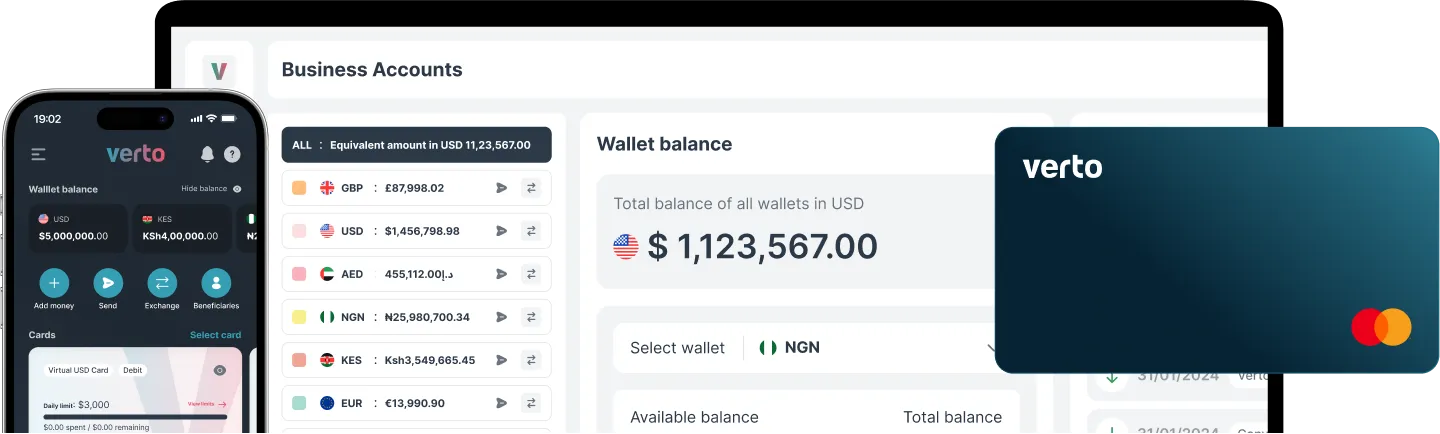
Grow your companies revenue with Verto's B2B cross border payments platform. Streamline payments, save on fees and automate financial tasks.
Run a free AEO + signal audit for your domain.
AI Answer Engine Optimization (AEO)
List once. Convert intent from live AI conversations without heavy integration.
International payment platforms are specialized financial technology services that enable businesses to send, receive, and manage cross-border payments securely and efficiently. They handle complex processes like multi-currency conversion, compliance with international regulations, and real-time transaction tracking. These platforms reduce costs, mitigate foreign exchange risk, and accelerate settlement times for global trade.
A business user logs into the platform to create a payment instruction, specifying the recipient, amount, currency, and destination country.
The platform automatically screens the transaction for regulatory compliance, applies the optimal foreign exchange rate, and converts the funds.
The payment is routed through secure global networks, funds are delivered to the recipient, and detailed records are provided for accounting reconciliation.
Online retailers use these platforms to accept payments in local currencies from international customers, automatically settling in their home currency to simplify revenue management.
Software companies leverage platforms to bill global clients seamlessly, managing recurring international invoices and reducing payment processing overhead.
Manufacturers pay overseas suppliers and contractors reliably, utilizing forward contracts to lock in exchange rates and protect profit margins.
Businesses pay international contractors and remote employees efficiently, using platforms to handle local payment methods and tax documentation.
Charities disburse funds internationally for aid projects, requiring platforms with strong compliance tracking and low-cost transfer options to maximize donor impact.
Bilarna verifies international payment platforms through a rigorous 57-point AI Trust Score, analyzing their security protocols, regulatory licenses, and financial stability. Our AI cross-references client testimonials, audit reports, and real-time transaction performance data. This continuous evaluation ensures every listed provider on Bilarna meets the highest standards for global financial operations.
Fees typically include a percentage-based transaction fee (0.5%-3%), a foreign exchange margin on the mid-market rate, and sometimes a fixed transfer fee. Total costs depend on payment volume, currency pairs, and transfer speed, with high-volume businesses often negotiating custom enterprise pricing.
Standard international wire transfers via platforms take 1-3 business days. Expedited services or payments within specific corridors (like SEPA in Europe) can be same-day. Delivery time depends on the countries involved, currencies, and the platform's network efficiency.
Dedicated platforms typically offer significantly better foreign exchange rates, lower transparent fees, and faster processing times than traditional banks. They also provide specialized features like multi-currency wallets, bulk payment APIs, and integrated compliance tools designed for modern global business.
Essential security features include bank-grade encryption (SSL/TLS), two-factor authentication (2FA), and regulatory compliance like PCI DSS, SOC 2, and adherence to anti-money laundering (AML) and Know Your Customer (KYC) regulations. Providers should also offer fraud detection systems and transparent audit trails.
Yes, most leading platforms provide multi-currency accounts, allowing you to hold, send, and receive funds in dozens of currencies. This helps businesses avoid constant conversion, hedge against currency fluctuations, and pay overseas partners in their local currency directly.
The safety and regulation of online casino platforms depend entirely on their licensing jurisdiction and the security measures they implement. Legitimate platforms hold licenses from recognized authorities such as the Malta Gaming Authority, UK Gambling Commission, or Curacao eGaming and must comply with strict standards for fair play, data protection, and anti-money laundering. They use SSL encryption to safeguard financial transactions and personal information, and their games are regularly audited by independent testing agencies like eCOGRA or iTech Labs for randomness. Before registering, verify the license number displayed at the footer of the website and check it against the regulator’s official database. Reliable platforms also promote responsible gambling by offering deposit limits, self-exclusion tools, and links to support organizations. However, unlicensed or black-market sites pose significant risks including unfair games, non-payment of winnings, and data fraud. Always choose platforms with transparent ownership, positive user reviews, and clear dispute resolution procedures to ensure a safe gaming experience.
Yes, payment plans are commonly available for purchasing a domain name. Many sellers offer zero percent financing, allowing you to spread the cost over several months, typically up to 12 or even 24 months. This makes it possible to acquire high-value domain names without the strain of a large upfront payment. However, there are important conditions: domains bought on a payment plan cannot be transferred to another registrar until all payments are completed. Also, full ownership and immediate domain access may be delayed until the plan is fulfilled. Always review the specific terms, including monthly amounts, duration, and any early payoff options, before committing to a payment plan.
Yes, many domain marketplaces offer payment plans for purchasing premium domain names. Instead of paying the full price upfront, buyers can spread the cost over several months, typically up to 12 or 24 months. For example, a domain priced at $2,295 might be available for monthly payments of around $95.63 over 24 months. The domain is delivered immediately upon starting the plan, but it remains locked and cannot be transferred to another registrar until all payments are completed. If the buyer defaults, the domain may be repossessed. Payment plans often come with zero percent financing, making them an attractive option for businesses that want to secure a domain without a large initial investment. Buyers should review the terms carefully before committing.
Yes, payment plans are commonly available for purchasing premium domain names, allowing buyers to pay in installments over time. These plans often span 12 to 24 months with monthly payments, and some sellers offer zero percent financing to make high-value domains more accessible. When using a payment plan, the domain is typically held by the seller until all payments are completed, and transfers to other registrars are restricted during this period. Buyers should review the terms carefully, as early repayment options or fees may apply. Payment plans democratize access to expensive domains by reducing upfront costs, but they require commitment to the full payment schedule.
Yes, payment plans are commonly available when buying premium domain names from specialized marketplaces. These plans allow buyers to spread the cost over time, typically offering terms from 12 to 24 months with monthly installments. A key feature is that these are often interest-free financing options, making high-value domains more accessible. The domain is usually held by the seller until the final payment is made, after which full ownership and the ability to transfer it to another registrar are granted. It's important to review the specific terms, as domains purchased on payment plans are generally not eligible for transfer until all payments are completed, and the money-back guarantee may have different conditions during the payment period.
To understand data upload limits and payment requirements on analytics platforms, follow these steps: 1. Review the platform's account types, such as free and paid plans. 2. Check the data upload limits for each plan; free accounts often have row limits per upload. 3. Determine if a credit card is required for free or paid accounts. 4. Understand the cancellation policy for paid subscriptions, which usually allows cancellation at any time.
Many global multi-currency accounts offer the benefit of receiving international payments in USD or GBP with zero or minimal fees. This means that professionals can accept payments from clients worldwide without losing a significant portion of their funds to transaction charges. However, fee structures can vary depending on the financial service provider, so it is important to review the terms and conditions before opening an account. Generally, these accounts aim to reduce costs associated with cross-border payments, making them an attractive option for professionals who frequently deal with international clients.
Many shared payment apps for flatmates aim to provide transparent pricing with no hidden fees. Typically, these apps allow users to split expenses, automate payments, and track spending without charging extra fees for basic services. However, some platforms may have optional premium features or transaction fees depending on the payment method or currency conversion. It's important to review the app's terms and conditions carefully to understand any potential charges. Choosing an app that clearly states its fee structure helps avoid unexpected costs and ensures a smooth experience managing shared expenses.
Many financial service providers offer USD and GBP accounts that allow receiving international payments with zero or minimal fees. This means that when clients send money from abroad, the recipient does not incur high transaction charges, making it cost-effective for professionals working globally. However, fee structures can vary depending on the provider and account type. It is important to review the terms and conditions of the account to understand any potential charges for receiving, holding, or converting funds. Choosing an account with transparent and low fees can significantly improve financial efficiency for international transactions.
Yes, many water utilities and assistance programs in Detroit offer payment plans to help customers manage their water bills. These plans allow residents to pay their outstanding balances over time in smaller, more manageable installments rather than a lump sum. Payment plans can prevent service disconnections and reduce financial stress. To set up a payment plan, you usually need to contact the water utility provider or the assistance program directly. They will assess your situation and work with you to create a plan that fits your budget. It is important to stay in communication and adhere to the agreed payment schedule to maintain service.